In The Blogs

Obama and FDR

OBAMA AND FDR....Paul Krugman writes today about the New Deal and the American economy:

Now, there's a whole intellectual industry, mainly operating out of right-wing think tanks, devoted to propagating the idea that F.D.R. actually made the Depression worse. So it's important to know that most of what you hear along those lines is based on deliberate misrepresentation of the facts. The New Deal brought real relief to most Americans.

That said, F.D.R. did not, in fact, manage to engineer a full economic recovery during his first two terms. This failure is often cited as evidence against Keynesian economics, which says that increased public spending can get a stalled economy moving. But the definitive study of fiscal policy in the '30s, by the M.I.T. economist E. Cary Brown, reached a very different conclusion: fiscal stimulus was unsuccessful "not because it does not work, but because it was not tried."

....F.D.R. wasn't just reluctant to pursue an all-out fiscal expansion — he was eager to return to conservative budget principles. That eagerness almost destroyed his legacy....What saved the economy, and the New Deal, was the enormous public works project known as World War II, which finally provided a fiscal stimulus adequate to the economy's needs.

I'm curious about something. I've read a number of conservatives recently taking liberals to task for thinking that the New Deal fixed the Great Depression. Some of them are the folks Krugman talks about, who like to pretend that the New Deal made things worse, but others are more moderate, insisting only that liberals stubbornly overestimate the macroeconomic impact of FDR's policies.
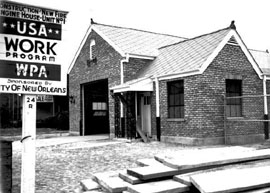
But here's the thing. I'm a liberal and I grew up (academically speaking) in the 70s and 80s. I wasn't an economics major or a history major, so everything I learned about FDR and the Great Depression came from a bog standard layman's viewpoint. And the conventional wisdom I learned (apparently based on Cary Brown's 1956 work, though I didn't know that at the time) was that although the New Deal was a fine thing that helped a lot of people etc. etc., it didn't get us out of the Great Depression because, in the end, FDR wasn't a Keynesian and the New Deal just didn't provide enough economic stimulus. What got us out of the Great Depression was World War II.

In other words, exactly what Krugman says. But if that's how I learned this stuff 30 years ago, it's not exactly a big secret, is it? Surely most liberals do, in fact, know this?

I'm also curious about why conservatives are so enamored with this argument in the first place. After all, the conclusion one draws from it is that the New Deal wasn't big enough. Hoover shouldn't have raised taxes, Roosevelt should have spent even more, and deficits should have been even bigger. I can see how they'd like the tax part, but do they really want to convince everyone that the New Deal was too timid? Doesn't that make the argument for an enormous stimulus to address our current mini-depression all the more forceful?
image
image
Get Mother Jones by Email - Free. Like what you're reading? Get the best of MoJo three times a week.
Comments
no profile pic for comment author

I'm also curious about why conservatives are so enamored with this argument in the first place.

FDR bad. Socialism. Bad.

Doesn't that make the argument for an enormous stimulus to address our current mini-depression all the more forceful?
Yes.

Conclusion: conservative argument stupid, either because those who say it are stupid, or because they expect their audience to be stupid enough to fall for it, or both.

no profile pic for comment author

By 1937, GDP had returned to 1929 levels. Unemployment in 1937 was lower than it had been in 1930. So the economy was recovering, but had not completely recovered, before US involvement in WWII.

no profile pic for comment author

The big difference between the New Deal and today is that in the 1930's / 1940's, the economic activity within the United States was "the economy" in a sense that in today's globalized world, it is not. We cannot dismiss events in Saudi Arabia or China as background noise.

This is the problem with old-fashioned Keynesianism and nothing about the collapse of supply-side Reaganomics resurrects this collapse.

A lot of people reading my post are going to be frustrated with me and demand what my solution is. Frankly, I don't have one. We have to trust to good fortune, and I can think of no compelling reason why we should have.

Sorry, but I have to call it the way I see it.

no profile pic for comment author

Kevin,
The reason the conservatives are up in arms over this and FDR is that to the free market thinkers FDR represented the power of the Federal government replacing the private sector as a source of economic control in the society. No longer could Wall St. dominate economic policy that was self-serving. FDR brought the weight of the political system to bear on it and they've never gotten over it.

no profile pic for comment author

I'm neither an economist nor a historian, so all I have are simple-minded questions.
Here's one; if the New Deal kept a number of people from starving, and provided employment to a number of unemployed, by what standard do they assert that "it didn't help the economy to recover?"

no profile pic for comment author

Kevin, my experience is exactly the same as yours. An additional point: I remember being taught that the '38 recession was brought on by FDR's belief that, ok, now he could balance the budget because the economy was doing better.

no profile pic for comment author

The reason conservatives like to bruit this argument about is that trying to end recessions through public works programs is gay, while ending recessions by firebombing enemy cities is manly. Building national parks? Gay. Building B-29s? Manly. It wasn't the fiscal stimulus of WWII that ended the Depression; the Depression ended via a mysterious testosterone-plus-airborne-ordnance alchemical reaction which took place when the boots hit the beaches at Normandy. To solve the current economic crisis, in other words, we must bomb China. Though perhaps bombing Germany and Japan again might do the trick too -- with Toyota and BMW out of the way, Ford and GM might just have a shot at escaping bankruptcy.

no profile pic for comment author

Kevin--Most liberals, progressives, non-wingnuts, and others of this (our) ilk ought to remember Brown's thesis, or at least something derived from it. But the Other Side either blithely disremembers it or counts on foisting an alternate narrative--not one of New Deal failures but instead the notion that we celebrate the New Deal for having accomplished something it didn't do and in fact wasn't meant to do. In this way, they have a stick with which to beat center-to-left scholars and their (our)students: supposedly, we've been selling our students the myth of the New Deal As Savior Of The American Economy for so long that the Americvan people will believe _anything_ about it...and will cravenly expect the government to take similar actions whenever the nation's economy goes to the dogs again (like now).

What they're not really pushing, though, is the notion that FDR & Co. _should_ have put more resources into the recovery, relief and reform programs. Instead, the present-day (I can't call it modern) right-wing critique leads one to the Coolidge-ish notion that simply letting the economy and society work through its own problems would have been just fine for then and better for the future. Hey, World War II would have come along anyway, saving our productivity bacon. I have not heard any responsible thinkers espousing this line but I've heard it from a number of my students, some of whom are usually pretty sharp--so they're reading it somewhere. My response is that the programs were for the most part necessary get-by temporizations...with some serious reforms of the financial system thrown in which for many years exercised pretty good restraints over the securities and banking businesses. And then there's the question of what would have happened without "stimulation" money going into building the Navy a new flattop or two.

no profile pic for comment author

The core of the right-wing argument is that FDR, by hamstringing business with regulation and higher taxes, and hammering it with his "economic royalist" rhetoric, made the Depression worse. If one points out that economic growth after 1933 was in fact quite strong, they respond [Friedman and Schwartz do this] that it would have been *stronger* had it not been for the damage the New Deal did to business confidence. Recovery would have been faster had business not felt so picked upon--that's the line.

no profile pic for comment author

People probably associate the New Deal with the government doing something. What, exactly, the public has in mind isn't clear, but it's something, as opposed to nothing. Thus, by beating back the idea that the New Deal was effective, the calls for more government involvement at certain times would seem misguided. Or something like that.

no profile pic for comment author

"And the conventional wisdom I learned (apparently based on Cary Brown's 1956 work, though I didn't know that at the time) was that although the New Deal was a fine thing that helped a lot of people etc. etc., it didn't get us out of the Great Depression because, in the end, FDR wasn't a Keynesian and the New Deal just didn't provide enough economic stimulus. What got us out of the Great Depression was World War II."

Well, real economic growth from 1933-1941 was 8% average/year. Saint Ronnie only matched that average growth rate for one quarter, conveniently before the 1984 election.

It was a hell of a hole the GOP got us into from 1929-1932, but FDR did a stellar job getting us out of it. Unemployment remained high, but whether that was becuase of those employed by the WPA being counted as unemployed, or because of insufficient stimulus, I don't know.

no profile pic for comment author

Don't have time to look this up now, but I thought one of the reasons the "New Deal = failure of Keynesian economics" argument doesn't work is that no such theory existed at the time--Keynes comes along in the midst of this period, after FDR's reforms were already under way. So his actions weren't being guided by the theory; he was just trying to provide some relief and jobs to people in desperate need. And yes, certainly the fact that WWII finally did put an end to the Depression, which is what I recall being taught as well, is a vindication of Keynes in any case.

Here's my question though: isn't massive deficit spending analogous to the defense spending of WWII precisely what we DO have going right now? $10B/month to keep the Iraq war running, over and above regular budgetary outlays is a pretty substantial Keynesian injection, right? I seem to recall Krugman himself saying so not too long past. So how does that figure in? Not enough $$? or not being spent in the right sectors?

no profile pic for comment author

An important reason why FDR didn't try Keynsianism is that Keynes's "General Theory" wasn't published until 1936. As Krugman says, it truly was the massive public works project called WWII that first applied Keynsian economics.

no profile pic for comment author

The only people who don't want us to run a deficit are those hoarding mountains of cash, ready to swoop in and grab it all when assets have crashed to rock bottom.

no profile pic for comment author

I did major in Economics, also in the 1980s. It was taught and I understood that FDR was unwilling to go all-out Keynesian during the 1930s, and only the war spending of the early 1940s brought about the budget deficits that Keynes was implying. And that finally brought us out of the long lingering post-Depression recession(s).

But it should also be recognized that an economic history of the Great Depression is not mandatory learning for economics degrees. I got my history as one element of one elective class within the department.

That partly explains the general ignorance that you observe. The other larger factor is the prevalence of economic snake oil, supply side economics, as a theory. The few academic adherents to supply side loudly support its corrolary: Always disagree with anything Keynesian. The non-academic WSJ editorial page prints howler after reliable howler not just in favor of the magical benefits of tax cuts - the absolute reason for the supply siders existence - but just as anti-intellectually against Keynes to this day.

no profile pic for comment author

"I'm also curious about why conservatives are so enamored with this argument in the first place"

Perhaps because it is factually correct and that understanding it can lead to better public policy-making today?

It's a strange concept - you wouldn't understand.

no profile pic for comment author

The conservatives may like the war spending of WWII, but the conveniently overlook the sacrifices and restrictions on the American people. Rationing, Victory Gardens, Gov't planning, etc. Practically a socialist wet dream from their point of view.

The bigger point is no ONE thing can get us out of a mess that many things and many people caused.

no profile pic for comment author

So here's the part I don't get. One would think that other things being equal public spending on war would be an inferior stimulus to public spending on infrastructure, because there are few positive knock-on effects to having more bombers. You drive on a road; it makes your life better. A bomber doesn't make anybody's life better. In fact, it makes a lot of people's lives much, much worse. As Tyler Cowen pointed out at some point, the multiplier effect of buying missiles is probably negative: not only don't they produce more wealth, they actually go out and blow something up, producing negative wealth.

So given that, why did WWII work better than the WPA at getting the economy out of recession? Well, we didn't really know we were out of the Depression until the late '40s or early '50s. And I'm curious about how strongly US industry benefited from the fact that all that spending during the war went to annihilate its overseas competition. How much of the US's economic takeoff in the late '40s (after the postwar contraction due to reduced government spending) was due to the fact that European and Japanese industry lay in ruins? To what extent was this effectively mercantilist protectionism by way of B-29s rather than tariffs?

no profile pic for comment author

Kevin,

You can add me to the list of folks taught macroeconomics in the 1970s who learned that the New Deal was far too tepid to be successful and that World War II was the stimulus package that got the job done. The Reagan era so successfully pushed aside all Keynsian notions that both Democrats and Republicans stopped talking about him. I doubt many Democrats in Congress in the 1980s and 1990s even knew who Keynes was. And, I may be incorrect about this, but I seem to recall reading in my college days that Keynes himself thought the economic stimulus used to fight the Depression was inadequate -- his views were so radical at the time that it was impossible to get governments to embrace the larger stimulus packages truly needed.

no profile pic for comment author

Well, my "layman's" understanding of the economics of the 30's and the great depression (also without having had any formal economic classes in college) was that FDR's New Deal policies and in particular the later WPA, pulled us out of the Great Depression. Then it was WWII and its economic effect that brough on the economic expansion and presperity of the 50's and 60's. I also believed that although FDR was not a Keynesian, he was convinced to enact Keynesian policies out of desperation for a solution after several years of refusing. So that's my "layman's" view, for what its worth.

no profile pic for comment author

brooksfoe: A bomber doesn't make anybody's life better.

Depends on the circumstances. In WWII building lots of bombers made sense.

As Tyler Cowen pointed out at some point, the multiplier effect of buying missiles is probably negative: not only don't they produce more wealth, they actually go out and blow something up

Only if you use the missiles. That was the beauty of the Cold War - build lots of expensive ICBM's, subs, bombers, etc. but don't actually use them.

P.S. Thanks to Lt. Col. Stanislav Petrov (Soviet Air Defence Forces, ret.) for keeping the world from becoming a pile of radioactive rubble.

I'm curious about how strongly US industry benefited from the fact that all that spending during the war went to annihilate its overseas competition.

Not that much. In the 1940's and 1950's trade was a much smaller part of the economy than today. Similar to how Smoot-Hawley didn't do much to make the Great Depression worse. While Smoot-Hawley was a bad idea, trade was too small a part of the economy for it to have much effect.

no profile pic for comment author

Conservatives are correct that the New Deal did not end the Great Depression per se, but it did save democracy and capitalism -- and that seems pretty important, too.

My 88-year-old mother and 91-year-old father have repeatedly told me that no one who did not live through it can adequately appreciate the sense of despair present in the winter of 1932-33. Or the growing sense of radicalism on both the right and left.

FDR's mostly robust actions in combatting the Depression provided hope and saved America from making, or even seriously considering, the choices made by many nations in Europe.

More importantly, many New Deal initiatives, most especially Social Security but many others, have had a lasting and positive impact on our economy and our daily lives.

In my mind, FDR does not begin to get enough credit for what he did, let alone too much. I wish Democrats would junk the Jefferson-Jackson dinners, neither man reflecting many of the sentiments of today's Democratic Party, and instead call them Roosevelt Appreciation Dinners.

no profile pic for comment author

My father was born in a town named Arthurdale, in West Virginia. This was the prototype of the revitalization of the Homestead Act during the Depression. This program, considered Eleanor's baby, took people out of abject poverty and put them into towns throughout the United States. In Washington, by both Republicans and Democrats, these programs were considered a failure. But they were not a failure for the families that were helped. Many were lifted within one generation into the middle class and remained there generations later.

"Failure" in economics, often depends on ones point of view.

no profile pic for comment author

1. While overall FDR's response to the Great Depression was better than the alternatives being promoted at the time, there were plenty of mistakes. For example, the NRA was a bad idea. Krugman himself has said so. Of course the way many Republicans spin it, since some ideas were bad, everything FDR did was bad. That's what happens when you concentrate on spinning people as heroes or villains, instead of discussing which policies are effective.

2. The standard conservative line these days is that the problem in the Great Depression was monetary policy. Since that was Friedman's theory, and again in the pursuit of a hero/villain dichotomy, all Friedman's ideas were good (even though much of his free market fanaticism had little to do with his technical work on monetary policy).

The fact is that bad monetary policy was a major factor. Krugman (and probably just about every economist these days) will agree with that. It does not mean that it was the only problem though. The Keynesian and monetarist explanations are not contradictory. For a good example though of the limits of monetary policy in such situations, search on "Krugman liquidity trap". It's one of his signature issues.

no profile pic for comment author

he wasn't saying it was factually incorrect--he was saying that by pushing this argument, and by highlighting the facts underlying it, conservatives are contradicting their own theories (if their pronouncements can be called that). he is saying that the conclusion from this argument is that FDR did not go far enough in intervening in the economy and in deficit spending. not a conclusion that would be welcomed by the conservatives pusing this point of view.

the fact that you misread this so badly gives a hint as to why conservatives do as KJ wonders that they do.

no profile pic for comment author

Krugman has better stuff on FDR and the Great Depression on his blog. Note the first and third entries.

Of course Krugman uses a rhetorical trick called "data" as represented by "numbers". It's well known that these have a liberal bias.

no profile pic for comment author

Also, another thing to remember is that much of FDR's harder left turn was because of electoral considerations, specifically the threat of Huey Long. We probably wouldn't have, for example, social security if it wasn't for the Kingfish.

Also, may I say, welcome back. I got the feeling the more we got into the election cycle, the less posts you made, and generally the less interesting they were. But the last few days we have seen you back in fine posting form. Good job, keep it up.

no profile pic for comment author

Conservatives like this argument because they are not, in fact, anti-Keynesians. What they are is anti-social programs. They're therefore against social Keynesianism, but perfectly fine with military Keynesianism. And this narrative supports the argument that military not social Keynesianism is what ended the Great Depression.

no profile pic for comment author

Of course Krugman uses a rhetorical trick called "data" as represented by "numbers". It's well known that these have a liberal bias.

Posted by: alex on 11/10/08

Numbers are just secret code to prevent Republicans from understanding what's going on.
heh

no profile pic for comment author

Mr. Farris, you've come up with a wonderful idea, the scrapping of a couple of states rights antecedents in favor of the appreciation of the man who probably saved our democratic republic.

Although I was only aware of the tag end of Mr. Roosevelt's regime I do believe that he imparted a reverence and dignity to which our nation could cling during hours as dark as that faced by Mr. Lincoln.

no profile pic for comment author

I remember life getting better in '40 when defense spending soared, war on the horizon, Lend-Lease, etc. My father was called back to work at Buick, my uncles at Chevrolet; they even had a union contract won in '39; enough food on the table for second helpings at all three daily meals; and my sister and I got new winter coats.

FDR talked us through the hard times. He might not have done much, but it was enough. I'm waiting for Obama's ''fireside chats.''

no profile pic for comment author

Brooksfoe,
Bravo! Brilliantly spoken and oh so true in my opinion. I just couldn't pass up adding a compliment comment

no profile pic for comment author

The misinformation and disinformation offered against FDR's economic stimulas (New Deal) in solving the problem of the Great Depression by conservative think tanks and the Wall St. Journal needs to be actively countered by shining the brightest lights possible on the results of the policies they have long favored: Monetary Policy over Fiscal Policy, unfettered Capitalism, especially minimal anti-trust activity and maximum deregulation, and flattening, even regressing our system of taxation.

President Obama, the Secretary of the Treasury and the Chairman of the Fed need to throw everything they have at curing our economy's ills, and it will still be a long and painful time before we hit bottom and start to recover. But the seeds need to be planted for constructing a better capitalism in the recovery that follows, and for that, they also must be on board for educating the country in what the conservative economic stewardship has wrought. That must be long and loud and endlessly repeated until more of the public comes to understand just what Adam Smith understood: Capitalism left unchecked will plant the seeds of its own destruction, and that's what we have been doing with precisely those conservative economic policies.

FWIW, I would postpone all tax hikes that Obama proposed until we have turned a corner, and then aggressively pursue them and other policies aimed at re-creating progressive taxation. Start to re-regulate now. Aggressively use Fiscal Policy and Monetary policy (already being done).

Selling tax cuts is the easiest thing to sell in the entire country politically. Teach the public who can potentially grasp it to understand that Supply Side theory is to Economics what Faith Healing is to Medicine.

Post a comment
Alternately, you may login to or register an account
The content of this field is kept private and will not be shown publicly.
  • Web page addresses and e-mail addresses turn into links automatically.
  • Allowed HTML tags: <a> <ul> <ol> <li> <blockquote> <img>
  • Lines and paragraphs break automatically.

More information about formatting options


Jail.org - Inmate Search
Criminal records, instant public records & people search & current court records. www.jail.org

U.S. Public Records Search
Search County & State Court Records, Criminal records, Vital and Adoption Records www.PublicRecordsInfo.com

Records.com - People Search
Public Records and Background Checks. Instantly Search Criminal Records, Addresses and Court Records www.Records.com

Court Records & County Records
Find Instant Public Records, Criminal Records as Well as County Property Records Search. www.PublicRecordsIndex.com

Mother Jones Podcast
Get in on the conversation! We talk about culture, politics, the environment, the economy and more. Listen now!

TalkBackTees.com
A treasure trove of liberal wit, wisdom and quotations, from ancient to modern, on colorful, cotton tees.

Support Independent Artists
Amazing art, crafts, apparel, paper-goods and more. A carefully curated selection of sundries since 1999.

FREE CONNECTIONS FOR GREEN SINGLES
Meet progressive singles in the environmental, vegetarian & animal rights community who share your values