- ‹ previous
- 906 of 2826
- next ›
Obama's Weak Tea
Matt Yglesias argues that the Obama administration has done the right thing by proposing that increased systemic risk authority be given to the Fed, which is insulated from the blowing of the political winds. But I think this is backward. If you're going to create some kind of systemic risk regulator at all — about which I'm sort of agnostic in the first place — you want to
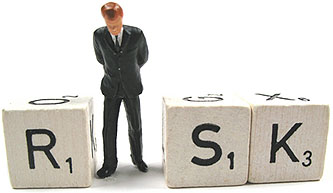
give the authority to an agency that's institutionally dedicated to reducing risk and considers it a primary task. That ain't the Fed. It's just going to get buried in the bureaucracy and forgotten there.
Matt also points to a couple of things Obama got right in his new financial regulation proposal:
Their regulatory package is reasonably strong on two ideas that I think could work. On the one hand, they have this consumer protection business.....It [] continues to be somewhat unclear exactly how much of the bad lending activity was truly fraudulent, but it’s at least possible that stronger consumer protections will help keep things under control. Last and most important of all, I think, is the idea of creating a clear legal process for the “resolution” of large, complicated financial firms. This is the one aspect of the crisis where I think you really can say that policymakers did want to do something different and better than what they did (ad hoc bailouts and bankrupties) and really were restrained by a lack of statutory and regulatory authority.
These are both potentially good things — assuming Congress doesn't water them down into useless swill. But I think it's wildly unlikely that a consumer protection agency would have prevented the housing bubble. After all, plenty of agencies knew about the fraud in the home loan market. They just didn't do anything about it. And the resolution authority, although it's important, only addresses what do to after a bubble has burst. What's more important is trying to keep bubbles from inflating quite so high in the first place.
So color me still discouraged. There's a legitimate concern that we not go crazy and overregulate the finance sector in response to the events of the past year. But frankly, we're not within light years of that yet, and reckless overuse of leverage is still the key issue that needs to be addressed. Obama's plan is weak on that score, and it will probably get even weaker after Dodd and Schumer and K Street are done with it. For more on that, read George Soros's brief column in yesterday's Financial Times. It seems on target to me.


Why not the Fed?
Much of what Soros is suggesting involves stopping asset bubbles This should be, and would have to be, the responsibility of the Fed.
I'm coming around to the idea of the Fed also acting as the unitary regulator. Many causes and solutions to recent financial crises involved monetary policy at the core. But the way we handle things now, everybody is off the hook when things go bad since responsibility is so diffused.
And because of the funding power the Fed has, it's power as an enforcer would be enormous. Only it would have the leverage needed to really strike fear in the hearts of Wall St.
Too bad Obama couldn't be a lot bolder. But that seems to be his problem in general.
The Fed is problematic, can't be the regulator now
tagged as:- solution
The Fed oversees monetary policy for the whole country. Structurally, they have so much power that if and when they have been captured by the banks, they can easily abuse the power they have been given. Many economists would agree there is regulatory capture here. The Fed has invariably chosen to put more money in the hands of those at the top who are able to invest rather than those at the bottom and in the middle who live in debt and pay off their credit cards monthly.
The Fed didn't do their job of using regulatory powers to keep large-scale risky activities from taking down the country.
Here is a petition that needs signing -- please, no new powers for the Fed unless they get reformed. They should not be the systemic risk regulator, otherwise the banks will basically be setting their own rules:
http://salsa.democracyinaction.org/o/1312/t/9812/petition.jsp?petition_K...
"On the one hand, they have
"On the one hand, they have this consumer protection business"
It's not at all clear to me that consumer protection wrt finance can work in the US.
This is a country that still insists that people are basically rational decision makers who should be allowed to make their own mistakes. So I can't believe the agency will actually have the ability to BLOCK certain types of financial arrangements --- it won't be telling people "no, you may not take out that loan to buy [plasma TV/car/house]", especially since the most likely people to be told no will be the poor, which means blacks and latinos, which means it becomes a race thing, "redlining for the 21st century!" and all that.
So if the agency can't actually stop loans (on either the consumer or provider side) then what? We will, of course, get that old standby disclosure. I have nothing against disclosure --- I actually read all the stuff my mutual funds send me --- but let's be realistic here. Common sense, and experience with other humans, tells us that almost no-one reads these disclosures, whether for financial products, software, or medical procedures. If the terms are especially egregious (as has happened one or two times with respect to software/internet access) there may be some anger raised that changes things, but, honestly, who out there with a credit card doesn't already know that if you don't pay your bill immediately, you have to pay off a much larger bill?
The issue is not that people are being given loans whose terms they don't understand. The issue is that there is a pool of people out there, people more weak-willed and short term than most of the people you and I interact with, who are happy to accept a deal now on whatever terms are offered, and let the future take care of itself.
How do we deal with these people? Disclosure certainly won't do it.
The next obvious suggestion would be something about financial literacy. Can't hurt, I guess, but I also don't think it gets to the root of the problem. Better would be to get your community groups/churches and suchlike into the business of presenting borrowing money (apart from very restricted cases, well within your financial limits) as inherently shameful, inherently non-masculine. I don't see that happening in the US.
So where do we stand? Some products with no obvious worth will be banned (balloon mortgages). Some with worth for some people may be banned (ARMs).
But is anything going to stop you taking on a large mortgage that you can't handle if you lose your job, get fewer clients than you expected, fall ill? Is anything going to stop you using your consumer credit to buy concert tickets, so that it's not there when you need it for something more important? Is anything going to stop you buying a new Hummer when the sensible car for your situation is a second-hand Camry at a third the cost and three times the milage/dollar?
It's not intended
to protect consumers from themselves. There are some thing that can't be regulated, no matter how much damage they do, and consumer irresponsibility is one of them.
I believe what it's intended to do is to crack down hard and fast on flat-out fraudulent practices that can be hard for consumers to recognize, such as flourished during the subprime heyday.
It's not going to make much of a dent in the overall economic problems, but it's not meant to. Strikes me as a combination of the basic principle that the unscrupulous ought not to be able to get away with this stuff as easily for as long as they did, and pure public politics-- good politics.
"Matt Yglesias argues that
"Matt Yglesias argues that the Obama administration has done the right thing by proposing that increased systemic risk authority be given to the Fed"
You can give it to Mickey Mouse for all that it matters. Authority is worthless unless it's given to someone who'll use it. Greenspan wouldn't even acknowledge that there was a housing bubble, and Bernanke was no better until everything blew up. Is there any reason to believe that the next Fed chair would be any better?
Nor can I say that our various Secretaries of the Treasury, or various other appointees have been any better. AFAIK the last regulator who had the common sense or guts to stop financial insanity was Brooksley Born, who as CFTC head in 1999 wanted to regulate CDS's. Of course she was shot down by the troika of Greenspan, Rubin and Summers (the last of whom is, or course, Obama's financial genyus).
Without the appointment of people who'll use the authority responsibly this is just political nonsense. And considering that Obama's chief financial guru is one of the bank robbers, I don't have much faith that that will happen.
Let's review Larry Summers' resume, shall we? He's been wrong about almost every major policy matter. He was a major proponent of the infamous "shock therapy" for the former Eastern bloc, adamantly opposed regulation of CDS's, and was a major proponent of the strong dollar policy that helped create our enormous trade deficit and provided the cash for the housing bubble. But of course he's a genyus.
Oh, and he made millions working part-time for Wall St. just prior to joining the Obama administration, and his mentor Rubin made over $100M with Citi. Obama's Chief of Staff Rahm Emanuel made $16M working for an investment bank for two years, despite having no obvious skills for such a position.
But remember, there's no conflict of interest.
GM's worst business mistake: not hiring political flunkies for multi-million dollar part-time jobs. Any bets on how different the GM "bailout" would look if they had?
Absolutely wrong (Drum) from A to Z
And confused as well. I have not had the occasion to read the proposal and will not have so due to travel, but for Systematic Risk, the Fed is the ideal entity (contra say consumer protection). Frankly, Drum continues to be obtuse (the US Treasury analysis of what applied best practice on a global basis has show highlighted this, Drum clearly is only just reacting on a gut basis based on a simple-minded gut reaction) and show little understanding of the issues. Rather makes me find his comments on the US anti-Green right (who I think are wrong-headed fools, ex their critiques of the Green movement's economic illiteracy, a pity given decent long-term market arguments for Green) ironic.
Bank reg
Don't worry. When the banks get through lobbying the bill in Congress, it will be known as the 2010 Banker's/CNBC Wet Dream Bill. I wouldn't be surprised to see the banks freed from their "unfair regulatory burdens" further by Congress. TARP money becomes campaign donations. Yippee!
Reckless or fraudulent
Reckless or fraudulent leverage, securitized and stupidly or fraudulently rated, then placed where suckers and taxpayers could be made to take the loss. Oh, and a lot of it sold short to suckers and taxpayers via Credit Default Swap.
The above commentator hasn't the most basic clue
It is not even particularly good work stringing together jargon phrases that are not really understood.
Why not just write "I hate and fear bankers!!! Lolz" Or whatever the internet jargon is.
Incoherent objection to the Fed
I have a hard time understanding this statement: "you're going to create some kind of system risk regulator at all ... you want to give the authority to an agency that's institutionally dedicated to reducing risk and considers it a primary task. That ain't the Fed. It's just going to get buried in the bureaucracy and forgotten there."
Either Drum has little real clue as to what the US central bank does (likely) or little clue as to what a systematic risk regulator does (equally likely). Well not really an either or actually, since both seem to be likely.
Systematic risk (versus bank by bank risk) is, given the national view of the Central Bank, and its operational involvement in backbone operations (a CORE function) of payment systems (RTGS), liquidity services (the Windows), as well as credit centred regional (versus single bank) analysis (regional reserve banks), is par excellance the proper place to have a stability regulator. Lost in the bureaucracy is a bloody meaningless statement, mere foolish and rather ignorant blog whanking posturing. Now one might well question the Stability Regulator role, but if one accepts its need, to say "that ain't the Fed" merely indicates you know fuck all about your own regulatory system. Perhaps not surprising, given Drum seems to know fuck all about finance, banking or bank / financial sector regulation, and seems rather stubbornly stuck on a simple minded and utterly pointless mantra about 'overuse of leverage'
But then he also seems unwilling to spend an evening away from his cats.
Once again
your substantive comments are-- "spot on," you would likely insist on saying. But your ill temper and abusive tone is what we would just call sophomoric.
Get over yourself, Lounsbury.
The Lounsbury: Why not just
The Lounsbury: Why not just write "I hate and fear bankers!!! Lolz"
Good point, old chap. After all, it isn't necessary to know the exact mechanisms and other details by which one (world) is getting fucked over to know that one is getting fucked over. In fact delving into such matters beyond the patently obvious just invites the other side to try and destroy the argument in detail. Perhaps better that some of us non-experts simply think of ourselves like the kid in "The Emperor's New Clothes". Even if we don't fully understand all the arguments the adults are making about how His Imperial Majesty is beautifully clothed, we know that they're all full of shit.
In this country we have a long and glorious tradition of hating and loathing bankers. In the past some political parties even based much of their platforms on such issues. Unfortunately that seems to have died out, but it's never too late for a revival. We also have a long tradition or ridiculing those we despise. An obvious example is the lawyer jokes so popular here. So let's start a tradition of banker jokes. Here are a few samples. Feel free to add some.
Q: What's the difference between a demolitions expert and a banker?
A: Demolitions experts only blow up things they plan to blow up.
Q: What's the difference between earthquakes and bankers?
A: Earthquakes cause less damage.
Q: What's the difference between a loan shark and a banker?
A: I don't know - you tell me.
Q: What's the difference between a banker making excuses for the financial meltdown and a kid telling his teacher that his dog ate his homework?
A: The kid has a better story.
Q: What's the difference between a sociopath and a banker?
A: Sociopaths have a greater sense of personal responsibility.
Q: What's the difference between a welfare mom and a banker?
A: Welfare moms only ask for thousands in taxpayer dollars - bankers ask for billions!
Q: Why are banks more successful than the Mafia?
A: Banks give politicians bigger bribes (oops, I mean better paying jobs).
And of course we can always recycle the lawyer jokes (hey, why should we only pick on our esteemed members of the bar?).
Q: How do know when a banker is lying?
A: His lips are moving.
Q: Why are they now using bankers instead of rats in lab experiments?
A1: The lab assistants don't feel sorry for the bankers.
A2: There are some things that even a rat won't do.
Good News: A busload of bankers ran off a cliff. The bus was destroyed and there were no survivors.
Bad News: There were three empty seats.
Q: What do you call 5000 dead bankers at the bottom of the ocean?
A: A good start!
Q: What's the difference between a dead skunk in the road and a dead banker in the road?
A: There are skid marks in front of the skunk.
Q: How do you get a banker out of a tree?
A: Cut the rope.
Q: Do you know how to save a drowning banker?
A1: Take your foot off his head.
A2: No. Good!
Q: What's the difference between a banker and a bucket of shit?
A: The bucket.
Q. Where can you find a good lawyer?
A. In the cemetery
Q. What's the difference between a banker and a hooker?
A1. A hooker only screws one person at a time.
A2: Hookers make an honest living.
Q. What's the difference between a banker and a vampire?
A. A vampire only sucks blood at night.
progressive taxes would work better
About 1/2 of the change that needs to happen would be achieved quickly and simply by just taxing capital gains income the same rate as wages, INCLUDING Social Security and Medicare taxes with no cap. Another 3/16 or so could be obtained by doubling the standard deduction and eliminating every other deduction and credit. Those changes would kill the tax incentive to shelter income in tricky financial instruments.
Another 1/4 would be done by removing the limit on FDIC deposit insurance. That would give large investors a safe place to keep their money and eliminate the need for financially creativity that constructs an illusion of safety. It would also give banks a reason to pay interest to depositors again, instead of relying so heavily on Wall St and the Fed.
All the regulation that would really be needed would be adjusting reserve requirements to accomodate the reality of big, single depositors.
progressive taxes would work better
tagged as:- solution
About 1/2 of the change that needs to happen would be achieved quickly and simply by just taxing capital gains income the same rate as wages, INCLUDING Social Security and Medicare taxes with no cap. Another 3/16 or so could be obtained by doubling the standard deduction and eliminating every other deduction and credit. Those changes would kill the tax incentive to shelter income in tricky financial instruments.
Another 1/4 would be done by removing the limit on FDIC deposit insurance. That would give large investors a safe place to keep their money and eliminate the need for financially creativity that constructs an illusion of safety. It would also give banks a reason to pay interest to depositors again, instead of relying so heavily on Wall St and the Fed.
All the regulation that would really be needed would be adjusting reserve requirements to accomodate the reality of big, single depositors.