In The Blogs

More on the Next Bubble

The housing bubble may be over in America, but all the money that fueled it still has to go somewhere.  The Wall Street Journal reports today on the same resurgent bubble-iciousness that Nouriel Roubini was warning about yesterday:

Concerns are mounting that efforts by governments and central banks to stoke a recovery will create a nasty side effect: asset bubbles in real-estate, stock and currency markets, especially in Asia.

....Behind the trend are measures such as cutting interest rates and pumping money into the financial system, which have left parts of the world awash in cash and at risk of bubbles, or run-ups in asset prices beyond what economic fundamentals suggest are reasonable.

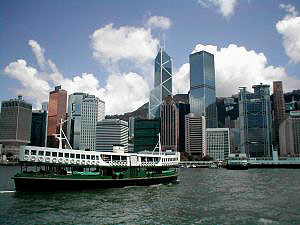
....The symptoms of a frenzy are most evident in Asia and the Pacific, where economies are recovering most quickly....Over the summer, a Singapore condominium developer raised prices 5% the day before units went on sale. After dozens of would-be buyers lined up on a steamy night, the developer — a joint venture of Hong Leong Group and Japan's Mitsui Fudosan — held a lottery for a chance to bid on the units. Singapore home prices rose 15.8% in the third quarter, the fastest rate in 28 years.

....The Australian dollar has jumped about 35% over the past 12 months as investors borrow in U.S. dollars to purchase Australian currency. The practice is propelling stock and bond markets faster than in the U.S. and Europe. Currency traders are betting that the Australian central bank, which raised interest rates by 0.25% on Tuesday, the second rise in two months, will continue tightening.

There should be better uses for this money.  Why aren't there?

image
image

Get Mother Jones by Email - Free. Like what you're reading? Get the best of MoJo three times a week.
Comments
g. powell

Monetary policy trumped fiscal

The fiscal stimulus didn't match the size of the extraordinary monetary measures the Fed was forced to deploy, so all that extra liquidity went to gold (record high today), overseas speculation, etc. If, however, the stimulus had been larger, that extra liquidity would have been employed by productive economic activity. Instead we got a slumping economy and financial mini-bubbles thanks to the timidity of Washington.

no profile pic for comment author

"There should be better uses

"There should be better uses for this money."

Railroads?

no profile pic for comment author

I don't know if the question

I don't know if the question was asked in jest, but railroads is exactly what Warren Buffett is putting his money in these days. In fact, he just bought the largest railroad company today.

no profile pic for comment author

Seems like a reasonable long

Seems like a reasonable long term investment if the regulatory structure and concentration issues can be remedied. Railroad transport and light commuter rail infrastructure are in need of tremendous work in order to catch up with Europe.

Oil isn't going to get any cheaper.

no profile pic for comment author

Overcapacity

Which private goods do we need more of in the US?

no profile pic for comment author

Infrastructure

Excess funds should be spent on infrastructure -- improved roads, more and better buses and subway cars, better rail and light rail, alternative energy R&D, smaller class sizes, etc. Without spending needed money on these projects we are simply living off of the efforts of past generations and we are passing needed expenditures onto future generations.

Besides, all those things are good for long-term growth in America!

Yes We Can! Er, I thought we could.
Hello? Hello?

no profile pic for comment author

"There should be better uses

"There should be better uses for this money. Why aren't there?"

Because you insist on taking money out of the hands of the individuals, based on the premise that those in power can better provide for them. Lest we forget:

"To act on the belief that we possess the knowledge and the power which enable us to shape the processes of society entirely to our liking, knowledge which in fact we do not possess, is likely to make us do much harm. "

no profile pic for comment author

But it's not government

But it's not government money that is going into these asset bubbles. It's private money.

no profile pic for comment author

It scares the crap out of me

It scares the crap out of me that there are honest people out there who still believe that the market needs no intervention. I have no idea whether investing in Hong Kong real estate will make me as an individual richer or poorer, so in that sense the efficient market hypothesis is true. But that just makes it obvious that being the best known prediction of prices has nothing to do with being the best allocation of goods, because there's so much stuff out there that would improve the world more than more expensive Hong Kong real estate.

no profile pic for comment author

You and Brad DeLong and all

You and Brad DeLong and all the other free traders have killed manufacturing, pretty much anywhere in the world as any sort of investment.

You're left with service and financial economy investments.

You'd have to be an idiot to invest in actual production.

Thanks!

(Side note: it cracks me up to read articles that with a straight face talk about how all the jobs are going to go to healthcare because those jobs can't be outsourced.)

no profile pic for comment author

A little perspective

I don't really think these are good examples of bubbles, but that being said, I think its true that bubbles will be a risk for emerging markets over the next few years.

The reason that these should not be considered bubbles is that what is really happening for most of these markets (especially the property markets) is that they are just rapidly revounding to the pre-crisis levels. Stocks and property fell more in Asia then they did in the US. But now Asia is realizing that it wasn't brought down that much by the US. So property fell by 40% due to the panic, but now you can't find sellers who will let go below 2007 levels, and thus markets are rapidly rebounding to those levels.

These Asian countries are also much better at countercyclical policy than the US. When the property market in China was heating up in 2006 and 2007, governement policy set up restrictions on borrowing to build and buy. in 2008 credit was made easily available. And now already China, Hong Kong and Singapore have already imposed new rules making it harder to finance the buying of property.

Minsky would love the way these countries are run.

no profile pic for comment author

where should the money go?

The global economy and the reduction of barriers to competition means there are fewer winners in the global market. You can't earn a living by dominating the local/state/national market for anything because the local/state/national markets are all global markets now. That's fine for the winners, but there used to be fewer losers.

Ask yourself, if $40,000 dropped in your lap, where would you invest it if you couldn't put in real estate or the stock market? If you can't think of anything good, is it any surprise that so many other people can't, either?

no profile pic for comment author

"all the money that fueled

"all the money that fueled it still has to go somewhere"

The money that fueled the housing bubble is gone, unless prices go back up to 2007 levels - that's why bubbles are destructive. The really destructive bubbles are fueled by extreme leverage, which means that lots of money is created quickly, but can be destroyed even faster. Many banks and others are probably still operating on bad housing debt that just hasn't been located yet.

There is still a lot of speculative money in the stock market. P/E of the S&P 500 is almost 3 times higher than ever before, and about 8 times average. This will also disappear before too long.

no profile pic for comment author

The basic problem, at least

The basic problem, at least in the U.S. is actually fairly simple. The government creates money through banks, and banks have been out of control, putting the money into speculation of various kinds instead of things which will be productive in the long term. Efforts at reform have been feeble even with respect to superficial restraints on banks and do not address this basic problem.

Art Eclectic

IMHO, the problem is

IMHO, the problem is unrealistic expectations on return. Too many people watched fortunes being made during the tech bubble and the result is too much money chasing big returns. These funds won't get invested in anything with a sensible and boring return rate like manufacturing or infrastructure, they want insta-wealth.

What you have at this point is a global set of high stakes gamblers looking for a table. The addiction is in force and the money will keep swirling around looking for the next big win.

MacGruber

If you have a million (or a

If you have a million (or a billion) to invest, why would you put it in the U.S. stock market right now? If you're a U.S. company, why reinvest your profits (if you have any) in the business right now?

In uneasy times, it's safer to hoard cash, or invest in commodities like gold, or invest in markets where things are a lot more settled.

There are still a lot of unanswered questions surrounding the U.S. economy and most importantly, domestic spending. People are saving more and spending less, which is good for them but bad for the U.S. economy, most of which (~70%) depends on consumer spending.

Unemployment is also a big concern, as is the continuing bad news about foreclosures.

Lastly, the government is debating a couple of proposals (health care reform and cap/trade) that will alter the economic environment via new taxes and increased prices for energy.

Right now, the U.S. economy is not a place to invest or reinvest your money. No wonder investors and businesses are either holding their cash or investing it abroad.

Which makes me wonder why or why are we shoveling money hand over fist to the banks. I guess it's to increase lending. But isn't that one of the main problems in the first place? Too much debt?

no profile pic for comment author

I'm surprised to see myself

I'm surprised to see myself writing this, but your post makes sense. With respect to healthcare and GHG's you even said "alter", which is a pretty neutral term (even the staunchest proponents can't deny that they'll alter things - if they didn't, there would be no point in passing them).

MacGruber: "Which makes me wonder why or why are we shoveling money hand over fist to the banks. I guess it's to increase lending. But isn't that one of the main problems in the first place? Too much debt?"

There's an argument (see Krugman, though it's not just a liberal POV) that we need to keep interest rates low right now to avoid deflation, which can lead to a debt-deflation spiral (ala Irving Fischer). That would make mortgage and other loan defaults soar.

The problem is that the main effect of the Fed's ZIRP (zero interest rate policy) is to enrich the banks, who make money off the spread between the Fed's rates and the rates they loan at. Interest rates are low for the lucky few that can get loans, but they haven't come down nearly as much as the Fed's discount rate. It's also a good way for the likes of Goldman-Sachs to enrich themselves, as their new status as a bank holding company lets them feed at the Fed's trough (even though as a non-depository institution they shouldn't qualify, and they haven't even made a show of complying with the regulatory and reporting requirements of their new status).

I agree that too much debt is a big part of the problem. The Minsky hypothesis is getting a lot of attention these days. Economist Steve Keen has lots of good stuff on the financial instability that accompanies excessive debt levels:

http://www.debtdeflation.com/blogs/

The only defense I can make is that it's undesirable to suddenly deflate the debt bubble, but it's an essential longer term goal.

no profile pic for comment author

My uneducated opinion is

My uneducated opinion is that the ratio of wealth to production in the world has gotten seriously, seriously out of whack, and that excess wealth sloshing around is creating all sorts of ill effects.

no profile pic for comment author

the golden egg of affluent consumption has been destroyed

Capital has dictated the surplus value added to all goods and services must accrue to those who own the means of production, leaving none of the profits for those who added the value to goods and services through their labor. The rules of the political economy were changed to ensure the wealth the economy generates flows to those who claim ownership, and not to those who actually add the surplus value. Those who control and manipulate capital have manipulated the political economy to control all the wealth the economy generates, which has consequences. Although the consequences of purely capitalist economies are well known to economists and historians, the political class has been wholly captured by the huge amount of wealth accumulated by the capitalists, and, at least in America, have reversed the progressive changes to the distribution of the economy's wealth of the middle Twentieth Century. The consequences are bubbles and the ruination of the middle class that the economy relies upon to consume its products. The wealthy will not only cause the ruination of the middle class, but of their class as well. As capital continues to seek ever higher returns in an economy without affluent consumers, it becomes misallocated to non-productive uses, forcing the inflation of assets like equities and real estate, which are no longer affordable to the masses. When it is realized there are no longer viable markets for these types of assets, those who invested in them realize a destruction of their wealth. As the destruction of wealth accelerates, capital increasingly cannot find sound investments to allocate itself to, and ends up chasing bubbles that will devour it. The redistribution of wealth created America's huge middle class, and the abolishing of wealth redistribution is in the process of destroying it. But the wealthy class's victory will be short lived, as they have destroyed the golden egg of affluent consumption for the masses.

MacGruber

"The redistribution of

"The redistribution of wealth created America's huge middle class, and the abolishing of wealth redistribution is in the process of destroying it."

Wealth redistribution does not create wealth. As you state, it only redistributes it. The government cannot create anything since it depends on tax dollars to operate. It simply redistributes the wealth of the citizens the government (supposedly) serves. Sometimes, it's better at redistributing than the free market, but most of the times it is not.

Wealth can only be created in the free market.

But you know that already.

Of course, history has shown that socialism, especially in its more severe forms, has failed miserably, from the Soviet Union to China to Cuba. China started to prosper once it started to enact free market reforms. China would love to shed it's underperforming and failing state industries, but must do it slowly or risk rampant unemployment.

Even lowly Cuba finally got the memo and has started meager free market reforms.

no profile pic for comment author

wealth creation comes from exchange

Wealth redistribution created America's huge middle class, was written, not wealth redistribution creates wealth. The multiplier effect of the redistributed wealth creates new wealth because of the increase of economic transactions.

The Soviet Union, Cuba and formerly China, were communist, not socialist. Germany, Europe's wealthiest nation, is socialist.

Wealth creation comes from exchange. When wealth accrues to only a few, wealth creation ceases, which is where America is headed. Socialism created America's huge middle class, and classical capitalism is destroying America's huge middle class.

no profile pic for comment author

Better uses

Would be to take it via taxes and use it to invest in infrastructure, technology, and improve the lives and prospects of the have nots. But we'd rather destroy civilization with an economy obliterating series of interrelated bubble-burst cycles than tax the top 1% apparently.

MacGruber

Germany, Europe's wealthiest

Germany, Europe's wealthiest nation, is socialist.

So are some of Europe's less than wealthy nations. Also, Germany can enjoy redistributing wealth so carelessly because it doesn't spend much on national defense. We do most of the heavy lifting for them.

There isn't a socialist nation that's wealthier than the U.S., today or historically. The top economy is the U.S. economy. The biggest and best corporations are concentrated in the U.S. Small businesses are more successful in the U.S. than anywhere else.

If you want to create or maintain a healthy middle class, then focus on small and medium sized businesses, where most middle class jobs reside. Make it easier for businesses to start and hire, rather than taxing them and over-regulating them.

The only wealth redistribution that has helped the U.S. economy is defense spending, which was kick-started to fight a world war. I doubt progressives are ever going to root for that since wars of any stripe are bad and so is defense spending.

no profile pic for comment author

MacGruber: "Small businesses

MacGruber: "Small businesses are more successful in the U.S. than anywhere else."

Unfortunately that's far from true. See An International Comparison of Small Business Employment.

I'm in favor of anything that changes that, and there's a good argument that UHC is one of those things. Nor is that just a theoretical argument - I work for a four person company that's getting murdered by health insurance costs. We'd be in a lot better shape if we could get the same rates as companies employing 200 or more people (IIRC that's a magic breakpoint).

no profile pic for comment author

Those who claim to want the

Those who claim to want the political economy to generate successful small businesses are against regulations preventing the consolidation of businesses, which destroys small businesses. They call such interference in the markets socialism. These ideologues would never become Anarcho-Syndicalists, who advocate creating a political economy based on lowest average cost. They would rather embrace Franco.

no profile pic for comment author

"There should be better uses

"There should be better uses for this money. Why aren't there?"

There are many better uses for the money. But that requires taking the money via taxes. And tax is a dirty 3 letter word anymore.

Post a comment
Alternately, you may login to or register an account
The content of this field is kept private and will not be shown publicly.
  • Web page addresses and e-mail addresses turn into links automatically.
  • Allowed HTML tags: <a> <ul> <ol> <li> <blockquote> <img>
  • Lines and paragraphs break automatically.

More information about formatting options


Jail.org - Inmate Search
Criminal records, instant public records & people search & current court records. www.jail.org

U.S. Public Records Search
Search County & State Court Records, Criminal records, Vital and Adoption Records www.PublicRecordsInfo.com

Records.com - People Search
Public Records and Background Checks. Instantly Search Criminal Records, Addresses and Court Records www.Records.com

Court Records & County Records
Find Instant Public Records, Criminal Records as Well as County Property Records Search. www.PublicRecordsIndex.com

Mother Jones Podcast
Get in on the conversation! We talk about culture, politics, the environment, the economy and more. Listen now!

TalkBackTees.com
A treasure trove of liberal wit, wisdom and quotations, from ancient to modern, on colorful, cotton tees.

Support Independent Artists
Amazing art, crafts, apparel, paper-goods and more. A carefully curated selection of sundries since 1999.

FREE CONNECTIONS FOR GREEN SINGLES
Meet progressive singles in the environmental, vegetarian & animal rights community who share your values