Introduction by Tom Engelhardt
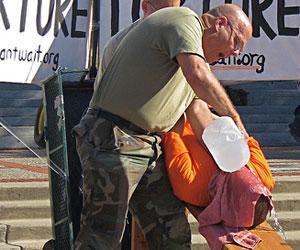
Murder, torture, abuse… and photos of the same. We’ve seen some of them, of course. Now, evidently under pressure from his top generals, President Obama has decided to fight the release of other grim photos from the dark side of the Bush years of offshore injustice—on the grounds that their publication might inflame opinion in the Middle East and our various war zones (as if fighting to suppress their publication won’t). In this way, just as the president is in the process of making Bush’s wars his own, so he seems to be making much of the nightmare legacy of those years of crime, torture, and cover-up his, too.
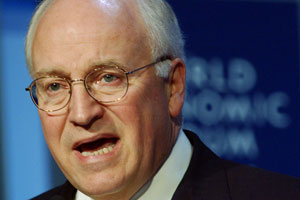
The photos his Justice Department will fight to suppress (for how long or how successfully we don’t yet know) are now officially “his”; next, assumedly, come those military commissions, suspended as Obama took office, which are evidently about to be reborn as Obama era tools of injustice. (This brings to mind, in grimmer form, the old saw about how military justice is to justice as military music is to music.) And with those commissions comes that wonderfully un-Constitutional idea of detaining chosen prisoners indefinitely either entirely without trial or with trials that will be mockeries. And with that, evidently, goes the idea of possibly setting up some sort of new “national security court” to try some detainees. (Keep in mind that the Obama administration is already hanging on tightly to Dick Cheney’s “state secrets” privilege to block various lawsuits by those wronged in all sorts of ways in the Bush years.)
In other words, if you can’t go to court and get the punishments you want, the solution is simply to create courts jiggered in such a way (and surrounded by enough secrecy) that you’ll get the decisions you desire. If that isn’t a striking definition of American justice, I don’t know what is.
Obama’s national security world is now coming into view—and it’s not a pretty picture, but then, as Noam Chomsky points out, in a tour de force piece below, it hasn’t been a pretty picture for a long, long time. Tom
Why We Can’t See the Trees or the Forest
The Torture Memos and Historical Amnesia
By Noam Chomsky
The torture memos released by the White House elicited shock, indignation, and surprise. The shock and indignation are understandable. The surprise, less so.
For one thing, even without inquiry, it was reasonable to suppose that Guantanamo was a torture chamber. Why else send prisoners where they would be beyond the reach of the law—a place, incidentally, that Washington is using in violation of a treaty forced on Cuba at the point of a gun? Security reasons were, of course, alleged, but they remain hard to take seriously. The same expectations held for the Bush administration’s “black sites,” or secret prisons, and for extraordinary rendition, and they were fulfilled.
More importantly, torture has been routinely practiced from the early days of the conquest of the national territory, and continued to be used as the imperial ventures of the “infant empire”—as George Washington called the new republic—extended to the Philippines, Haiti, and elsewhere. Keep in mind as well that torture was the least of the many crimes of aggression, terror, subversion, and economic strangulation that have darkened U.S. history, much as in the case of other great powers.
Accordingly, what’s surprising is to see the reactions to the release of those Justice Department memos, even by some of the most eloquent and forthright critics of Bush malfeasance: Paul Krugman, for example, writing that we used to be “a nation of moral ideals” and never before Bush “have our leaders so utterly betrayed everything our nation stands for.” To say the least, that common view reflects a rather slanted version of American history.
Occasionally the conflict between “what we stand for” and “what we do” has been forthrightly addressed. One distinguished scholar who undertook the task at hand was Hans Morgenthau, a founder of realist international relations theory. In a classic study published in 1964 in the glow of Camelot, Morgenthau developed the standard view that the U.S. has a “transcendent purpose”: establishing peace and freedom at home and indeed everywhere, since “the arena within which the United States must defend and promote its purpose has become world-wide.” But as a scrupulous scholar, he also recognized that the historical record was radically inconsistent with that “transcendent purpose.”
We should not be misled by that discrepancy, advised Morgenthau; we should not “confound the abuse of reality with reality itself.” Reality is the unachieved “national purpose” revealed by “the evidence of history as our minds reflect it.” What actually happened was merely the “abuse of reality.”
The release of the torture memos led others to recognize the problem. In the New York Times, columnist Roger Cohen reviewed a new book, The Myth of American Exceptionalism, by British journalist Geoffrey Hodgson, who concludes that the U.S. is “just one great, but imperfect, country among others.” Cohen agrees that the evidence supports Hodgson’s judgment, but nonetheless regards as fundamentally mistaken Hodgson’s failure to understand that “America was born as an idea, and so it has to carry that idea forward.” The American idea is revealed in the country’s birth as a “city on a hill,” an “inspirational notion” that resides “deep in the American psyche,” and by “the distinctive spirit of American individualism and enterprise” demonstrated in the Western expansion. Hodgson’s error, it seems, is that he is keeping to “the distortions of the American idea,” “the abuse of reality.”
Let us then turn to “reality itself”: the “idea” of America from its earliest days.
“Come Over and Help Us”
The inspirational phrase “city on a hill” was coined by John Winthrop in 1630, borrowing from the Gospels, and outlining the glorious future of a new nation “ordained by God.” One year earlier his Massachusetts Bay Colony created its Great Seal. It depicted an Indian with a scroll coming out of his mouth. On that scroll are the words “Come over and help us.” The British colonists were thus pictured as benevolent humanists, responding to the pleas of the miserable natives to be rescued from their bitter pagan fate.
The Great Seal is, in fact, a graphic representation of “the idea of America,” from its birth. It should be exhumed from the depths of the psyche and displayed on the walls of every classroom. It should certainly appear in the background of all of the Kim Il-Sung-style worship of that savage murderer and torturer Ronald Reagan, who blissfully described himself as the leader of a “shining city on the hill,” while orchestrating some of the more ghastly crimes of his years in office, notoriously in Central America but elsewhere as well.
The Great Seal was an early proclamation of “humanitarian intervention,” to use the currently fashionable phrase. As has commonly been the case since, the “humanitarian intervention” led to a catastrophe for the alleged beneficiaries. The first Secretary of War, General Henry Knox, described “the utter extirpation of all the Indians in most populous parts of the Union” by means “more destructive to the Indian natives than the conduct of the conquerors of Mexico and Peru.”
Long after his own significant contributions to the process were past, John Quincy Adams deplored the fate of “that hapless race of native Americans, which we are exterminating with such merciless and perfidious cruelty… among the heinous sins of this nation, for which I believe God will one day bring [it] to judgement.” The “merciless and perfidious cruelty” continued until “the West was won.” Instead of God’s judgment, the heinous sins today bring only praise for the fulfillment of the American “idea.”
The conquest and settling of the West indeed showed that “individualism and enterprise,” so praised by Roger Cohen. Settler-colonialist enterprises, the cruelest form of imperialism, commonly do. The results were hailed by the respected and influential Senator Henry Cabot Lodge in 1898. Calling for intervention in Cuba, Lodge lauded our record “of conquest, colonization, and territorial expansion unequalled by any people in the 19th century,” and urged that it is “not to be curbed now,” as the Cubans too were pleading, in the Great Seal’s words, “come over and help us.”
Their plea was answered. The U.S. sent troops, thereby preventing Cuba’s liberation from Spain and turning it into a virtual colony, as it remained until 1959.
 The “American idea” was illustrated further by the remarkable campaign, initiated by the Eisenhower administration virtually at once to restore Cuba to its proper place, after Fidel Castro entered Havana in January 1959, finally liberating the island from foreign domination, with enormous popular support, as Washington ruefully conceded. What followed was economic warfare with the clearly articulated aim of punishing the Cuban population so that they would overthrow the disobedient Castro government, invasion, the dedication of the Kennedy brothers to bringing “the terrors of the earth” to Cuba (the phrase of historian Arthur Schlesinger in his biography of Robert Kennedy, who considered that task one of his highest priorities), and other crimes continuing to the present, in defiance of virtually unanimous world opinion.
American imperialism is often traced to the takeover of Cuba, Puerto Rico, and Hawaii in 1898. But that is to succumb to what historian of imperialism Bernard Porter calls “the saltwater fallacy,” the idea that conquest only becomes imperialism when it crosses saltwater. Thus, if the Mississippi had resembled the Irish Sea, Western expansion would have been imperialism. From George Washington to Henry Cabot Lodge, those engaged in the enterprise had a clearer grasp of just what they were doing.
After the success of humanitarian intervention in Cuba in 1898, the next step in the mission assigned by Providence was to confer “the blessings of liberty and civilization upon all the rescued peoples” of the Philippines (in the words of the platform of Lodge’s Republican party)—at least those who survived the murderous onslaught and widespread use of torture and other atrocities that accompanied it. These fortunate souls were left to the mercies of the U.S.-established Philippine constabulary within a newly devised model of colonial domination, relying on security forces trained and equipped for sophisticated modes of surveillance, intimidation, and violence. Similar models would be adopted in many other areas where the U.S. imposed brutal National Guards and other client forces.
The Torture Paradigm
Over the past 60 years, victims worldwide have endured the CIA’s “torture paradigm,” developed at a cost that reached $1 billion annually, according to historian Alfred McCoy in his book A Question of Torture. He shows how torture methods the CIA developed from the 1950s surfaced with little change in the infamous photos at Iraq’s Abu Ghraib prison. There is no hyperbole in the title of Jennifer Harbury’s penetrating study of the U.S. torture record: Truth, Torture, and the American Way. So it is highly misleading, to say the least, when investigators of the Bush gang’s descent into the global sewers lament that “in waging the war against terrorism, America had lost its way.”
None of this is to say that Bush-Cheney-Rumsfeld et al. did not introduce important innovations. In ordinary American practice, torture was largely farmed out to subsidiaries, not carried out by Americans directly in their own government-established torture chambers. As Allan Nairn, who has carried out some of the most revealing and courageous investigations of torture, points out: “What the Obama [ban on torture] ostensibly knocks off is that small percentage of torture now done by Americans while retaining the overwhelming bulk of the system’s torture, which is done by foreigners under U.S. patronage. Obama could stop backing foreign forces that torture, but he has chosen not to do so.”
Obama did not shut down the practice of torture, Nairn observes, but “merely repositioned it,” restoring it to the American norm, a matter of indifference to the victims. “[H]is is a return to the status quo ante,” writes Nairn, “the torture regime of Ford through Clinton, which, year by year, often produced more U.S.-backed strapped-down agony than was produced during the Bush/Cheney years.”
Sometimes the American engagement in torture was even more indirect. In a 1980 study, Latin Americanist Lars Schoultz found that U.S. aid “has tended to flow disproportionately to Latin American governments which torture their citizens,… to the hemisphere’s relatively egregious violators of fundamental human rights.” Broader studies by Edward Herman found the same correlation, and also suggested an explanation. Not surprisingly, U.S. aid tends to correlate with a favorable climate for business operations, commonly improved by the murder of labor and peasant organizers and human rights activists and other such actions, yielding a secondary correlation between aid and egregious violation of human rights.
These studies took place before the Reagan years, when the topic was not worth studying because the correlations were so clear.
Small wonder that President Obama advises us to look forward, not backward—a convenient doctrine for those who hold the clubs. Those who are beaten by them tend to see the world differently, much to our annoyance.
Adopting Bush’s Positions
An argument can be made that implementation of the CIA’s “torture paradigm” never violated the 1984 Torture Convention, at least as Washington interpreted it. McCoy points out that the highly sophisticated CIA paradigm developed at enormous cost in the 1950s and 1960s, based on the “KGB’s most devastating torture technique,” kept primarily to mental torture, not crude physical torture, which was considered less effective in turning people into pliant vegetables.
McCoy writes that the Reagan administration then carefully revised the International Torture Convention “with four detailed diplomatic ‘reservations’ focused on just one word in the convention’s 26-printed pages,” the word “mental.” He continues: “These intricately-constructed diplomatic reservations re-defined torture, as interpreted by the United States, to exclude sensory deprivation and self-inflicted pain—the very techniques the CIA had refined at such great cost.”
When Clinton sent the UN Convention to Congress for ratification in 1994, he included the Reagan reservations. The president and Congress therefore exempted the core of the CIA torture paradigm from the U.S. interpretation of the Torture Convention; and those reservations, McCoy observes, were “reproduced verbatim in domestic legislation enacted to give legal force to the UN Convention.” That is the “political land mine” that “detonated with such phenomenal force” in the Abu Ghraib scandal and in the shameful Military Commissions Act that was passed with bipartisan support in 2006.
Bush, of course, went beyond his predecessors in authorizing prima facie violations of international law, and several of his extremist innovations were struck down by the Courts. While Obama, like Bush, eloquently affirms our unwavering commitment to international law, he seems intent on substantially reinstating the extremist Bush measures. In the important case of Boumediene v. Bush in June 2008, the Supreme Court rejected as unconstitutional the Bush administration claim that prisoners in Guantanamo are not entitled to the right of habeas corpus.
Salon.com columnist Glenn Greenwald reviews the aftermath. Seeking to “preserve the power to abduct people from around the world” and imprison them without due process, the Bush administration decided to ship them to the U.S. prison at Bagram Air Base in Afghanistan, treating “the Boumediene ruling, grounded in our most basic constitutional guarantees, as though it was some sort of a silly game—fly your abducted prisoners to Guantanamo and they have constitutional rights, but fly them instead to Bagram and you can disappear them forever with no judicial process.”
Obama adopted the Bush position, “filing a brief in federal court that, in two sentences, declared that it embraced the most extremist Bush theory on this issue,” arguing that prisoners flown to Bagram from anywhere in the world (in the case in question, Yemenis and Tunisians captured in Thailand and the United Arab Emirates) “can be imprisoned indefinitely with no rights of any kind—as long as they are kept in Bagram rather than Guantanamo.”
In March, however, a Bush-appointed federal judge “rejected the Bush/Obama position and held that the rationale of Boumediene applies every bit as much to Bagram as it does to Guantanamo.” The Obama administration announced that it would appeal the ruling, thus placing Obama’s Department of Justice, Greenwald concludes, “squarely to the Right of an extremely conservative, pro-executive-power, Bush 43-appointed judge on issues of executive power and due-process-less detentions,” in radical violation of Obama’s campaign promises and earlier stands.
The case of Rasul v. Rumsfeld appears to be following a similar trajectory. The plaintiffs charged that Rumsfeld and other high officials were responsible for their torture in Guantanamo, where they were sent after being captured by Uzbeki warlord Rashid Dostum. The plaintiffs claimed that they had traveled to Afghanistan to offer humanitarian relief. Dostum, a notorious thug, was then a leader of the Northern Alliance, the Afghan faction supported by Russia, Iran, India, Turkey, and the Central Asian states, and the U.S. as it attacked Afghanistan in October 2001.
Dostum turned them over to U.S. custody, allegedly for bounty money. The Bush administration sought to have the case dismissed. Recently, Obama’s Department of Justice filed a brief supporting the Bush position that government officials are not liable for torture and other violations of due process, on the grounds that the Courts had not yet clearly established the rights that prisoners enjoy.
It is also reported that the Obama administration intends to revive military commissions, one of the more severe violations of the rule of law during the Bush years. There is a reason, according to William Glaberson of the New York Times: “Officials who work on the Guantanamo issue say administration lawyers have become concerned that they would face significant obstacles to trying some terrorism suspects in federal courts. Judges might make it difficult to prosecute detainees who were subjected to brutal treatment or for prosecutors to use hearsay evidence gathered by intelligence agencies.” A serious flaw in the criminal justice system, it appears.
Creating Terrorists
There is still much debate about whether torture has been effective in eliciting information—the assumption being, apparently, that if it is effective, then it may be justified. By the same argument, when Nicaragua captured U.S. pilot Eugene Hasenfuss in 1986, after shooting down his plane delivering aid to U.S.-supported Contra forces, they should not have tried him, found him guilty, and then sent him back to the U.S., as they did. Instead, they should have applied the CIA torture paradigm to try to extract information about other terrorist atrocities being planned and implemented in Washington, no small matter for a tiny, impoverished country under terrorist attack by the global superpower.
By the same standards, if the Nicaraguans had been able to capture the chief terrorism coordinator, John Negroponte, then U.S. ambassador in Honduras (later appointed as the first Director of National Intelligence, essentially counterterrorism czar, without eliciting a murmur), they should have done the same. Cuba would have been justified in acting similarly, had the Castro government been able to lay hands on the Kennedy brothers. There is no need to bring up what their victims should have done to Henry Kissinger, Ronald Reagan, and other leading terrorist commanders, whose exploits leave al-Qaeda in the dust, and who doubtless had ample information that could have prevented further “ticking bomb” attacks.
Such considerations never seem to arise in public discussion.
There is, to be sure, a response: our terrorism, even if surely terrorism, is benign, deriving as it does from the city on the hill.
Perhaps culpability would be greater, by prevailing moral standards, if it were discovered that Bush administration torture had cost American lives. That is, in fact, the conclusion drawn by Major Matthew Alexander [a pseudonym], one of the most seasoned U.S. interrogators in Iraq, who elicited “the information that led to the US military being able to locate Abu Musab al-Zarqawi, the head of al-Qa’ida in Iraq,” correspondent Patrick Cockburn reports.
Alexander expresses only contempt for the Bush administration’s harsh interrogation methods: “The use of torture by the U.S.,” he believes, not only elicits no useful information but “has proved so counter-productive that it may have led to the death of as many U.S. soldiers as civilians killed in 9/11.” From hundreds of interrogations, Alexander discovered that foreign fighters came to Iraq in reaction to the abuses at Guantanamo and Abu Ghraib, and that they and their domestic allies turned to suicide bombing and other terrorist acts for the same reasons.
There is also mounting evidence that the torture methods Dick Cheney and Donald Rumsfeld encouraged created terrorists. One carefully studied case is that of Abdallah al-Ajmi, who was locked up in Guantanamo on the charge of “engaging in two or three fire fights with the Northern Alliance.” He ended up in Afghanistan after having failed to reach Chechnya to fight against the Russians.
After four years of brutal treatment in Guantanamo, he was returned to Kuwait. He later found his way to Iraq and, in March 2008, drove a bomb-laden truck into an Iraqi military compound, killing himself and 13 soldiers—”the single most heinous act of violence committed by a former Guantanamo detainee,” according to the Washington Post, and according to his lawyer, the direct result of his abusive imprisonment.
All much as a reasonable person would expect.
Unexceptional Americans
Another standard pretext for torture is the context: the “war on terror” that Bush declared after 9/11. A crime that rendered traditional international law “quaint” and “obsolete”—so George W. Bush was advised by his legal counsel Alberto Gonzales, later appointed Attorney General. The doctrine has been widely reiterated in one form or another in commentary and analysis.
The 9/11 attack was doubtless unique in many respects. One is where the guns were pointing: typically it is in the opposite direction. In fact, it was the first attack of any consequence on the national territory of the United States since the British burned down Washington in 1814.
Another unique feature was the scale of terror perpetrated by a non-state actor.
Horrifying as it was, however, it could have been worse. Suppose that the perpetrators had bombed the White House, killed the president, and established a vicious military dictatorship that killed 50,000 to 100,000 people and tortured 700,000, set up a huge international terror center that carried out assassinations and helped impose comparable military dictatorships elsewhere, and implemented economic doctrines that so radically dismantled the economy that the state had to virtually take it over a few years later.
That would indeed have been far worse than September 11, 2001. And it happened in Salvador Allende’s Chile in what Latin Americans often call “the first 9/11” in 1973. (The numbers above were changed to per-capita U.S. equivalents, a realistic way of measuring crimes.) Responsibility for the military coup against Allende can be traced straight back to Washington. Accordingly, the otherwise quite appropriate analogy is out of consciousness here in the U.S., while the facts are consigned to the “abuse of reality” that the naïve call “history.”
It should also be recalled that Bush did not declare the “war on terror,” he re-declared it. Twenty years earlier, President Reagan’s administration came into office declaring that a centerpiece of its foreign policy would be a war on terror, “the plague of the modern age” and “a return to barbarism in our time”—to sample the fevered rhetoric of the day.
That first U.S. war on terror has also been deleted from historical consciousness, because the outcome cannot readily be incorporated into the canon: hundreds of thousands slaughtered in the ruined countries of Central America and many more elsewhere, among them an estimated 1.5 million dead in the terrorist wars sponsored in neighboring countries by Reagan’s favored ally, apartheid South Africa, which had to defend itself from Nelson Mandela’s African National Congress (ANC), one of the world’s “more notorious terrorist groups,” as Washington determined in 1988. In fairness, it should be added that, 20 years later, Congress voted to remove the ANC from the list of terrorist organizations, so that Mandela is now, at last, able to enter the U.S. without obtaining a waiver from the government.
The reigning doctrine of the country is sometimes called “American exceptionalism.” It is nothing of the sort. It is probably close to a universal habit among imperial powers. France was hailing its “civilizing mission” in its colonies, while the French Minister of War called for “exterminating the indigenous population” of Algeria. Britain’s nobility was a “novelty in the world,” John Stuart Mill declared, while urging that this angelic power delay no longer in completing its liberation of India.
Similarly, there is no reason to doubt the sincerity of Japanese militarists in the 1930s, who were bringing an “earthly paradise” to China under benign Japanese tutelage, as they carried out the rape of Nanking and their “burn all, loot all, kill all” campaigns in rural North China. History is replete with similar glorious episodes.
As long as such “exceptionalist” theses remain firmly implanted, however, the occasional revelations of the “abuse of history” often backfire, serving only to efface terrible crimes. The My Lai massacre was a mere footnote to the vastly greater atrocities of the post-Tet pacification programs, ignored while indignation in this country was largely focused on this single crime.
Watergate was doubtless criminal, but the furor over it displaced incomparably worse crimes at home and abroad, including the FBI-organized assassination of black organizer Fred Hampton as part of the infamous COINTELPRO repression, or the bombing of Cambodia, to mention just two egregious examples. Torture is hideous enough; the invasion of Iraq was a far worse crime. Quite commonly, selective atrocities have this function.
Historical amnesia is a dangerous phenomenon, not only because it undermines moral and intellectual integrity, but also because it lays the groundwork for crimes that still lie ahead.
Noam Chomsky is Institute Professor (retired) at MIT. He is the author of many books and articles on international affairs and social-political issues, and a long-time participant in activist movements.
[Note: A slightly longer version of this piece, fully footnoted, will be posted at Chomsky.info within 48 hours.]