Image: Tom Uhlman/Gamma Liaison
No. 4
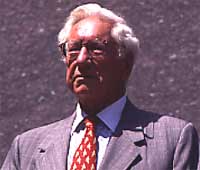
Carl H. Lindner
Last year’s rank: No. 55, Cincinnati, Ohio, $536,000 (with wife, Edyth) 

Lindner, 79, is the CEO of Chiquita Brands International.
If Chiquita Brands International wasn’t already the acknowledged heavyweight in the banana market, it is now, thanks to the Cincinnati Enquirer’s 18-page investigation last May into allegedly questionable business practices in Chiquita’s Central American operations.
The new reputation for muscle, however, comes less from the allegations of dubious land deals, cover-ups, and poor treatment of plantation workers than from CEO Carl Lindner’s don’t-mess-with-me response. After Chiquita got wind of the Enquirer’s investigation, it alerted its lawyers (none other than Kenneth Starr’s law firm, Kirkland & Ellis) to run interference. Then, just eight weeks after publication, the Enquirer retracted the report by running three front-page apologies, firing reporter Michael Gallagher, and agreeing to pay a cash settlement in excess of $10 million. Lindner and his company emerged thoroughly vindicated.
After all, the Cincinnati business titan has a reputation to protect — in addition to Chiquita, Lindner’s holding company, American Financial Group, includes Great American Insurance; he is a minority owner of the Cincinnati Reds; and he is a majority owner in Provident Bank. Along with his generosity to certain social causes, universities, and museums (it’s difficult to spit in Cincinnati without hitting a building with his name on it), Lindner is a longtime political giver, and he doesn’t take risks. Despite his conservative leanings, he invests in both parties. From January 1997 through August of this year, he and his wife, Edyth, gave $360,000 to Republicans and $176,000 to Democrats.
No doubt this political largesse hasn’t hurt Lindner’s banana empire. In 1996, with the support of the Republican Congress, then-U.S. Trade Representative Mickey Kantor brought a formal complaint before the World Trade Organization against the European Union, alleging that its banana quota system violated global trade accords. The quotas, implemented in 1993, required EU countries to import bananas from their former Caribbean colonies. Chiquita has blamed net losses of more than $350 million since ’92 in part on its restricted access to the EU market.
Last year, under continued pressure from the United States, the WTO ruled against the EU (which has argued that the quotas are vital to the Caribbean economies) and said it must comply with the new standards by 1999.