• Donald Trump Sure Seems to Like Russia a Lot, Doesn’t He?

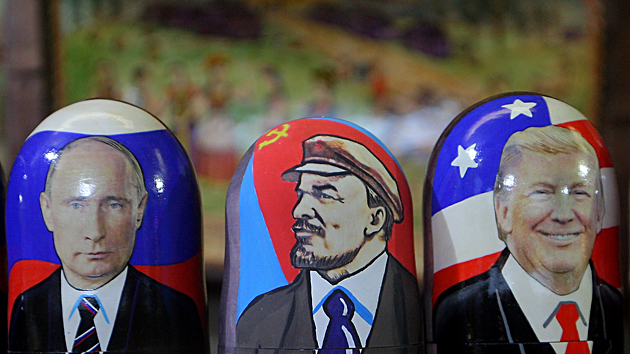
    Danil Shamkin/NurPhoto via ZUMA

    Josh Marshall verbalizes today what’s been on my mind—and many other minds—for at least the past year:

    Over the course of 16+ months, President Trump has acted consistently and with some success to destabilize and break up the western alliance — both its formal manifestation in NATO but also its less formal dimensions in trade and other partnerships. He has also worked consistently on really every front to advance the interests of Russia.

    Less obviously to many Americans, he’s been doing something similar in East Asia. The U.S. alliance with Japan and South Korea…is not simply to protect against North Korea. It is to build a series of security relationships with countries on that periphery to act as a counterweight to the regional (perhaps world) great power, China.

    ….The last twenty four hours of attacks on our closest allies capped by President Trump’s seemingly out of the blue demand to bring Russia back into the G-7 (making it again the G-8 which it was for most of the post-Cold War era until Russia was expelled over the annexation of Crimea) simply brings the matter into a newly sharp relief. If candidate Trump and President Putin had made a corrupt bargain which obligated President Trump to destabilize all U.S. security and trade alliances (especially NATO, which has been Russia’s primary strategic goal for 70 years) and advance the strategic interests of Russia, there’s really nothing more remotely realistic he could have done to accomplish that than what he has in fact done.

    Take a moment to let that sink in. I need to take a moment to let it sink in. It’s shocking to me. It’s shocking to me what’s happening….We have a President who clearly got a great deal of assistance from Russia in getting elected….He’s doing all the stuff he’d have been asked to do if such a corrupt bargain had been made. At a certain point — and I’d say we’re clearly at or past that point — it really doesn’t matter whether we can prove such a bargain was made. I’m not even sure it matters whether it was explicit or even happened. The bank robber helped the teller get the job and now the teller just won’t seem to lock the safe or even turn on the alarm. We can debate forever whether the teller is just absent-minded or has some odd philosophical aversion toward locks. The debate may be unresolvable. It truly doesn’t matter.

    I’m not an unreconstructed Cold Warrior who hates Russia, and I’m sure Josh isn’t either. Nevertheless, Vladimir Putin is unquestionably a bad guy: he rigs elections, he tosses critics into prison, he’s built his populist cred on horrifically homophobic policy, he shuts down any media he doesn’t control, he threatens his neighbors, and he rules as an autocrat. It’s certainly no wonder that Trump seems to admire him. It’s pretty plain that Trump would like to rule that way too if he could figure out a way to do it.

    But it’s worth noting that this isn’t just about Russia. If Trump came to office and started doing everything in his power to help France and hurt the rest of Europe, that would hardly be any better, even if France is currently a more admirable country than Russia. An American president isn’t obligated to literally ignore the interests of the rest of the world, but an American president is supposed to generally put America’s interests first. Trump talks about that constantly, but he sure doesn’t seem to do it in practice.

    But if there’s anything even worse about this, it’s the fact that the Republican Party just doesn’t seem to care. A few of them speak out occasionally, usually if they’ve decided not to run for reelection, but that’s about it. Trump is dedicated to total support of Israel, and that by itself seems to be about the only foreign policy issue that matters to them anymore. Russia, China, free trade, NATO—meh. As long as Trump keeps selling plenty of hardware to Israel and delivering lots of right-wing judges to the Senate, they’re happy enough.

    Yes, it’s shocking. And it’s even more shocking that we’ve gotten to the point where it hardly even seems that shocking anymore.
  • A Look At Income Inequality Around the World: It’s a Choice, Not a Destiny

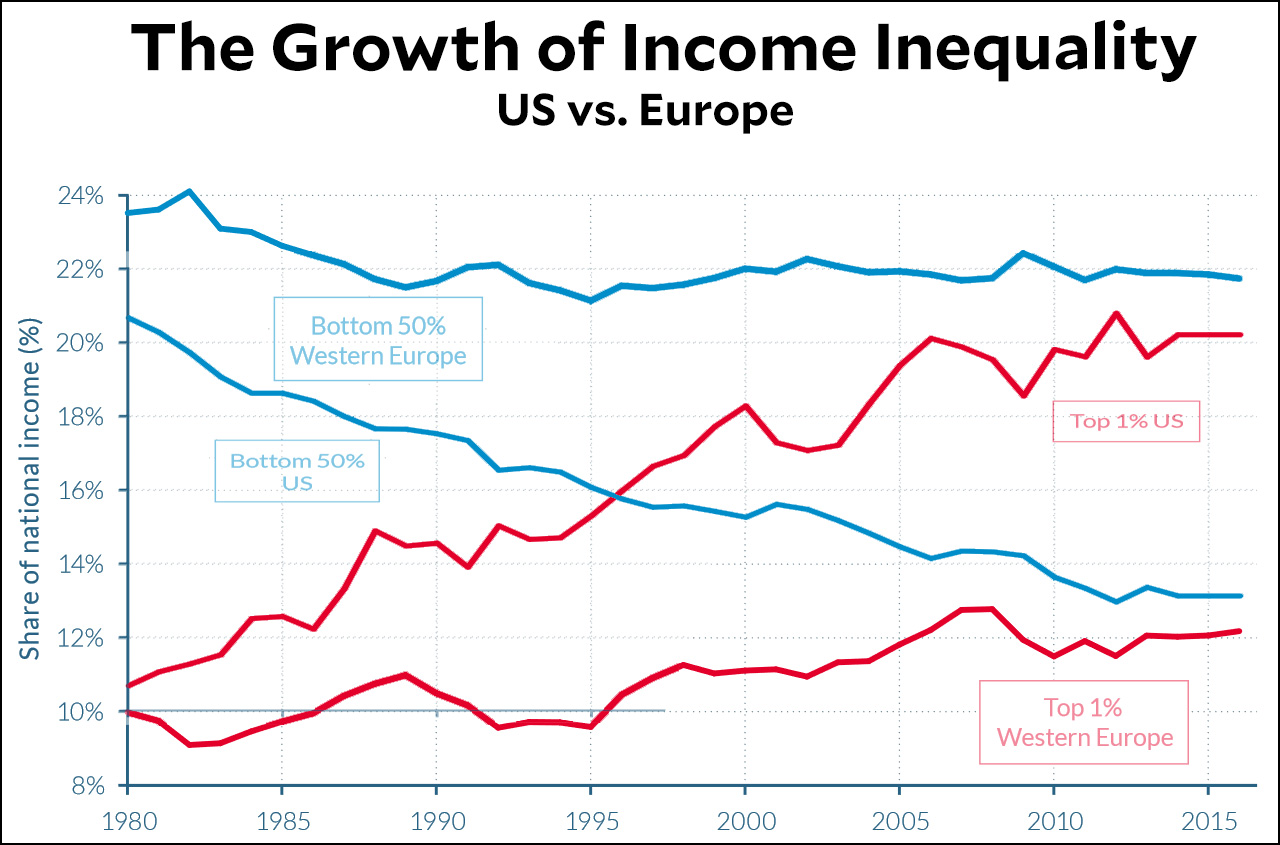
    The World Inequality Database is out with its 2018 report, and of course not much has changed. After all, how much could it change in a single year? Still, we don’t often venture outside the US when we talk about income inequality, so it’s worth taking a look around the world occasionally. First up, here is the US vs. Europe:

    Income inequality has grown in Europe, but not nearly as dramatically as in the US. In both places, the rich started out with roughly a 10 percent share of national income, but by 2016 that had increased to only 12 percent in Europe while it skyrocketed to 20 percent in the US. Likewise, the middle class in Europe started out with a 24 percent share of income and now have 22 percent. The American middle class can only dream of such largesse. They started out with a lower share of income than their European comrades and have since plummeted to about 13 percent. Obviously, growing inequality isn’t inevitable: it’s the result of very deliberate policy choices

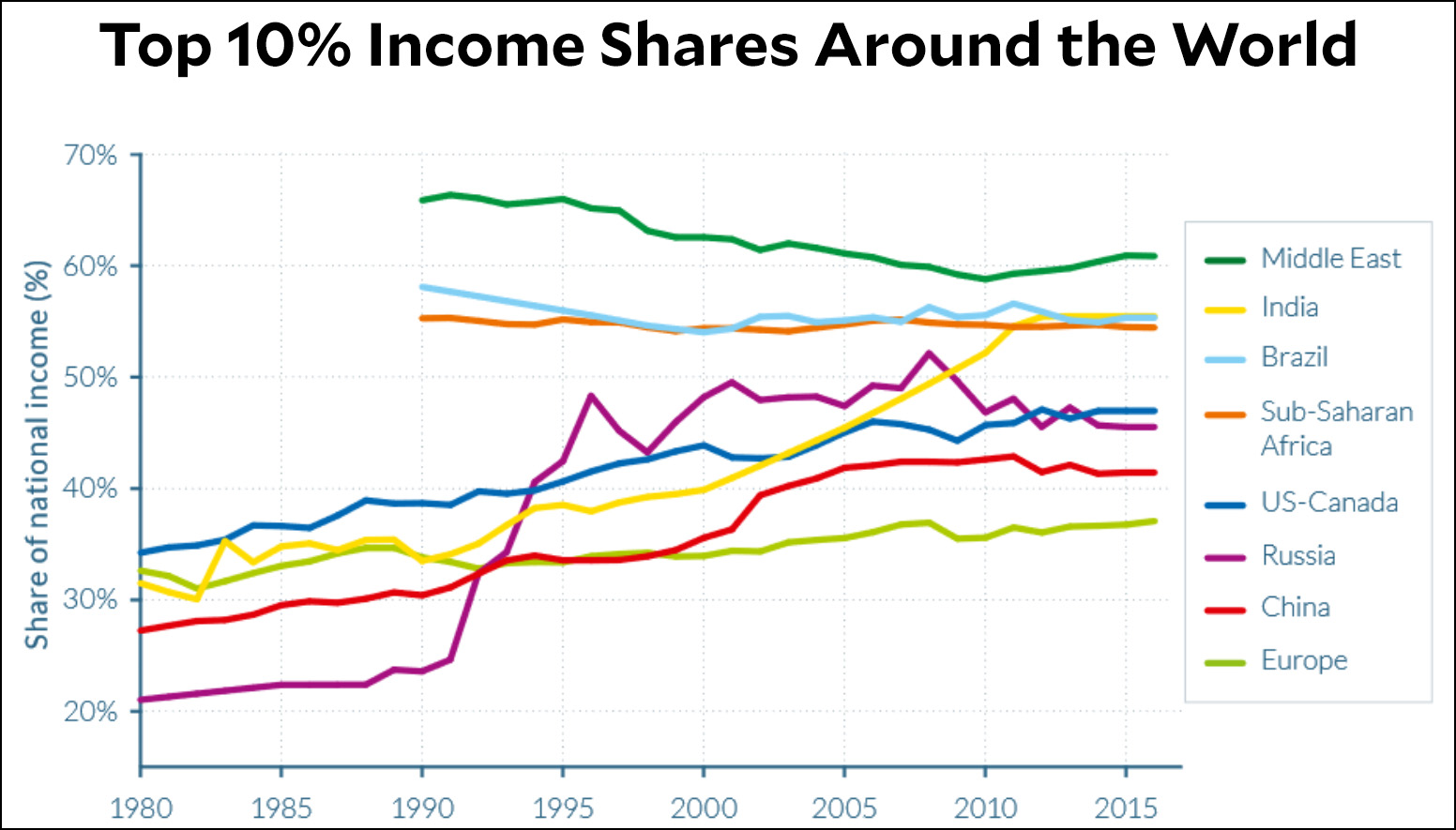
    Now let’s widen our view even more and look at the entire world:

    The Middle East, Brazil, and Africa started out with the highest inequality in the world, but at least they’ve come down a bit since 1990. Russian income inequality skyrocketed in the 90s when Boris Yeltsin and his American advisors basically gave away the entire country to the oligarchs. India went crazy starting around 1990, while income inequality in China and the US has been steadily increasing the entire time, kicked off by Ronald Reagan in the US and Deng Xiaoping in China. Meanwhile, only Europe has made a real effort to rein in the effects of globalization, financialization, and liberated capital.

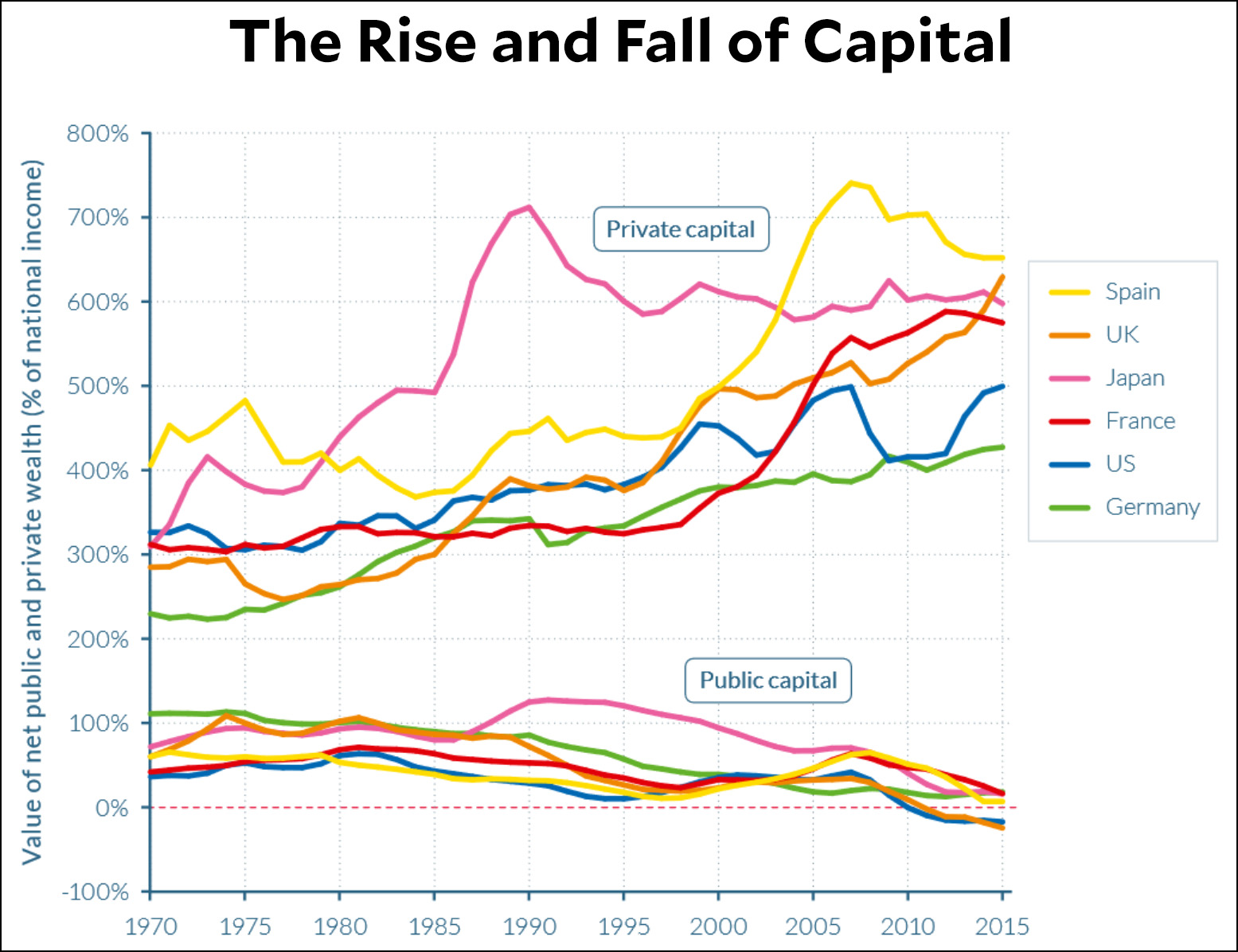
    And speaking of liberated capital, check out this chart:

    Public capital has shrunk nearly to zero nearly everywhere since 1970. In fact, it’s shrunk to less than zero in the US and Britain. So who has all the capital now? Private wealth holders, of course.

    You can download the full report here, or the executive summary here, in English, French, or Chinese.

  • Can a Canadian Company Put an End to the Era of Oil?

    Carbon Engineering

    Over at the Atlantic, Robinson Meyer describes a new process for creating fuel that releases no net CO2:

    First, outside air is sucked into the factory’s “contactors” and exposed to an alkaline liquid….Second, the now-watery liquid (containing carbon dioxide) is brought into the factory, where it undergoes a series of chemical reactions to separate the base from the acid….Finally, the carbon dioxide is combined with hydrogen and converted into liquid fuels, including gasoline, diesel, and jet fuel.

    ….What does that mean? Consider an example: If you were to burn Carbon Engineering’s gas in your car, you would release carbon-dioxide pollution out of your tailpipe and into Earth’s atmosphere. But as this carbon dioxide came from the air in the first place, these emissions would not introduce any new CO2 to the atmosphere. Nor would any new oil have to be mined to power your car.

    “Nor would any new oil have to be mined to power your car.” That sounds a bit like burying the lead, doesn’t it? Anyway, this new process sounds great, but the article skips a wee little step. Where does all the hydrogen come from?

    Electrolysis of some kind, I suppose, or some other method of splitting water into hydrogen and oxygen. But that takes a lot of energy. That’s why we don’t have cheap, plentiful synthetic gasoline already. But then again, there’s this from last year:

    University of Houston physicists have discovered a catalyst that can split water into hydrogen and oxygen, composed of easily available, low-cost materials and operating far more efficiently than previous catalysts.

    ….The catalyst, composed of ferrous metaphosphate grown on a conductive nickel foam platform, is far more efficient than previous catalysts, as well as less expensive to produce. “Cost-wise, it is much lower and performance-wise, much better,” said Zhifeng Ren, M.D. Anderson professor of physics and lead author on the paper. The catalyst also is durable, operating more than 20 hours and 10,000 cycles in testing.

    There’s a lot of research going into more energy-efficient ways of splitting hydrogen out of water, and hydrogen is relatively easy to store. As usual, the key to all this is how well it scales and how much it really costs once you put everything together. But even if this is one of those things that’s still five or ten years away, it’s promising news anyway.

  • Donald Trump Takes Aim at Pre-Existing Conditions

    Jim West via ZUMA

    The Trump administration’s desperate desire to deprive Americans of health care entered a new phase tonight when Donald Trump personally approved a decision by the Justice Department not to defend Obamacare against state lawsuits:

    In a brief filed in a Texas federal court and an accompanying letter to the House and Senate leaders of both parties, the Justice Department agrees in large part with the 20 Republican-led states who brought the suit. They contend that the ACA provision requiring most Americans to carry health insurance soon will no longer be constitutional and that, as a result, consumer insurance protections under the law will not be valid either.

    ….The administration does not go as far as the Texas attorney general and his counterparts. In their suit, lodged in February in the U.S. District Court for the Northern District of Texas, they argue that the entire law is now invalid. By contrast, the Justice brief and letter say many other aspects of the law can survive because they can be considered legally distinct from the insurance mandate and such consumer protections as a ban on charging more or refusing coverage to people with preexisting medical conditions.

    ….In an unusual filing just before 6 p.m. Thursday, when the brief was due, the three career Justice attorneys involved in the case — Joel McElvain, Eric Beckenhauer and Rebecca Kopplin — withdrew.

    A few points:

    • It is very unusual—in fact, virtually unprecedented—for the Justice Department not to defend a law.
    • DOJ is joining an unusually frivolous effort. The states claim that with the mandate tax now repealed, the mandate itself has also been repealed. And if there’s no mandate, then forcing insurers to cover pre-existing conditions is no longer valid either. This makes no sense.
    • Senseless or not, both Trump and other Republicans have stated repeatedly that they’re all in favor of prohibiting insurers from discriminating against patients with pre-existing conditions. Now they’re explicitly trying to allow it.

    And check out this tweet from the middle of an Andy Slavitt tweetstorm:

    Of course they don’t want it to go into effect before the election. That would generate lots of newspaper headlines and make people mad. Instead, they want to pretend that they have a shiny new ban on pre-existing conditions all ready to go, so there’s nothing to worry about. A few days after the election, if they get the ruling they want and remain in control of Congress, they will conveniently be unable to pass anything through either house.

    Of course, probably none of this matters. Any decision would almost certainly be stayed and appealed immediately, and eventually make its way to the Supreme Court. It’s unlikely the present court would waste time on a subject they’ve already spent so much time on, but you never know when a justice will retire or die, opening up a slot for a conservative willing to vote for anything as long as it cripples Obamacare. In a normal world, nobody would have to worry about petty nonsense like these lawsuits. But we don’t live in a normal world anymore.

  • It’s Not Just the US Where Suicide Rates Are on the Rise

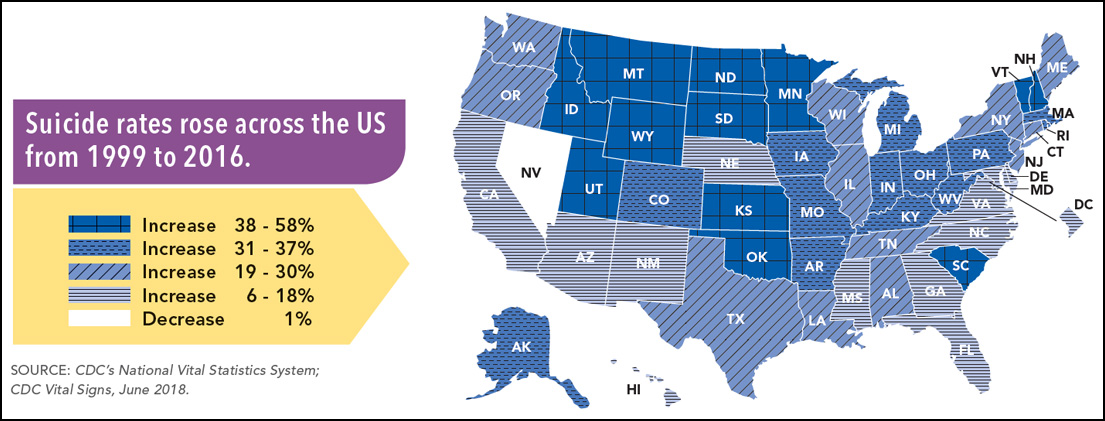
    Every newspaper in America seems to be highlighting the current issue of Vital Signs, in which the CDC announced that suicide rates have gone up by more than 30 percent in half of all states since 1999:

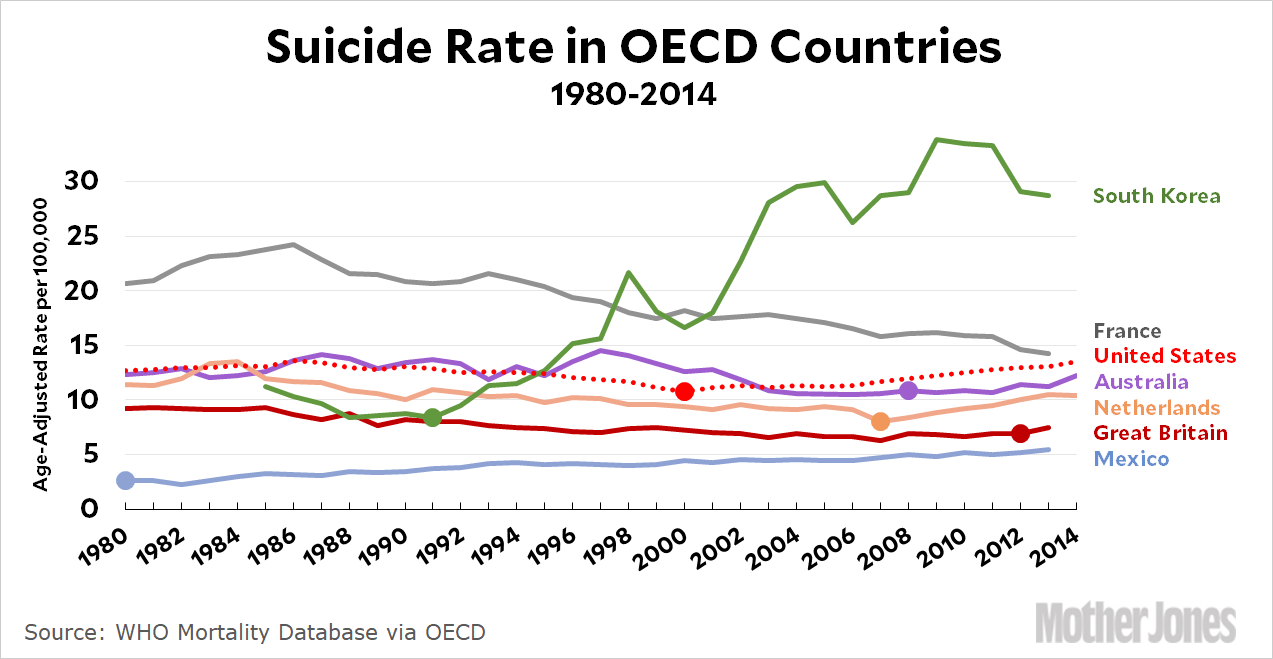
    The biggest increases are in small-population states in the upper plains, so the overall suicide rate is closer to 25 percent than 30+. However, that’s still a big increase, and most advanced countries have seen flat or declining suicide rates during this period. However, that’s not true of all countries. There are a number of peer countries that have also shown increases:

    The big dot in each line indicates the year that suicide rates started to turn up. Generally, speaking, the US rate started rising earlier and more steeply than most countries. However, suicide rates in Mexico and South Korea had already been rising for years by the time the upward trend began in the US. Italy (not shown) followed suit in 2006, the Netherlands in 2007, Australia in 2008, and Great Britain in 2012. France, conversely, started high but has been dropping for decades. Germany, Scandinavia, and Canada (not shown) have all been down or flat too.

    South Korea and Mexico may have measurement issues, and the other countries on the rise have shown only small increases. The United States really is an outlier here. Still, it’s not a total outlier, and there are definitely some upward trends in suicide elsewhere in the world. More research, please.

  • The Omani Rial Mystery — Solved!

    Responding to my bank mystery earlier today, a reader with lots of currency trading experience emails with an explanation for why Iran’s $5.7 billion in Oman had to go through a 3-step transfer (rials —> dollars —> euros) to be converted into euros. Here’s the main point:

    Assuming that Bank Muscat had sufficient liquidity, they could have simply transferred the EUR equivalent of USD 5.7 billion to Iran. This would, however, have lead to a significant mismatch in Muscat Bank’s balance sheet. The mismatch would have occurred because banks are de facto required to maintain a balance between their assets and liabilities on a per currency basis…. Sending out EUR to Iran would have reduced its EUR assets, while cancelling its OMR liability (the deposit of Iran) would have reduced an OMR liability. This would have created a situation where Bank Muscat was long OMR and short EUR. In order to restore the required balance on a per currency basis, Bank Muscat would have needed to trade (in one or more steps) OMR  for EUR. Given the size, they likely would have needed to do this in advance of the transfer of EUR to Iran.

    So, Bank Muscat would have needed to make a market transaction to balance its currency risks in order to send out the funds. This transaction would have been absolutely enormous for Bank Muscat. According to Wikipedia, it has USD 28 billion or so in assets. I cannot emphasize enough that the required foreign exchange trade would have been huge and unusual….It is also worth noting that the OMR to EUR market is illiquid, meaning, in this case, that there are not sufficient customers for any bank wishing to buy OMR in exchange for EUR for the market to have satisfied that order at any price.

    Primarily, then, we have a tiny bank that couldn’t possibly conduct a huge trade in a currency pair that’s illiquid to begin with. It’s too risky, assuming they could even do it in the first place. And even though the Treasury Department granted a license and urged American banks to cooperate in the 3-step trade, none of them wanted to. They’ve been trained to be so wary of Iranian business that they were afraid of someday being hauled up on charges of failing to comply with sanctions no matter what fancy paperwork Treasury had given them.

    Fine. That makes sense unless someone comes up with something better. But it raises another question: Why did Iran park $5.7 billion in a tiny bank in Oman? Surely there were bigger banks around that were friendly enough to manage the funds for them?

  • Today I Bring You a Mini Health Care Mystery Starring . . . Tylenol!

    Vince Talotta/The Toronto Star/ZUMA

    Here’s a peculiar health care story. It is extremely non-momentous, but entertaining in its own way. I’m not sure if there are any lessons to be drawn from it.

    Every Thursday I go to my local infusion center for chemotherapy. However, I’m supposed to wake up early and take both Zyrtec and the evil dex a couple of hours before I go in.

    So I did this on the first day, and when I got there they gave me a couple of Tylenol just in case the meds produce a fever. No problem. I gulped them down. Then this:

    OK, I’m ready to go.

    First we have to wait an hour for the Tylenol to kick in.

    Wait. What? I’m taking all this other stuff beforehand, why not take the Tylenol at home too?

    Oh, they have us give the Tylenol here.

    But if you trust me take the other stuff, why not trust me to take the Tylenol?

    Um…no one’s ever asked that before.

    I’ll be the first! Next week can I take the Tylenol at home so we can start right away?

    Well…

    A couple of hours later, the nurse came by and whispered to me in faux conspiratorial tones: Go ahead and take the Tylenol at home next week. Better to beg forgiveness than ask permission, eh?

    So I did and there was indeed no problem. I did the same this week, and happened to have a nurse I’ve never seen before:

    Did you take your meds?

    You bet. Zyrtec, dex, and Tylenol.

    [Eyes little cup of Tylenol she already has out.] Oh, you took the Tylenol too?

    You bet.

    You’re the first person who’s ever done that! We can get started right away.

    So what’s the deal here? Taking the Tylenol at home seems obvious. It occurred to me immediately because—well, truthfully, because it instantly tripped my annoyance alarm. But annoyance aside, taking the Tylenol at home does cut down the visit by an hour. That’s good for the patients (nobody wants to while away their day in an infusion center) and good for the infusion center (it opens up a chair sooner).

    How is it possible that no one has ever thought of this before? The nurses seemed genuinely surprised when I asked about it, and it can’t be part of an explicit procedure since they agreed to change things for me. What’s more, they also seemed genuinely pleased by this revelation since it pretty obviously improves efficiency at no cost.

    Today’s nurse suggested that they administered the Tylenol because not everyone has Tylenol at home. True, but it’s cheap and easy to get. And that doesn’t explain why no patient has ever asked about this. What am I missing?

  • The Mystery of the Omani Rial

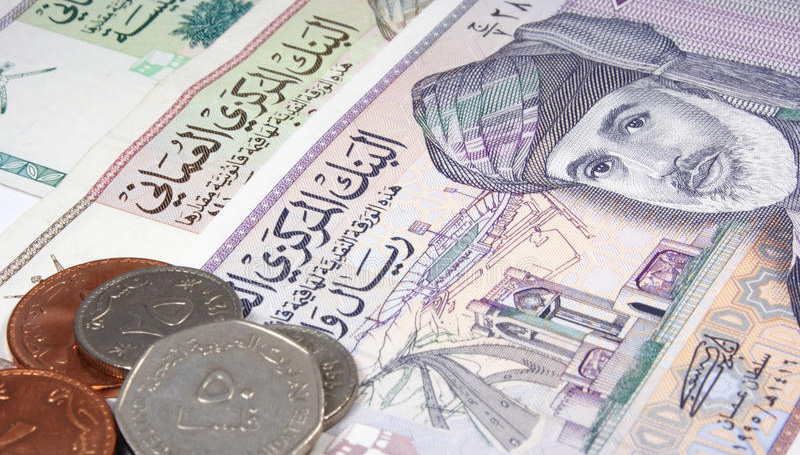
    Yesterday I learned that Republicans are still obsessed with alleged violations of the Iran deal even though President Trump has killed it off. Their latest outrage comes over an effort by the Obama Treasury Department to help Iran get access to its frozen funds, as required by the agreement. The problem was a simple one: Some of the funds were held at a bank in Oman, and Iran wanted to convert them to euros. This was a two-step process: first rials to dollars and then dollars to euros.

    But wait. Even after sanctions were lifted, Iran was banned from any access to the US financial system. That meant they couldn’t convert to and from dollars and therefore couldn’t get to their Omani funds. The Treasury Department eventually concluded that giving Iran access to its money took precedence and therefore looked into granting a one-time “license” that would allow a US bank to perform the conversion.

    In the end, even though the license was granted, no US bank was willing to conduct the transaction. Republicans nevertheless spent months investigating this Obama-era outrage. God only knows why, and I don’t care. But I am curious about this:

    In approaching the U.S. government, Bank Muscat claimed it would be impossible to complete Iran’s requested conversion to euros without first changing the Omani rials to U.S. dollars….A Bank Muscat executive also expressed frustration that the primary sanctions banning the use of the U.S. financial institution created a “challenge to convert one currency to another.”

    In this case, the primary hurdle was that the Omani rial is “pegged” to the U.S. dollar. In 1986, Oman created a fixed exchange rate and established a .38 Omani rial peg to the U.S. dollar.

    What’s the deal here? Why can’t Bank Muscat convert directly from rials to euros? And why does it matter that the rial is pegged to the dollar? Why wouldn’t, say, Credit Suisse be willing to accept rials in return for euros? Can someone with deep knowledge of currency conversion issues explain?

    As for why Republicans are hot and bothered about this, I suppose it’s just habit. Maybe it’s all for the best that they waste so much of their time on stuff like this.

  • The Gig Economy Is Basically a Myth

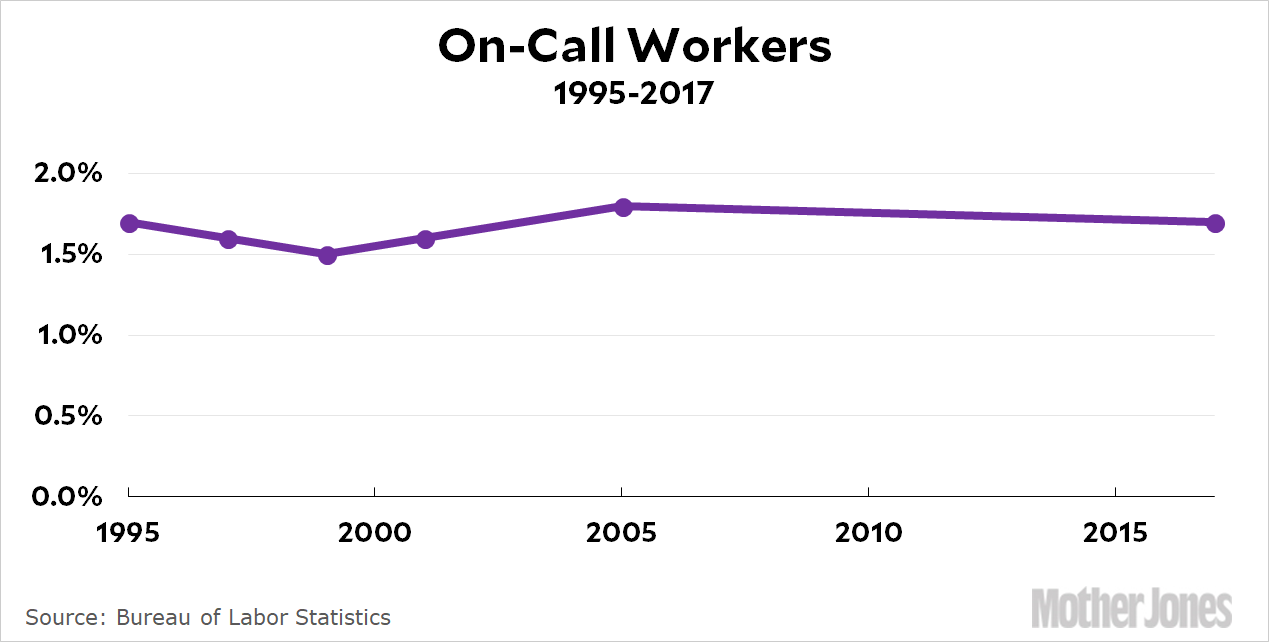
    The Bureau of Labor Statistics used to perform a contingent worker survey every couple of years, but they stopped doing it after 2005. Last year they started up again, which gives us a look at how the gig economy has grown since then. The closest category they have to “gig worker” is people who are on call for sporadic work, which looks like this:

    In a nutshell, nothing has changed. Uber drivers might get notified of work via an app instead of a phone call, but that’s about it.

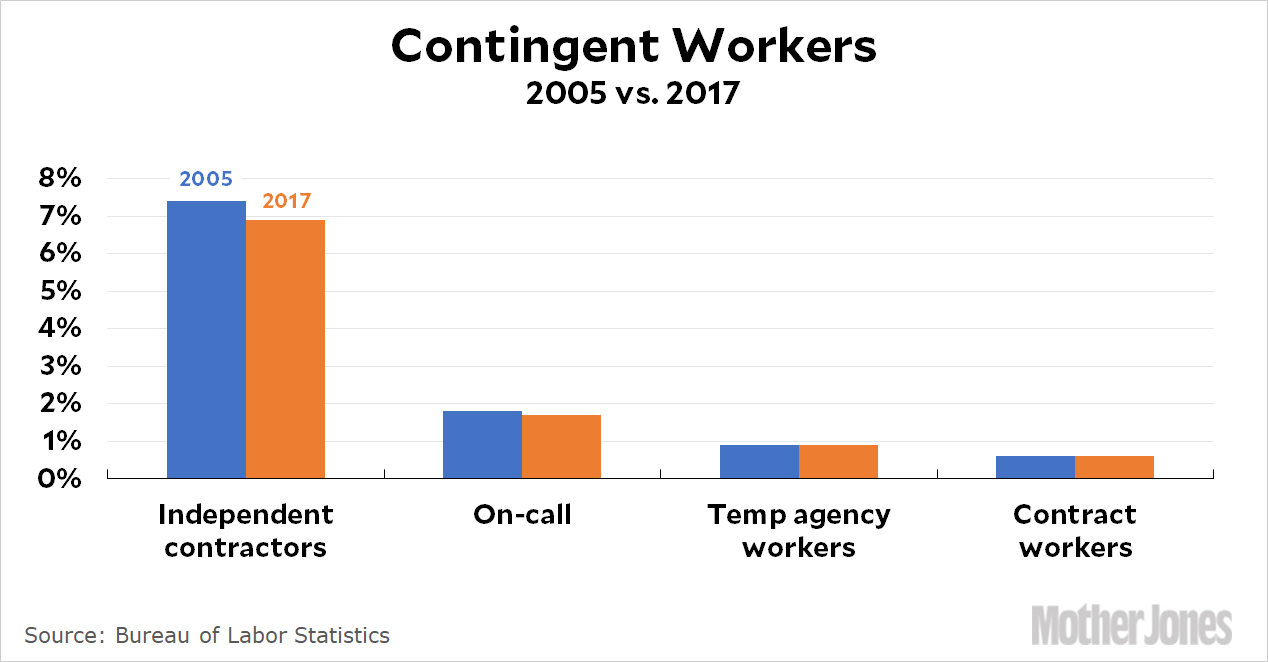
    The BLS has several other definitions of contingent workers, but they don’t make any difference. No matter how you define it, contingent work hasn’t changed much since 2005:

    Any way you slice it, the gig economy just isn’t a thing: it’s not large and it’s not growing. In fact, since Uber accounted for half these jobs in 2017 but none of them in 2005, it’s very likely that the non-Uber gig market has declined considerably over the past decade. The vast, vast majority of people want steady work, the same as they always have.