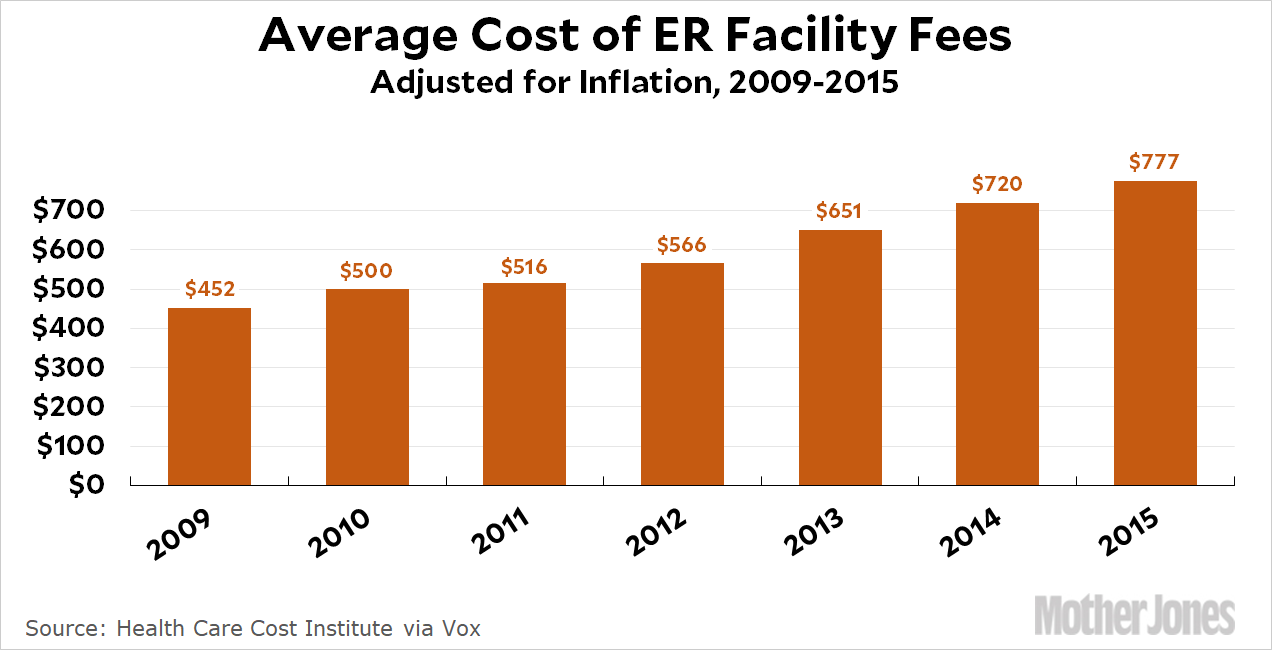
Over at Vox, Sarah Kliff is collecting data and personal stories about ER visits. Today’s installment is about “facility fees,” the charge added to your bill just for walking through the door:
Around 1 am on August 20, Ismael Saifan woke up with a terrible pain in his lower back, likely the result of moving furniture earlier that day….The only place open at that hour was Overland Park Regional Medical Center in his hometown of Overland Park, Kansas. The doctor checked his blood pressure, asked about the pain, and gave him a muscle relaxant. The visit was quick and easy, lasting about 20 minutes.
But Saifan was shocked when he received bills totaling $2,429.84. The bill included a $3.50 charge for the muscle relaxant. The rest — $2,426.34 — was from “facility fees” charged by the hospital and doctor for walking into the emergency room and seeking care.
You will be unsurprised to learn that these fees are rising faster than Donald Trump’s hat size:
Hospitals claim that facility fees are going up because we are all aging, getting sicker, and requiring more complex procedures in emergency rooms. Jonathan Mathieu, chief economist at the Center for Improving Health Care Value, is skeptical: “This feels a little shaky, for a lack of a more elegant term, because it is the same trend year over year over year.”
It feels a little shaky to me too. The average facility fee has risen 72 percent since 2009. Have we really gotten 72 percent sicker over that period? Color me doubtful.
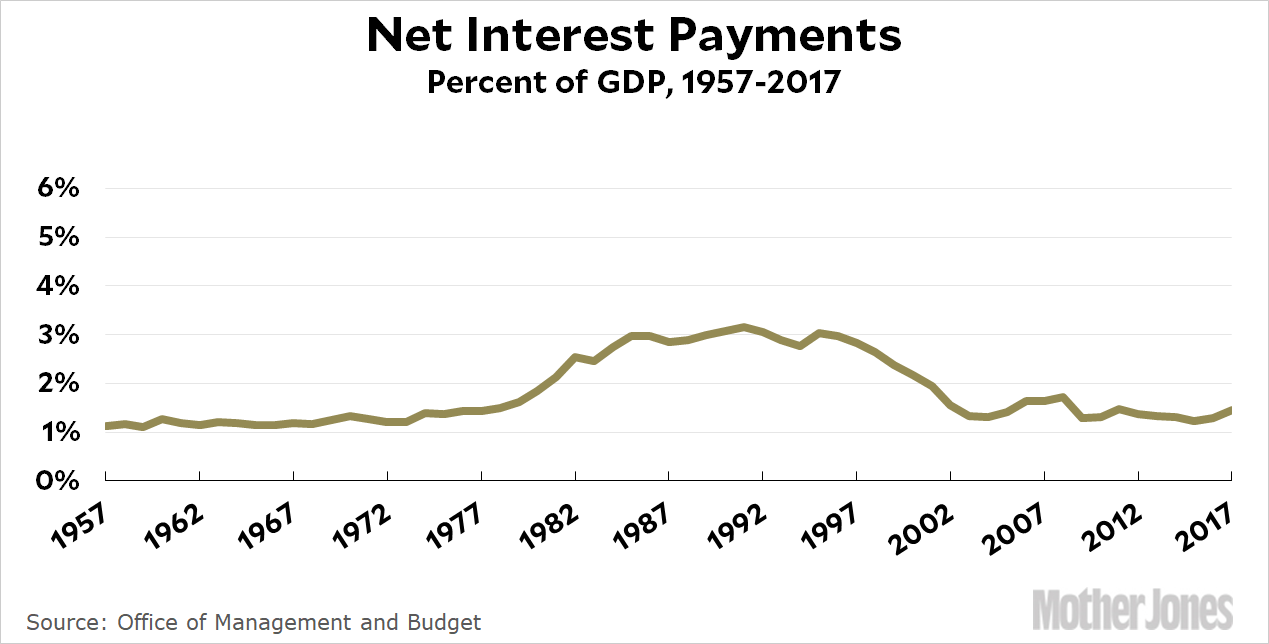
Does the national debt matter? Opinions differ, but this isn’t a hard issue to analyze. What we really care about isn’t the debt per se, but interest payments on the debt. Here it is:
That doesn’t look like anything to worry about. For the last two decades, interest on the national debt has been a steady 1-2 percent of GDP.
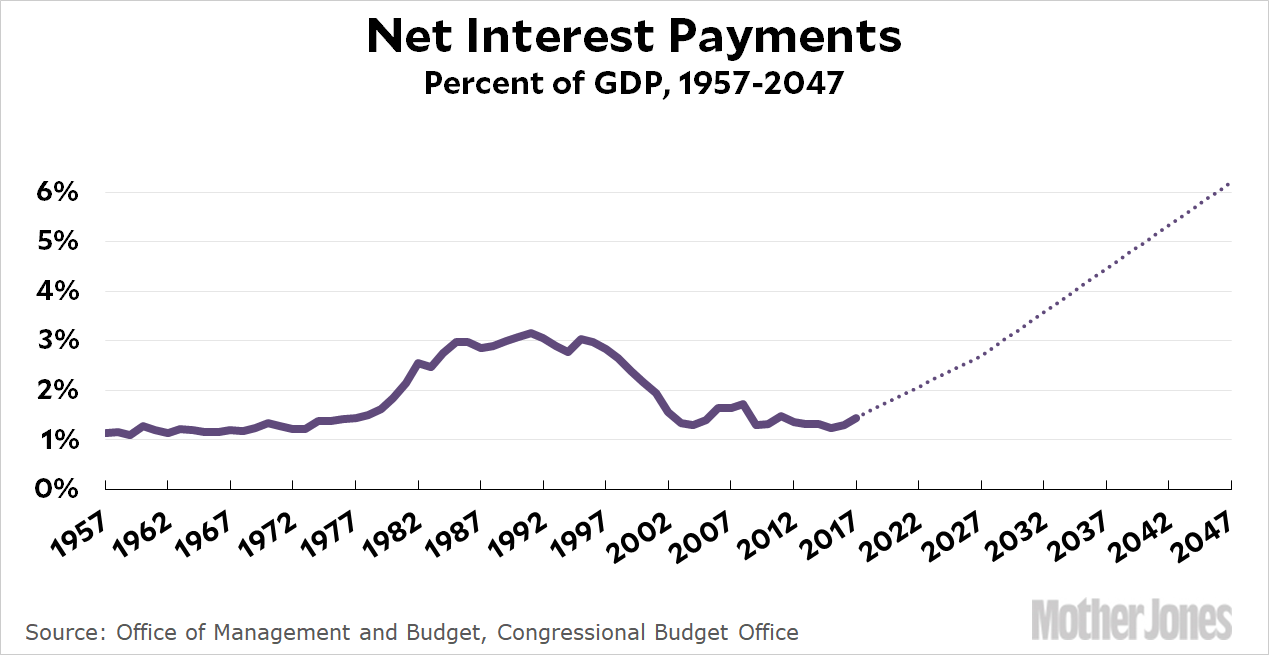
So everything is hunky-dory? Not quite. The Congressional Budget Office says that the good times are over. Over the next three decades, interest expenses will skyrocket:
Yikes! It looks like we’re in big trouble.
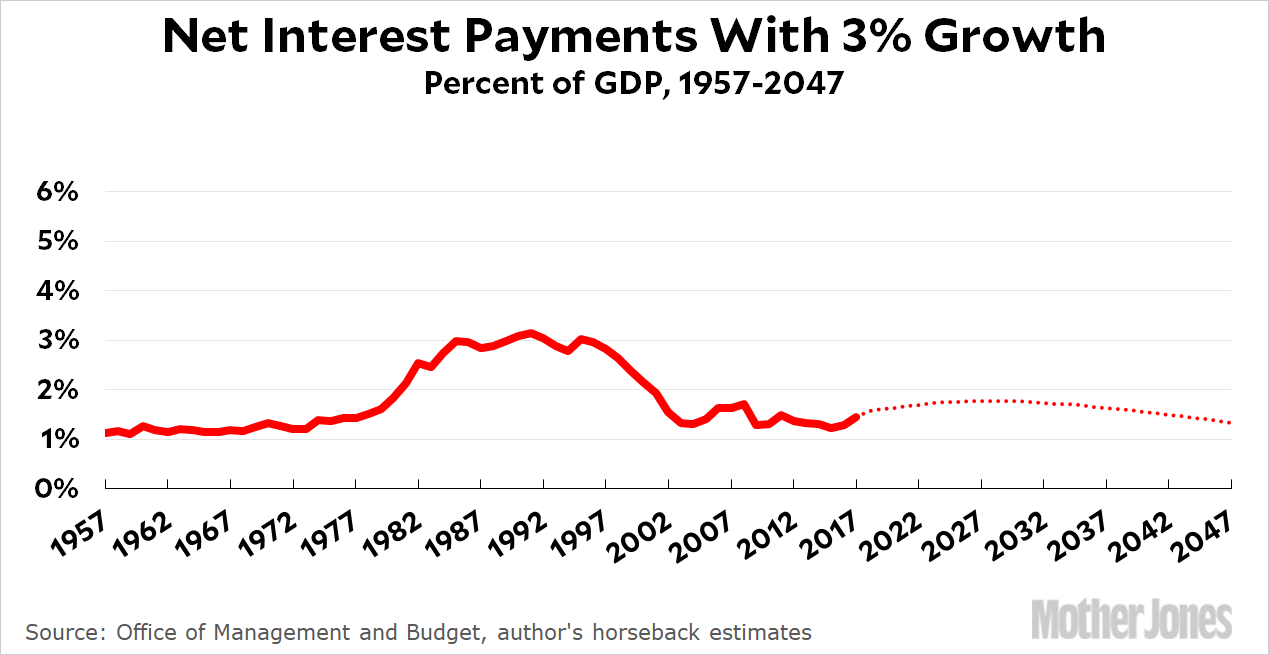
Or are we? Republicans just passed a tax bill that they say will increase economic growth to 3 percent per year. Maybe more, in fact. But that means more tax revenue, lower interest rates, and higher GDP. I don’t have one of those rocket science financial models to tell me what that means, so I had to take an educated guess about how a higher growth rate would affect federal revenues, federal spending, the annual deficit, the national debt, and the interest payments needed to service it. Here it is:
Once again, we’re in good shape. Thanks, Republicans! I guess this means we don’t really have to worry much about the national debt anymore, do we?
POSTSCRIPT: There is a point behind this joke: Republicans can’t have it both ways. If they say their policies will produce 3 percent growth, then they also have to accept what that means for spending and debt. They can’t claim 3 percent growth when they’re pretending that their tax cut will pay for itself, but then turn around and use CBO’s growth rates when they want to raise the alarm about entitlement spending bankrupting us. It’s one or the other.
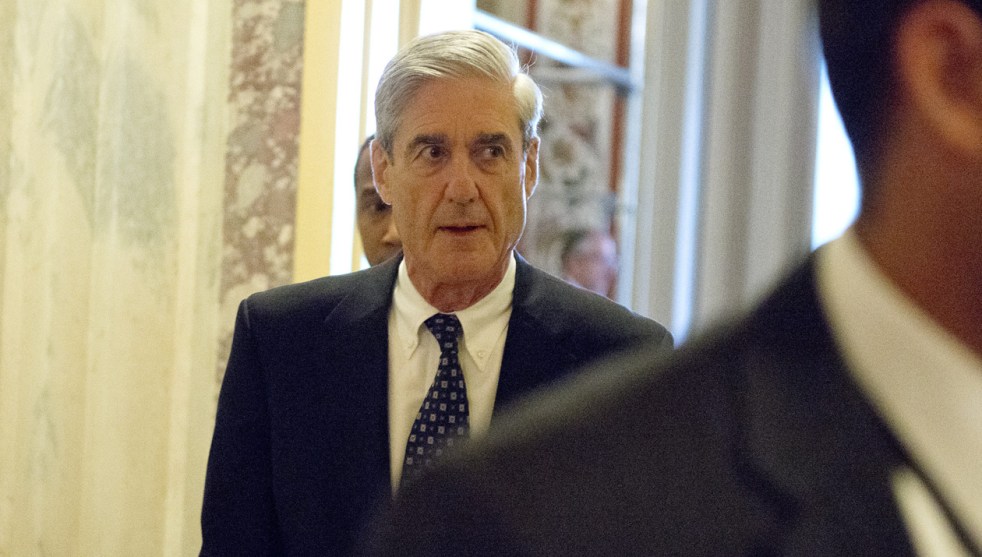
National Review’s Rich Lowry writes today that “if Jared or Don Jr. made the same mistake as Michael Flynn and didn’t tell the truth to FBI agents,” Trump would most likely pardon them. Then he says this:
But if Mueller starts going after Trump’s finances, it’s hard to see any solution from Trump’s perspective other than firing Mueller — and that would be an enormously consequential act that would probably rock his presidency to its foundations. The latest news, by the way, is that Mueller has subpoenaed Deutsche bank records.
I don’t want to read too much into what might just be careless wording, but I’m struck by the lack of the word if. Lowry doesn’t say “if Trump has engaged in illegal financial actions,” he merely assumes that if Mueller starts investigating Trump’s finances, the jig is up.
As it happens, I’d make the same assumption. I doubt very much that Trump could stand up to even some modest digging into his finances. But is that assumption now more or less universal, even among conservatives?
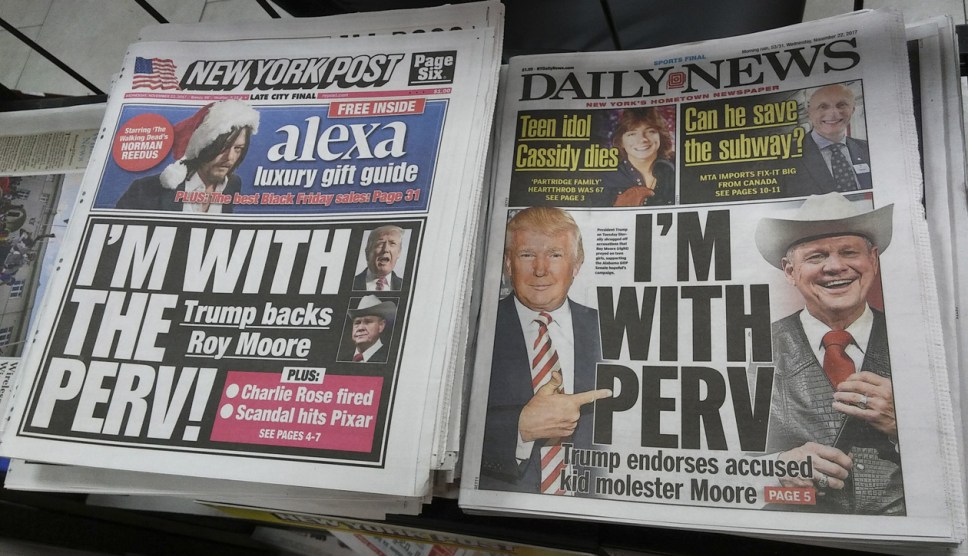
Until today, Republicans could say that, officially at least, they have repudiated Roy Moore’s noxious behavior.¹ Not anymore:
President Trump on Monday strongly endorsed Roy S. Moore, the Republican nominee for a United States Senate seat here, prompting the Republican National Committee to restore its support for a candidate accused of sexual misconduct against teenage girls.
….Mr. Trump’s endorsement and the party’s reversal hours later came a day after Senator Mitch McConnell, the Republican leader, had stepped back from his earlier criticism of Mr. Moore, saying Alabama voters should “make the call” on whether to send Mr. Moore to the Senate. Taken together, the week’s developments suggested that Republicans were increasingly confident that Mr. Moore is well positioned to defeat Doug Jones, the Democratic nominee, in next week’s special election.
This is the most depraved conduct possible from the Republican Party. They could have stood by Moore from the start, saying that the charges against him weren’t credible. Alternatively, they could have publicly denounced Moore but continued to hope in their hearts that he won.
But no. They publicly accepted that the charges against Moore were credible. They agreed that this made him unfit for office. But then, when it looked like he might win, they turned around and decided to support him anyway. And this all came on the same day that Moore said this about Jewish philanthropist George Soros:
Woah. Roy Moore on George Soros: “No matter how much money he’s got, he’s still going to the same place that people who don’t recognize God and morality and accept his salvation are going. And that’s not a good place.” cc: @RJC@AriFleischer
Speaking about financial bubbles, John Maynard Keynes once said “the markets can stay irrational longer than you can stay solvent.” Right now, we seem to be stuck in a sort of Republican immorality bubble, and it’s already continued its surge for far longer than I would have imagined possible. But it won’t last forever. Someday the Republican Party is going to pay a price for its stunning lack of a moral compass.
¹Which, just for the record, goes far beyond molesting teenage girls.
I haven’t followed the Brexit negotiations in detail—life is too short, right?—but I know the basics. I know, for example, that the border between Ireland and Northern Ireland has become a big issue. The problem is simple: Northern Ireland is part of Great Britain, so if Britain exits the EU then there needs to be a border between Ireland and Northern Ireland. However, both Ireland and Northern Ireland are dead set against this. So now the negotiations between Prime Minister Theresa May and European Commission President Jean-Claude Juncker have come to this:
Reports suggest that May and Juncker were willing to accept a deal that would in essence have seen Northern Ireland remain within the EU’s single market and customs union, even though the rest of the United Kingdom is likely to lose such privileges.
Such a deal would prevent a hard border from reemerging between the two parts of Ireland and ensure that smooth trade relations could be maintained. But statements from the Democratic Unionist Party, or DUP, the group that May’s government now depends on to maintain a majority in Parliament, were quick to thwart that. “We will not accept any form of regulatory divergence which separates Northern Ireland economically or politically from the rest of the U.K.,” DUP leader Arlene Foster said in a news conference Monday afternoon.
….Even as the DUP threw a wrench into the talks, the governments in Scotland and Wales, as well as London Mayor Sadiq Khan, were also quick to state that if Northern Ireland got preferential treatment, they expected a similar deal.
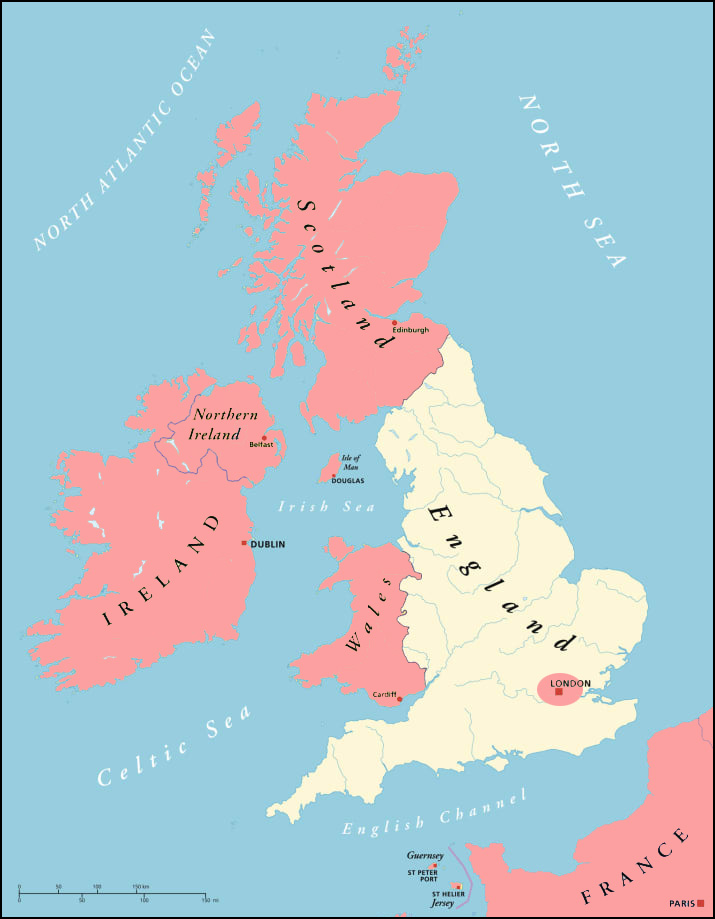
Ireland is not willing to accept a border with Northern Ireland. Answer: leave Northern Ireland in the EU (sort of). But Northern Ireland won’t accept any kind of border with the rest of Britain. And anyway, if Northern Ireland gets to stay in the EU, then Wales, Scotland, and London all want to stay in the EU too. So we’d end up with a map like this:
I wonder how long it’s going to take before Britain just gives up and decides to cancel Brexit entirely? And if they do, will the EU even allow them to stay? Beats me. I’d probably be chuckling over the whole thing if it weren’t for the fact that my country elected as president a game-show host who is plausibly thought to have colluded with Russia in order to get elected. We don’t exactly have anything to chuckle about when it comes to national idiocy.
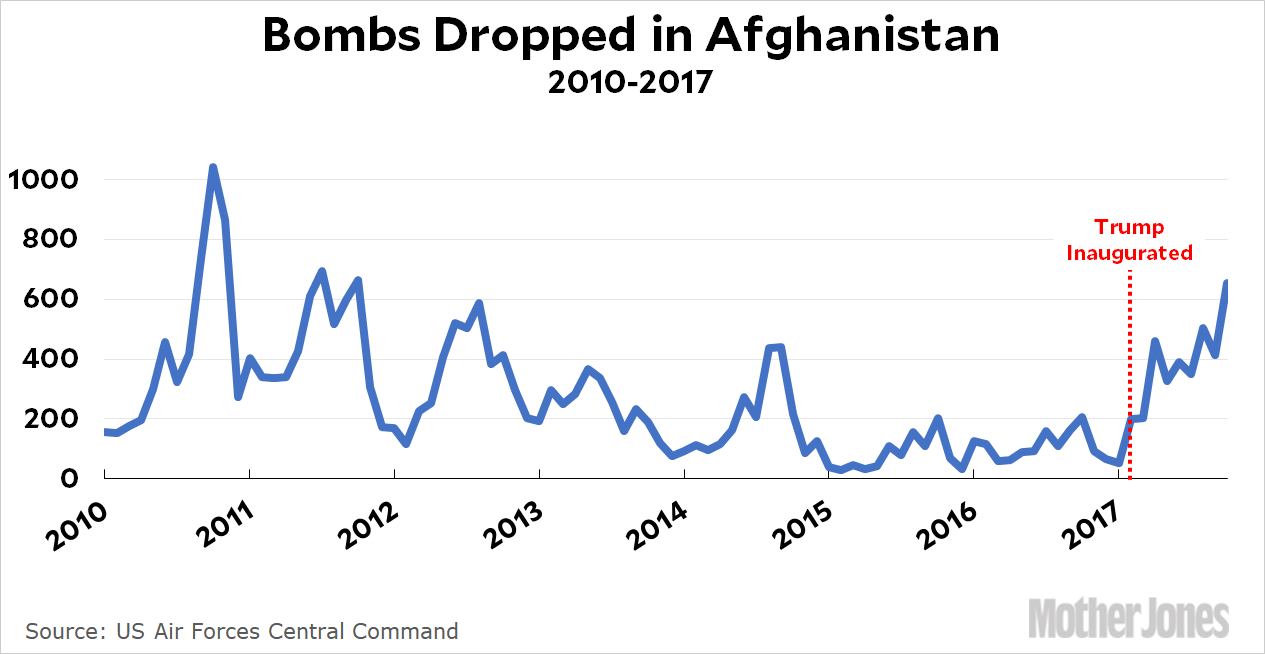
According to Centcom, here are the number of bombs released in Afghanistan since the Obama surge of 2010:
After Obama approved a big increase in troops at the end of 2009—up from 30,000 to 100,000—the air component of the war surged too, with over a thousand bombs dropped in some months of 2010. Later, as the surge was drawn down, the air component was drawn down too. When Donald Trump took office he didn’t approve any significant troop increases, but he did ask for more bombing. And he got it: the average number of bombs dropped per month has increased from about 100 in 2016 to over 400 in 2017.
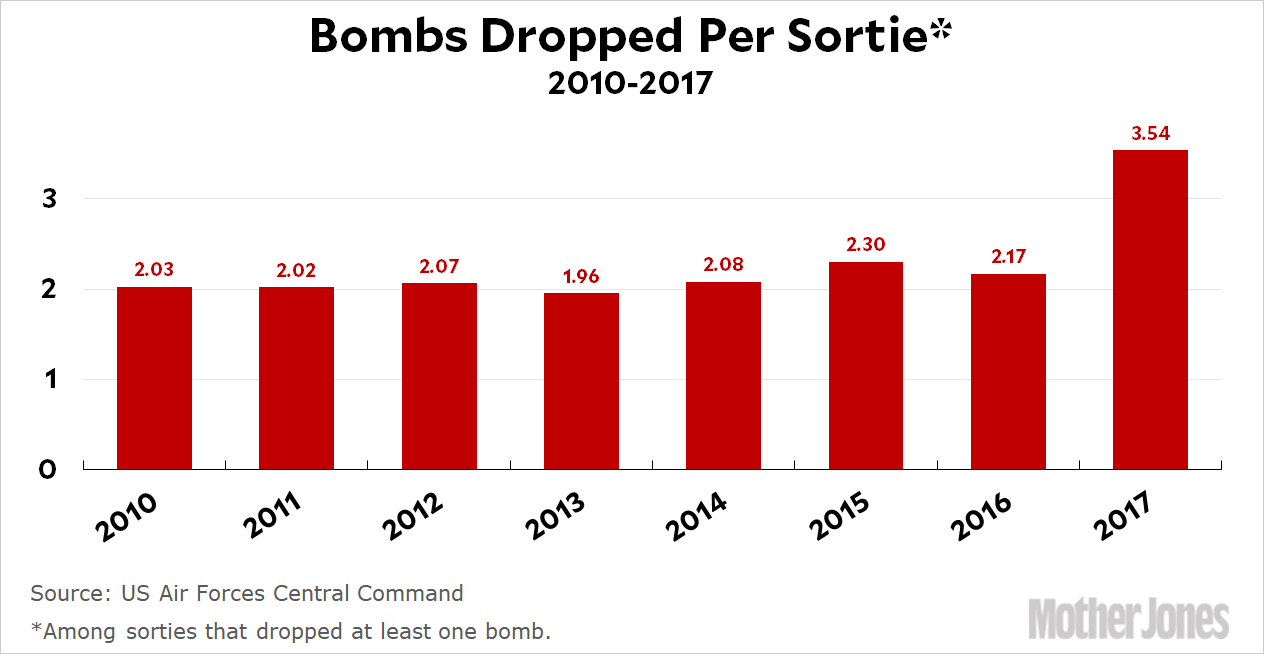
But there’s a little more to it. The Air Force is flying more sorties, but the real increase has come in the number of bombs each sortie drops:
For seven years, regardless of troop levels or number of air strikes, one thing has remained constant: among sorties that drop at least one bomb, the average number of bombs dropped has been rock steady at around two. Then, in 2017, that nearly doubled to 3.5. Here’s the result:
The United Nations mission in Afghanistan documented 205 civilian deaths and 261 injuries from airstrikes in the first nine months this year, a 52% increase in casualties compared with the same period in 2016.
….When there were 100,000 American troops in the country, then-President Hamid Karzai frequently accused them of excessive force and wielded reports of dead innocents as a cudgel against the United States. Karzai’s bombast had an effect: Far fewer civilians died in airstrikes in 2012 and 2013, according to U.N. reports….Experts said North Atlantic Treaty Organization coalition commanders took serious measures to reduce the risk of harm to civilians.
….As the foreign troop presence shrank and NATO shifted its focus to training Afghan forces, coalition officials released less information about operations. They also face less resistance from Afghan President Ashraf Ghani, a stronger proponent of U.S. military action. “The U.S. military is becoming less transparent, and it’s a pity because they had worked really hard — and succeeded — in reducing civilian casualties,” said Kate Clark, co-director of the Afghanistan Analysts Network, a Kabul-based research organization.
….In October, Defense Secretary James N. Mattis testified to Congress that Trump had authorized him to eliminate the requirement that U.S. forces could fire only when in “proximity” to hostile fighters. “In other words, wherever we find the enemy, we can put the pressure from the air support on them,” Mattis said.
The evidence all points in the same direction: US air forces are no longer very concerned about being precise. If they see something, they unload lots of bombs and the result is a big increase in civilian deaths.
As bad as this is on its own, it’s even worse in context. After all, how likely is it that a bigger air campaign will work in the absence of more troops? We’ve been down this road before, and the answer is: not very. Hell, a bigger air campaign didn’t even work that well with more troops. The Taliban is roughly as strong now as it was ten years ago.
We’ve been fighting the Taliban to a tenuous stalemate for more than a decade. If we stay, the stalemate will continue indefinitely. If we leave, the Taliban is likely to eventually regain control of the entire country. These are not great choices, but if we’re going to stay the very least we could do is drop the notion that loosening the rules of engagement and killing more civilians somehow shows that “the gloves have been taken off.” It’s not true, and it doesn’t make victory any more likely. It just means we have more dead civilians.
CIA Director Mike Pompeo.Jeff Malet/Newscom via ZUMA
What’s the protocol for passing along a story that seems absurd on its face and is supported solely by anonymous sources? In the past, it probably would have been prudent to hold off. Sure, this is a blog, and the rules are a little looser, but it’s still not the National Enquirer.
But in the Trump era? Let’s just say that “absurd on its face” has a very different meaning these days than it used to. So feast your eyes on this report from the Intercept:
The Trump administration is considering a set of proposals developed by Blackwater founder Erik Prince and a retired CIA officer — with assistance from Oliver North, a key figure in the Iran-Contra scandal — to provide CIA Director Mike Pompeo and the White House with a global, private spy network that would circumvent official U.S. intelligence agencies….“Pompeo can’t trust the CIA bureaucracy, so we need to create this thing that reports just directly to him,” said a former senior U.S. intelligence official with firsthand knowledge of the proposals, in describing White House discussions. “It is a direct-action arm, totally off the books,” this person said.
….The proposals would utilize an army of spies with no official cover in several countries deemed “denied areas” for current American intelligence personnel, including North Korea and Iran. The White House has also considered creating a new global rendition unit meant to capture terrorist suspects around the world, as well as a propaganda campaign in the Middle East and Europe to combat Islamic extremism and Iran….According to two former senior intelligence officials, Pompeo has embraced the plan and has lobbied the White House to approve the contract.
Needless to say, everyone connected with this denies everything. And who knows? They might be telling the truth. Maybe this story is just a farrago of nonsense. On the other hand, BuzzFeed reported something last week that was more limited, but still eerily similar:
The White House and CIA have been considering a package of secret proposals to allow former US intelligence officers to run privatized covert actions, intelligence gathering, and propaganda missions, according to three sources who’ve been briefed on or have direct knowledge of the proposals.
One of the proposals would involve hiring a private company, Amyntor Group, for millions of dollars to set up a large intelligence network and run counterterrorist propaganda efforts….Another proposal presented to US officials would allow individuals affiliated with the company to help capture wanted terrorists on behalf of the United States. In keeping with that proposal, people close to the company are tracking two specific suspects in a Middle Eastern country, the sources said, for possible “rendition” to the United States.
….Those familiar with the proposals say one of the driving impulses for privatizing some missions is a fear by some supporters of President Donald Trump, outside government, that the CIA bureaucracy has an anti-Trump bias that would thwart efforts to fulfill the president’s objectives.
It’s not clear (to me, anyway) if something like this would be illegal. It probably depends on where the funding comes from and whether this group performs any explicitly prohibited actions.
That aside, it does not fill one with confidence to see the names Mike Pompeo, Oliver North, and Erik Prince mentioned in the same breath. This story may or may not go anywhere, but it’s worth keeping an eye on.
Back in 2009 I wrote a piece for the magazine about marijuana legalization. One of the things I learned is that a key question about the effect of legalization is whether marijuana and alcohol are substitutes or complements.
If alcohol and marijuana are substitutes, it means that higher sales of marijuana will likely produce lower sales of alcohol. This would, generally speaking, be a good thing, since marijuana smoking is less hazardous than alcohol on multiple levels: It does less physiological damage to the imbiber and less damage to others (drunks tend to get mean while smokers tend to get stoned).
However, if alcohol and marijuana are complements, then higher sales of marijuana are likely to lead to higher sales of alcohol too. There would be nothing good about this.
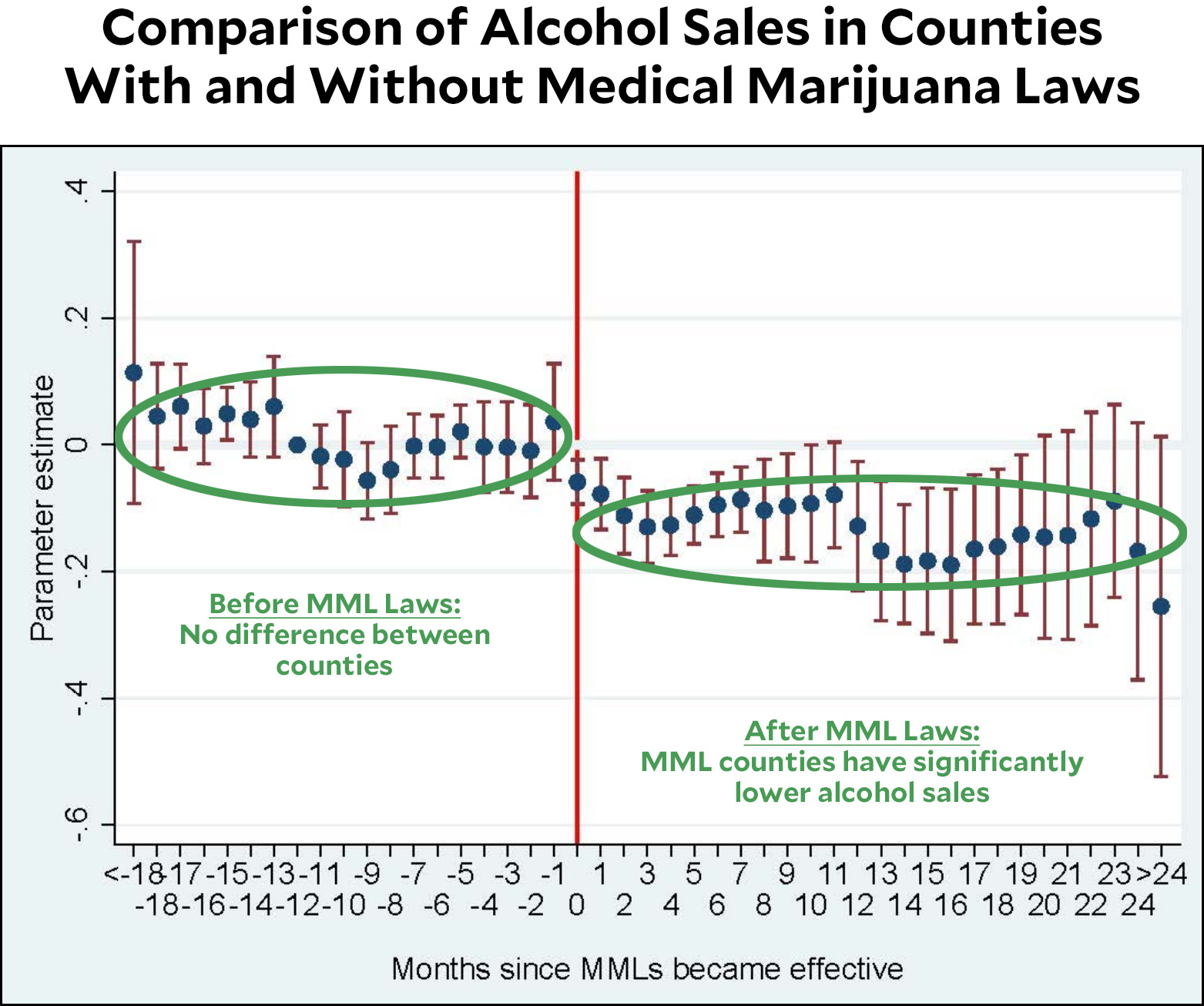
A trio of researchers recently tried to settle this question using detailed scanner data of alcohol sales. Their methodology was fairly simple: they picked out states that had enacted medical marijuana laws and measured sales of alcohol at the county level. For each state that passed an MML law, they compared its alcohol sales to states that hadn’t legalized medical marijuana. Here’s what they found:
In order to test substitutability, the authors created a parameter associated with alcohol sales. They set the parameter so that it was (on average) the same in all states before medical marijuana laws were enacted. In the chart above, this is why the pre-MML data points cluster around zero. Then they tracked the parameter over time and found that after MML laws were enacted, sales of alcohol were lower in the MML states:
We find that marijuana and alcohol are strong substitutes. Counties located in MML states reduced monthly alcohol sales by 15 percent, which is a consistent finding across several empirical specifications. When disaggregating by beer and wine we find that legalization of medical marijuana had a negative effect on corresponding sales by as much as 13.8 and 16.2 percent, respectively.
The authors also measured sales of alcohol in border counties. The effect was the same: after medical marijuana laws were enacted, counties in MML states had lower alcohol sales than counties across the state border.
There are a few caveats here. First, it’s based on scanner data, but not all alcohol is sold in stores. Second, as usual for studies like this, the authors control for a wide range of things: “county economic conditions such as unemployment rate and median household income…total population, percentage of male and Hispanic population, and the share of population by age groups.” Is that enough? Is it too much? It’s always hard to tell.
There’s more to marijuana than just this, but it’s nonetheless positive news. If it holds up, it’s yet another reason that legalizing marijuana is, on net, probably a good thing.
And we respect that! But maybe you’re of a mind to support our work directly instead? We have until December 31 to raise the last $400,000 we need to keep our nonprofit newsroom running at full strength into 2026. Will you make a gift today?
We noticed you have an ad blocker on. Can you pitch in a few bucks to help fund Mother Jones' investigative journalism?
Billionaires own the media,
but they don’t own us.
At Mother Jones we know these aren’t conventional times, and they require unconventional coverage. That’s what deliver every day: fierce, independent journalism you can’t find elsewhere. Perhaps never in the history of our country has that been more necessary than now. But we can’t do it without reader support—your support. Please chip in today.
Billionaires own the media,
but they don’t own us.
At Mother Jones we know these aren’t conventional times, and they require unconventional coverage. That’s what deliver every day: fierce, independent journalism you can’t find elsewhere. Perhaps never in the history of our country has that been more necessary than now. But we can’t do it without reader support—your support. Please chip in today.