If Democrats manage to defeat Trumpcare, that’s hardly the end of the battle. If Obamacare remains the law, Republicans will do everything in their power to ensure that it does indeed “crash & burn.” They will stop funding the CSR subsidies, which will devastate the poor. They will stop enforcing the individual mandate. They will do everything legally possible to issue damaging insurance regulations. And they will make it crystal clear to insurance companies that there is nothing they can count on, and they might as well just exit the Obamacare exchange market now.
This is not me being pessimistic. This is just the reality of what Republicans will do. Their goal is to repeal Obamacare, not to provide medical care to the poor and working class. That’s what we’re up against.
By chance, another study of Seattle’s $15 minimum wage has just come out. It’s from the University of Washington group that’s been issuing periodic reports, and it comes to a different conclusion than last week’s study. Among jobs paying less than $19 per hour:
We estimate statistically insignificant hours reductions between 0.9% and 3.4% (averaging 1.9%) during the three quarters when the minimum wage was $11 per hour. By contrast, the subsequent minimum wage increase to $13 associates with larger, significant hours reductions between 7.9% and 10.6% (averaging 9.4%)
The authors suggest that Seattle lost about 10,000 low-wage jobs when the minimum wage increased from $11 to $13. If this is confirmed in subsequent studies, it suggests that a minimum wage of, say, $12 per hour, has a minimal effect on low-skill employment. But $15 will have a significant effect.
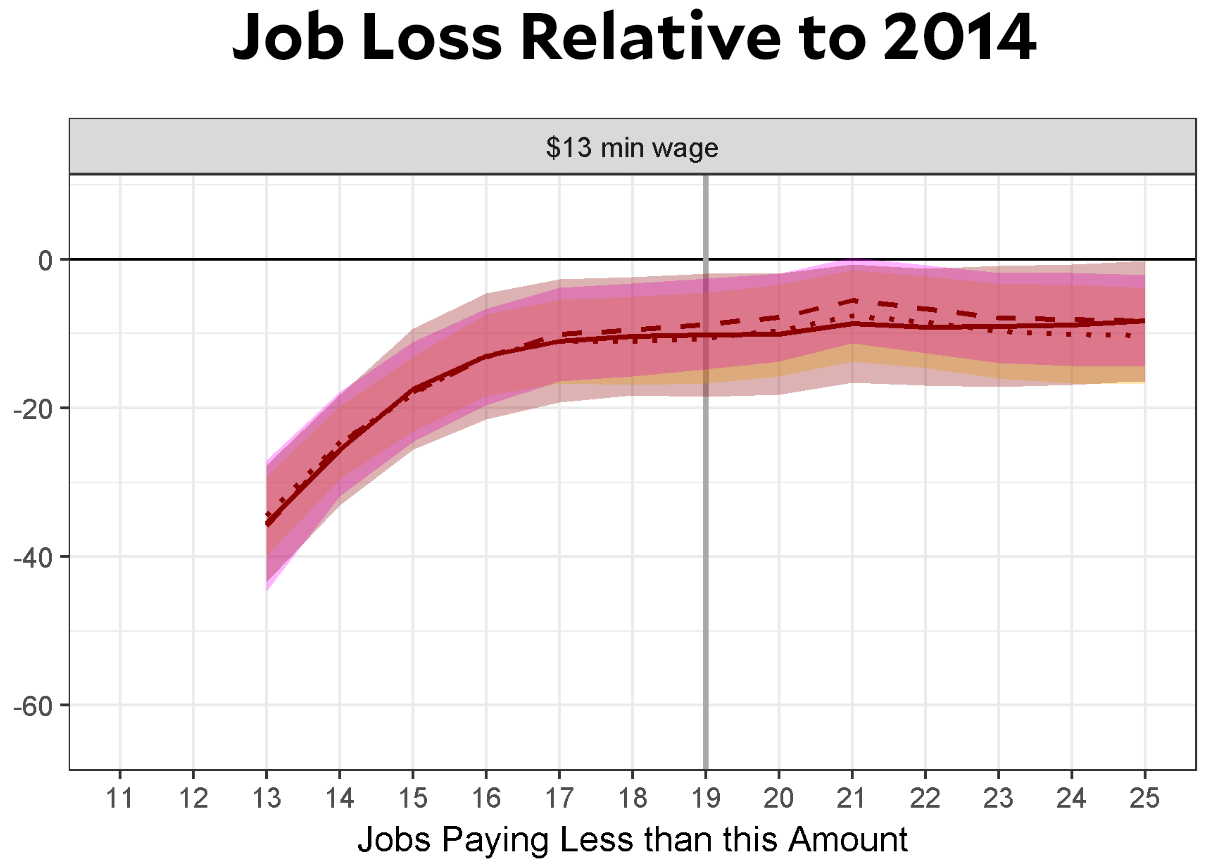
The effect on hours worked is similar. At $11, the reduction in low-wage jobs is small and probably illusory anyway: “It appears that any ‘loss’ in hours at lower thresholds is likely to reflect a cascade of workers to higher wage levels.” But at $13 it looks like this:
The key thing in this chart is that the solid line never reaches zero: “Thus, there is no evidence to suggest that the estimated employment losses associated with the second phase-in reflect a similar cascading phenomenon.”
This study is more pessimistic than previous studies, but it’s well done and scrupulously honest. Nor should it necessarily be a surprise. There’s a mountain of evidence that modest increases in the minimum wage have little effect on low-wage jobs, but the key word here is modest. We’ve never tested how high the minimum wage can go before it starts to have a serious impact on low-wage jobs, because no one has ever raised the minimum wage more than modestly. This means that the question of how high the minimum wage can go is an empirical one—and there’s no special reason to think it’s $15. It could be higher or lower. And if this study holds up, the answer at the moment is around $12.
One other thing worth noting: Among other rich countries, the minimum wage is roughly 50 percent of the median wage. Depending on how you measure it, that comes to $11-$13 in the United States. So if the ideal minimum wage turns out to be $12 per hour—roughly the same as it was in the 60s—no one should be taken aback.
UPDATE:EPI has released a critique of the new UW study: “The authors’ analysis…suffers from a number of data and methodological problems that bias the study in the direction of finding job loss, even where there may have been no job loss at all.” I won’t try to arbitrate this, since I don’t have the econometric chops to do it. Eventually this will all get sorted out, but it’s likely to take a few years.
The Supreme Court handed President Trump a victory Monday by reviving part of his disputed ban on foreign travelers from six Muslim-majority nations….The justices said the travel ban may go into effect, except for “foreign nationals who have a credible claim of a bona fide relationship with a person or entity in the United States,” such as a spouse or close relative.
….”The student from the designated countries who have been admitted to the University of Hawaii have such a relationship with an American entity,” the court said. “So too would a worker who accepted an offer of employment from an American company or a lecturer invited to address an American audience.” But this would not extend to other foreigners who lack this connection.
Despite the fact that tightening up visa requirements was supposedly a critical national security concern, Trump dropped the whole thing after his travel ban was stayed by several lower courts. He’s had plenty of time to craft new vetting rules—which were supposed to take 90-120 days from February—but he’s done nothing.
The official excuse is that the courts prevented this, which is ridiculous in the way Trump’s statements are always ridiculous. There was nothing stopping him from working on new, permanent rules. But he didn’t, presumably because personal pique was more important than the supposedly porous borders that he inherited from President Obama.
With the Supreme Court rules now in place, even this thin excuse is gone. So will he restart work on new rules so he’ll be ready to go as soon as the Supreme Court gives the OK? That’s what he’d do if he really thought this was important. Let’s wait and see.
With the Senate health care bill finally out in the open, a tediously familiar game is unfolding once again. The game is to defend massive Medicaid cuts by claiming that Medicaid is useless anyway. In fact, maybe worse than useless. You see, people on Medicaid don’t have mortality rates any better than people with no insurance at all.
This is tiresome, especially since it invariably comes from folks who have private insurance and would sooner cut off their big toes than give it up. My guess is that if they were suddenly poverty stricken, not a single one of them would choose to go uninsured rather than accept Medicaid.
But that’s just my frustration talking. Instead, let’s talk facts. There are two big reasons why I find this nonsense so annoying.
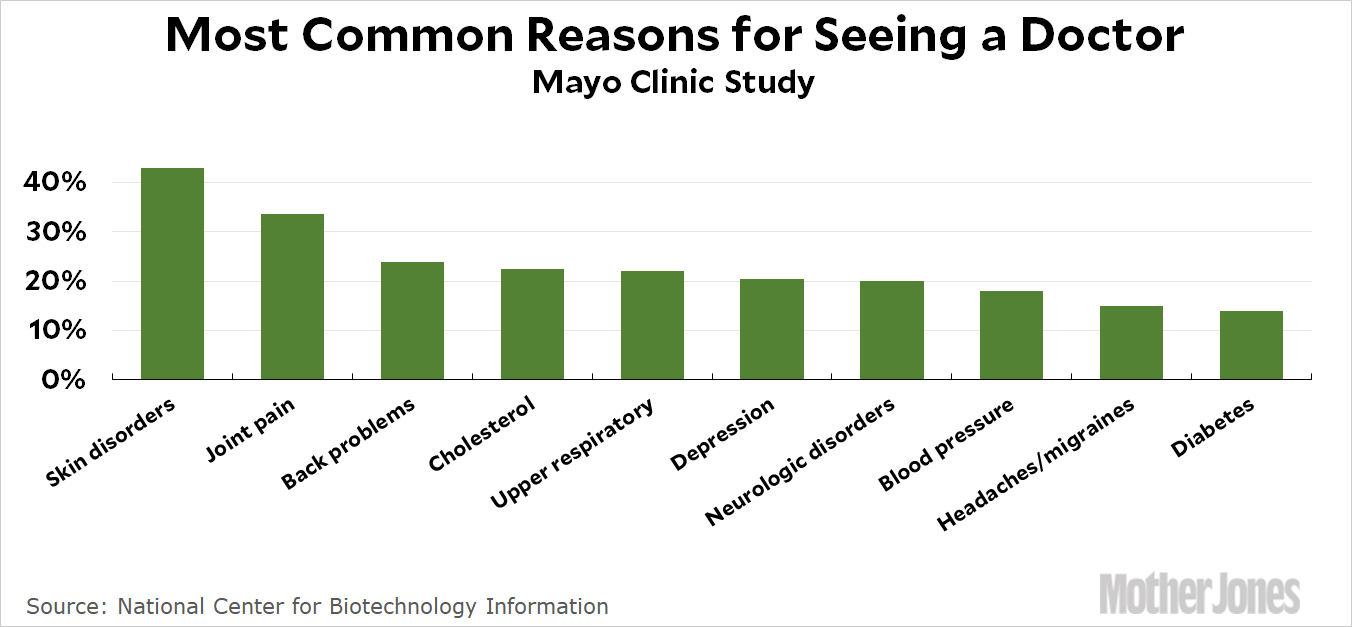
First, improving mortality is hardly the only goal of medical care. For most of us, it’s not even the main goal: the vast majority of doctor visits aren’t for life-threatening conditions. So even if it were true that Medicaid did nothing to extend lives, it still does plenty. If you get a toothache fixed, or your migraine headaches treated, or a meniscus repaired, it doesn’t affect your lifespan at all. But it sure makes you feel better. And if, in addition, it does this without subjecting you to $10,000 in debt and a horde of bill collectors on your ass 24/7, that’s pretty damn helpful too. Unless you’re explicitly looking for a cynical reason to claim that Medicaid is useless, you just can’t pretend that this stuff doesn’t matter.
Second, the average age of adult Medicaid recipients is 38. At that age, there isn’t much mortality in the first place: less than 2 per thousand each year. To meaningfully distinguish mortality rates given such a low baseline you’d need a huge study. And it better be a pretty good one. General mortality (as opposed to mortality for, say, a specific chemotherapy drug) can only be properly estimated if you follow a population for five or ten years. So it needs to be a long-term study. And it needs to account for the fact that the Medicaid population is different from the general population: poorer, sicker,¹ more stressed, more disabled, etc. I don’t know if any studies have ever been done that meet these criteria.
However, there have been studies. Warts and all, they’re the best we have. The most famous is the Oregon Experiment, which is especially useful because it used genuinely identical treatment and control groups. However, each group consisted of only 10,000 people, which means the expected mortality in each group was 18 per year. That’s so low that the authors of the study couldn’t reach any conclusions at all about whether Medicaid had any effect on mortality. They did, however, draw null conclusions about other health indicators like blood pressure and cholesterol. The problem, again, is that the treatment group was so small that it’s hard to put much stock in this, especially since the study only lasted two years. However, if you nonetheless take their null conclusions about blood pressure and cholesterol seriously, you also have to take seriously their extremely positive results about depression, self-reported health, decrease in pain, and lack of financial catastrophe.
Either way, that’s only one study. There have been others. A trio of researchers reviewed Medicaid studies recently in the New England Journal of Medicine, and came to these conclusions:
The Oregon experiment found…significant increases in the rate of diagnosis of diabetes…along with a near-doubling of use of diabetes medications…. Meanwhile, the Oregon study found…a 30% relative reduction in rates of depressive symptoms.
….Multiple analyses have found improved self-reported health after the ACA’s coverage expansion, either in broad national trends or Medicaid expansion studies….Self-reported health is a validated measure of the risk of death….One study compared three states implementing large Medicaid expansions in the early 2000s to neighboring states that didn’t expand Medicaid, finding a significant 6% decrease in mortality over 5 years of follow-up….A more recent analysis of Medicaid’s mortality effects was one life saved for every 239 to 316 adults gaining coverage.
….One head-to-head quasi-experimental study of Medicaid versus private insurance, based on Arkansas’s decision to use ACA dollars to buy private coverage for low-income adults, found minimal differences. [That is, Medicaid was as effective as private insurance.]
That’s pretty impressive, and it doesn’t even count aching teeth, repaired cartilage, treated migraines, or any of the hundreds of other routine things that don’t show up in studies of chronic conditions. Nor does it validate the frequent claim that Medicaid is useless because doctors won’t see Medicaid patients: most studies show that Medicaid patients did indeed see doctors when they needed to and were generally pleased with their treatment.
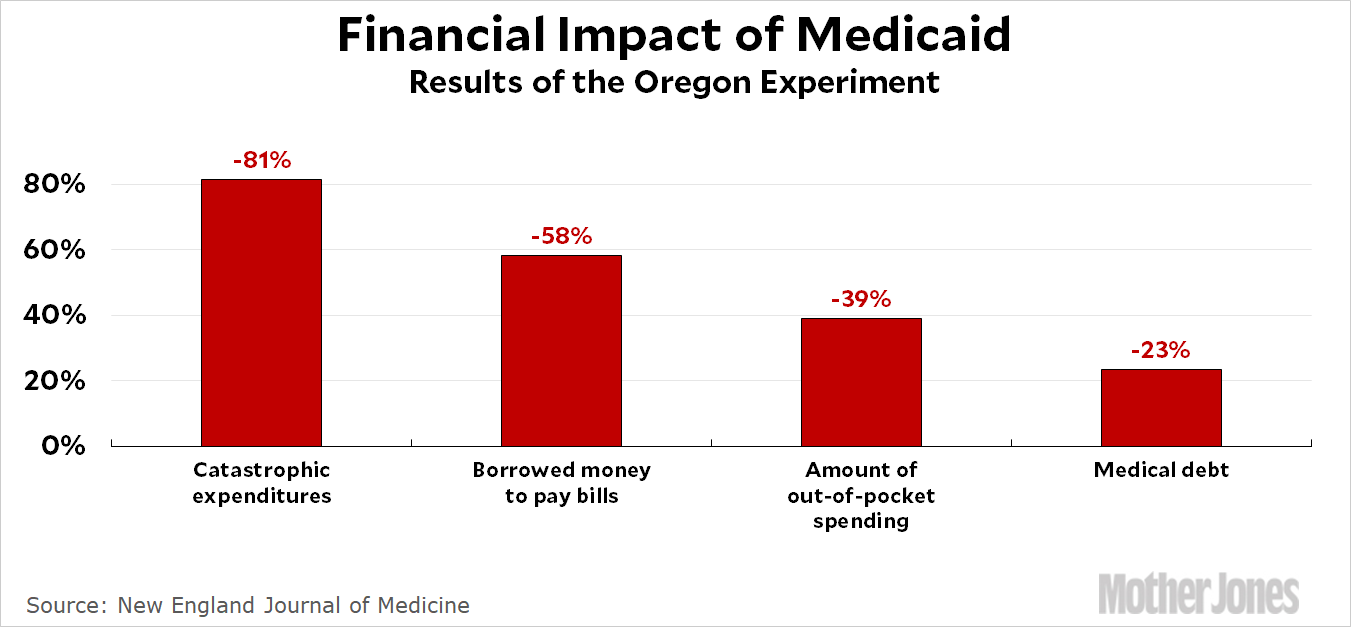
That said, there’s a pretty obvious reason that Medicaid might not always produce dramatic differences compared to people with no insurance: by hook or by crook, the uninsured do get treatment for serious conditions. The main difference is that they have to pay for it. Here are the results of the Oregon experiment on the finances of the folks who received Medicaid:
Adults on Medicaid had 81 percent fewer catastrophic expenses. And in this case, the methodology of the Oregon Experiment is fine. A sample of 10,000 is plenty big and a timeframe of two years is plenty long. These are not things that affect only a tiny percentage of people, or that need years to show an effect. In addition to its medical benefits, Medicaid is a financial godsend for poor people.
One final thing: the folks who claim that Medicaid is useless never provide any feasible mechanism for this. Statistical studies are fine, but if they really do show null results for Medicaid coverage, there has to be some plausible reason why it produces no results. If we assume that medical care in general has positive results, why wouldn’t Medicaid? It may not provide the quality of care of private insurance, but it’s hardly the domain of quacks and shysters. It pays for care by real doctors and real hospitals, and it would be remarkable if that care really did no one any good. So what’s the theory here?
None of this means that Medicaid is perfect. It reimburses too little and really does seem to fail on some measures. It’s a serious drain on state budgets. And it has other problems as well that we ought to address. Liberals and conservatives alike should be dedicated to continually improving it.
Of course, speaking for myself, I’d love to eliminate Medicaid. And Medicare. And Obamacare. And employer insurance. A simpleminded national health care system would cover more people, almost certainly cost less than our current hodgepodge, and produce better results than what we get now. But that’s pie in the sky in this particular political moment. Given the reality of what we have, Medicaid is a critical part of our health care hodgepodge. Slashing it in order to give a big tax cut to the rich is obscene.
¹You may be surprised to learn that low reimbursement rates aren’t the only reason doctors are reluctant to see Medicaid patients. It’s a big factor, but nearly as important is that Medicaid patients take up so much time. This is because they’re generally sicker than other patients. So doctors are getting paid half as much for patients who have much more complex medical needs than average. The general stress of being poor accounts for most of this, but lack of consistent health care over their lifetime probably accounts for some of it too.
Congressional Republicans, who for years blasted the Affordable Care Act for disrupting Americans’ healthcare, are now pushing changes that threaten to not only strip health coverage from millions, but also upend insurance markets, cripple state budgets and drive medical clinics and hospitals to the breaking point.
….The cascading effects of such a retrenchment will reach far beyond those who lose coverage, according to doctors, hospital leaders, insurance executives, patient advocates and state officials across the country….Governors and state legislators, facing huge reductions in federal Medicaid funding, may soon have to decide whether to reduce services, limit who can enroll in the healthcare safety net or make cuts to other state programs, such as education or transportation….Those coverage losses, in turn, will put new pressures on doctors, clinics and hospitals as they face growing numbers of patients with no insurance who are unable to pay their medical bills.
….The strain on hospitals and doctors will reach beyond the healthcare system. American employers, which provide health coverage to more than 150 million workers and their families, could see their costs rise as hospitals and physicians try to make up for losses they incur caring for more uninsured patients….It also will probably hit employees, who will see insurance premiums increase and wages stagnate as businesses shift healthcare costs onto workers, as has happened repeatedly in the past.
Republicans have been saying for seven years that they want to repeal Obamacare, so I can hardly pretend to be surprised that they’re doing it after winning the 2016 election. But now that it’s actually happening, I still find it hard to believe. What kind of people do this just so the rich can get a modest tax cut? How cold-blooded do you have to be? Especially when Obamacare’s modest problems could be fixed with nothing more than a few minor changes and additional funding of $5-10 billion or so. Of course, if we did that the millionaires wouldn’t get their tax cut.
This whole thing is just profoundly depressing. What the hell kind of country is this?
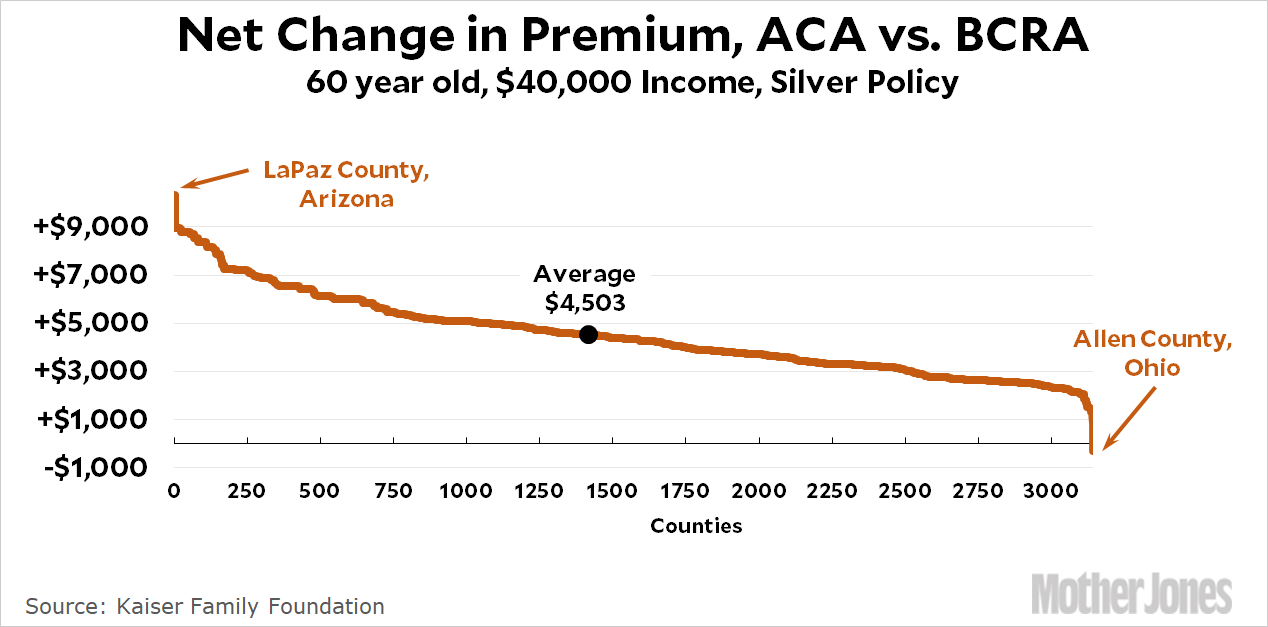
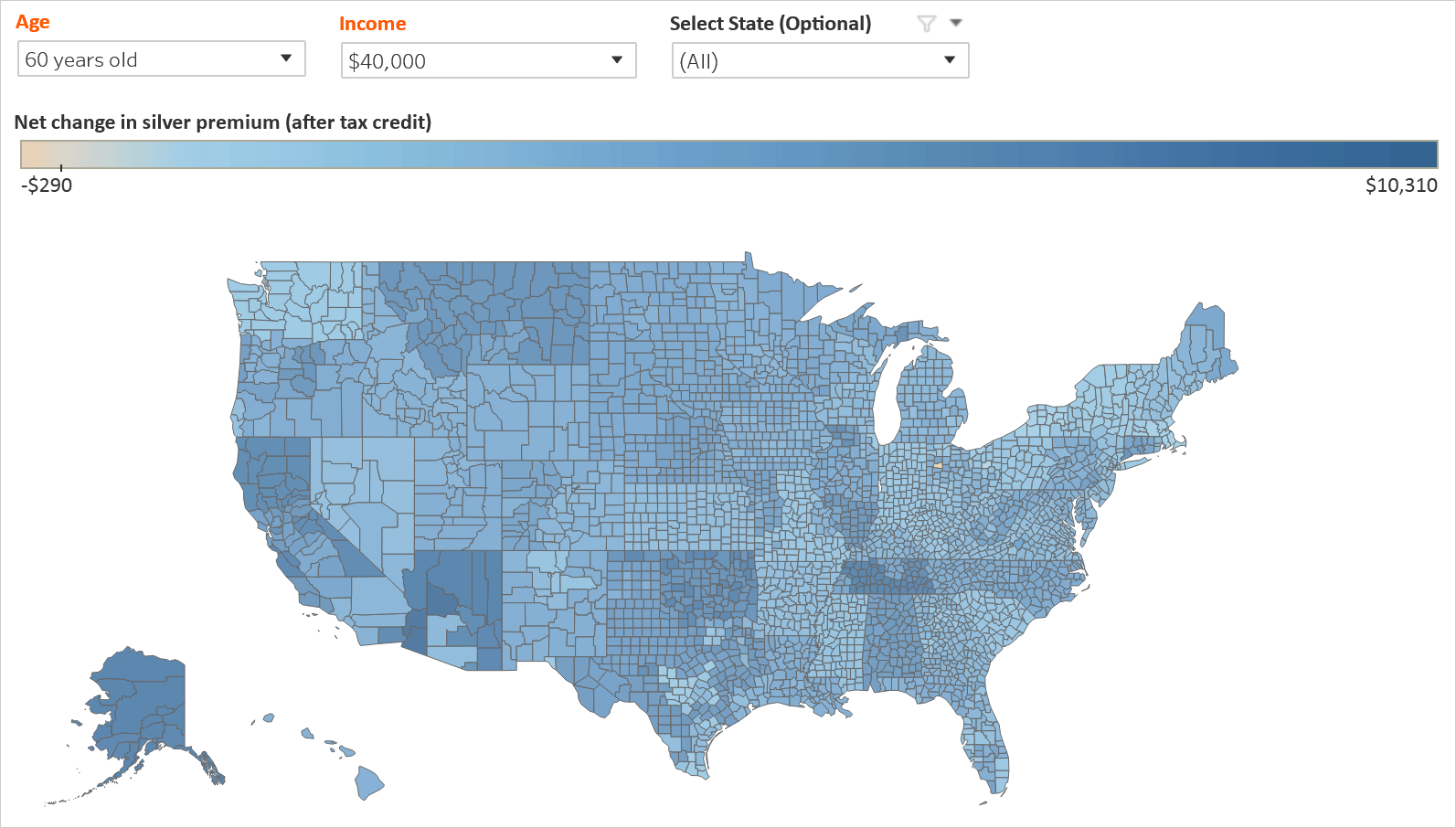
The Kaiser Family Foundation has figured out what the net premiums would be under the Senate health care bill for all 3,143 counties in the United States. For folks in their 20s, premiums go down in most places by an average of a few hundred dollars. For people in their 40s, 50s, and 60s with modest incomes, premiums go up—in most cases by thousands of dollars.
The net premium is the cost of coverage minus the tax credit subsidy. For you quantitative types who like to see your data in chart form, here it is for a working-class 60-year-old. There is one (1) county in the entire country that sees a net reduction:
And for you visual types, here it is in map form:
And keep in mind that with the end of protection for essential benefits and the elimination of CSR subsidies, these higher premiums are almost certainly paying for worse coverage, higher deductibles, and higher copays.
Poor Bret Stephens. He’s the latest punching bag for the left among New York Times columnists, and apparently he’s getting sick of it. “Twitter is about the naked, grunting brain,” he says. “It’s whatever pops out. And what pops out is altogether too revealing.” So he’s quitting Twitter.
There’s not much question that Twitter is a cesspool, but I think he’s making a mistake nonetheless. A lot of people blame social media for making our politics cruder, but that misses the reality. Our politics has always been this crude. We just didn’t know it. All Twitter has done is expose our collective id in a way that’s hard to brush off.
This is difficult to accept. Is this really what America is like in the privacy of our own thoughts? Yes it is. There’s no point in denying it. The question is, are we better off knowing it, or were we better off when we all pretended to be better people than this?
I’m not sure. There are surely advantages to norms of civility in public life. A Burkean conservative would probably say that those norms have been developed over a long time and we should respect the fact that we’ve historically found them useful. However, one thing Twitter (and Donald Trump) have demonstrated is that there are damn few Burkean conservatives in the United States. Conversely, a liberal would presumably believe that it’s important to know the raw truth. On the other hand, it’s liberals who are the biggest complainers about the rampant sexism, racism, xenophobia, and so forth that are so common on Twitter.
As for myself, I have an unusual attitude toward this stuff: it doesn’t bother me much. In fact, it kind of amuses me, which is why I’ve never blocked anyone. I get a little bit of a kick out of seeing the tidal wave of idiocy that comes my way periodically when someone gets pissed off for one reason or another and brings along a troll army.
Of course, I’m white, male, straight, and sort of emotionally stunted. So I don’t get burning crosses sent my way, or threats to rape me, or piles of people telling me to get the hell out of the country. The stuff I get is plenty nasty, but in a generic sort of way—and since I have stunted emotions it never upsets me that much. In fact, it’s kind of useful to know how idiots feel about stuff, since I don’t spend much time with idiots in my day-to-day life.
This could all change, I suppose. One thing I find odd is how uncreative Twitter trolls are. There are things that would provoke me, but they never seem to have any clue what they might be. They just stick with all-purpose insults that are so dumb it’s hard to believe anyone actually being upset by them. I wonder if they’ll ever get smarter?
Probably not. After all, they’re idiots. If they were smart, they wouldn’t be doing this kind of dogpiling in the first place. In the end, I think this is what will save Twitter. There’s only so much damage that idiots can do, and I think we already know what it is.
This is just a note about the Senate health care bill. Do not believe any prattle about Mitch McConnell “being OK with a loss.” Or about “moderate Republicans” who will vote against it. Or about conservatives who are “revolting.” Or about “desperate attempts” to hold the Republican caucus together.
Next week the CBO will release its score of the bill. They will confirm that it doesn’t increase the deficit. The Senate will debate for a day or two; pass a few minor amendments; and then pass the bill. The vote will be 51-50, with Vice President Pence breaking the tie.
If Paul Ryan is smart, he will simply bring up the Senate bill for a vote and be done with it. It will pass because everyone will understand that this is their only chance. Either vote yes, or else give up on repealing Obamacare and give Democrats a big win.
The only way to break this cycle is to generate some new opposition. Senate Republicans already know that Democrats oppose the bill, AARP opposes the bill, hospitals oppose the bill, and so forth. They don’t care. The Democrats won’t vote for them no matter what they do and the others aren’t threatening to withdraw campaign support. They oppose the bill, but only on paper. They also know that their bill will take away health coverage from millions. They don’t care about that either. They never have.
This is it. There’s a week left. Lefties need to generate some new opposition to the bill that wavering senators are actually afraid of. Any ideas?
Catblogging is a few minutes early this week because I have to drive Marian to the airport. She’s flying to Colorado via Phoenix, where it’s a balmy 112º today. Apparently this means that the tarmac won’t melt the wheels of her plane, so everything should be hunky dory.
In cat news today, Wim Van Neer of the Royal Belgian Institute of Natural Sciences in Brussels has been collecting ancient cat specimens for the past decade and putting them through the genetic wringer. His conclusion: “It was the Egyptians who turned them into the lovable fur balls we know today.” Thanks, Egyptians!
A couple of days ago I wrote a post responding to Peter Beinart’s recent article about Democrats and illegal immigration. It was a bit of a dog’s breakfast. I intended to write one thing and then ended up writing something else, which made the post a little disjointed. Then it turned out I’d made an arithmetic mistake, and had to rewrite a chunk of the piece on the fly. Blecch.
But I did promise to eventually write the piece I initially had in mind, so here it is. I’m a little pressed for time, so I’ll keep it short.
Statistics aside, one of Beinart’s main points was not that liberals should become big opponents of immigration, but that they should be willing to admit that there are drawbacks as well as benefits to large flows of illegal immigration. It’s a complicated issue, and everyone should be willing to admit it.
I agree completely, and this is hardly a problem limited to immigration. Naturally, I blame it mostly on conservatives, but I imagine conservatives blame it mostly on liberals, so I won’t bother trying to assign blame. Either way, the upshot is that there never appears to be any political advantage to admitting that an issue has both upsides and downsides. Every issue important enough to be worth talking about does, but there’s hardly any audience left that cares.
I have no idea what, if anything, we can do about this. But I will say this. I lurk on a number of message boards populated by liberals, and what they say privately is very often more nuanced than what they say publicly.¹ On immigration, there are probably lots of liberals willing to concede that there needs to be a limit to the flow of undocumented workers. There are cultural, economic, and nationalistic reasons for this. But there’s little benefit to saying so in public. It just invites massive social media swarms insisting that you’re a closet racist.
I’ve long been on record as a moderate liberal on immigration. I think there are benefits to keeping illegal immigration to a modest level,² and details aside, I think the way to do this is a rigorous version of E-Verify along with tough employer sanctions. In my own personal utopia, I’d pair this up with a national ID card. Basically, if undocumented immigrants can’t get jobs, they’ll stop coming. There’s no need for a wall.
I wonder how many liberals agree with me, more or less? I wonder how many are waiting for someone else to say it before they do? I wonder how many just flatly don’t consider it worth the blowback, so they stay quiet? Questions, questions.
¹As you might imagine, this is partly because the boards I’m attracted to aren’t run by shouters and nutballs. Still, I’m curious: is the same true of moderate conservative boards? Any wingers out there care to comment?
²And drawbacks to getting too tough on illegal immigration. There are good reasons to protect our borders, but there are economic, humanitarian, and police state reasons not to have a goal of zero illegal immigration.
And we respect that! But maybe you’re of a mind to support our work directly instead? We have until December 31 to raise the last $400,000 we need to keep our nonprofit newsroom running at full strength into 2026. Will you make a gift today?
We noticed you have an ad blocker on. Can you pitch in a few bucks to help fund Mother Jones' investigative journalism?
Billionaires own the media,
but they don’t own us.
At Mother Jones we know these aren’t conventional times, and they require unconventional coverage. That’s what deliver every day: fierce, independent journalism you can’t find elsewhere. Perhaps never in the history of our country has that been more necessary than now. But we can’t do it without reader support—your support. Please chip in today.
Billionaires own the media,
but they don’t own us.
At Mother Jones we know these aren’t conventional times, and they require unconventional coverage. That’s what deliver every day: fierce, independent journalism you can’t find elsewhere. Perhaps never in the history of our country has that been more necessary than now. But we can’t do it without reader support—your support. Please chip in today.