• A Terrorist Attack Is Not Like a Car Accident

    Jonah Goldberg is tired of liberals downplaying terrorist attacks with rote claims that terrorism is small potatoes compared to traffic accidents or swimming pool deaths:

    Imagine if I were to respond to complaints from, say, Black Lives Matter in the same way so many people respond to terrorism:

    “Yes, yes, this is regrettable. Police shouldn’t kill young black men like this. But let’s keep this in perspective. More people die in bathtubs and swimming pools than from unwarranted police homicides.”

    Or imagine if I tried to explain away an abortion-clinic bombing by noting that far more people die in swimming-pool accidents. I’m not so sure the gang at Vox would nod appreciatively. Rather, my hunch is that the outrage would be deafening — and rightly so.

    I happen to agree with Goldberg about this, and I’ve long wanted liberals to knock it off. Modest regulations can reduce bathtub accidents and traffic deaths, and neither bathtubs nor cars will up their game in response. This makes it relatively easy to decide how much regulation we’re willing to put up with in order to save a given number of lives.1

    Needless to say, human beings do respond when they encounter resistance, and that makes motivated attacks like London or Tehran very different. Without continual vigilance, improved tactics, and possibly an ever-increasing fight,2 terrorist attacks would grow considerably over time. In addition, it’s simply human nature to fear attacks from other human beings far more than the possibility of an impersonal mishap. That’s why homicide investigations are a lot more thorough than bathtub accident investigations.
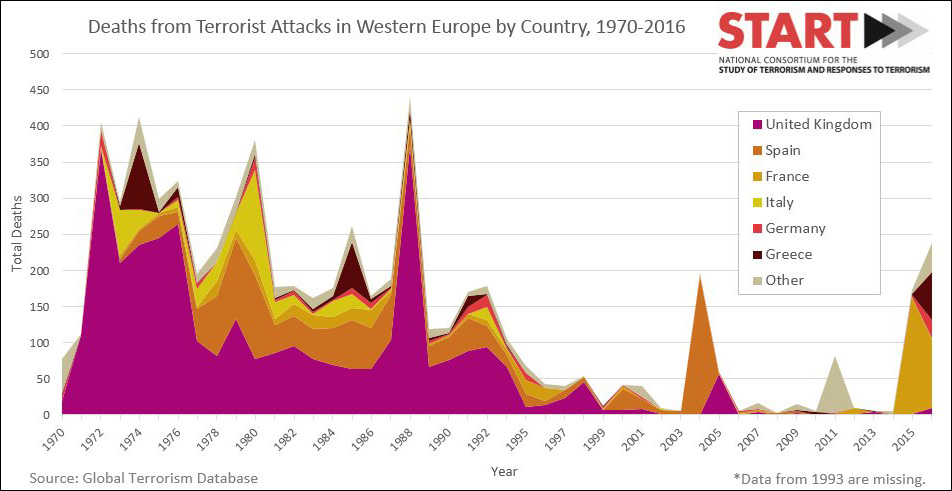
    Now, having said all that, I have one question: Just who are all these liberals comparing terrorism to bathtub slip-and-falls? This was actually fairly common a number of years ago, but I’ve seen less and less of it recently—and Goldberg doesn’t cite any examples following the London killings. Neither does Michael Brendan Dougherty, who Goldberg links to. He mentions only a couple of non-liberals, both of whom have written items about the rarity of terrorist attacks in the past.

    I don’t doubt that you can still find examples of liberals making the bathtub argument. Social media is vast, after all. But I really don’t think it’s a very common trope anymore. Good riddance to it.

    1Note that “relative” is doing a lot of heavy lifting here. Even with cars and bathtubs, we have big fights about just how much regulation is appropriate and how many lives it’s likely to save.

    2Or maybe not. There are plenty of liberals who believe that we’re fighting terrorism the wrong way, but that’s very different from suggesting it’s no big deal compared to traffic accidents.
  • Here’s What’s Really Behind the Republican Push to Privatize Air Traffic Control

    President Trump spent Monday touting his plan to privatize the air traffic control system. I don’t really have a considered opinion on the merits of this. Both private and government-run systems are used elsewhere in the world, and they seem to work about equally well.

    However, we should be clear on exactly what the motivation for this move is. It’s true that our current air traffic control system is outdated, and the FAA has been working for years on an upgraded, GPS-based system called NextGen. So what’s the problem? It’s not the technology, it’s the funding. Big airlines want a better air traffic control system, but they’re unhappy that congressional funding is so unreliable. They want the upgrade to receive proper funding so it can get up and running quickly.

    You probably know what’s coming next. Republicans in Congress are the roadblock here, because they’re ideologically opposed to raising taxes or fees to fully fund the upgrade. So big airlines want control turned over to a private corporation that would have the authority to raise fees itself. For big airlines, the benefit is that they get the funding they want plus more control over the system. For Republicans, the benefit is that the upgrade gets funded, but without any GOP fingerprints on the tax increase. That’s what this is all about.

    POSTSCRIPT: So what might stop Trump’s proposal? Well, a private corporation run by big airlines would almost certainly favor the interests of big city airports. Smaller airports in mid-size cities would likely get the shaft. So senators in states that lack big cities might decide that having a neutral FAA running things is a better bet after all.

  • Housekeeping Note

    Just a quick note about our big software upgrade. It mostly went pretty well, but there are a few glitches still outstanding. In particular, I’ve gotten a lot of questions about comments and the RSS feed. Both should be up and running shortly. Comments have to be ported over from the old site, and that takes a while since there’s a lot of them. The RSS feed just needs to be redirected. Both of these things should be fixed in the next day or two. I’ll keep you posted if I get any further news.

  • Why Do Republicans Want to Unregulate Wall Street?

    I understand why Republicans want to repeal Obamacare. I understand why they want to cut taxes on the rich. I understand why they want to slash social welfare programs for the poor. I may not like it, but I mostly understand it.

    But why do they want to repeal the Dodd-Frank financial reform bill? Their base doesn’t care about it. The banking industry is fighting over the details but seems mostly willing to live with it. Credit unions and small banks want relief from certain parts of the law, but that’s a fairly limited thing.

    So what’s the point? Republicans would like to get rid of the Consumer Finance Protection Bureau because they historically hate consumer protection. That much I get. But why get rid of OLA, the provision that helps regulators perform an orderly liquidation of a big bank like Lehman Brothers? Why get rid of the provision that allows extra scrutiny and tighter rules for “systemically important” banks? Why exactly are Republicans opposed to that?

    I’m sort of mystified about this. I mean, sure, these provisions are (a) regulations, (b) Democratic regulations, and (c) Democratic regulations on rich people. I guess that’s enough. But who’s pressing them on this stuff? It’s crazy on the face of it. The 2008 meltdown happened less than a decade ago. Why would even a Republican be opposed to raising capital requirements on big banks and insisting that the financial industry pay for any future bailouts?

  • America Is Inching Closer to Energy Independence

    The Wall Street Journal reports that the United States is now an oil exporting giant:

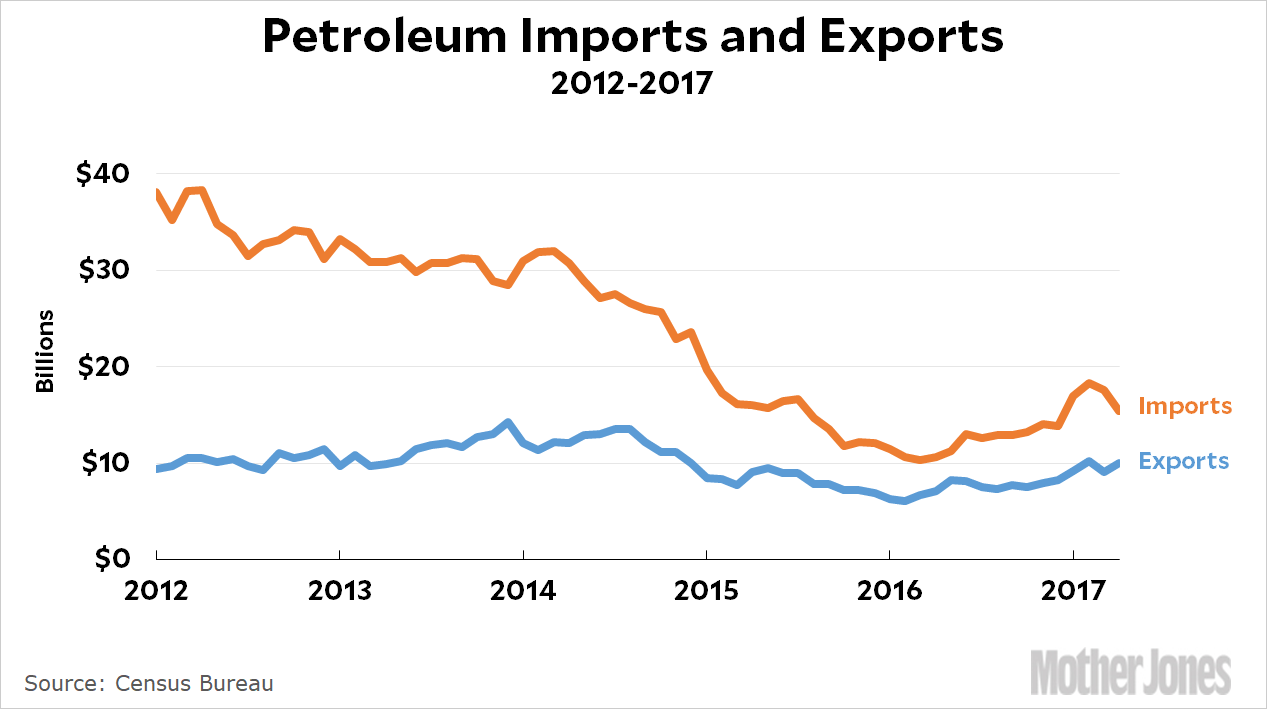
    American oil exports are emerging as a disruptive new force in global markets. The U.S. exported 1 million barrels of oil a day during some months so far this year—double the pace of 2016—and is on track to average that amount for all of 2017, according to a Wall Street Journal analysis of data from the U.S. Energy Department and the International Trade Commission.

    American exports are mostly refined petroleum, not crude, but this is a trend many years in the making. As you can see, total imports of petroleum have dropped significantly over the past few years, and if exports double this year we’ll be close to a net balance in the oil trade. It’s a new era.

  • Obamacare Repeal Is Right on Track

    Erik Mcgregor/Pacific Press via ZUMA

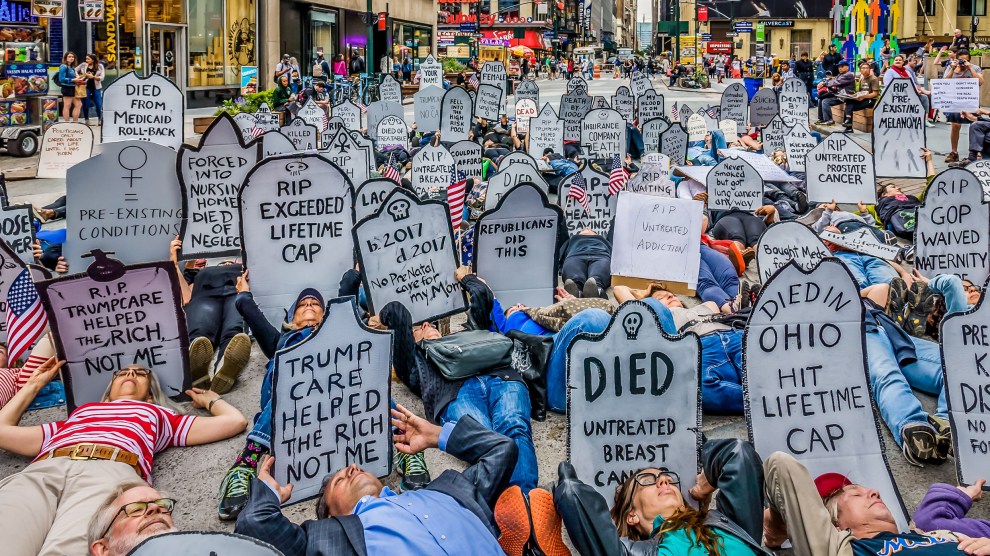
    This is just a placeholder post to make sure everyone is on the same page about the progress of Obamacare repeal. After the House failed to pass Trumpcare 1.0, we all thought it was dead. When Paul Ryan revived it, we figured it was still dead. There was just no way to reconcile the various wings of the GOP. Then, in a sudden rush, with no hearings, no time to read the bill, and no CBO score, Trumpcare 2.0 passed.

    Some lefties said: Maybe this is for the best. Let it pass in the House, chew up time in the Senate, and then fail there.

    Well, now it’s in the Senate. Until today, it looked doomed. Republican senators all had hangdog expressions. They said it was impossible to reconcile the various wings of the GOP. As late as this morning, pundits were theorizing that Mitch McConnell just wanted a “body”—a bill that would fail, but which would show that at least he tried.

    Now, suddenly, after a motivational lunch, everyone is feeling chipper. Maybe they can pass something after all! And they’ll do it with no hearings, no time to read the bill, and no CBO score.

    I sure hope everyone is taking this seriously. It could happen. If there’s one thing that can unite the Republican Party, it’s showing up a bunch of smug Democrats. As for all those “moderates” who supposedly will never agree to a bill that takes away insurance from millions, just remember what happened in the House: after voting against Trumpcare 1.0, the moderates negotiated an even worse bill and then went ahead and voted for it. The thinnest reed on the planet is a Republican moderate.

  • Your Evening Trump Roundup

    Things we’ve learned in the past few hours:

    Russiagate #1: After James Comey’s meeting with Donald Trump in February, in which Trump asked him to shut down the Russia investigation, Comey told Attorney General Jeff Sessions that he didn’t want to be left alone with Trump ever again.

    Russiagate #2: In March, Trump explicitly asked Dan Coats, the Director of National Intelligence, to help him get Comey to back off the Russia probe. After discussing this with other officials, Coats “decided that intervening with Comey as Trump had suggested would be inappropriate.”

    Eric Trump: For years, Eric Trump hosted a golf tournament to benefit St. Jude Children’s Research Hospital in Memphis. Use of the golf course was donated by Donald Trump. At least, it was until 2010, when Donald suddenly decided that Eric’s charity tournament would have to pay full freight for use of the facilities. In fact, Eric had to pay more than anyone plausibly thinks a weekend rental of the course could possibly cost. “Even if the Eric Trump Foundation had to pay the full rate for literally everything, Forbes couldn’t come up with a plausible path to $322,000 given the parameters of the annual event (a golf outing for about 200 and dinner for perhaps 400 more).” There are plenty of other niggling little questions at the link about the Trump family’s approach to charity.

    Our solar wall: If Mexico isn’t going to pay for the wall, maybe we can turn it into a moneymaker all on its own. Apparently Donald Trump has proposed that we build the wall 50 feet high, cover it with solar panels, and then sell the electricity. Sigh.

  • Here Are Three Big Tests of the Donald Trump Approach to Public Policy

    It occurs to me that we now have three tests of Donald Trump’s barstool approach to public policy:

    Immigration. Trump hasn’t done much on the policy side to reduce illegal immigration, but he has stepped up the pace of high-profile raids. He’s also blustered a lot and pissed off just about the entire nation of Mexico. Will this be effective in scaring Latin Americans away from crossing the border into El Norte?

    Qatar. The US has been unhappy with Qatar’s support for terrorist groups for several years. Now Trump has decided to turn this into a highly public battle. Will Qatar respond positively to this?

    NATO. Every American president has pressed our NATO allies to spend more on defense, with only sporadic success. Trump has decided to up the ante by implicitly threatening to leave NATO if they don’t. Will this finally get them to commit to higher defense budgets?

    All of us overeducated types are sure that Trump’s approach will make things worse, not better. That’s certainly what I think. In a year or two, these three issues should give us a pretty good idea of whether we’re right.

  • Those High Obamacare Deductibles Aren’t So High After All

    Republicans have been griping for years about the “worthless” health insurance provided by Obamacare. Why worthless? Because the deductibles are so high.

    This takes some serious chutzpah, since high-deductible insurance has been a favorite Republican meme for decades. Practically every Republican health care proposal is based on some combination of high-deductible plans and health savings accounts, and Trumpcare is no exception. Under Trumpcare, average deductibles would increase considerably and HSAs would double in value. The only reason you haven’t heard about this is because Republicans have kept pretty quiet about it. You see, conservatives love it, but voters don’t. They just want health insurance to pay the damn bills.

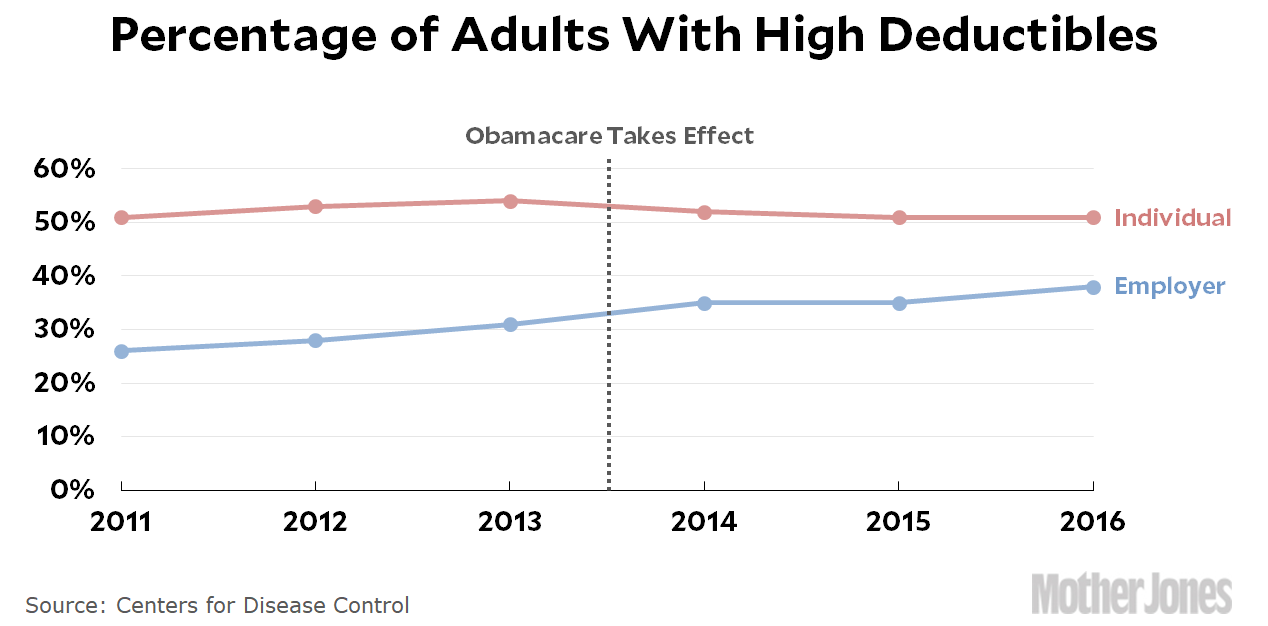
    But shameless or not, it’s still true that many people on the Obamacare exchanges buy plans with deductibles of $3,000 or more. That’s a drag. Of course, before Obamacare lots of people with individual insurance bought plans with high deductibles too. So what we really want to know is whether this changed when Obamacare went into effect. Here are the latest numbers from the CDC:

    Among those with individual insurance, high-deductible plans have stayed dead level since Obamacare took effect. It’s had zero effect on the number of people who choose to buy less expensive plans with higher deductibles.

    On the other hand, employer plans have been getting steadily crummier the entire time, and once again this has nothing to do with Obamacare. Deductibles have gone up solely because large companies have chosen to pare down their health coverage even though corporate profits are at an all-time high.

    This is just the latest in a long list of Obamacare disasters that have turned out not to be. It didn’t send the cost of health care skyrocketing. Obamacare didn’t destroy part-time jobs. It’s not in a death spiral. Premiums haven’t been higher than originally projected. And now we know that it’s had no effect on deductibles either.

    Obamacare does have a few real problems. They are generally small and technical, and could be fixed very easily. But fixing Obamacare wouldn’t provide a big tax cut for the rich, so Republicans aren’t interested. That’s all you need to know about why they hate it so much.

  • Trumpcare Could Screw Millions With Employer Insurance

    Here’s something that’s been brewing for a while, but is only now starting to get some attention. The Trumpcare bill that passed the House allows states to waive the ten essential benefits mandated by Obamacare. But this doesn’t just affect individual insurance purchased on the exchanges. It also affects employer insurance:

    Under the House bill, large employers could choose the benefit requirements from any state—including those that are allowed to lower their benchmarks under a waiver, health analysts said. By choosing a waiver state, employers looking to lower their costs could impose lifetime limits and eliminate the out-of-pocket cost cap from their plans under the GOP legislation.

    A company wouldn’t have to do business in a state to choose that state’s benefits level, analysts said. The company could just choose a state to match no matter where it is based.

    ….A House GOP spokesman [said] the bill didn’t intend to touch employer plans and any unintended consequences could be addressed by Health and Human Services Secretary Tom Price.

    Please raise your hand if you trust Tom Price to take care of this little boo-boo after the fact. Anyone?

    There’s going to be more stuff like this. Democrats spent months writing the legislative language for Obamacare, and even so there were mistakes and unintended side effects. House Republicans spent a few days on their bill. What are the odds that they have any idea what it actually does?