• Helping the Poor Is the Right Thing to Do, But Maybe Not Much of a Political Winner


    I don’t want to make too big a deal out of one comment from one guy, but here’s the response of a minimum-wage worker who got a big increase when Emeryville raised its minimum wage to $14 per hour:

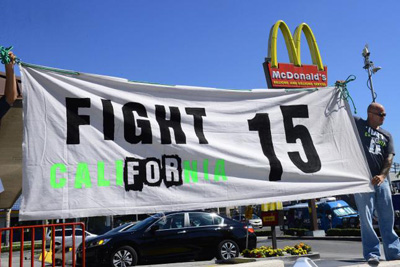
    Security guard Kenneth Lofton was among the workers who benefited last year when this East Bay city hiked its hourly minimum wage to nearly $15 for employees at large companies. The jump was almost 70% more than what he used to make in nearby Oakland when he was paid $10 an hour.

    ….”It’s somewhat better, but not much,” Lofton said Tuesday morning while eating breakfast and manning the security gate at an Emeryville parking lot. “The high cost of living here takes a big bite out of whatever monetary increase you get, so it’s like not getting an increase at all.”

    But, he said, “at least they’re trying.”

    This is crazy. If Lofton works full time, he’s seeing an increase of $160 per week. Call it $130 or so after taxes. That’s real money. But “it’s like not getting an increase at all.”

    Raising the minimum wage—whether to $12, $14, or $15—is the right thing to do. But as a purely political matter, comments like Lofton’s make you wonder if this kind of thing provides any benefits for Democrats. It earns them plenty of annoyance from employers, along with at least some annoyance from consumers who have to pay higher prices, but it’s not clear if this is offset much by increased loyalty from the folks who are helped. Is Lofton more likely to show up at the polls in November because he got a raise? Hard to say.

  • Donald Trump’s Position on Abortion Changes Yet Again

    So what is Donald Trump’s position on abortion? Let us count the ways:

    Wednesday:

    MATTHEWS: Do you believe in punishment for abortion, yes or no as a principle?

    TRUMP: The answer is that there has to be some form of punishment.

    MATTHEWS: For the woman?

    TRUMP: Yes, there has to be some form.

    A few hours later:

    Campaign statement: This issue is unclear and should be put back into the states for determination.

    A few hours after that:

    Campaign statement: The doctor or any other person performing this illegal act upon a woman would be held legally responsible, not the woman….My position has not changed.

    Thursday:

    “It could be that I misspoke but this was a long, convoluted subject….This was a long discussion…which frankly they don’t run on television because it’s too long.”

    (Ed note: This is a lie. Trump’s answer was televised in its entirety.)

    Friday morning:

    “A question was asked to me. And it was asked in a very hypothetical. And it was said, ‘Illegal, illegal’….But I was asked as a hypothetical, hypothetically. The laws are set now on abortion and that’s the way they’re going to remain until they’re changed….I think it would’ve been better if it were up to the states. But right now, the laws are set….And I think we have to leave it that way.”

    A few hours later:

    Campaign statement: Mr. Trump gave an accurate account of the law as it is today and made clear it must stay that way now—until he is President. Then he will change the law through his judicial appointments and allow the states to protect the unborn. There is nothing new or different here.

    The best part of all this is that when the Trump campaign issues a statement cleaning up after their boss, they always insist that nothing has changed.

    No, wait: the best part is when John Dickerson asked Trump if he thought abortion was murder and Trump refused to answer. “I do have my opinions on it. I just don’t think it’s an appropriate forum.” Really? Face the Nation is not an appropriate forum for discussing one of the key political issues of our time? What is?

  • Friday Cat Blogging – 1 April 2016


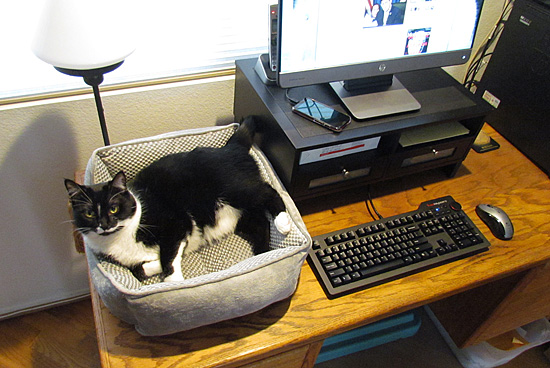
    For the last few weeks I’ve been on a mission to upgrade my working environment—the very hub of my blogging empire. As these things so often do, it all started with something trivial: a new lamp. Then I got a new monitor, a new monitor stand, a new keyboard, and new cable management to clean everything up. It’s all lovely.

    Naturally, I had to upgrade the cats’ snoozing environment too, so I bought a new cat bed to replace the old red blanket. It’s a hit with both critters, but especially Hilbert. And the nice thing about it is that it has side pillows, which keeps Hilbert within the boundaries of the bed when he rolls and stretches. I have created a bounded Hilbert space, which turns out to be excellent for human blog productivity.

    And with that, I’ve finally gotten my Hilbert space joke off my chest. It’s been a long time coming.

  • Millennials Still Feeling Pretty Apathetic About the Election


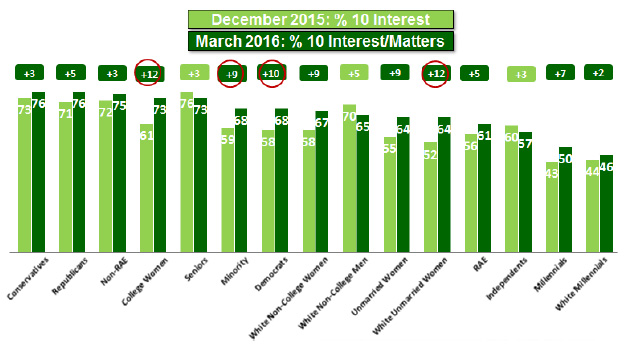
    Democracy Corps has an interesting new survey out. Basically, it shows that women hate Donald Trump; unmarried women really hate Donald Trump; and the white working class doesn’t actually seem to like him any better than they liked Romney.

    But here’s the bit that interested me:

    What this shows is that, generally speaking, traditional Democratic constituencies have been more fired up by this year’s election theatrics than traditional Republican groups. That’s bad news for Trump.

    But there’s one exception: millennials. They’re the least engaged of all groups, and the election hasn’t done much to change that. Their enthusiasm is up a few points from December, but that’s all. Millennials in college are a lot more engaged—the women, anyway—but millennials in general aren’t showing much more enthusiasm than usual even though they’re starting from a low base.

    This gets to one of my pet gripes: the conflation of millennials with college students. Whenever you hear about the millennial vote, it’s almost always illustrated by either college students or college grads. That’s fine, as long as it’s noted. But usually it’s not. And college grads are not representative of all millennials. In fact, as this chart shows, quite the contrary.

  • Yet Again, There Will Be No Dodgers on TV in Los Angeles This Year


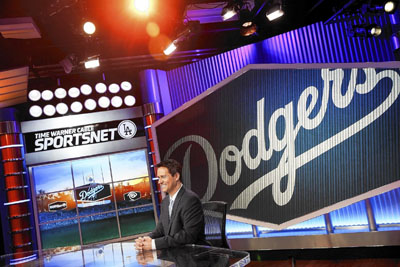
    Time Warner Cable in Los Angeles owns the rights to the Dodgers, but no other cable operator has been willing to pay the high asking price to carry TWC’s Dodgers channel. As a result, the Dodgers have been blacked out on most TVs in Southern California for the past two years. This year, Time Warner tried once again to cut a deal, and everyone turned them down yet again:

    The company proposed cutting the carriage fee for the channel, entering into binding arbitration or signing a six-year deal — but struck out. “They’ve rejected every offer we’ve made,” Time Warner Cable spokesman Andrew Fegyveresi said Thursday.

    “We’ve offered short-term deals and long-term deals, we’ve lowered the price by 30%, we’ve asked for arbitration, we’ve offered … the same thing they charge for their regional sports networks, we’ve told them we’d meet them any time, anywhere to negotiate and nothing has worked,” Fegyveresi said.

    Boo hoo. They tried everything—everything, I tell you. Except, of course, for the one thing that would have worked: the right to make the Dodgers an extra-cost option, not part of basic cable. Most cable operators see no reason that every television viewer in the LA basin should have to pay 60 bucks a year more in cable fees regardless of whether or not they care about baseball.

    And that’s the one thing TWC won’t do. Why? Because then it will become crystal clear just how few households actually care enough about the Dodgers to pay for them. And that would truly be a disaster beyond reckoning. There’s a limit to the amount of sports programming that people are willing to have crammed down their throats!

    So what’s going to happen? Time Warner paid $8 billion for a 25-year deal to broadcast the Dodgers, and they’re taking a bath. As things stand, they could keep taking a bath for 23 more years. At some point, surely they have to cave?

  • Did the Internet Kill April Fool’s Day?


    Here is today’s question to ponder: Did the internet kill April Fool’s Day?

    Sure, April Fool’s has always been kind of annoying. But back in the dark ages, the effort involved in creating pranks, along with the inherent size limits of meatspace circles of friends, kept it from getting too far out of control. Then along came the internet, and suddenly April Fool’s jokes were easy and unavoidable. There were times when it seemed like every page you visited had some dumb April Fool’s joke embedded somewhere.

    But now there’s a backlash. Everyone’s weary of the whole thing. And the number of April Fool’s pranks seems to have gone way down.

    So is that that? Are we getting back to a time when only a plucky few pull off April Fool’s pranks, and they know they have to make them good enough to be worthwhile? Or are we just taking a breather this year?

  • Has Donald Trump Wrecked the Republican Ideological Coalition?


    Dylan Matthews points me toward a new study by Matt Grossmann and David Hopkins that can be summarized in the chart below, which I mashed up from a pair of separate charts:
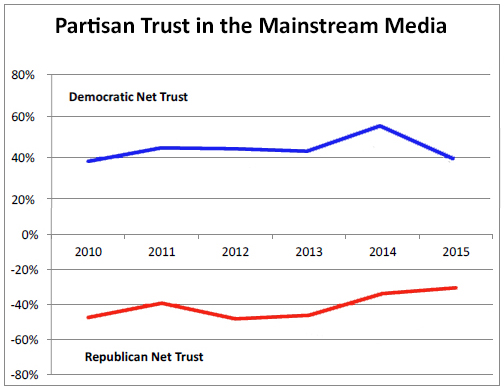
    Well, that’s no surprise, is it? Distrust of the lamestream media has been a conservative staple for decades. But Grossmann and Hopkins claim this has a broad, systemic effect on how partisans view the world:

    The American party system contains two distinct partisan types: a Republican Party chiefly defined by a common ideological commitment and a Democratic Party that is instead a coalition of social groups. Republican perceptions of widespread bias in the mainstream media encourage party members to view themselves as engaged in an ideological battle with a hostile liberal establishment, turning even their choice of news source into a conscious act of conservative self-assertion.

    ….Democrats, in contrast, are relatively content to rely on traditional media sources that often implicitly flatter the Democratic worldview but do not portray themselves or their consumers as combatants in a political or ideological conflict….The information environment in which they reside claims to prize objectivity, empiricism, and policy expertise—thus remaining highly congruent with the character of the Democratic Party as a coalition of voters who demand practical solutions to social problems in the form of targeted government action.

    OK. Once again, I’m not sure this is really news. So why highlight it? Because I’m disappointed that the authors didn’t take the opportunity to examine the Donald Trump phenomenon in light of all this. In 2016, we’ve learned that perhaps the Republican coalition isn’t actually as ideologically committed as we thought: conservatives are voting for Trump in large numbers despite his rather obvious disdain for standard Fox News right-wing principles. In 2012, the Republican primary battle was between the tea partiers (Gingrich, Santorum, Perry, Bachmann) and the moderates (Romney), but that’s not happening this year. Instead, it’s been a battle between Trump and everyone.

    So perhaps Fox has failed? Presented with a populist conservative like Trump, a large number of conservatives have jumped ship and decided that the ideological Fox worldview was never what they cared about in the first place. They liked the outrage and they liked the liberal bashing, but the whole “small government/hooray for corporations/cut capital gains taxes” schtick never really did much for them. They just went along because of the other stuff. In the end, when it came down to a choice between Fox and Trump, Trump won.

    Maybe this doesn’t mean anything. Maybe Trump is sui generis and everything will go back to normal if he loses. But it’s certainly worth some hard thought.

    UPDATE: David Hopkins replies here:

    In our view, the existence of the conservative media universe is actually central to the story of Trump’s success….Many conservatives out in the electorate might have been open to the argument that Trump’s various policy apostasies should properly rule him out of membership in the conservative movement, but regular voters are not necessarily going to reach such a conclusion by reasoning on their own. Some political authority that they know and trust would need to make this case against Trump in order for it to stick—and today, the authorities that Republican voters know and trust the most are not elected officials or policy intellectuals but leading personalities in the conservative media empire. By and large, these personalities—Hannity, O’Reilly, Rush Limbaugh—have not criticized Trump in this manner, and in fact have often praised him, thus validating him in the eyes of the electorate as a true conservative in good standing.

    This sets up an interesting dynamic: “Fox News” vs. Fox News anchors. In its corporate role as an arm of the Republican Party, Fox News is anti-Trump. But most of its anchors are Trump sympathizers. They care more about maintaining their credibility with their fans than with their bosses—and their bosses don’t have the leverage to do much about it.

    I’m not sure what this all means. But it deserves a bit of cogitation.

  • Chart of the Day: Net New Jobs in March


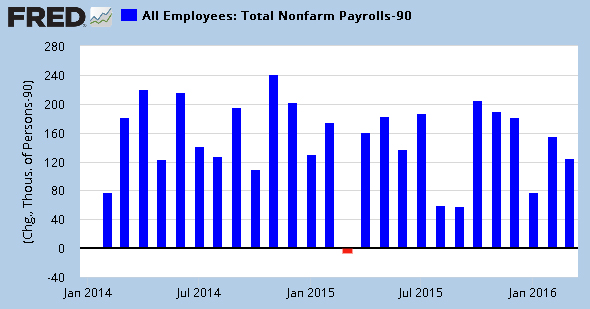
    The American economy added 215,000 new jobs last month, 90,000 of which were needed to keep up with population growth. This means that net job growth clocked in at a respectable 125,000 jobs. Both the number of workers and the number of unemployed increased, and the headline unemployment rate increased from 4.9 percent to 5.0 percent. About a tenth of the new jobs were in the public sector, which is a little more than usual. Labor force participation was up by 0.1 percentage points. Overall, this was a fairly typical jobs report in the post-recovery era: not bad but not great. The labor market is showing slow and steady progress, but not enough to make up for the output gap from the Great Recession anytime soon.

    Hourly earnings of production and nonsupervisory employees were up at an annual rate of about 2.4 percent compared to last month, and weekly earnings rebounded from last month’s decline. This is also the new normal. It’s better than nothing, but it’s not exactly a sign of a booming labor market.

  • Reality Is Bearing Down on Paul Ryan


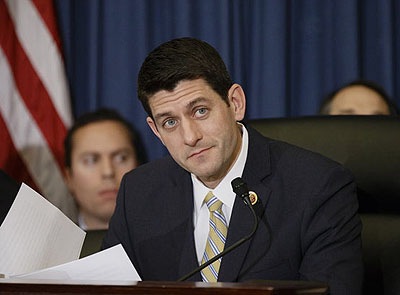
    Lisa Mascaro reports that the honeymoon may be over for Paul Ryan. He only lasted five months:

    As Congress is careening toward another budget crisis and the Republican Party is ripping itself apart over Donald Trump’s rise, the man best known as the architect of the GOP’s austere spending blueprint is likely to miss an April 15 deadline to approve a new funding plan for 2017.

    He’s been unable to overcome the same resistance from the conservative House Freedom Caucus that doomed his predecessor, and is so far similarly unwilling to use the power of the speaker’s office to force stragglers to fall into line.

    ….To some, Ryan’s repeated calls for Republicans to “raise our gaze” and his frequent attempts to position himself as the GOP’s deep thinker are starting to give off an air of ivory tower insignificance. Conservatives wonder if he’s still a “young gun” trying to shake up the party. At a Trump rally in Ryan’s Wisconsin hometown of Janesville last week, the crowd booed the mention of his name.

    ….In many ways, the speaker’s problems are of his own making, the result of a leadership strategy he helped forge to recruit the most conservative candidates to run for office and then, after Republicans won the House majority in the 2010 midterm election, reject almost all of Obama’s initiatives.

    Well, it’s still early days. Maybe Ryan is just working slowly and steadily to gain some kind of consensus. More likely, though, the tea partiers aren’t any more willing to compromise under Ryan than they were under Boehner—and that leaves Ryan high and dry. If he can’t convince them to be flexible even during an election year, he obviously doesn’t have much conservative credibility left. Hard to believe.

  • Email Newsletters Are a Blight on Mankind


    Justin Wolfers is annoyed by the email newsletter bubble. Brad DeLong comments:

    Authors seeking both eyeballs to sell to advertisers and a committed, engaged audience with which they can conduct a conversation are now trying to ride two horses—a clickbait audience served by self-contained pieces, and a newsletter audience with which they can interact and converse. I don’t think it is working very well.

    Is that what’s happening? I’ve always thought there was something different going on: the professionalization of the blogosphere has, ironically, made blogs too stuffy and corporate. If you want to write a post complaining that the local supermarket doesn’t carry the brand of peanut butter you like, you can hardly do this at Vox.com or 538 or the Washington Monthly.1 Those sites are reserved for serious commentary. So if you still want to write that kind of stuff, you do it in a newsletter that’s all yours and nobody else controls.

    But Brad is suggesting that the real motivator is a desire to—what? Avoid the trolls? (Who cares about trolls?) Write in a more interactive space? (How are newsletters more interactive than blogs?) Write in a more private space where you can toss out weird ideas with less potential for blowback? (Cowards.) Create “added value” for subscribers who will hopefully donate money to you/your employer? (You corporate shill, you.)

    I think we should toss this question to the newsletter writers. What’s the deal? If you need a second writing space, why not a quick-and-dirty blogspot blog or Tumblr or Medium? Why the throwback to email?

    1I typically solve this problem by writing this kind of stuff on weekends, which I consider a more personal space. So far, nobody has disabused me of this notion.