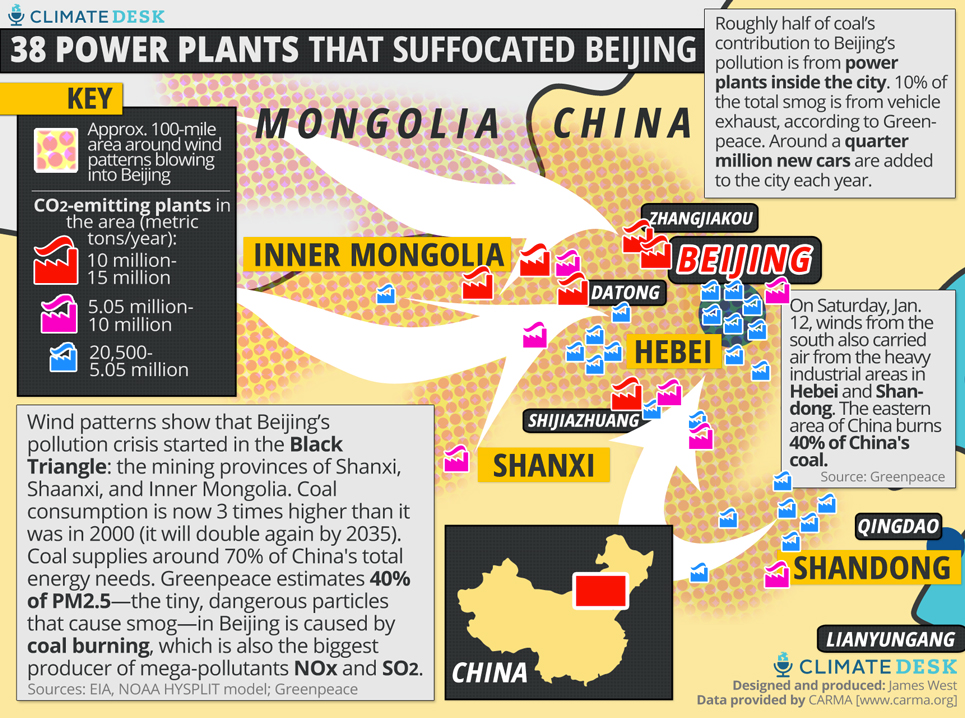
Chart: The Black Triangle Suffocating Beijing


Beijing Coal Map

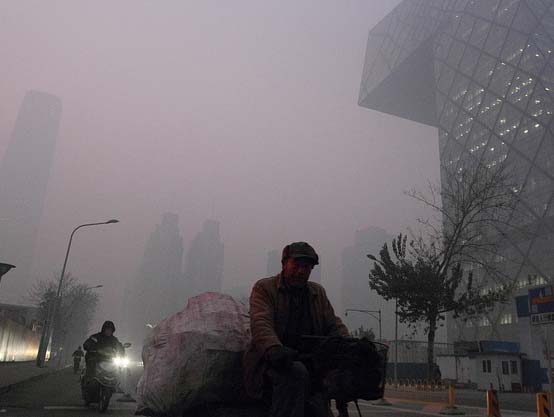
In 2008, Beijing pulled off what some (myself included) considered a miracle: banishing choking smog to reveal an Olympic city bathing in blue. They reportedly took a million of the city’s 3.3 million cars off the road, and closed down factories and construction sites.

But try as they might, in the years since the Olympics, city officials have rarely replicated that success, despite replacing the city’s coal-fired power stations with natural gas, capping its annual coal consumption at 20 million tons by 2015, forcing heavy trucking to go nocturnal, and limiting car exhaust and construction dust.

The recent crisis that featured “beyond index” rates of pollutants and a thick, blanket of smog that choked the city for days, proves why Beijing just can’t do it alone. China’s enormous boom in cars often gets blamed, but in fact the bigger problem lies farther afield.

The chart above shows that without controlling emissions across the country—especially from neighboring coal-producing provinces like Hebei and Shanxi—prevailing winds will keep blowing toxic smog Beijing’s way. Climate Desk has compiled data from NOAA, Greenpeace, and CARMA to show 38 power plants that lie in the path of the winds that brought smog to Beijing during its pollution crisis from January 10-12.

The pollution is bad news for people’s health: A recent study by Greenpeace East Asia and Peking University’s School of Public Health estimated that 8,572 premature deaths occurred in four major Chinese cities in 2012 because of the smog.

A note about the data: CARMA produces a detailed list of carbon-emitting power plants around the world—but for China, it can be tricky to get their precise locations and emissions because there is no public disclosure database provided by the government. The area displayed on the map is a rough approximation.

More Mother Jones reporting on Climate Desk

DECEMBER IS MAKE OR BREAK

A full one-third of our annual fundraising comes in this month alone. That’s risky, because a strong December means our newsroom is on the beat and reporting at full strength—but a weak one means budget cuts and hard choices ahead.

The December 31 deadline is closing in fast. To reach our $400,000 goal, we need readers who’ve never given before to join the ranks of MoJo donors. And we need our steadfast supporters to give again—any amount today.

Managing an independent, nonprofit newsroom is staggeringly hard. There’s no cushion in our budget—no backup revenue, no corporate safety net. We can’t afford to fall short, and we can’t rely on corporations or deep-pocketed interests to fund the fierce, investigative journalism Mother Jones exists to do.

That’s why we need you right now. Please chip in to help close the gap.

DECEMBER IS MAKE OR BREAK

A full one-third of our annual fundraising comes in this month alone. That’s risky, because a strong December means our newsroom is on the beat and reporting at full strength—but a weak one means budget cuts and hard choices ahead.

The December 31 deadline is closing in fast. To reach our $400,000 goal, we need readers who’ve never given before to join the ranks of MoJo donors. And we need our steadfast supporters to give again—any amount today.

Managing an independent, nonprofit newsroom is staggeringly hard. There’s no cushion in our budget—no backup revenue, no corporate safety net. We can’t afford to fall short, and we can’t rely on corporations or deep-pocketed interests to fund the fierce, investigative journalism Mother Jones exists to do.

That’s why we need you right now. Please chip in to help close the gap.

We Recommend

Latest

Sign up for our free newsletter

Subscribe to the Mother Jones Daily to have our top stories delivered directly to your inbox.

Get our award-winning magazine

Save big on a full year of investigations, ideas, and insights.

Subscribe

Support our journalism

Help Mother Jones' reporters dig deep with a tax-deductible donation.

Donate