• Donald Trump’s North Korea Comments, Explained

    OK, fine, let’s write about the North Korea thing. When Donald Trump says something truly preposterous, the usual response is for someone in the White House to suggest anonymously that he didn’t really mean it. This can take many forms, and today it took this one:

    Goodness. How could these morons interpret “fire and fury like the world has never seen” as a nuclear attack? He was just talking about, um, a new and improved kind of napalm. Or, you know, a really spectacular Aurora Borealis. Or a really nasty tweet. We also have this:

    Ah, so this wasn’t a prepared statement after all. I thought that sounded iffy from the start. Trump was just looking at an opioid fact sheet. This explains a lot of things, as my exclusive blow-up of the document shows:
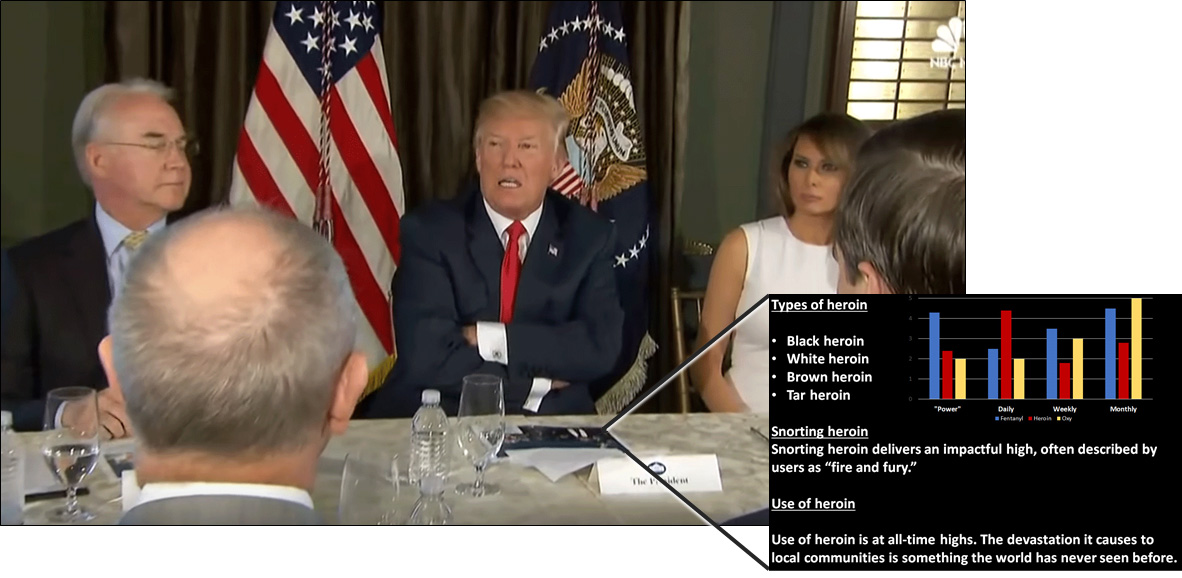
    Meanwhile, Rex Tillerson is telling us that the US is totally willing to talk things over with the North Koreans: “I think the president just wanted to be clear to the North Korean regime that the U.S. has the unquestionable ability to defend itself, will defend itself and its allies, and I think it was important that he deliver that message to avoid any miscalculation on their part.”

    Yeah. Trump was just trying to avoid any miscalculations. That’s the ticket.
  • Raw Data: Astrology in Europe

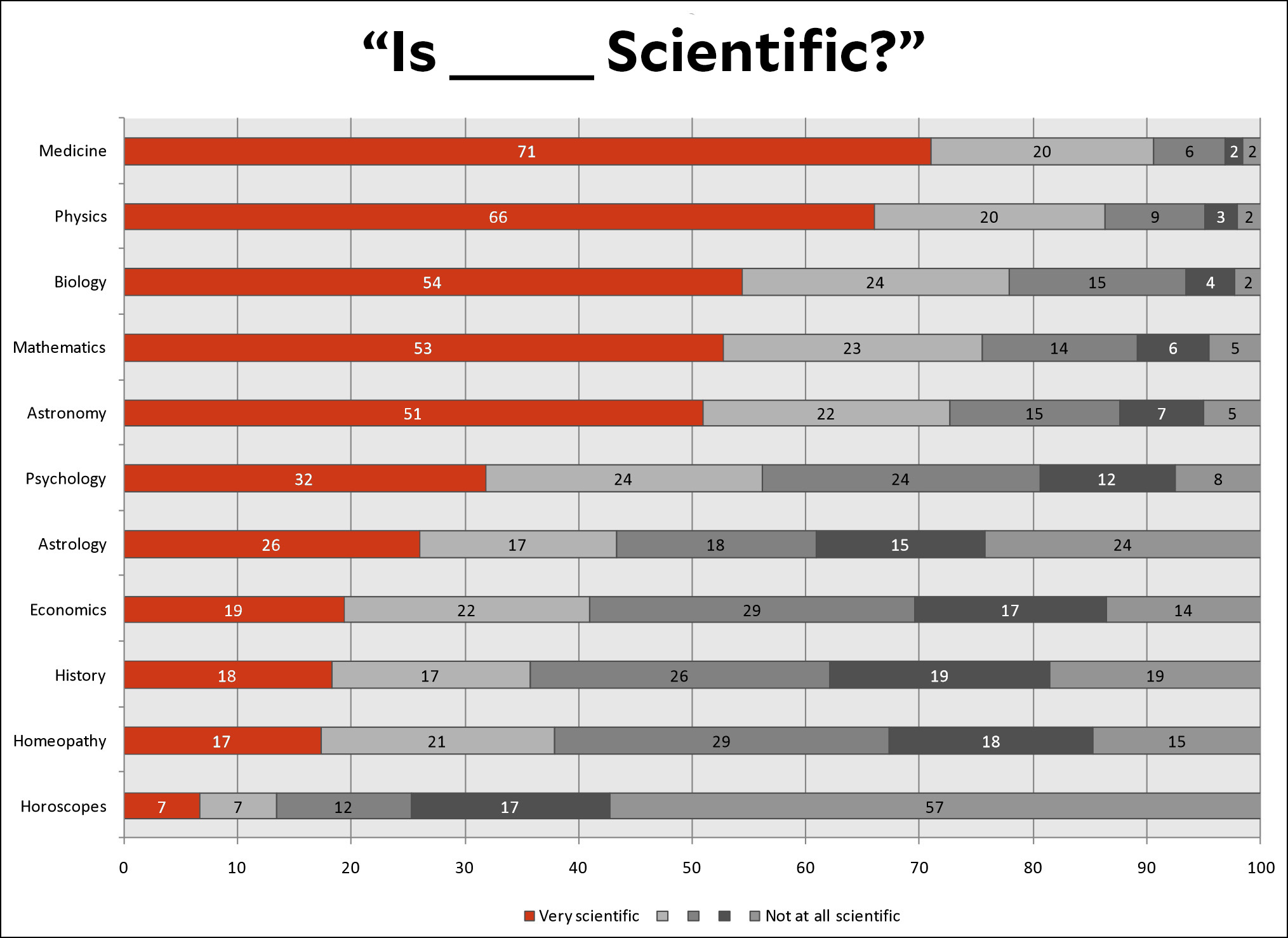
    This is apropos of nothing except that (a) I really don’t want to write about nuclear war with North Korea, and (b) Ross Douthat happened to point to it as part of an argument that other countries are stupid too. Anyway, here are the results of a 2011 study about the beliefs of Europeans:

    Apparently 43 percent of Europeans think astrology is pretty scientific, though only 14 percent think horoscopes are pretty scientific. Astrology handily beats out economics, which some people—*cough* Paul Romer *cough*—would consider a pretty sophisticated take on modern macro. And in a huge upset, medicine beat out physics.

    Also: Finland had the least belief in astrology as scientific. They also invented Linux and the Molotov cocktail. Pretty pragmatic, those Finns.

  • Chart of the Day: Middle Class Incomes vs. the Rich, 1946-2014

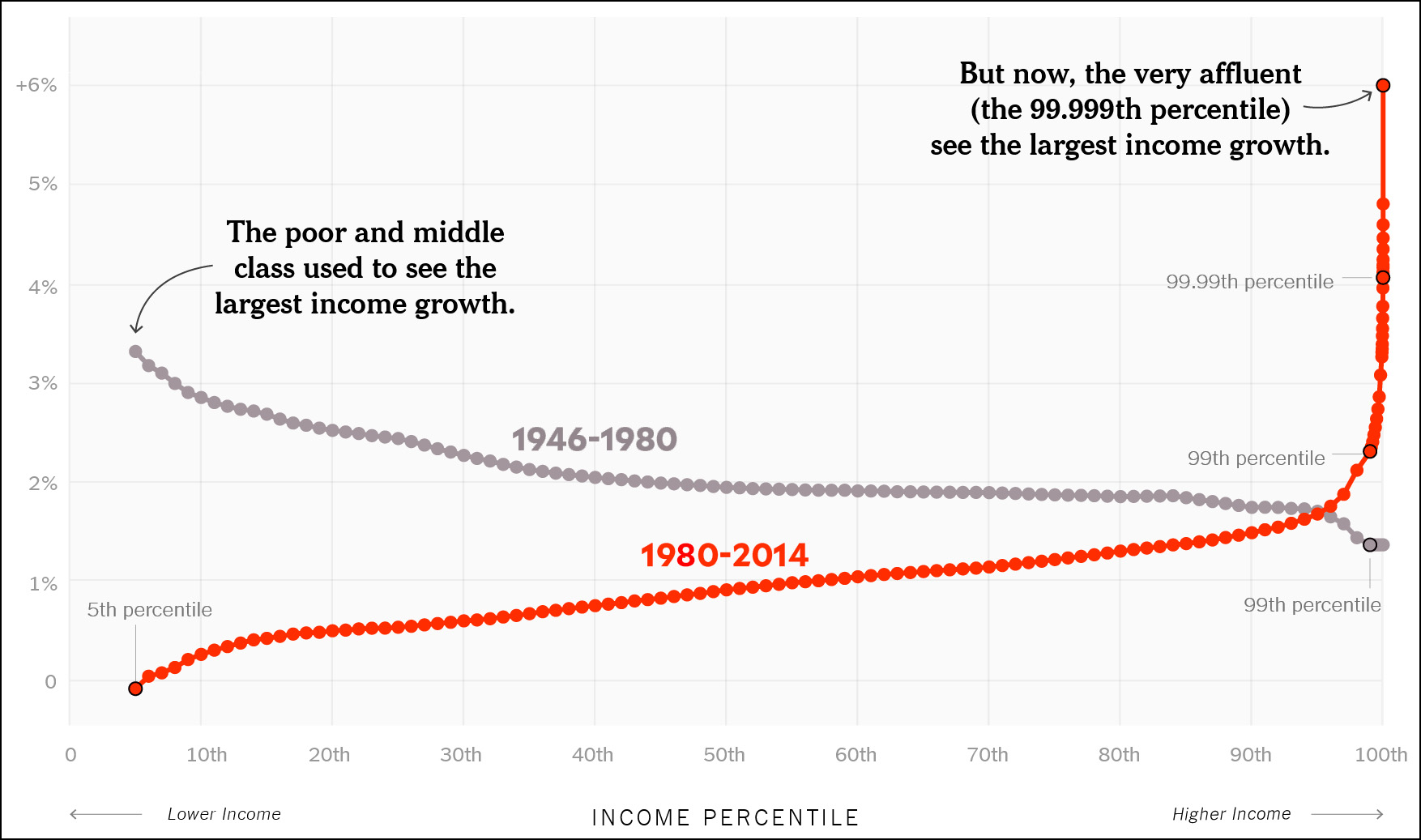
    I’m pretty sure I’ve posted a chart like this one before, but no matter. This one is better. It’s from David Leonhardt, and it shows income growth for various income levels over two periods of recent history:

    As we all know, incomes of the working and middle classes rose steadily in the decades after World War II. Then, in the mid-70s, their income growth suddenly slowed down. Finally, after 2000, their income growth went from sluggish to completely stagnant. Between 2000 and 2014, median household incomes didn’t increase by a single penny.

    There are several reasons we had such robust middle-class income growth in the 50s, 60s, and 70s: strong unions, cultural norms about executive pay, catchup growth from the Great Depression, Democratic control of Congress, weak international competition, financial repression, and so forth. As those things disintegrated in the late 70s and 80s, the rich were able to siphon off bigger and bigger shares of economic growth. And they did.

    That’s a familiar story. But this chart illustrates two other things as well:

    • In the postwar era, incomes of the working and middle classes actually grew faster than the incomes of the rich.
    • However, income growth was relatively evenly spread, ranging from about 3 percent per year for the poor to 1.5 percent per year for the rich.

    That second point is easy to miss. We look at the chart, and the first thing that catches our eye about the gray line is that it’s going down. But it doesn’t go down all that much. Pretty much everyone is doing well.

    In the post-1980 era, that changed dramatically. It’s not just that things turned around, it’s that the red line isn’t anywhere close to flat. The poor and working class have seen virtually no income increase at all. But the rich have seen gigantic increases, and even among the rich, the billionaires have done far better than the mere millionaires.

    That dynamic started around 1980, and has grown since then. However, it’s only since 2000 that it’s spiraled out of control. That’s when middle-class incomes stagnate completely and the income growth of the rich starts to skyrocket past 3 percent. In the recent American economy, 1973 was the first watershed year and 2000 was the second watershed year. The start of the 21st century is when our economy suddenly changed and became crazy. But I still don’t think that anybody knows why.

  • “Fire and Fury” From Donald Trump

    Apparently Trump O’Clock came while I was busy writing about humans incinerating the earth. It turns out that Donald Trump is thinking along the same lines:

    North Korea best not make any more threats to the United States. They will be met with fire and fury like the world has never seen. He has been very threatening beyond a normal state, and, as I said, they will be met with fire and fury and, frankly, power, the likes of which this world has never seen before.

    I’m not quite as worried by this as some people. Trump blusters this way routinely, and anyway, he’ll probably consider anything he does to be so heroic that it’s unlike anything the world has seen. Just yesterday, referring to a fairly routine bit of resume fudging that was exposed a decade ago, he tweeted, “Never in U.S. history has anyone lied or defrauded voters like Senator Richard Blumenthal.” Uh huh. Plus Trump is surrounded by advisors who can probably keep him in line.

    The bigger worry is the one I talked about a few days ago: that all the pressure over North Korea might prompt Trump to do something stupid. This in turn might provoke North Korea into launching an attack first. If they decide that Trump is serious, it might seem the best option.

    I don’t think that will happen either. Kim Jong-un isn’t crazy, he just likes to act that way. He’s probably completely rational, in the same murderous kind of way that Josef Stalin was. He might bluster like Trump, but he knows perfectly well that any war involving the United States would end with the obliteration of his country.

    All that said, this represents one of the reasons that Trump is so much worse than garden variety Republicans. With, say, Ted Cruz in office, I think there’s a 0 percent chance of nuclear war. With Trump in office there’s a 1 percent chance. That’s not much, but it’s 1 percent more than I’d like.

  • Welcome to Hell: Climate Change in the United States

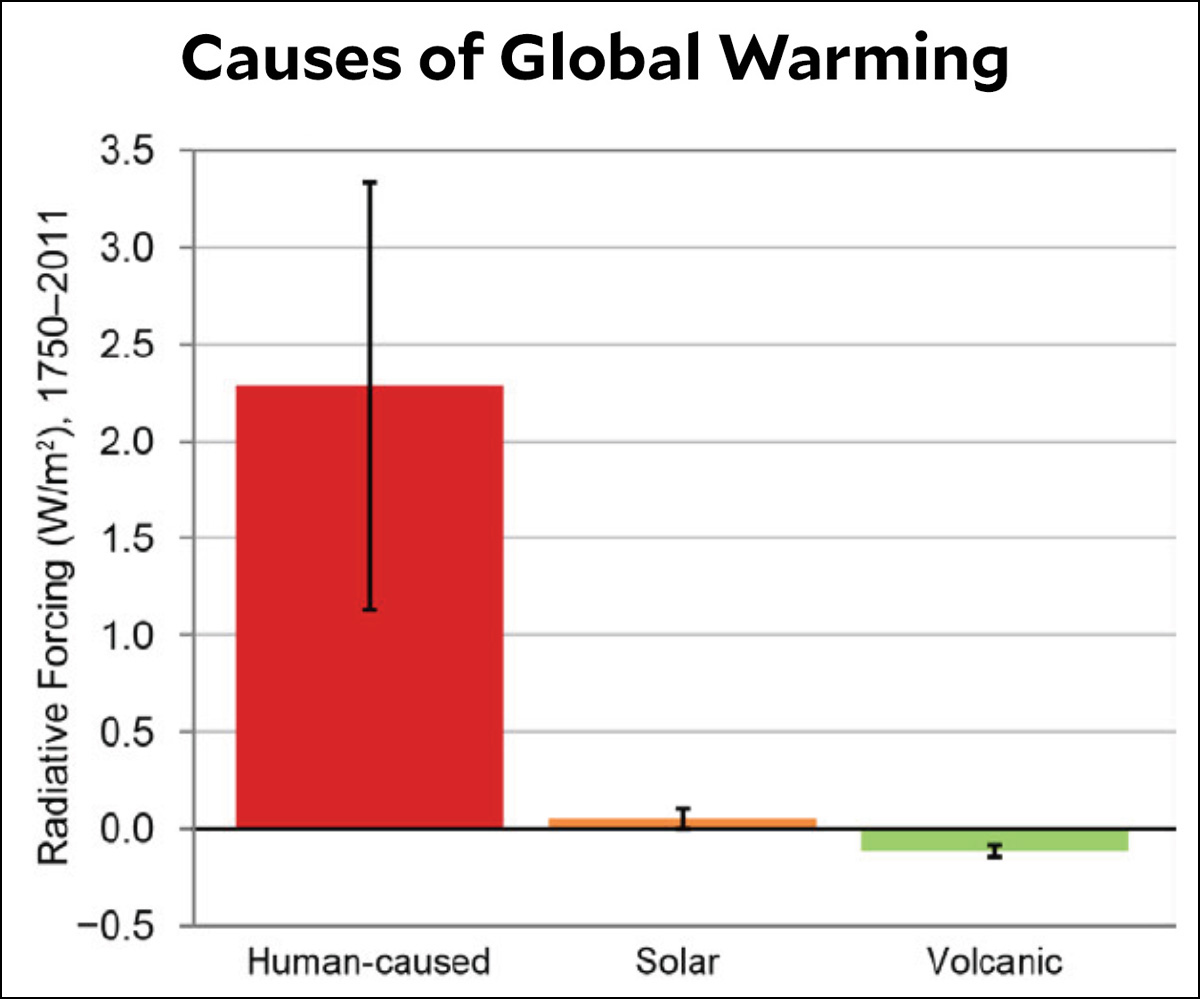
    A draft version of the Fourth National Climate Assessment has been leaked to the New York Times. Why? Because scientists were naturally afraid that the Trump administration might just decide to bury it. After all, here’s what it says:

    Many lines of evidence demonstrate that it is extremely likely that human influence has been the dominant cause of the observed warming since the mid-20th century….The likely range of the human contribution to the global mean temnperature increase over the period 1951-2010 is…0.6ºC to 0.8°C….Significant advances have been made in the attribution of the human influence for individual climate and weather extreme events since NCA3.

    And now, because I’m a chart lover, here are a few selected charts from the NCA4 report. First up is projected storm activity if we keep pumping CO2 into the atmosphere. Check out the West Coast in 60 or 70 years:

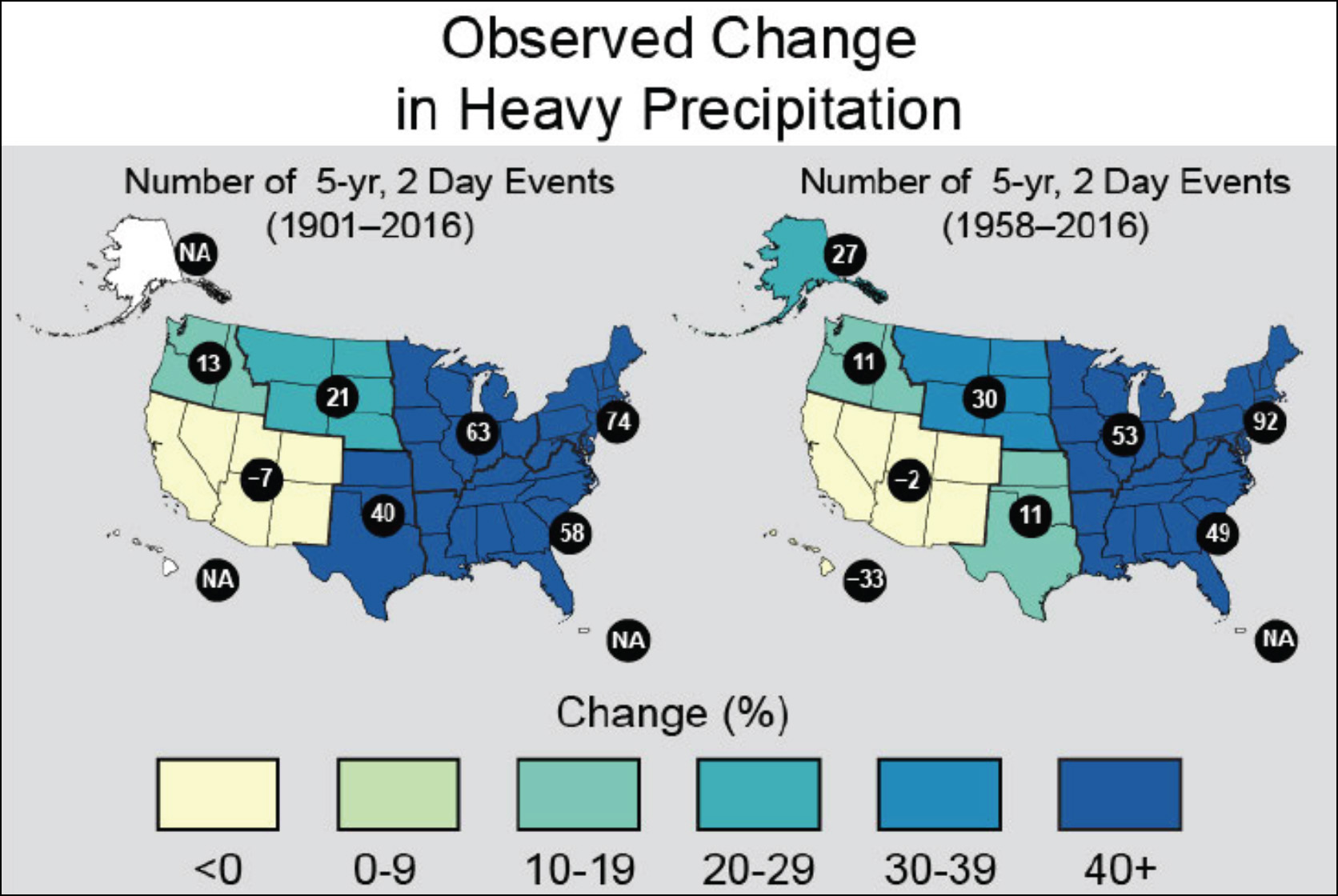
    That’s a lot more big storms for Baja California. The rest of the world will be getting a helluva lot stormier too. However, there’s also plain old rain, and outside of the West we’re going to get a lot more of it:

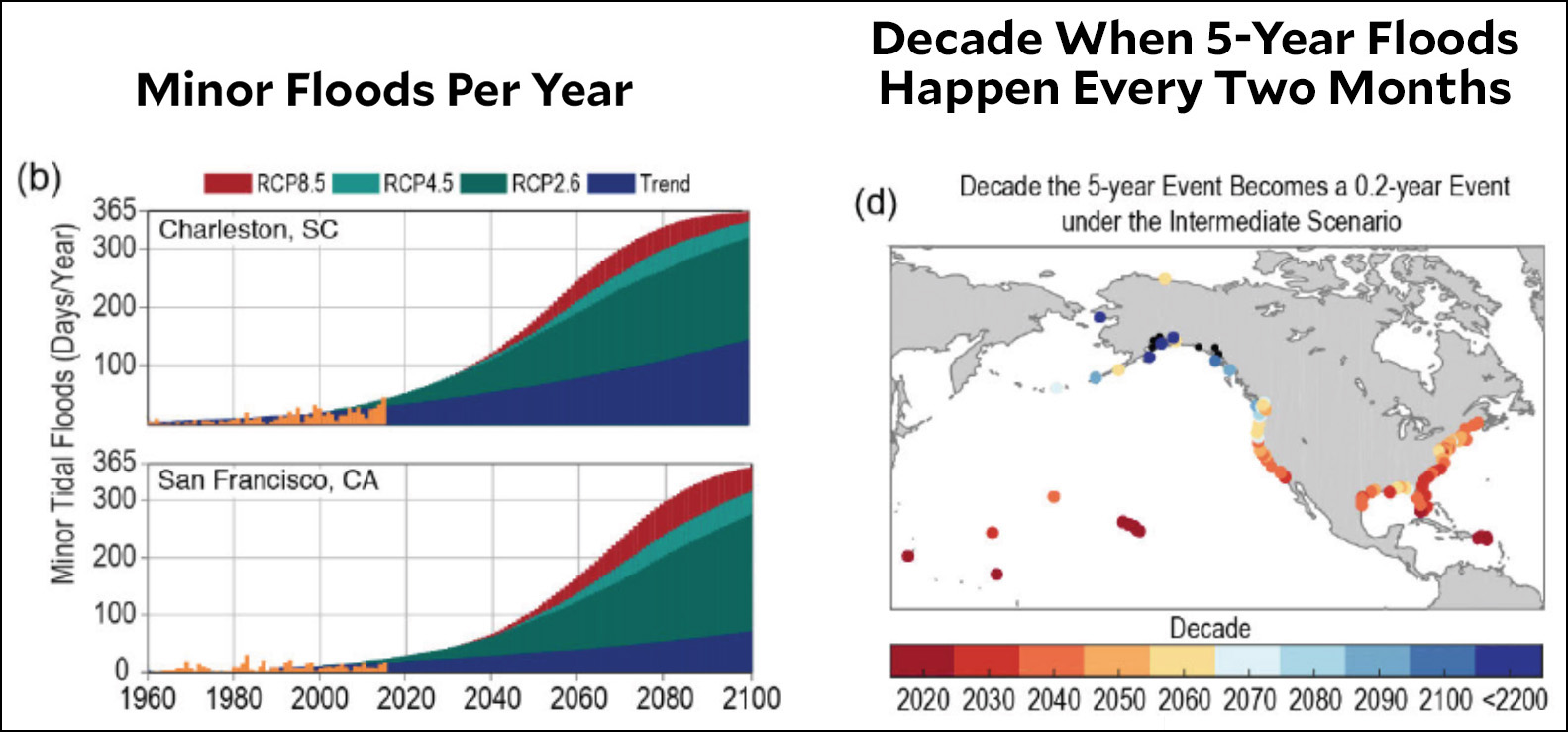
    Sea level is also rising. Add that to the increased rain and the increased number of storms, and you get a lot more floods. Note that the increase in flooding is going to happen pretty soon: as early as 2020 in some places and 2030 or 2040 in others.

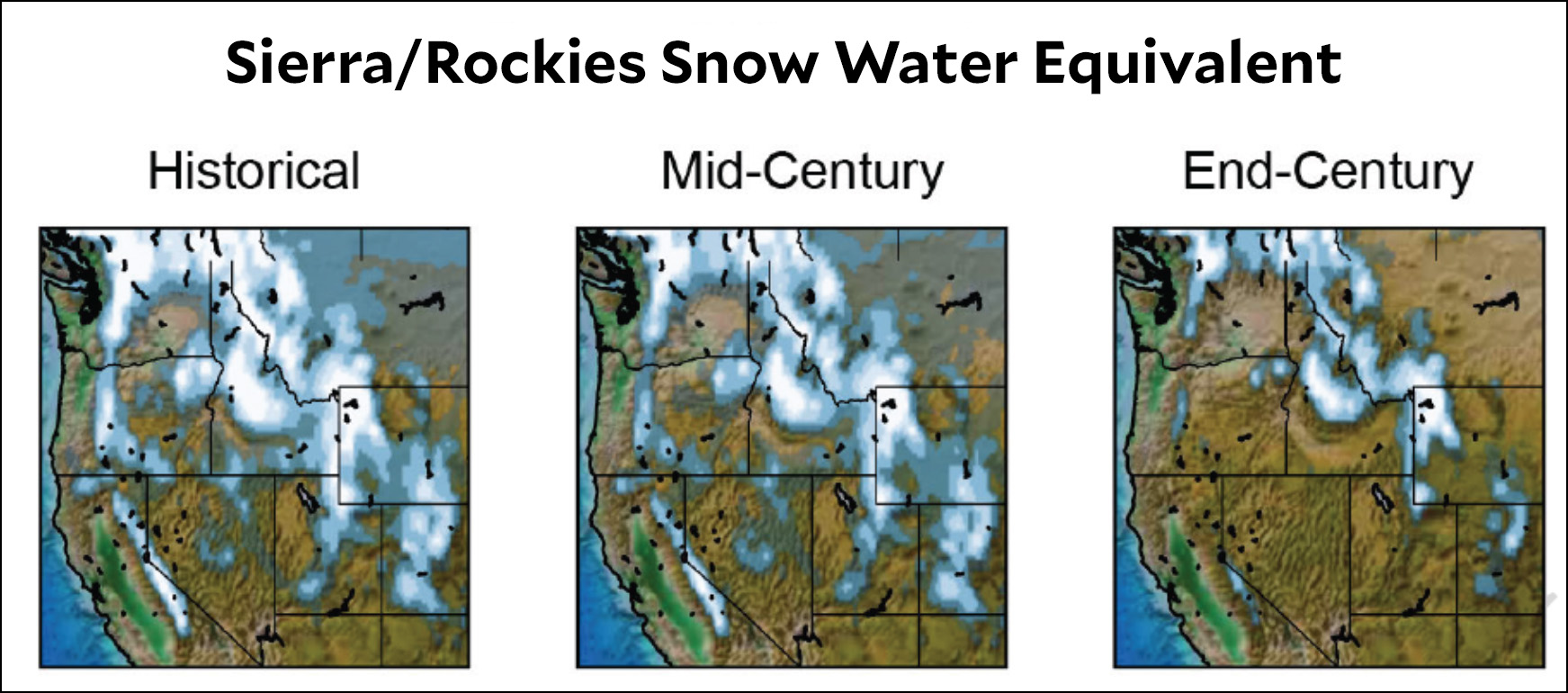
    Out here in California, we’re mostly worried about the opposite of floods. We’ll be getting a lot more wildfires and a lot more drought thanks to the steady decline of the Sierra snow pack:

    This doesn’t have to happen, of course. We could, if we wished, do something about it. Unfortunately, our current president doesn’t even believe this stuff, let alone have any desire to stop it from happening. Feeling better yet?

  • Hot Take: Why Are Small Business Owners So Happy?

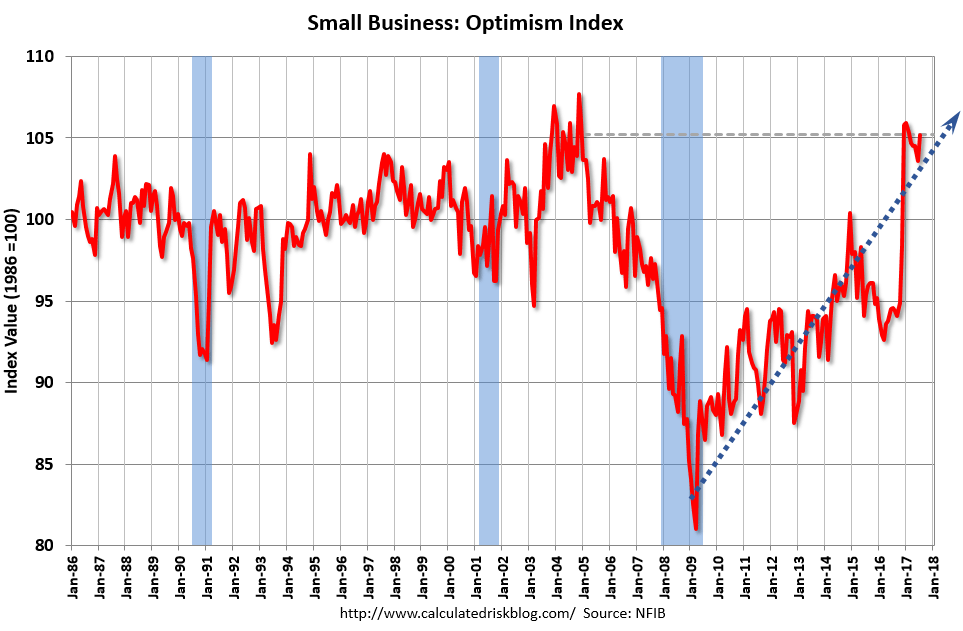
    A reader writes that he’d like my take on “the single weirdest trend I’m aware of in American opinion: small business optimism.” I aim to please, so here’s my hot take. First off, here’s the small-business optimism index from NFIB, via Calculated Risk:

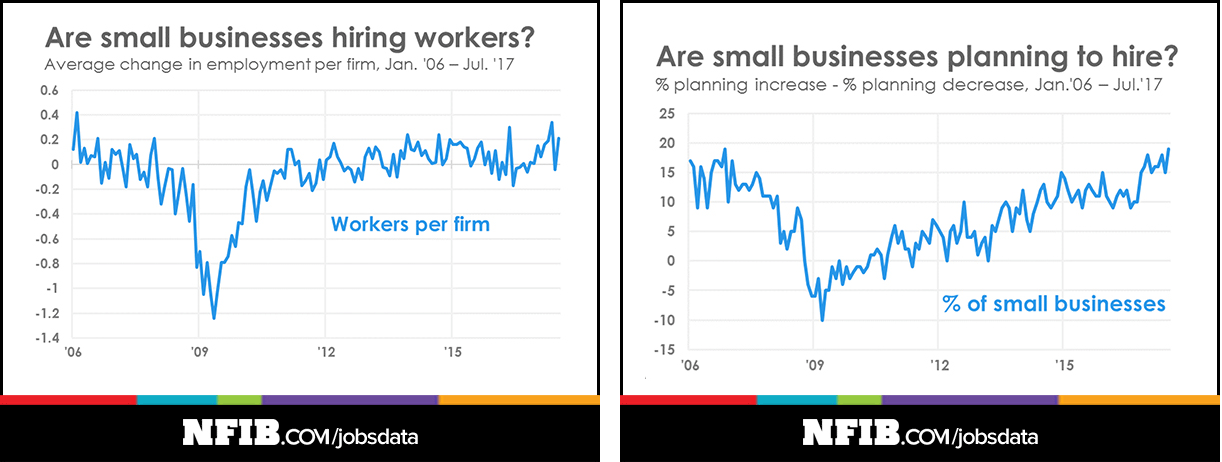
    Next up are a couple of other charts from NFIB’s website:

    There are a few things to note:

    • In the top chart, small business optimism unquestionably spiked after Donald Trump’s election.
    • At the same time, as the eyeball trendline shows, this was basically a reversion to trend, making up ground from a mysterious decline in 2015.¹
    • The two bottom charts don’t measure optimism. They measure what small businesses are actually doing. And the answer is: nothing much. Hiring has gone up slowly but steadily since the end of the recession, with no particular Trump bump. Plans to hire have done the same.

    There’s more data at the NFIB site, but it tells a reasonably consistent story: economic conditions have been getting better since the recession ended, and small businesses have responded the way you’d expect. If you take a look at what they’re actually doing—and planning to do—Trump’s election appears to have had only a modest effect.

    In other words, small business optimism is mostly a false front, not anything real about how he’s expected to affect the economy. There was sort of a pent-up demand to rebound from the unwarranted fall in optimism during 2015, and when you combine that with a lot of support for Trump, you get a spike in reported optimism. When it comes to actual hiring decisions, however, it’s obvious that small businesses aren’t all that optimistic about what a Trump administration will do.

    Bottom line hot take: small business owners surveyed by NFIB just really love Trump. That’s it.

    ¹Why did small business optimism decline so much in 2015? Well, 2015 was the first year of the recovery in which workers saw healthy pay increases. This made business owners sad. Wage increases stopped in 2016, and that made them happy. There’s probably not much more to it than that.

    POSTSCRIPT: I will mention one other little oddity. In the full NFIB report, small businesses report a noticeable uptick in actual sales and earnings since Trump was elected. This makes no sense, since the economy has been growing pretty steadily for the past several years. It makes you wonder just how reliable these reported numbers are.

  • The Sabotage of Obamacare Is Going Great

    A week ago:

    Blaming the uncertainty over health care reform in the U.S. Senate, insurance carriers will stop offering plans under the Affordable Care Act in nearly all of Nevada’s rural counties, including Carson City and Douglas County….Only Anthem currently sells plans on the exchange in those counties.

    Today:

    After significant dialogue with state leaders and regulators Anthem Blue Cross Blue Shield has made the difficult decision to revise our rate filing for our 2018 Individual plan offerings in Nevada….Planning and pricing for ACA-compliant health plans has become increasingly difficult due to a shrinking and deteriorating individual market, as well as continual changes and uncertainty in federal operations, rules and guidance, including cost sharing reduction subsidies and the restoration of taxes on fully insured coverage. Specifically, Anthem will reduce its 2018 Individual plan offering in Nevada and will only offer an off-exchange catastrophic medical plan statewide

    Nevada now has no insurers in its rural counties. Only two are left in its three big counties following the withdrawal of Anthem. This isn’t because of anything inherently broken about health coverage in Nevada. It’s all thanks to Senate Republicans and Donald Trump, who have deliberately destabilized the insurance market and are now gleefully watching the ensuing chaos. Trump could stop this with just a word, but revenge is more important to him than the health care of thousands. The sabotage of Obamacare continues apace.

  • Chart of the Day: Tax Rates on the Rich and the Rest of Us

    Over at Slate, Jordan Weissmann notes that the fabled 90 percent top tax rate on the rich back in the 1950s is a bit of a myth. It’s true, he says, that this was the top marginal rate on ordinary income, but the average tax rate on the rich was considerably less. In fact, Scott Greenberg of the conservative Tax Foundation argues that “taxes on the rich were not that much higher” back in the 50s than they are today.

    My first thought was: Great. Now you tell us. I guess we never really needed those huge Reagan tax cuts after all.

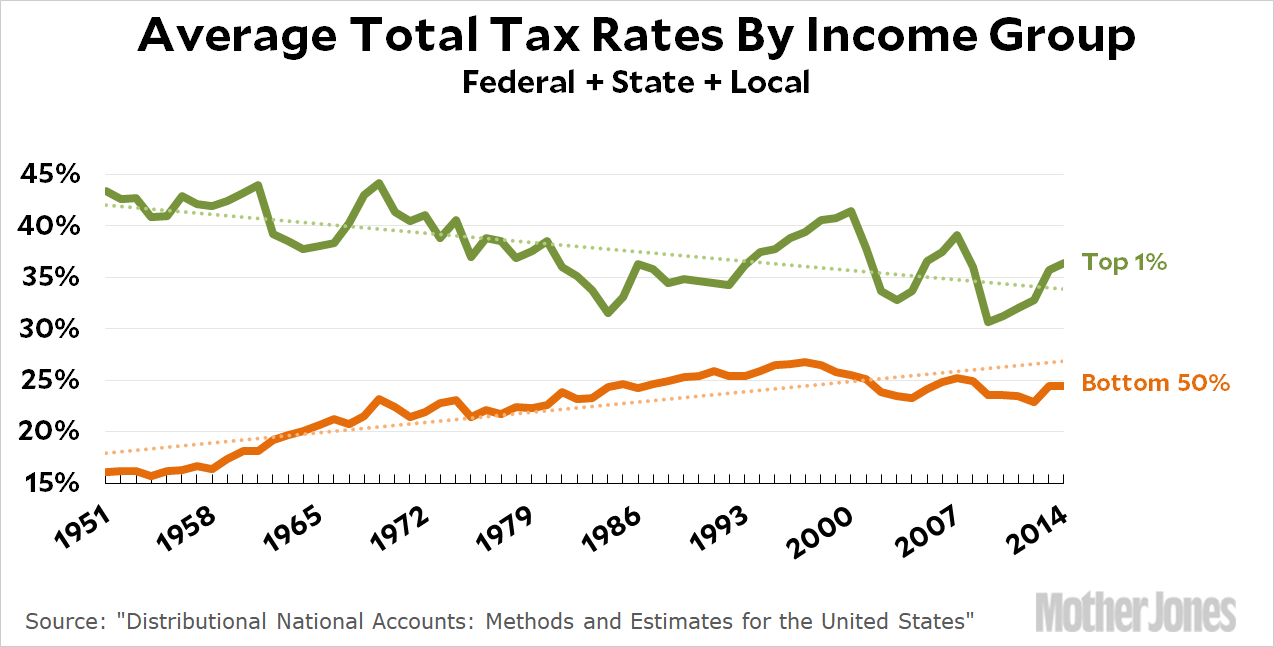
    Bygones. However, something else caught my eye. Greenberg relied on data from Gabriel Zucman, Thomas Piketty, and Emmanuel Saez on average tax rates over time. Here’s what that looks like:

    This chart accounts for all taxes: federal, state, local, income, payroll, etc. Everything. And while it’s true that the rich didn’t pay 90 percent of their entire income in federal taxes back in 1951, it’s also true that their average tax rate has gone steadily down in the entire era since World War II. And this has happened at the same time that their share of total national income has nearly doubled.

    Income way up, tax rates way down. Nice work if you can get it.

  • There’s Something Odd About That Google Memo

    Ole Spata/DPA via ZUMA

    A few days ago, a Google engineer named James Damore wrote a lengthy memo that he posted on one of Google’s internal discussion boards. Roughly speaking, it argued that the reason there were so few women at Google wasn’t because of discrimination or bias. It was because women had certain innate characteristics that made them poorly suited for software engineering. Today, Google fired Damore.

    I finally got around to reading the memo this afternoon. What surprised me wasn’t that Damore wrote what he did. I imagine there are plenty of Silicon Valley engineer-bros who are tired of all the SJW diversity lectures and have managed to convince themselves that it’s nonsense on the basis of what they think is rigorously impartial scientific analysis. Throw in a bit of conservative victimology and you have a pretty good taste of Damore’s memo. You can read the whole thing here if you want.

    Like I said, that much didn’t surprise me. But there was something that struck me as a bit off-kilter about Damore’s memo. Maybe I’m over-reading things, but it seemed like Damore very calculatedly went further over the line than he needed to. For example, he didn’t need to argue that women are biologically unsuited for engineering jobs, something that he must have known would be both stupid and galactically incendiary. If he had simply said that women pursue software engineering careers in small numbers thanks to cultural and societal norms, it would have been less contentious and it wouldn’t have hurt his point. In fact, he really didn’t need to argue anything at all about the capabilities of women. He could have written a one-paragraph memo pointing out that, for whatever reason, female IT grads make up only x percent of the total, so it’s just not feasible for Google to employ very many women. He could bemoan this state of affairs, but point out that it has to be addressed starting in primary school, and by the time Google is involved there’s nothing they can do about the pool of applicants. So can we please knock off the sackcloth and ashes routine?

    That still would have been wrong in several ways, but it probably wouldn’t have gotten him fired.

    So why did he write what he did? Maybe I’m overestimating Damore’s sophistication, but something about his writing style made me think he had deliberately chosen not to take this tack. There was something about the amateurishness of his analysis that seemed strained, as if he was playing a role. And that role was simple: not to write about why he thought Google’s diversity programs were misguided, but to write something as offensive as possible in a way that allowed him plausible deniability. In other words, he was trying to get fired so he could portray himself as a lonely martyr to Silicon Valley’s intolerance for conservative views. Maybe he could even go to court, funded by some nice right-wing think tank.

    You should take this as completely speculative. Obviously I’m just guessing. But something about the memo didn’t seem quite authentic, and I’ve read quite a few similar ones. Back in the days of dinosaurs, this kind of thing was one of the staples of the blogosphere. Aren’t you glad you weren’t reading blogs back then?