• If You’ve Ever Had Lyme Disease, Blame the Anti-Vaxxers

    Lyme disease has been spreading for years, and thanks to global warming it’s poised to explode over the next few years. This map is from New Scientist:

    That’s bad. But it turns out there’s a vaccine for Lyme disease. Or I guess I should say, there used to be a vaccine for Lyme disease. In 1998 the FDA approved a a drug called Lymerix, and it was pretty effective until the chronic Lyme crowd and the anti-vaxxers started ranting:

    Influenced by now-discredited research purporting to show a link between the MMR vaccine and autism, activists raised the question of whether the Lyme disease vaccine could cause arthritis. Media coverage and the anti-Lyme-vaccination groups gave a voice to those who believed their pain was due to the vaccine, and public support for the vaccine declined.

    “The chronic arthritis was not associated with Lyme,” says Stanley Plotkin, an adviser to pharmaceutical company Sanofi Pasteur. “When you’re dealing with adults, all kinds of things happen to them. They get arthritis, they get strokes, heart attacks. So unless you have a control group, you’re in la-la land.”

    But there was a control group – the rest of the US population. And when the FDA reviewed the vaccine’s adverse event reports in a retrospective study, they found only 905 reports for 1.4 million doses. Still, the damage was done, and the vaccine was benched.

    All of you who have had Lyme disease should know this. You could have avoided it if not for the ravings of the anti-vax nitwits and the gullibility of the mainstream TV talkers who give them a platform. It’s long past time to put an end to this idiocy.

    But I won’t leave you without some good news. First, although you can’t vaccinate yourself, you can vaccinate your dog. So there’s that. Second, a French company has developed an even better Lyme vaccination, and it should be ready in 2023. That’s a mere six years. Just be patient, OK?
  • Medicaid Expansion Had a Huge Impact on the Finances of the Poor

    It often slips people’s minds that the point of insurance is fundamentally financial. Auto insurance doesn’t prevent accidents, but it keeps you from going bankrupt over one. Ditto for homeowner’s insurance, life insurance, etc.

    Health coverage is a little different because, in addition to being traditional insurance, it also pays for lots of routine medical care. Nevertheless, it’s still insurance. You can get medical care without it,¹ but it will cost you a fortune. So when you take a look at, say, Medicaid expansion, it’s at least as important to look at financial outcomes as it is to look at health outcomes.

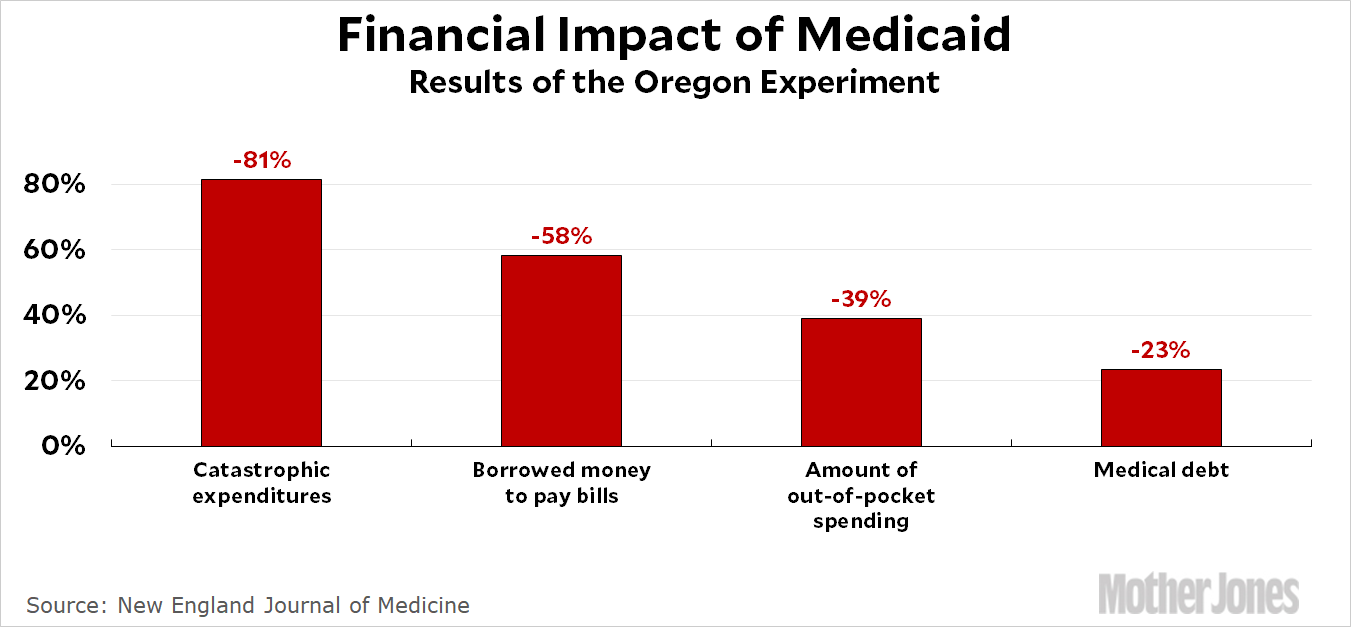
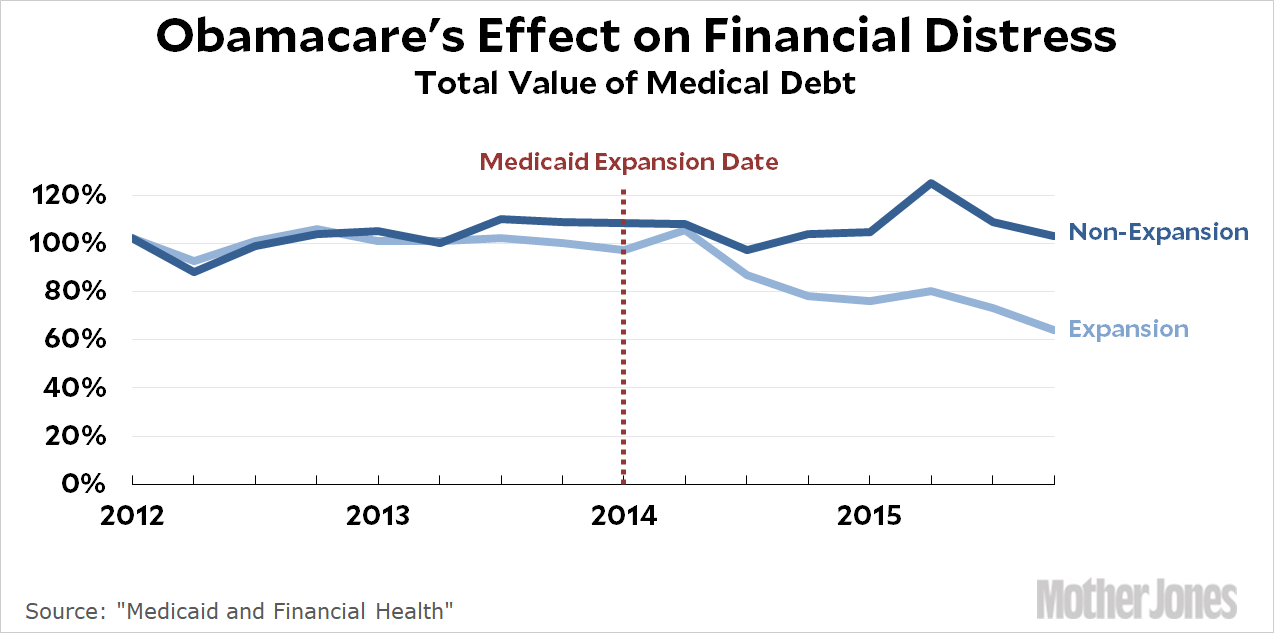
    Via Paul G-P on Twitter, here’s a CFPB study of how Medicaid expansion under Obamacare affected the finances of the poor. The authors take advantage of the fact that some states accepted the Medicaid expansion and some didn’t. They also have access to extremely detailed tradeline data in credit records. Here’s their basic result:

    In states that didn’t expand Medicaid, nothing much happened. In states that did expand Medicaid, medical debt fell nearly 40 percent by the end of 2015. As a check, they also examined overall debt, and found that it varied by only a small amount between expansion and non-expansion states.

    Note that this is a 40 percent reduction in total medical debt. Since Medicaid is available only to the poor, it’s a good bet that it’s reduced the medical debt of the poor by considerably more than 40 percent.

    So: Does Medicaid work? Yes indeed. It has moderate but positive effects on health, and very large effects on medical debt.

    ¹Sometimes, anyway.

  • Here’s the Real Reason Trump Fired Comey

    Just a quick observation here. Donald Trump demonstrated again this morning that he remains obsessed with Hillary Clinton:

    Trump is preoccupied with Hillary because she ruined his victory: he still can’t stand the thought that she got several million more votes than he did. I suspect the same is true of James Comey. Sure, he wanted Comey to help him out with the Michael Flynn investigation, but Comey’s real sin was being a living, breathing, daily reminder that Trump won only because Comey helped him out with his last-minute letter about the email investigation. This gnawed endlessly at Trump, so Comey had to go.

  • Did Jeff Sessions Lie Again About Campaign Contacts With Russia?

    Ting Shen/Xinhua/Xinhua via ZUMA

    Does the volume of crap raining down on us ever let up anymore? Here’s the latest from the Washington Post:

    Russia’s ambassador to Washington told his superiors in Moscow that he discussed campaign-related matters, including policy issues important to Moscow, with Jeff Sessions during the 2016 presidential race.

    ….One U.S. official said that Sessions — who testified that he has no recollection of an April encounter — has provided “misleading” statements that are “contradicted by other evidence.” A former official said that the intelligence indicates that Sessions and Kislyak had “substantive” discussions on matters including Trump’s positions on Russia-related issues and prospects for U.S.-Russia relations in a Trump administration.

    Sessions has said repeatedly that he never discussed campaign-related issues with Russian officials and that it was only in his capacity as a U.S. senator that he met with Kislyak.

    ….Officials emphasized that the information contradicting Sessions comes from U.S. intelligence on Kislyak’s communications with the Kremlin, and acknowledged that the Russian ambassador could have mischaracterized or exaggerated the nature of his interactions.

    Where is this stuff coming from? If it’s coming from the intelligence community, color me disturbed. I don’t like the idea that the CIA and NSA are basically at war with the Trump administration. But if, instead, it’s coming from folks inside the White House, I’m astonished that anyone there would be interested in bringing down a hammer this colossal on Sessions. Do they want him to resign that badly? Or is it coming from former Obama officials who are just now getting around to leaking it?

    Is there a single person in the Trump administration with any better morals than your average Mafia hood?

    POSTSCRIPT: Here’s another thought. In his interview with the New York Times on Wednesday, Trump didn’t just gripe about Sessions recusing himself. He also remarked—without being asked—that Sessions had provided some “bad answers” to the Senate during his confirmation hearings. That struck me as an odd thing to say. Is it possible that Trump (a) knew about this intel, (b) knew it was going to get leaked soon, and (c) was deliberately distancing himself from Sessions before it happened?

  • Parliamentarian Deals Yet Another Killing Blow to Trumpcare

    Jeff Malet/Newscom via ZUMA

    I’ve been wondering when the Senate parliamentarian will rule on various provisions of the Senate health care bill, and apparently she already has. Today, Bernie Sanders released a summary of what’s in and what’s out. As you read this, keep in mind that the Byrd Rule allows a reconciliation bill to contain only provisions that directly affect the budget. If a provision only “incidentally” affects the budget, it needs to pass via regular order, which means it needs 60 votes—which means it’s dead. Here are the main provisions that are dead:

    Abortion. The GOP bill contains two separate provisions that ban the purchase of health care policies that cover abortion. Freedom Caucus chair Mark Meadows says that killing these provisions makes passage “almost impossible.”

    Planned Parenthood. This is a provision that prevents Medicaid from covering services provided by Planned Parenthood. Presumably this doesn’t pass muster because it doesn’t affect total spending, only where money can be spent.

    Essential benefits. A provision in the Senate bill allows states to propose Medicaid alternatives that don’t cover essential benefits. However, this is merely a regulatory change, not something that changes overall spending.

    CSR funding. This one is kind of ironic. The House has sued to stop the payment of CSR subsidies under Obamacare, and President Trump has deliberately refused to say if he’ll continue them. However, Republicans recognize how important they are, so they included them in their own health care bill. The parliamentarian struck down this provision because it duplicates something that already exists, which means it doesn’t affect the budget.

    6-Month Lockout. This is the Republican replacement for the hated individual mandate. Instead of legally requiring everyone to buy insurance, they encourage everyone to buy insurance by mandating a waiting period if you fail to maintain continuous coverage. With this gone, there’s no longer any incentive to buy insurance. You might as well just wait until you’re sick and then buy it.

    Medical Loss Ratio. This is a provision that does away with Obamacare’s mandate that insurance companies spend at least 80 percent of their revenue on medical care.

    This stuff is deadly. Conservatives will hate the abortion and Planned Parenthood decisions. Insurers will hate the CSR and lockout decisions. Medicaid reformers will hate the essential benefits decision. And the end of the 6-month lockout provision will almost certainly have a big negative impact on the next version of the CBO score.

  • New Study Suggests Corporate Investment Is Down Because of Industry Consolidation

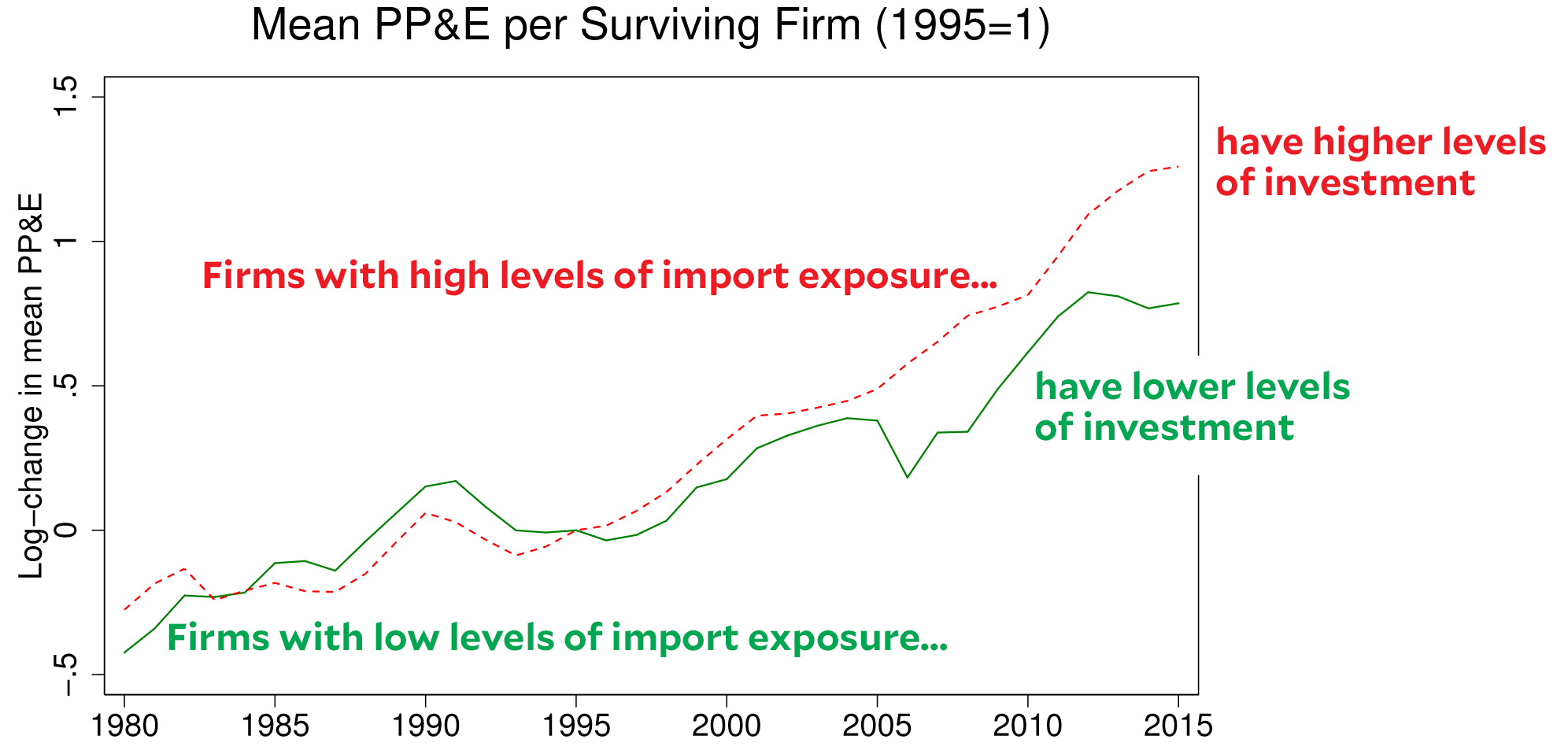
    Why are corporations sitting on such big piles of cash? Why aren’t they investing more? Max Ehrenfreund points to a new bit of research with an intriguing answer: as firms merge, their market positions become so powerful they don’t need to bother. After all, why spend money if you don’t have to?

    To investigate this, Germán Gutiérrez and Thomas Philippon took advantage of a natural experiment: the big rise in Chinese imports during the aughts. What they found was that in sectors that were highly affected by Chinese imports, firms increased their investment spending in order to compete. In sectors that were lightly affected, they didn’t bother:

    (Note that this is a log scale, so the difference between the lines starting around 2005 is actually quite large.)

    The authors suggest that the same thing has happened more generally. As sectors have become more consolidated, competition has dwindled and the need for heavy investment spending has dwindled too.

    I don’t have the chops to evaluate this, but I’m sure others will chime in. However, it reinforces my belief that competition is good for its own sake, and antitrust law needs to recognize this. We should move away from “consumer benefit” fables that corporations use to justify mergers, and instead insist on keeping sectors as competitive as possible.

  • Quote of the Day: “I can’t even remember why I opposed it”

    From Patrick Murphy, owner of Bagel Barrel in Doylestown, Pennsylvania, on why he doesn’t want Obamacare repealed:

    I can’t even remember why I opposed it. Everybody needs some sort of health insurance.

    Answer: he opposed it because movement conservatives in the richest country in all of human history created a hysterical atmosphere of cultural doom and fiscal annihilation surrounding the idea of providing a minimal level of health coverage for everyone. Why did they do it? Why do they continue to do it? Even after seven years, I’m not sure I truly know.

  • Sean Spicer Finally Resigns

    Cheriss May/NurPhoto via ZUMA

    The Sean Spicer story has come to an end:

    Sean Spicer, the White House press secretary, resigned on Friday morning, telling President Trump he vehemently disagreed with the appointment of the New York financier Anthony Scaramucci as communications director.

    Mr. Trump offered Mr. Scaramucci the job at 10 a.m. The president requested that Mr. Spicer stay on, but Mr. Spicer told Mr. Trump that he believed the appointment was a major mistake, according to a person with direct knowledge of the exchange.

    On a purely personal level, I feel kind of sorry for Spicer, the same way I feel sorry for anyone who finally figures out just what kind of person Donald Trump really is.

    On the other hand, it was pretty obvious all along what kind of person Trump was. Spicer knew, and he took the job anyway. I can excuse that for some of the national security folks, who might genuinely feel that they’re doing a public service preventing Trump from blowing up the world. But press secretary? No. If you want to wreck your reputation working for a clown like Trump, there’s no excuse. You went in with your eyes open.

    POSTSCRIPT: Honestly, Spicer should have resigned after the Vatican snub. That was perhaps the pettiest thing I can ever remember a president doing to one of his staff. At a purely personal level, it shows what a horrible excuse for a human being Trump is.