It Takes How Much Water to Grow an Almond?!

Why California’s drought is a disaster for your favorite fruits, vegetables, and nuts.


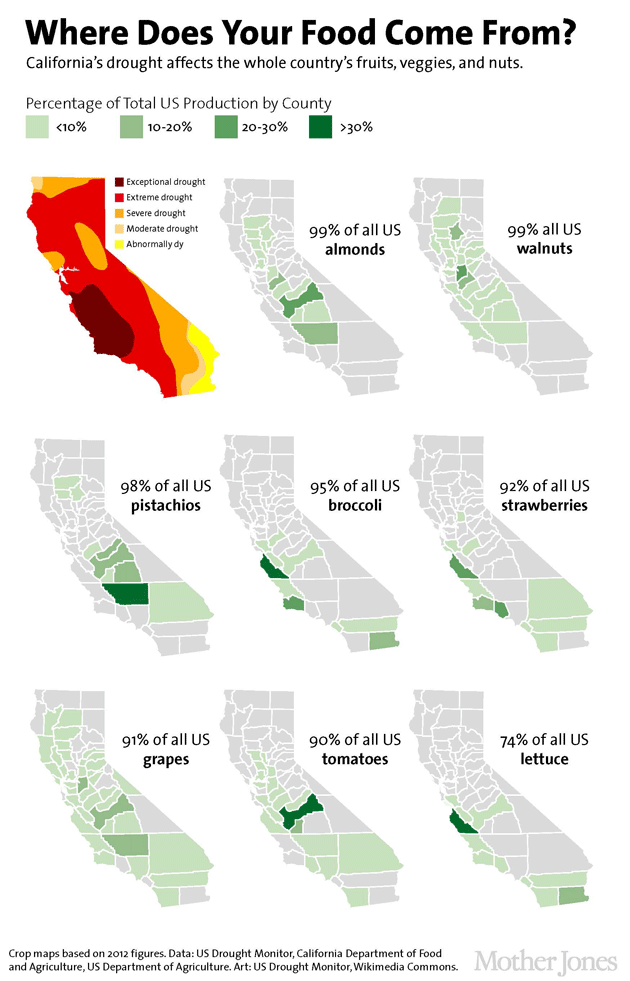
Crop map

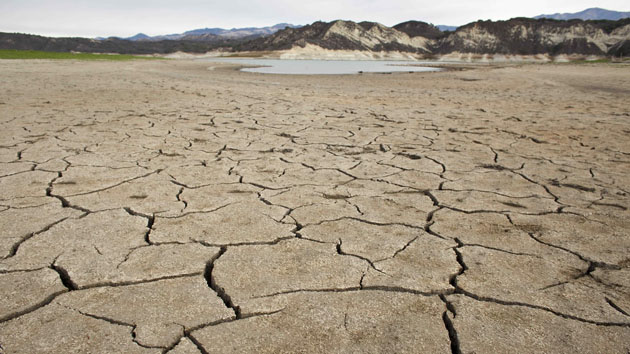
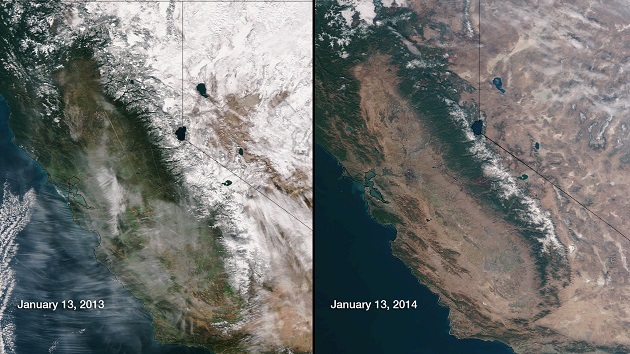
California, supplier of nearly half of all US fruits, veggies, and nuts, is on track to experience the driest year in the past half millennium. Farms use about 80 percent of the state’s “developed water,” or water that’s moved from its natural source to other areas via pipes and aqueducts.

As the maps above show, much of California’s agriculture is concentrated in the parts of the state that the drought has hit the hardest. For example: Monterey County, which is currently enduring an “exceptional drought,” according to the US Drought Monitor, grew nearly half of America’s lettuce and broccoli in 2012.

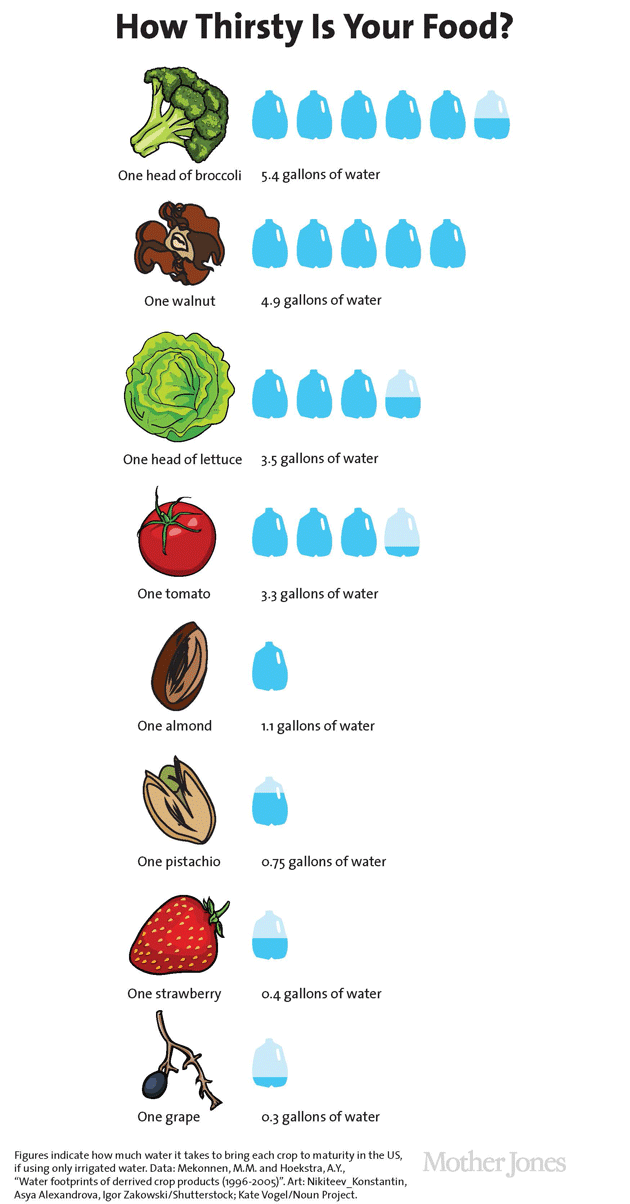
When it comes to water use, not all plants are created equal. Here’s how much water some of California’s major crops require:
Jay Lund, a water expert at the University of California-Davis, says that water problems mean that agriculture may soon play a less important role in California’s economy, as the business of growing food moves to the South and the Midwest, where water is less expensive. Production rates for thirsty crops like alfalfa and cotton have already diminished significantly in the last few years. Between 2006 and 2010 alone, the amount of land irrigated for cotton fell by 46 percent.

In addition to farms, the drought affects municipal water supplies. There is so little water this year that some places are in danger of running out—and the little that is left could soon become undrinkable because of the high concentration of pollutants.

So how are Californians doing on water conservation? Here’s how some cities stack up:
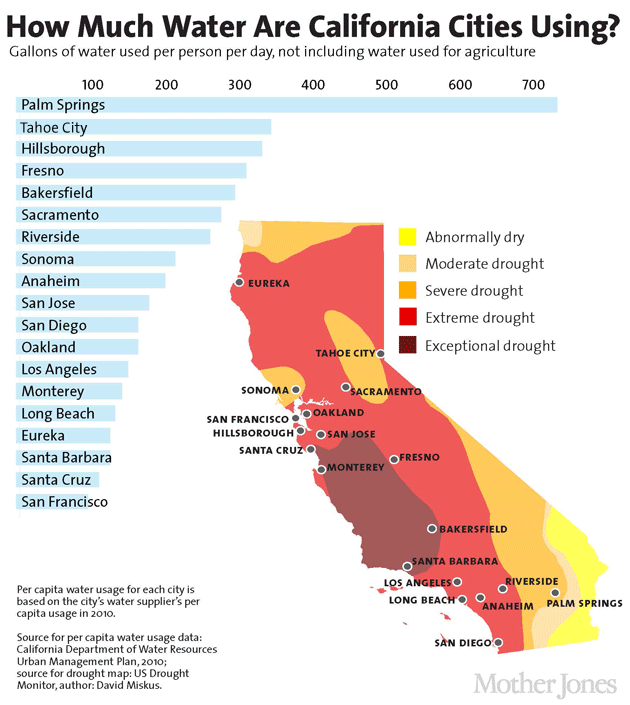
CA cities water chart

From the desk of Mother Jones CEO, Monika Bauerlein...

Newsrooms can be funded in many ways. One of the most controversial (and volatile) ways is by a for-profit corporation or a billionaire owner. We see it across the headlines on a weekly basis: the claw backs in public media, the gutting of The Washington Post, the bending over backwards to appeal to Trump and his allies.

But not here.

When Mother Jones first started publishing 50 years ago, our founders made a critical decision: to be a reader-supported nonprofit. They knew that no corporate owner would be interested in a muckraking newsroom; they also knew that no muckraking newsroom would be interested in following the agenda of a corporate owner.

And so, we’ve been reader-funded for half a century. We rely on contributions from our readers—readers like you—whether it’s $50, or $15 a month, or whatever fits your budget. People give what they can, and every donation makes a difference for our newsroom, which has grown tremendously—in size and reach and renown—since its inception in 1976.

You may be wondering: What does it take to publish an investigation? And what does my donation actually fund? The answers are one and the same: It takes people, resources, and time. And that’s what your donation funds directly.

Every donation Mother Jones receives from readers fortifies our newsroom, whether we’re covering underreported scandals out of Washington, DC, or the most important news of the day. And right now, each donation will be doubled because of our $50,000 match. So when you make a donation—$5, $50, any amount—it’ll go twice as far.

Your support keeps us going. If you’re able, donate today.

Thanks for reading.

—Monika

From the desk of Mother Jones CEO, Monika Bauerlein...

Newsrooms can be funded in many ways. One of the most controversial (and volatile) ways is by a for-profit corporation or a billionaire owner. We see it across the headlines on a weekly basis: the claw backs in public media, the gutting of The Washington Post, the bending over backwards to appeal to Trump and his allies.

But not here.

When Mother Jones first started publishing 50 years ago, our founders made a critical decision: to be a reader-supported nonprofit. They knew that no corporate owner would be interested in a muckraking newsroom; they also knew that no muckraking newsroom would be interested in following the agenda of a corporate owner.

And so, we’ve been reader-funded for half a century. We rely on contributions from our readers—readers like you—whether it’s $50, or $15 a month, or whatever fits your budget. People give what they can, and every donation makes a difference for our newsroom, which has grown tremendously—in size and reach and renown—since its inception in 1976.

You may be wondering: What does it take to publish an investigation? And what does my donation actually fund? The answers are one and the same: It takes people, resources, and time. And that’s what your donation funds directly.

Every donation Mother Jones receives from readers fortifies our newsroom, whether we’re covering underreported scandals out of Washington, DC, or the most important news of the day. And right now, each donation will be doubled because of our $50,000 match. So when you make a donation—$5, $50, any amount—it’ll go twice as far.

Your support keeps us going. If you’re able, donate today.

Thanks for reading.

—Monika

We Recommend

Latest

Sign up for our free newsletter

Subscribe to the Mother Jones Daily to have our top stories delivered directly to your inbox.

Get our award-winning magazine

Save big on a full year of investigations, ideas, and insights.

Subscribe

INDEPENDENT. BECAUSE OF YOU.

Mother Jones has no billionaires calling the shots—just readers like you making fearless reporting possible

Donate