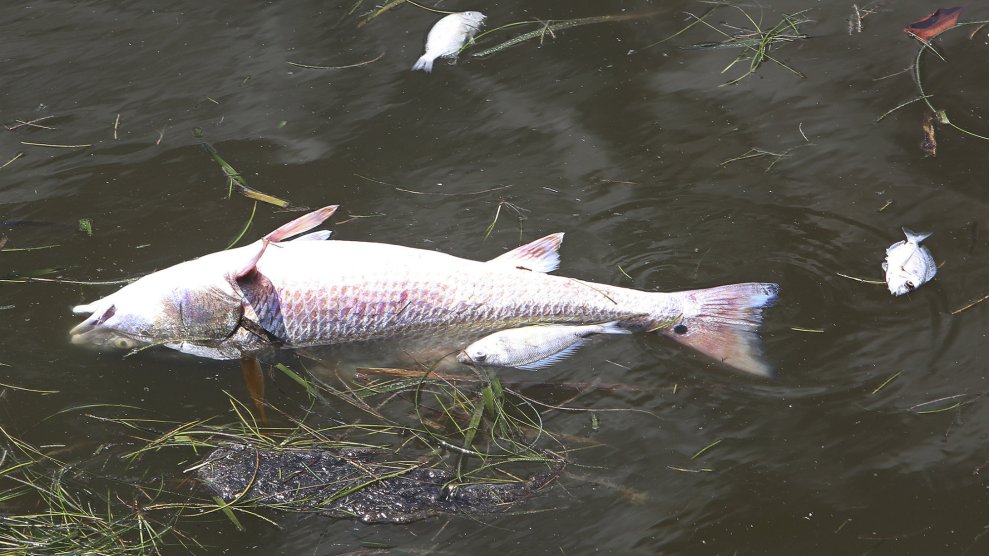
Florida’s Getting Swamped by Deadly Red Algae

“I can’t describe the smell. It’s like unbelievable.”

Scott Keeler/Tampa Bay Times via AP

Get your news from a source that’s not owned and controlled by oligarchs. Sign up for the free Mother Jones Daily.

This story was originally published by HuffPost. It appears here as part of the Climate Desk collaboration.

Florida Gov. Rick Scott (R) declared a state of emergency on Monday as a months-long red tide continues to spread throughout the region’s waters, killing hundreds of turtles and sickening people in coastal communities.

The red tide―a harmful bloom of algae that occurs naturally―began last year and has spread through the Gulf of Mexico, now spanning some 150 miles. Fish and other wildlife have been washing up dead on beaches throughout Florida, including more than 300 sea turtles, manatees and even a whale shark that may have been killed by the phenomenon.

“I am issuing an emergency declaration to provide significant funding and resources to the communities experiencing red tide so we can combat its terrible impacts,” Scott said in a statement on Monday.

The declaration will provide $1.5 million in emergency funding and make state scientists available to help with clean-up efforts and animal rescues.

The bloom of algae began last October and extends from Naples to the Everglades region, with no sign of slowing down. Residents have reported some negative health effects, including eye, nose and throat irritation, due to the vapors released by the red tide, according to the Washington Post.

“I can’t describe the smell. It’s like unbelievable,” Alex Kuizon, a resident of Bradenton Beach, told the Associated Press last week. “It makes you throw up.”

More than 100 tons of dead fish have been removed from area beaches, NPR reports, and officials say they’re worried about the tide’s impact on tourism.
DECEMBER IS MAKE OR BREAK

A full one-third of our annual fundraising comes in this month alone. That’s risky, because a strong December means our newsroom is on the beat and reporting at full strength—but a weak one means budget cuts and hard choices ahead.

With only days left until December 31, we've raised about half of our $400,000 goal—but we need a huge surge in reader support to close the remaining gap. Whether you've given before or this is your first time, your contribution right now matters.

Managing an independent, nonprofit newsroom is staggeringly hard. There’s no cushion in our budget—no backup revenue, no corporate safety net. We can’t afford to fall short, and we can’t rely on corporations or deep-pocketed interests to fund the fierce, investigative journalism Mother Jones exists to do. That’s why we need you right now. Please chip in to help close the gap.

DECEMBER IS MAKE OR BREAK

A full one-third of our annual fundraising comes in this month alone. That’s risky, because a strong December means our newsroom is on the beat and reporting at full strength—but a weak one means budget cuts and hard choices ahead.

With only days left until December 31, we've raised about half of our $400,000 goal—but we need a huge surge in reader support to close the remaining gap. Whether you've given before or this is your first time, your contribution right now matters.

Managing an independent, nonprofit newsroom is staggeringly hard. There’s no cushion in our budget—no backup revenue, no corporate safety net. We can’t afford to fall short, and we can’t rely on corporations or deep-pocketed interests to fund the fierce, investigative journalism Mother Jones exists to do. That’s why we need you right now. Please chip in to help close the gap.

We Recommend

Latest

Sign up for our free newsletter

Subscribe to the Mother Jones Daily to have our top stories delivered directly to your inbox.

Get our award-winning magazine

Save big on a full year of investigations, ideas, and insights.

Subscribe

Support our journalism

Help Mother Jones' reporters dig deep with a tax-deductible donation.

Donate