Dan Rather Explores the Bee Collapse/Pesticide Connection

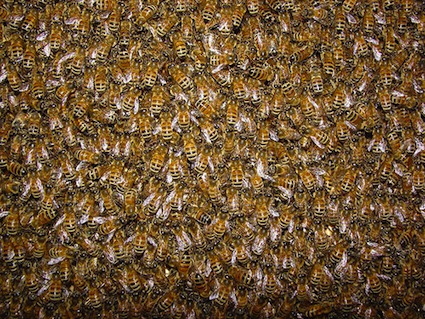
<a href="http://www.flickr.com/photos/kokogiak/6274404/">kokogiak</a>/Flickr

Get your news from a source that’s not owned and controlled by oligarchs. Sign up for the free Mother Jones Daily.

Is a pesticide marketed by Bayer—used on millions of acres of US corn—the factor that’s pushing honey bees into steep annual die-offs that have become known as Colony Collapse Disorder?

A ragtag group of commercial beekeepers has gathered an impressive cache of evidence supporting that claim. In series of articles starting December 2010 on Grist, I dug into the evidence and told the story, which features discredited studies used by Bayer to push the pesticide through EPA registration, an alarming study from a USDA scientist, and more.

I fully expected my work to spark stories in larger, more influential mainstream media, which might in turn inspire progressive Congresspeople to get involved, or force the EPA to reconsider.  I mean, we’re talking about a pesticide whose range extends to nearly the entire US corn crop, and a species critical to producing about a third of the food we eat. Instead, though, silence. In the 2011 growing season, corn farmers once again planted seed treated with Bayer’s suspect bug killers, with nary a peep from Congress or The New York Times, Washington Post, etc.

Well, now, a mainstream-media legend has taken note and filed an excellent report on the topic. Trouble is, Dan Rather isn’t of the mainstream media anymore; he now plies his trade on the upstart network HDnet (still winning Emmy’s though!). As the below segment will show, Rather’s reportorial chops remain intact. I hope other journalists take note—the bee collapse/pesticide story is one that needs to be heard and debated. The bee section of Rather’s show ends at about the 27-minute mark. (Hat tip to the ever-excellent Pesticide Action Network.)

Bee Aware from Greg Stanley on Vimeo.
 

DECEMBER IS MAKE OR BREAK

A full one-third of our annual fundraising comes in this month alone. That’s risky, because a strong December means our newsroom is on the beat and reporting at full strength—but a weak one means budget cuts and hard choices ahead.

The December 31 deadline is closing in fast. To reach our $400,000 goal, we need readers who’ve never given before to join the ranks of MoJo donors. And we need our steadfast supporters to give again—any amount today.

Managing an independent, nonprofit newsroom is staggeringly hard. There’s no cushion in our budget—no backup revenue, no corporate safety net. We can’t afford to fall short, and we can’t rely on corporations or deep-pocketed interests to fund the fierce, investigative journalism Mother Jones exists to do.

That’s why we need you right now. Please chip in to help close the gap.

DECEMBER IS MAKE OR BREAK

A full one-third of our annual fundraising comes in this month alone. That’s risky, because a strong December means our newsroom is on the beat and reporting at full strength—but a weak one means budget cuts and hard choices ahead.

The December 31 deadline is closing in fast. To reach our $400,000 goal, we need readers who’ve never given before to join the ranks of MoJo donors. And we need our steadfast supporters to give again—any amount today.

Managing an independent, nonprofit newsroom is staggeringly hard. There’s no cushion in our budget—no backup revenue, no corporate safety net. We can’t afford to fall short, and we can’t rely on corporations or deep-pocketed interests to fund the fierce, investigative journalism Mother Jones exists to do.

That’s why we need you right now. Please chip in to help close the gap.

We Recommend

Latest

Sign up for our free newsletter

Subscribe to the Mother Jones Daily to have our top stories delivered directly to your inbox.

Get our award-winning magazine

Save big on a full year of investigations, ideas, and insights.

Subscribe

Support our journalism

Help Mother Jones' reporters dig deep with a tax-deductible donation.

Donate