
This is a little off the beaten path, but let’s do a bit of World War I blogging. (Need a news hook for this? Here it is.)
Tyler Cowen just read Dance of the Furies: Europe and the Outbreak of World War I, by Michael Neiberg, and says he was “stunned” by the claims in the book, a few of which can be summarized quickly:
First…few Europeans expected a war and even fewer wanted one. Europe was not a place of white-hot nationalist passions looking for a spark…Virtually no one in Europe sought a war to correct supposed inequities stemming from the turbulent nineteenth century or as a way to adjust borders. Even in France, there was no desire for war as a way to avenge the loss of Alsace-Lorraine…
Third, the people of Europe accepted the necessity of war primarily because they believed their wars to be defensive.
Fourth, disillusion with the war…was well in place by the end of the war’s first year.
Sixth, despite their concerns and suspicions, societies kept fighting. Their reasons for doing so included a desire to avenge the losses of 1914, the quite real threats to their existence which remained from foreign armies, and an awareness that the hatreds unleashed by the war as early as the end of the first month made anything short of total victory or total defeat unthinkable.
I’m genuinely curious about this. All of these four claims seem, to me, not only non-stunning, but almost pedestrian. If you’d put them in front of me with no commentary, I’m pretty sure I would have said that this is pretty much the modern conventional wisdom about WWI.
So: am I completely off base here? Are these claims more unusual than I think? And if they are, why did they seem so familiar to me? I’ve read a few books about the war, but that’s about the extent of my knowledge.
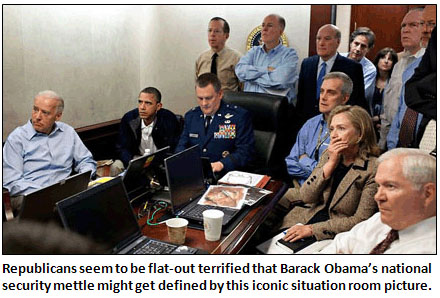 A while back I suggested that the killing of Osama bin Laden wasn’t likely to provide President Obama with much of a long-term benefit. Now I’m beginning to change my mind.
 dropping out of equities, I wonder what the supercomputers are up to now?”
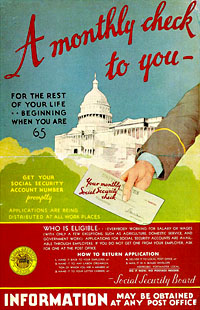 long they live after they retire. So how much longer do retirees live these days? Answer: For men, life expectancy at age 65 has gone up from 78 to 83. Since the Social Security retirement age has also gone up, from 65 to 67, this means that over the past 60 years the expected payout period has increased by about three years.



