• Will Germany Ease Up Now That Greece Is Toeing the Line?

    Like a lot of people, I figure that victory in this weekend’s Greek election is purely Pyrrhic. Greece is in for years of mind-numbing austerity no matter what happens next, and whichever party is in charge during this period is probably writing its own death warrant.

    But maybe not! Here’s a scenario that allows this weekend’s winner to stave off certain disaster. 

    Basically, Greece has two options. In Option #1, they commit to following the austerity measures imposed by Germany and the rest of the EU. This dooms them to years of pain and suffering. In Option #2, they repudiate their debt, leave the eurozone, revert to the drachma, and devaluate their currency. Since no one will then loan them money, they’re forced to live within their means, which also dooms them to years of pain and suffering.

    So which option should they choose? Well, Option #1 probably means a little less pain and suffering because they continue getting aid from the EU, but it most likely also means a longer period of pain and suffering since it will take a long time to rebalance their economy as long as they’re yoked to the euro. Option #2 would be a sharper economic shock, but devaluation would solve Greece’s underlying problems and probably lead to a genuine recovery within a few years.

    Greek leaders know this. German leaders know this. Everyone in the EU knows this. And now that conservatives have won a tenuous victory in Greece and committed to following EU austerity guidelines, it’s possible that Germany will agree to ease up a bit. Partly this would be to reward Greek voters. Partly it would be because Germany knows perfectly well that a tenuous victory won’t last long if austerity bites so hard that there are riots in the Athenian streets on a weekly basis. With the election over, it might now be in Germany’s best interest to take a softer line if they truly want to save the euro.

    Of course, even if Germany does ease up it will still be tough sledding for the party in power. As we all know, “Things are bad, but they’d be even worse under the other guys” is not a stellar electoral message. We’ll see.

  • Public vs. Private Universities: A Reply From the Trenches

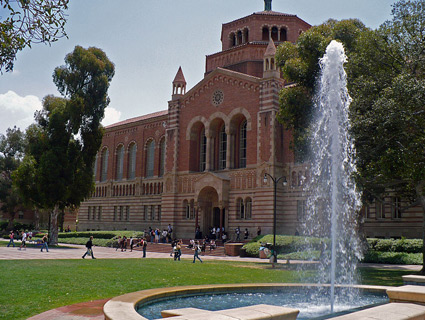
    <a href="http://en.wikipedia.org/wiki/File:Powell_Library.JPG">Nikhil Kulkarni</a>/Wikimedia Commons

    A professor friend of mine with experience at both private universities and the University of California emailed me a response to my post a couple of days ago about funding of higher education. My description of public vs. private universities, he says, might have been accurate 30 or 40 years ago, but not anymore:


    Dear Kevin:

    Whatever the merits of your plan to wean private universities off government support and concentrate our efforts on shoring up public universities — and there’s something to it — I have to take issue with something you wrote in it:

    UCLA provides undergraduates with an education that’s just as good as Harvard, and the country might be a better place if we all faced up to that and took Harvard and the rest of our super-elite universities off the pedestal we’ve placed them on.

    Based on wide experience in both private and public universities, I’d have to say that this isn’t true. People who think it is true probably aren’t aware of just how much public universities have cut, or else aren’t aware just how intensive an education private universities provide. (What I’m going to say covers the humanities and social sciences; I’m less familiar with science and engineering.)

    Public universities still have excellent faculties. Their scholarship is often first-rate, and their lecturing skill is probably no worse, on average, than it is in the Ivy League. The problem is that while lecturing is cheap and easily scalable, developing writing and critical thinking skills is expensive because it’s labor intensive. For students to really engage with the material they’re reading in books and hearing about in lectures, someone smart and knowledgeable has to lead a small-group discussion. For them to learn how to make an argument and defend it against objections, they have to write lots of papers, be able to work on them with someone who knows how to write and also knows the subject matter, and have them graded by someone in a position to make serious comments so they can do better next time.

    Ivy League students sometimes complain that most of the discussion-leading and careful paper-grading — they call it “real teaching” and they’re right to do so — is done by grad student teaching assistants, since seminars with professors are scarce. But at the University of California these days — and I’m told it’s been like this at Michigan for decades — graduate and undergraduate funding cuts mean that most upper-level courses have no discussion sections and no teaching assistants. In other words, the real teaching doesn’t take place at all. Papers, if they’re assigned at all — and increasingly they’re not — are graded by “readers” paid so poorly that they can only spend a few minutes on each paper, are not available for writing assistance, and can’t even be required, given their meager pay for long hours, to attend the lectures in the classes they’re grading for. There’s no way readers can grade papers carefully in such circumstances: they put check marks in the margin when something of substance is mentioned, and pass pretty much everyone through. As for professor-led seminars, never that plentiful, they’ve all but vanished: they simply cost too much.

    Consider what this means. Even leaving aside freshman writing courses and the writing-heavy introductory courses that many majors require, Ivy League students will write two or three real papers, with intensive comments and help if they want it, in every social-science and humanities class they take. UCLA students will write maybe four papers in a freshman writing class, three papers in an intro class in their major — these still have TAs, though they’re responsible for far more students than used to be the case — and a sprinkling of unassisted and barely-assessed papers in a few upper level classes. That’s it. And that’s a difference of at least forty papers over four years, probably more like fifty or sixty. Depending on the university, most private university students also write at least a couple of longer research papers, and a big chunk (at Princeton, everyone) write senior theses. UC students rarely write research papers, and very few write theses. The faculty resources to advise theses aren’t there, and the students would be very poorly prepared to write them anyway.

    It’s not that the undergraduate education is better at Ivies than at other private universities. (In fact, Ivies almost certainly provide a worse education than many obscure liberal arts colleges that may have loose admissions standards but provide very intensive and personal instruction.) It does mean that, in the current budget situation, pretty much any private college will provide a much, much better education in the liberal arts and social sciences than any public university — except the rare ones that operate like liberal arts colleges, like William & Mary or SUNY-New Paltz.

    This wasn’t always true. (In 1970, Berkeley spent 70 percent as much per student, from all funding sources, as Stanford. As of a few years ago the figure was 30 percent and now I bet it’s more like 20 percent. With those numbers, there’s no way that the private-public distinction is a matter of fancy gyms and climbing walls.) I wish it weren’t true now. And none of this necessarily means you’re wrong about how to fund higher education: subsidizing students to attend the Ivies in some ways may widen the gap I’ve just mentioned.

    But if I were an employer or a professor in charge of grad schools admissions, I’d have to judge that a random UC graduate on average (I’m not talking Ezra Klein), and regardless of native talent, can probably write and think analytically on the same level as a typical student starting his or her third year at Grinnell or Beloit. Public universities, desperate to prevent a flight of bright and relatively well-off students, are obscuring a basic fact: the result of less money spent on real teaching must, over time, be less learning.


  • Friday Cat Blogging – 15 June 2012

    According to the EXIF data on this photo, it was taken on Wednesday at 4:44 PM. What you’re seeing is the Dinner Stare™, designed to make it clear that the cats will brook no tardiness in producing dinner promptly at 5:00. They are not amused that instead of making preparations, I’m sitting on my butt watching some stupid TV show.

    Needless to say, dinner was produced on time. By 5:02 it was gone. The Late Night Snack Stare™ commenced at about 8:30.

  • Message Discipline and the Decline of Political Journalism

    Ezra Klein is only 28 years old, but he says that Washington DC has changed in just the few years he’s been there:

    Perhaps my favorite thing to do on the blog is long Q&As, like the ones I’ve conducted with Tom Coburn, Kent Conrad, Paul Ryan, and Buddy Roemer, to name just a few. But those interviews are harder to get than they were even a few years ago. The communications directors see too little upside, and too much risk, to letting their charges speak freely in public. And I’m finding it increasingly difficult to explain why they’re wrong.
    Ezra is riffing off an interview that TPM did with Ryan Lizza, in which Lizza talks about today’s poisonous media environment:

    I’ve been meaning to write a piece about this. We were talking earlier about the daily gaffes and Twitter and the news cycle, and I’m totally as much to blame for helping that atmosphere as anyone. We all engage in tweeting and commenting and hammering these guys when they say something off message. It’s created a crisis for political journalism. People genuinely do not think it is in their interest — both White House and campaign officials, both campaigns, it’s not a partisan thing at all, it’s Democrats and Republicans — they genuinely do not believe it’s in their interest to talk in an unguarded way. Because even if they trust you to get the context 100 percent right, it doesn’t matter, because they know that a liberal or conservative blog, or a campaign ad, will just grab something out of context and run with it and create some damaging meme.

    I’ve been doing this for 15 years, and it’s worse now than it’s ever been. If you think about it from their perspective for a second, you can’t totally blame them. Lately I’ve realized it’s harder than it’s ever been, and these campaigns want to exercise complete and total message discipline. In the current media environment, that’s the whole game. There’s pretty serious tension between running a campaign and running a transparent and open White House. We often complain about this, and rightfully so, but we have to recognize some of the blame here.

    I don’t blame social media for this. It’s something that’s very obviously been on the increase for at least the past 20 years. National politicians have been exercising increasing message discipline for years, and the modern, totally locked down presidential campaign is just the obvious endpoint of this trend. Maybe social media has accelerated it a bit, but I don’t think it’s anything close to a root cause.

    Question: is this worse in the United States than in, say, Great Britain? If so, why? They have blogs, they have Twitter, they have venomously partisan newspapers, and they have political parties that are, by design, as polarized as ours. But my sense is that their politicians aren’t quite as scripted as ours. (Though there are obviously some spectacular exceptions.) Is this sense wrong? Or are they so used to polarized parliamentary politics that they’re better able to shrug off the attacks?

  • Obama to Stop Deporting Young Immigrants With Clean Records


    I guess I’m surprised that President Obama has the power to do this via executive order, but apparently he’s decided to partially implement the goals of the DREAM Act without asking for congressional approval:

    Under the new plan, illegal immigrants will be immune from deportation if they were brought to the United States before they turned 16 and are younger than 30, have been in the country for at least five continuous years, have no criminal history, graduated from a U.S. high school or earned a GED, or served in the military. They also can apply for a work permit that will be good for two years with no limits on how many times it can be renewed. The officials who described the plan spoke on the condition of anonymity to discuss it in advance of the official announcement.

    The policy will not lead toward citizenship but will remove the threat of deportation and grant the ability to work legally, leaving eligible immigrants able to remain in the United States for extended periods.

    Good for him. Sure, this is election-year positioning, but sometimes good policy is good politics. And not only will this be good for Obama’s electoral chances directly, but it presents Republicans with an excruciating dilemma: either lay low and piss off their base, or follow their usual anti-Obama playbook and unleash a blizzard of criticism that will torpedo their efforts to attract Latino voters for years to come. The smart move would be the former, and I imagine folks like Karl Rove will be pleading with leading conservatives to take a low-key approach to this. But my money is on the latter. The tea party folks will not be assuaged with a few ritual condemnations. They’ll want blood. And they’ll probably get it.

  • Taxpayers Should Fund Public Universities, Not Private Ones

    In the New York Times today, Luigi Zingales criticizes student loan programs for inflating tuition rates. Basically, he figures that whenever federal aid levels go up, universities raise their tuition rates and suck in all the extra money. Students themselves end up just as deeply in debt as they were before.

    I suspect there’s something to this for private universities. But I have my doubts about Zingales’s favored solution:

    Investors could finance students’ education with equity rather than debt. In exchange for their capital, the investors would receive a fraction of a student’s future income — or, even better, a fraction of the increase in her income that derives from college attendance. (This increase can be easily calculated as the difference between the actual income and the average income of high school graduates in the same area.)

    This is not a modern form of indentured servitude, but a voluntary form of taxation, one that would make only the beneficiaries of a college education — not all taxpayers — pay for the costs of it.

    The cost of enforcing contracts contingent on future income is very large, but there is an effective solution: piggybacking on the tax collection system. The Internal Revenue Service could perform collection services on behalf of private lenders, and at no cost to taxpayers. (In Australia, such a system has been in place since the 1980s. The national tax agency enforces repayment of loans contingent on income, though the payments of the wealthiest graduates are capped, and therefore less affluent graduates need to be charged more to make the program viable than in the system I am proposing.)
    I wonder how the tax incidence of a program like this would differ from simply raising income tax rates on the wealthy a bit? Probably not that much, really, but you’d still have the problem of restraining tuition increases. As long as the government is making fixed amounts available to students, private universities have an incentive to take that money and then add on every cent the traffic will bear.

    So what’s the solution? I’m not sure, but I don’t think that counting on “investors” would work. There might very well be plenty of investors willing to take a flyer on students at the top 40 or 50 most prestigious universities, but I doubt there’d be many takers below that level. Instead, if I were king for a day, I think I’d suggest this:

    • Public universities revert to their traditional function of providing good educations at very low cost. There’s still a role for direct federal aid here, but it’s a small one. For the most part, states would fund their own university systems and ensure that they’re accessible to anyone who qualifies academically.
    • Private universities fund their own students, full stop. If you get accepted at Harvard, then it’s up to Harvard to provide grants or loans that make it possible for you to attend. After you graduate, you’re in hock to Harvard, not to a bank or the feds. If Harvard declines to provide adequate funding, then you don’t go to Harvard.

    Is this unfair? Sure. There are going to be some bright but poor (or middle-class) students who can’t go to Harvard. Instead they’ll have to go to UCLA or Rutgers. Is this a tragedy? I’m not so sure it is. It might even end up as an improvement as flagship state universities find themselves able to enroll more of the very best students. And why shouldn’t they? The fact is that UCLA provides undergraduates with an education that’s just as good as Harvard, and the country might be a better place if we all faced up to that and took Harvard and the rest of our super-elite universities off the pedestal we’ve placed them on. That pedestal has long since become corrosive and damaging to the public welfare.

    Bottom line: The taxpayers don’t owe you an education at Harvard. They don’t owe you an education at whichever leafy liberal arts college stole your heart during a campus visit on your 17th birthday. They owe you a good education. Period. Maybe we’d be better off if we all understood this as well as we used to and rededicated ourselves to having the finest and most accessible public universities in the world.

    POSTSCRIPT: This post should be taken mostly as a provocation, not as a carefully considered position. Persuade me that I’m wrong! I’m wide open to dissenting arguments here.

  • No, Mitt Romney Doesn’t Care About Your Preexisting Conditions


    Ed Kilgore comments on Mitt Romney’s latest fantasy for public consumption:

    In a speech in Florida today, Mitt Romney repeated his frequent claim that in a post-ObamaCare world, he would fight to prevent insurance companies from denying coverage to people with pre-existing health conditions.

    That’s not just a lie, but a pretty big, pretty important lie.

    I was going to excerpt the paragraph after that too, and then the next one, and the one after that as well. But that would have been pretty much the entire post. Instead, click the link and read it. Ed explains chapter and verse.

    Bottom line: Mitt Romney has no intention of preventing insurance companies from denying coverage to people with preexisting conditions. His party wouldn’t allow it, he doesn’t really care about it, and it’s basically impossible as a standalone policy anyway. He knows this. Everyone covering his campaign knows it. But the rules of engagement prevent anyone from plainly saying so. Ain’t politics grand?

  • Quote of the Day: How the 1 Percent Won

    Andrew Sprung diagnoses American politics:

    Over time, an increasingly extremist GOP has managed to induce a critical mass of voters to green-light its embodiment in law of two ideological tenets that are simple naked rationalizations of the narrowest interests of what we now call the 1%: 1) that tax increases always inhibit productive economic activity, and 2) that “free speech” entails prohibiting any restrictions on vested interests’ access to the airwaves for any purpose whatever.

    And the epic destruction of American unions over the past few decades has meant there was really no one to fight back against this. The victory of the 1% may have been spearheaded by the Republican Party, but it was aided and abetted by a Democratic Party that had no choice except to embrace corporations and the rich as its base of support as the labor movement faded away.

    Now, I know what the usual objection to this is: It’s too monocausal. There’s more to life than economic interests, and people vote their values as well. But no matter how many times I hear that, I really don’t buy it. There are plenty of people on the right and the left who care a lot about values and vote them pretty assiduously—me, for example—but in the vast middle ground values are more malleable. Views on abortion and gays and guns and religion tend to be less deeply held. For many of these folks in the middle, pocketbook issues would be decisive if they actually believed that one party was better for their pocketbook than the other. But increasingly they don’t. Partly this is because of the GOP’s messaging success and partly because the modern Democratic Party is, thanks to its reaction to the GOP’s success, only modestly better for them anyway.

    I’ve mentioned this before, but it was the financial collapse of 2008 that really cemented me in this view that the 1 percent have simply crushed their opposition over the past three decades. In any normal universe, that collapse should have ushered in an era of populist politics and ruined the Republican Party for years. Not for a generation, mind you—2008 wasn’t 1929 and George W. Bush wasn’t Herbert Hoover—but certainly for a good long time. After all, how clear could things be? We followed the precise path that Wall Street and the Republican Party laid down for us and the result was the biggest global economic crisis since the Great Depression. That sort of thing should keep you out of power for at least a few election cycles, no? But in fact, it kept them out of power for only one election cycle. That was it. The last few years have been a period of time in which the economy was overwhelmingly the most important electoral issue, and vast swaths of the American public simply haven’t held the GOP or its policies responsible. They might tell pollsters they do, but in the voting booth, where it counts, they don’t.

    Republican economic policy has always promoted the interests of corporations and the rich. Once upon a time, this wasn’t even an issue of contention. Everyone knew it and acted accordingly. The GOP’s great triumph over the past three decades has been to gull the American public into believing that it’s no longer the case. Their success has been nothing short of astonishing.