
• A Case Study of Republicans vs. Democrats on FEMA

    Mitt Romney apparently still thinks that downsizing and privatizing the functions of FEMA is a good idea. After all, everyone knows that federal bureaucracies are cesspools of incompetence.

    Except….it turns out that they’re only cesspools of incompetence during certain eras. See if you can spot the trend here:

    George H.W. Bush: Appoints Wallace Stickney, head of New Hampshire’s Department of Transportation, as head of FEMA. Stickney is a hapless choice and the agency is rapidly driven into the ditch: “Because FEMA had 10 times the proportion of political appointees of most other government agencies, the poorly chosen Bush appointees had a profound effect on the performance of the agency.”

    Bill Clinton: Appoints James Lee Witt, former head of the Arkansas Office of Emergency Services, as head of FEMA. The agency is reborn as a professional operation: “As amazing as it sounds, Witt was the first FEMA head who came to the position with direct experience in emergency management….On Witt’s recommendation, Clinton filled most of the FEMA jobs reserved for political appointees with persons who had previous experience in natural disasters and intergovernmental relations.”

    George W. Bush: Appoints Joe Allbaugh, his 2000 campaign manager, as head of FEMA. Allbaugh explains that his role is to downsize FEMA and privatize its functions: “Expectations of when the federal government should be involved and the degree of involvement may have ballooned beyond what is an appropriate level. We must restore the predominant role of State and local response to most disasters.” Once again, the agency goes downhill: “[Allbaugh] showed little interest in its work or in the missions pursued by the departed Witt….Those of us in the business of dealing with emergencies find ourselves with no national leadership and no mentors. We are being forced to fend for ourselves.”

    Allbaugh quits after only two years and George W. Bush downgrades FEMA from a cabinet-level agency and appoints Allbaugh’s deputy, Michael Brown, former Commissioner of Judges and Stewards for the International Arabian Horse Association, as FEMA’s head. A former employer, Stephen Jones, is gobsmacked when he hears about it: “Brown was pleasant enough, if a bit opportunistic, Jones said, but he did not put enough time and energy into his job. ‘He would have been better suited to be a small city or county lawyer,’ he said.”

    Barack Obama: Appoints Craig Fugate, Florida’s state emergency management director, as head of FEMA. Fugate immediately revives FEMA, receiving widespread praise for the agency’s handling of the devastating tornadoes that ripped across seven Southern states last year: “Under Fugate’s leadership, an unimaginable natural disaster literally has paved the way for a textbook lesson in FEMA crisis management….Once the laughingstock of the federal bureaucracy after the bumbling, dithering tenure of director Michael Brown, FEMA under Fugate prepares for the worst and hopes for the best rather than the other way around.”

    The lesson here is simple. At a deep ideological level, Republicans believe that federal bureaucracies are inherently inept, so when Republicans occupy the White House they have no interest in making the federal bureaucracy work. And it doesn’t. Democrats, by contrast, take government services seriously and appoint people whose job is to make sure the federal bureaucracy does work. And it does.

    More on this subject from Jon Cohn here and Ed Kilgore here.

  • Romney Doubles Down on Deceitful Jeep Ad in Ohio


    Earlier this morning I said I was skeptical that being called a liar by a bunch of Ohio newspapers outweighed the benefits of running deceitful ads aimed at scaring Ohio autoworkers about their jobs getting shipped to China. Obviously the Romney campaign agrees with me, because they’re now gleefully expanding their ad buy:

    A Dem source familiar with ad buy info tells me that the Romney campaign has now put a version of the spot on the radio in Toledo, Ohio — the site of a Jeep plant. The buy is roughly $100,000, the source says.

    The move seems to confirm that the Romney campaign is making the Jeep-to-China falsehood central to its final push to turn things around in the state. The Romney campaign has explicitly said in the past that it will not let fact checking constrain its messaging, so perhaps it’s not surprising that it appears to be expanding an ad campaign based on a claim that has been widely pilloried by fact checkers.

    In 2004, Ohio was ground zero for the Swift Boat smear campaign. In 2008 Ohio was ground zero for all things related to Joe the Plumber. In 2012 it’s already been ground zero for Mitt Romney’s fraudulent welfare ad and is now ground zero for a flatly dishonest ad about Jeep assembly being moved to China. At some point, you’d think that Ohio voters would get tired of Republicans treating them like chumps. Maybe this is the year.

  • Is It Time to Start Adapting to Climate Change?

    Andy Sabl has kinda sorta given up on the prospect of collective action to head off climate change:

    A few minutes ago, New York Governor Andrew Cuomo in a press conference (no video or transcript yet, but I’ll be happy to provide it later if I can find it) again gave a version of the line I’ve been hearing from him since last night: “We have a new reality, in terms of weather patterns, but we have an old infrastructure….I don’t think anyone can sit back any more and say, ‘well, I’m shocked by that weather pattern.’”

    ….The governor has said he’ll keep pushing this. I hope he does. Against my inclination, I’m starting to side with Matt [Kahn] on this: given how far climate change has already gone, and how many interests stand against quick action, we can’t assume a climate future that resembles the past. But the reward to acknowledging climate reality will be (where local politicians aren’t climate deniers, and only there) urban areas that are far better designed to accommodate the new reality than they have been up to now.
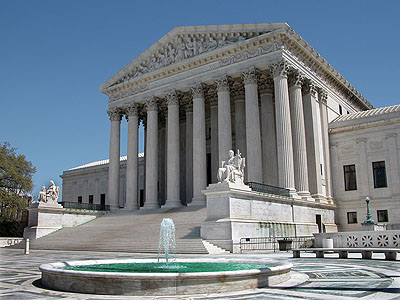
    If you were teaching a graduate seminar in public policy and challenged your students to come up with the most difficult possible problem to solve, they’d come up with something very much like climate change. It’s slow-acting. It’s essentially invisible. It’s expensive to address. It has a huge number of very rich special interests arrayed against doing anything about it. It requires international action that pits rich countries against poor ones. And it has a lot of momentum: you have to take action now, before its effects are serious, because today’s greenhouse gases will cause climate change tomorrow no matter what we do in thirty years.

    I have to confess that I find myself feeling the same way Andy does more and more often these days. It’s really hard to envision any way that we’re going to seriously cut back on greenhouse gas emissions until the effects of climate change become obvious, and by then it will be too late. I recognize how defeatist this is, and perhaps the proliferation of extreme weather events like Sandy will help turn the tide. But it hasn’t so far, and given the unlikelihood of large-scale global action on climate change, adaptation seems more appealing all the time. For the same reason, so does continued research into geoengineering as a last-resort backup plan.

    I’d like someone to persuade me I’m wrong, though.

  • Supreme Court Might Deliver a Tiny Victory for Common Sense

    The FISA surveillance act had its day in court yesterday, but the subject was solely whether the act would ever have a real day in court. Adam Serwer explains:
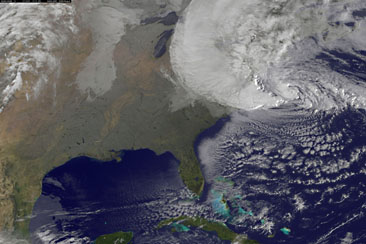
    Here’s what the civil libertarians and human rights activists are upset about: The FISA Amendments Act authorized the warrantless surveillance aimed at targets abroad, including correspondence where one of the points of contact is within the United States. That means the government could spy on American citizens without a warrant or probable cause. Surveillance in cases targeting suspected foreign agents previously had to be approved by a special court. The FISA Amendments Act allowed the government broad latitude to spy without ever needing to ask a judge’s permission, even if that means picking up Americans’ emails and phone calls.

    The arguments before the Supreme Court on Monday weren’t about whether this kind of surveillance violates Americans’ constitutional rights. Instead, the justices are deciding whether or not the lawyers, journalists, and human rights activists involved in the case can sue at all. To move forward with their case, the plaintiffs need to prove they have what lawyers call “standing”—they have to prove that the law will affect them. That’s hard because who the government spies on is by definition a secret.

    David Savage tells us how things went:

    Supreme Court justices were surprisingly skeptical Monday about arguments by a top Justice Department lawyer who in a hearing sought to squelch an anti-wiretapping lawsuit brought by lawyers, journalists and activists.

    ….[Elena] Kagan said lawyers who represent foreign clients accused of terrorism-related offenses cannot speak to them on the phone. They said they had to fly overseas to speak to them in person. That suggests these plaintiffs have suffered some harm because of the prospect of their calls being overheard, she said….Kennedy said he too found it hard to believe that the NSA is not engaged in broad monitoring of international calls.

    “The government has obtained this extraordinarily wide-reaching power,” he said. “It is hard for me to think the government isn’t using all of the powers at its command under the law.”

    This is obviously a tiny victory, but it’s a victory nonetheless. The government has been playing this card for over a decade, claiming that literally no one has standing to sue over its secret surveillance programs because no one can prove they’ve been surveilled. It’s an absurd Catch-22, and the court is right to be skeptical of it. One way or another, there should always be somebody who has standing to challenge a law in court. Even if the Supreme Court eventually rules that FISA and its amendments are all constitutional, it would be nice to at least get a ruling that no law is entirely unassailable merely due to technicalities of standing.

  • Ohio Press Slams Romney Over Jeep Ad


    Greg Sargent scans the Ohio media for coverage of Mitt Romney’s ad claiming that Obama is helping Chrysler ship jobs to China, and finds that it’s mostly pretty scorching:

    This is hardly a comprehensive look at the local coverage, but it does suggest the possibility that Romney’s Jeep-to-China gamble may be backfiring. Polls have shown that large numbers of Ohioans don’t think Romney cares about their needs and problems. And the Obama campaign views the auto bailout, and Romney’s dishonesty about it, as central to their closing case against Romney’s character, integrity, and true priorities. So these are exactly the headlines the Obama team wants.

    I’d like to believe this. But I wonder if it’s true. In terms of reach and effectiveness, how does a bunch of indignant newspaper coverage compare to a gut-punch of a TV ad that airs a few thousand times in the course of a week? I’m not sure. I guess we’ll find out next Tuesday.

  • Will Romney Try to Exploit Hurricane Sandy?

    A friend and I were just emailing about Hurricane Sandy:

    Friend: This may be the election right here. If Obama can look like he’s handling this competently and in control he should be okay. But I’m sure Romney’s people are all in a room trying to figure out how to make this Obama’s Katrina.

    Me: Benghazi didn’t work for them, so Sandy is their last hope. But I do think this is a challenge for Romney. Any criticism will look nakedly opportunistic unless there’s really a good reason for it. I think the press is probably waiting for Romney to say something obviously excessive.
    Friend: I’d watch Drudge for the cues. He should have a picture of a stranded black person up at some point tomorrow.

    The wingers will certainly be looking for some kind of Sandy-related incompetence to hang on Obama, but I really do think the press will be on the watch for this and ready to pounce. It’s such an obvious thing for a desperate campaign to do, and exploiting a tragedy like this a week before an election would be a little too raw even for our conflict-loving media. Unless Obama really screws up something badly, Romney would probably be best served by quietly telling his surrogates to cool it on Sandy.

  • David Brooks Says We Must Allow the Hostage to be Killed


    Shorter David Brooks: congressional Republicans are such implacable assholes that they’ll flatly refuse to support big legislation that’s good for the country as long as Barack Obama is president. But congressional Democrats are more reasonable, so if Mitt Romney wins, he’ll be able to get some big stuff passed. Therefore you should vote for Romney.

    Shorter shorter David Brooks: the only way to deal with terrorists is to give them what they want.

    If you think I must be characterizing Brooks unfairly, I urge you to click on the link above. Then come back and tell me what I got wrong.

  • The Real Real Story Behind Benghazi


    Having pretty much failed to persuade the country that the Obama administration misled the American public about Benghazi while cravenly refusing to call it an act of terrorism, conservatives now have a new conspiracy theory. It revolves around the notion that Obama basically had a real-time video feed of what was happening; knew that embassy staffers were requesting help; knew that a fast-response team could get there in time; but ordered them not to go in, thus making himself personally responsible for the deaths of four American diplomats. Charles Woods, the father of Benghazi victim Tyrone Woods, has been retailing this story all over right-wing talk radio, and conservatives are up in arms that the mainstream media is ignoring it.

    But I guess that’s old news. The latest latest conspiracy theory is that General Carter Ham, the head of AFRICOM, is being sacked because….well, let’s let James Robbins tell the story that he heard from “someone inside the military that I trust entirely”:

    General Ham immediately had a rapid response unit ready and communicated to the Pentagon that he had a unit ready. General Ham then received the order to stand down. His response was to screw it, he was going to help anyhow. Within 30 seconds to a minute after making the move to respond, his second in command apprehended General Ham and told him that he was now relieved of his command.

    The mainstream media is, once again, ignoring this bombshell on the pretext that the Pentagon flatly denies it. The real reason, of course, is that they’re in the tank for Obama and won’t do anything to hurt him before Election Day.

    I have nowhere really to go with this, so I’ll turn it into a reader poll. On Twitter earlier, I predicted that no matter who wins, Republicans will completely lose interest in Benghazi on November 7th. What do you think?

    A. Yes indeed. Peddling this nonsense will no longer serve any purpose once the election is over.

    B. No siree. If Obama wins, Benghazi will mutate from election fodder into impeachment fodder.

    Vote in comments!

  • One of These Tax Plans Is Not Like the Other


    Jared Bernstein compliments the Washington Post today for its tough line on Mitt Romney’s evolving portfolio of magical tax plans. Unfortunately, he says, they can’t leave well enough alone:

    But the WaPo then goes unfairly to the “pox-on-both-houses” place when it claims that President Obama has not suggested explicit tax expenditures/loophole closures to pay for his corporate tax rate reduction, from 35% to 28%. In this document that introduced the administration’s corporate tax reform ideas, they explicitly call for eliminating an inventory accounting tax gimmick that costs the Treasury $74 billion over ten, oil and gas subsidies ($27 billion), the carried interest loophole, and a bunch of other cats and dogs that amount to over $140 billion.

    Beyond that, however, they raise significant revenue (another $148 billion), and just as importantly, close down some distortionary incentives to offshore production, by closing international taxation loopholes. Moreover, their document suggests that some big ticket credits and deductions, including accelerated depreciation and tax preferences for debt over equity financing should be on the table.

    How is that anywhere near analogous to the absence of specificity from the Romney campaign on their tax plan? So while I give the WaPo kudos for scrutinizing Romney’s tax math, the double pox formulation doesn’t work here. At the very least, they need to read the administration’s white paper and explain why I’m wrong.

    Also worth noting: the Obama document is actually a serious proposal. It’s not just four or five bullet points, as most of Romney’s plans are. It goes into some serious detail about the pros and cons of various corporate tax reforms and explains what they mean and how much they cost. It’s like night and day compared to the pabulum on the Romney campaign website.

    More generally, Bernstein is right: this kind of editorializing is lazy, and it infects plenty of other subjects. If the Post doesn’t like Obama’s corporate tax proposal, that’s fine. If they think his numbers don’t add up, also fine. But why pretend that he’s done nothing but go after trivial small-dollar pay-fors and hasn’t produced a serious plan? It’s just not true.

