
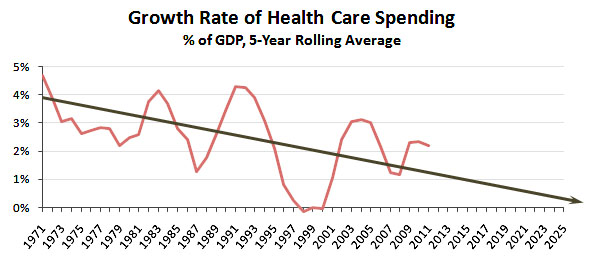
This is apropos of nothing. I happened to be fiddling around with CMS health care expenditures and decided to take a look at how spending has increased year-over-year as a share of GDP for the past four decades. (Example: If spending increases from a 16 percent share of GDP to a 16.4 percent share of GDP, that’s a year-over-year 2.5 percent growth rate.)
The chart below is a rolling 5-year average to smooth out the noise. Roughly speaking, it shows a steady decrease in the growth rate. If things continue along these lines, health care spending will continue increasing until it reaches about 21-22 percent of GDP sometime in the mid-2020s. The aging of the baby boom generation might send that number a little higher, but not by a lot, I suspect. The mechanism is simple: As spending goes up, our collective resistance to higher spending increases, and that’s the ultimate brake on health care expenditures. I’m willing to bet that U.S. spending on health care will never top 25 percent of GDP. It might not even top 23 percent.
 said Wednesday….The proposal could force advertisers to turn to Google, already the biggest player in online advertising, to get information about people’s shopping habits and preferences—rather than tracking users themselves.
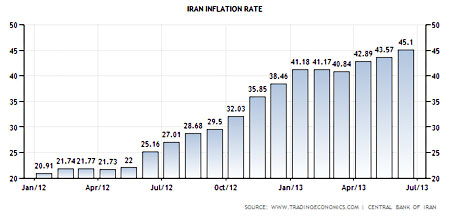 president, seems to have nudged Iran into getting serious about
 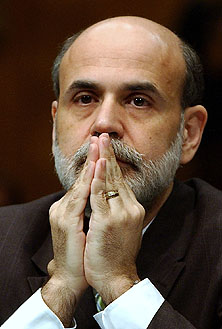 Congressional Republicans have been critical of the Fed’s loose monetary policies for quite some time. Today, the Fed announced that monetary policy would stay loose for the foreseeable future, and Fed chair Ben Bernanke explained that part of the reason for this is….
 OK, smartypants, let’s just compare that to reality.



