This will obviously not come as a shock to anyone, but Suzanne Dovi, a public policy professor at the University of Arizona, puts together a few interesting factlets about government corruption in an op-ed today:
Political scientist Adolfo Santos has found that public officials who have plans to become lobbyists act differently while in office from their colleagues who don’t. Interestingly, they are more successful at passing the bills they introduce than officials who don’t go on to be lobbyists. Does this behavior reflect their desire to please their potential future employer or something else? We can’t tell. What we do know is that public officials who are no longer thinking about reelection are freed from the sanctioning power of constituents.
….One report found that congressional members, on average, get a 1,452% raise when they become lobbyists….Interestingly, according to one study, former staff members can generate more revenue (and earn higher salaries) than former members of Congress.
Dovi recommends that we increase the mandatory waiting period before government officials and staffers can become lobbyists. Instead of being required to wait two years after they leave their jobs, she suggests six. “A six-year wait would significantly weaken their connections and diminish their earning power as lobbyists. And that would reduce the temptation to treat public service as a trial job period, acting on behalf of a future boss rather than the constituents.”
This, of course, is why it will never happen. But it’s probably not a bad idea.
 its residents see the impact of immigration every day. “Talking to anyone in Brownsville about immigration is like talking to Noah about the flood,” Judge Hanen said.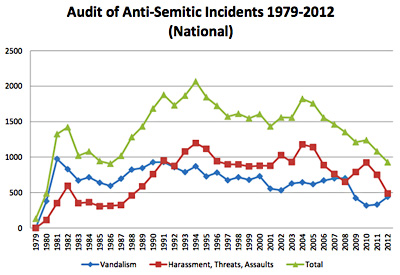
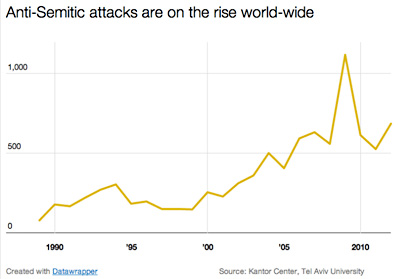 upward path ever since the late 90s. This is despite the fact that violent crime in Europe, which accounts for most of the incidents, has followed a trajectory pretty similar to the U.S. The exact dates when violent crime peaked and then started to fall are a little different in different countries, but not by a lot.
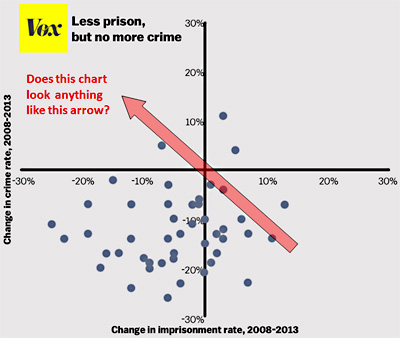 just a hint. Sometimes correlation implies causation and sometimes it doesn’t.
 industry against the pro-neutrality tech industry. Today an LA Times article dives more deeply into the