
The decision last week by United Healthcare to drop out of Obamacare got a lot of attention, but the truth is that UH was a pretty small player in the exchanges. What’s more important—but hasn’t gotten much attention—is the fact that more and more Obamacare insurers are getting close to profitability. Richard Mayhew comments:
2014 was a year where there were only guesses about both the Exchange population, the market structure, and federal policy structure (specifically the risk corridor revenue neutrality restrictions. 2015 had a bit more clarity on who was coming into the market, what was working and what was not working, and what federal policy on risk corridors would actually be. 2016 is the first year where the policies are priced on functionally decent real information and some of the amazingly dumb strategic decisions have been unwound through either course changes or through exiting the market.
As a simple reminder, competitive markets should see some companies make money and some companies that offer more expensive and less attractive products lose money. I would be extremely worried if everyone was making money after three years, just like I would be extremely worried that everyone was losing money after three years of increasingly better data.
Obamacare critics have spent a lot of energy trying to pretend that premiums on the exchanges have skyrocketed, but that’s never been true. What is true is that premiums started below projections and have since risen moderately as insurers get a better grasp on their customer base. This is how competitive markets work: players enter the market with prices designed to attract market share; customers pick winners and losers; prices adjust over time; and some companies are successful while others drop out. Eventually you reach a rough equilibrium, which we’re getting close to with Obamacare.
It’s ironic (or something) that the problems conservatives are making such a fuss about are the result of precisely what they say they want: competitive insurance markets. Apparently Obamacare has produced a little more competition than they’re comfortable with.
 how they plan to
  they were likely to become more extreme,
  percent of Trump’s supporters picked 2015, when Mr. Trump’s campaign began.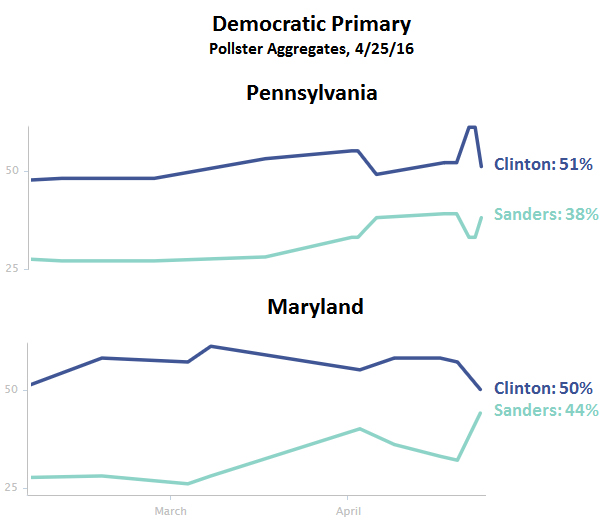
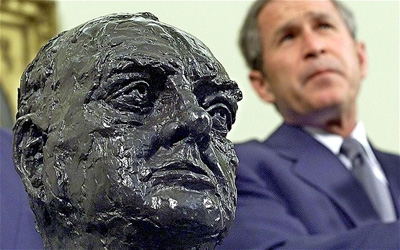 Over the years, conservatives have invented a spectacular set of grievances against President Obama—teleprompters, whitey tapes, Bill Ayers, birth certificates, etc.—but in the category of just plain strange, none of them surpass the tale of the missing Churchill bust. Early in his presidency, someone noticed that a bust of Churchill that had adorned the Oval Office during W’s presidency was gone, and this became a cause célèbre, one that continues to this day. Why does Obama hate Churchill? Is it because of his Kenyan background? Because he hates anyone who showed toughness during a time of war? Because he wanted to snub the British?
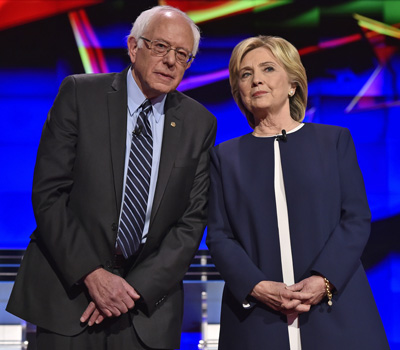 Greg Sargent thinks that Bernie Sanders has already conceded to the reality that he’s not going to win the Democratic nomination. He’ll continue to go through the motions for a while, but will then start up “serious unity talks”
  Smith suggests that part of the answer is lending to households,



