I didn’t expect to find any cats in London, but I’ve already found three. Here’s one of them, a handsome orange tabby who was prowling around near Edwardes Square. He didn’t run away when I approached, but neither was he quite courageous enough to come over and make friends. However, he did jump up onto a wall and pose for some pictures. I thought that was jolly decent of him.
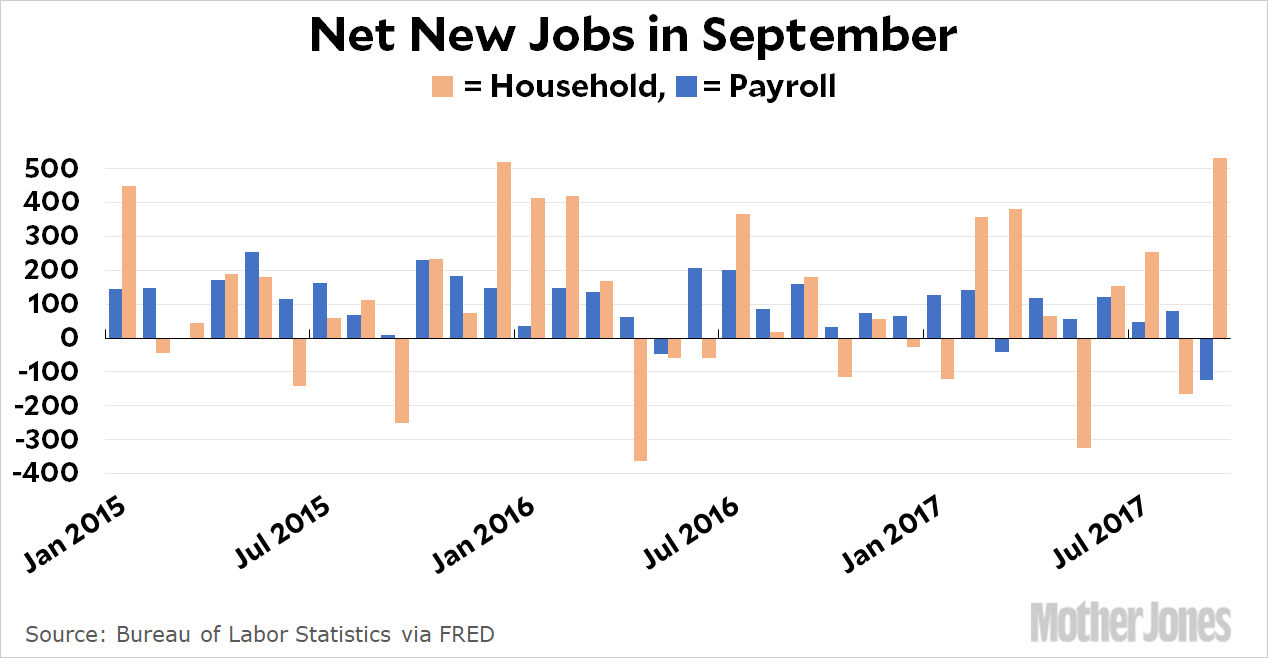
The American economy lost 33,000 jobs last month. We need 90,000 new jobs just to keep up with population growth, which means that net job growth clocked in at -123,000 jobs. And yet, the unemployment rate ticked down to 4.2 percent and the labor participation rate increased to 63.1 percent. What’s going on?
There are two plausible explanations. First, the jobs survey was scheduled just after Hurricane Harvey. Since much of Houston was underwater, businesses reported that no one was working, and that skewed the numbers.
The second alternative is that it’s just one of those things. There are two surveys: the payroll survey of businesses, which produces the jobs report, and the household survey, which produces the unemployment report. As the chart below shows, they frequently diverge significantly:
Over time, these two surveys generally even out, but September might have been one of those months where they happened to diverge a lot. Combine that with Hurricane Harvey and you get a very strange jobs report. It’s probably best not to pay much attention to it.
On the earnings front, there was surprisingly good news: hourly earnings of production and nonsupervisory employees went up at an annual rate of 5.1 percent. Inflation is currently running around 2 percent, so that’s excellent wage growth. We’ll see if the Fed allows it to continue.
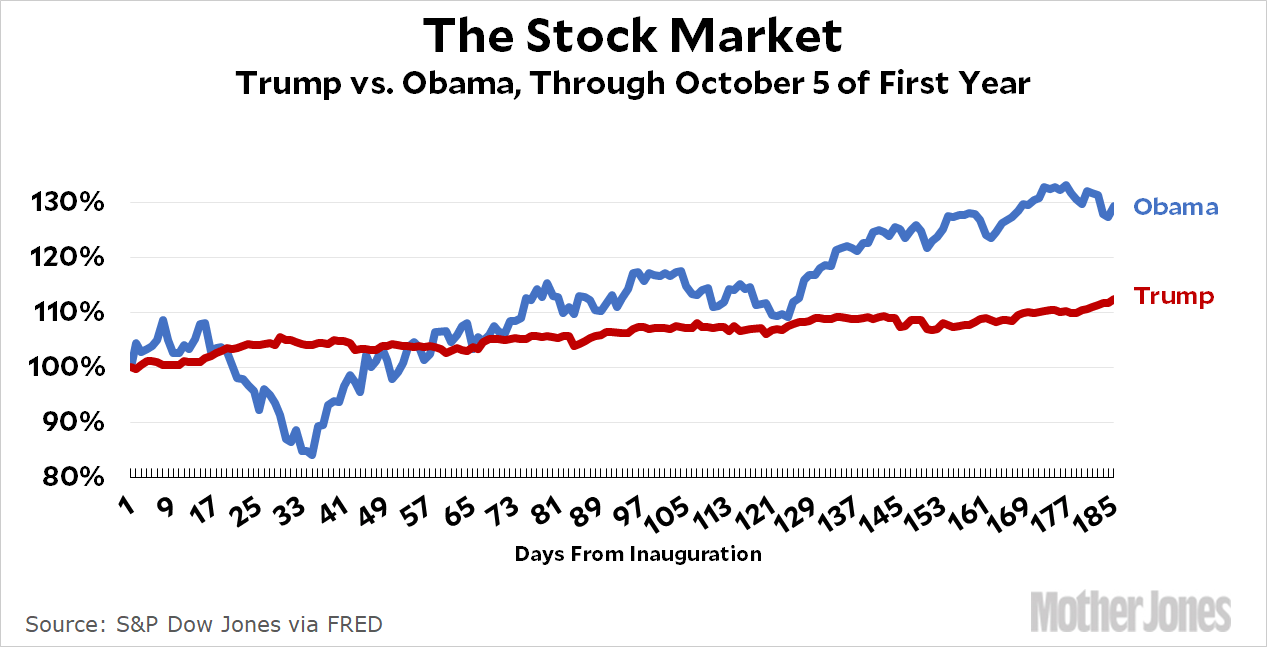
Donald Trump is bragging about the stock market again. As well he should: the S&P 500 is up 12 percent since he took office. That’s not bad! Of course, this is hardly the best first year a president has had in recent history:
Poor Donald. The ghost of Obama haunts him constantly. Still, I guess he needs something to take his mind off the fact that his Secretary of State thinks he’s a “fucking moron”:
Four senior administration officials said Trump first learned on Wednesday that Tillerson had disparaged him after a July 20 national security meeting at the Pentagon….Trump was furious when he saw the NBC News report, which was published shortly before 6 a.m. Wednesday. For the next two hours the president fumed inside the White House, venting to [John] Kelly, officials said. He left for Las Vegas shortly after 8 a.m., 20 minutes behind schedule.
This is the kind of thing a non-moron would probably laugh off. “Yeah, giving a campaign speech to a bunch of boy scouts was kind of dumb, wasn’t it?” But an actual moron will always go ballistic over something like this. Especially after a press conference where Tillerson pointedly refused to deny ever saying such a thing.
It’s no wonder Kelly decided not to go to Las Vegas with Trump. Trump had already bent his ear for two hours. Did he really need another five hours of being yapped at while he was trapped in a plane with Trump? Where’s Jared “Trump Whisperer” Kushner when you need him?
The Senate Better Care Reconciliation Act (BCRA), a proposal to repeal and replace the Affordable Care Act (ACA), includes a provision to create new association health plan options for small employers and self-employed individuals. These so-called “small business health plans” (SBHPs) would be considered part of the large group market, which has different rules than the small group market. In particular, the ACA requirement that premiums cannot vary based on health status does not apply in the large group market. Neither does the requirement for policies to cover ten categories of essential health benefits. If enacted, this provision would considerably disrupt the small group market because small employers could seek lower rates or less comprehensive coverage in an SBHP when their employees are healthy, but theoretically move back to regular small group market plans if an employee becomes ill.
Got that? “Association” health plans, which usually cover small groups, would have been allowed to offer plans that didn’t protect pre-existing conditions and didn’t offer all the essential benefits of Obamacare.
Presumably, this means I could have set up the “Friends of Kevin Drum” association and offered a really cheap health insurance plan. It would have been cheap because I would have accepted only healthy customers and I would have offered very limited coverage. If lots of people followed my lead, the Obamacare exchanges would lose nearly all their healthy customers, leaving them only with older, sicker customers. As you can imagine, that would be a disaster.
So it’s a good thing we dodged that bullet. Unless maybe we didn’t. Andy Slavitt reports that Donald Trump is about to sign an executive order implementing this particular provision of the Senate bill:
10/ The EO allows “association health plans”– ability for plans to be offered with no pre-ex protections & turn ACA into a high risk pool.
If this is true, it would be the most massive sabotage of Obamacare yet. It would also end up in court almost instantly, so it probably wouldn’t take effect soon, and might eventually be struck down. But even so, it would send a blaring signal that Trump is absolutely dead set on killing Obamacare one way or another. There aren’t many insurance companies who will stick with the exchanges once it becomes clear just how dedicated Trump is to this cause.
The Treasury Department’s Inspector General has concluded that Steven Mnuchin’s frequent use of military travel violated no laws. However:
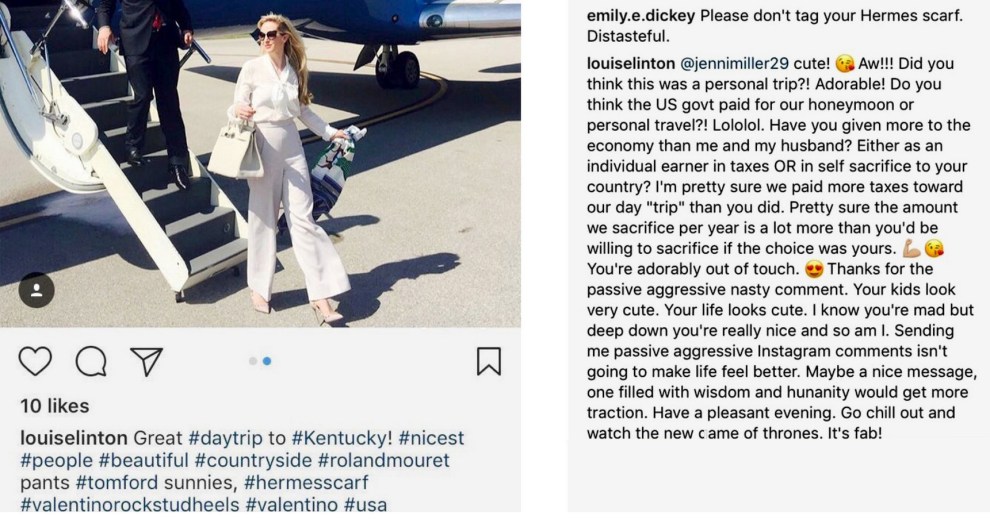
Treasury Secretary Steven Mnuchin has flown on military aircraft seven times since March at a cost of more than $800,000, including a $15,000 round-trip flight to New York to meet with President Trump at Trump Tower, according to the Treasury Department’s Office of Inspector General.
….Mr. Mnuchin has made nine requests for military aircraft since assuming his position earlier this year and has taken seven flights….Treasury secretaries generally take commercial flights except in extenuating circumstances because of the exorbitant costs of using military planes.
Apparently Mnuchin routinely requests military flights just in case he has a pressing need to conduct classified phone calls. Which is totally reasonable. Commercial flights from DC to New York, for example, can take as long as an hour, and who knows what might happen if the Treasury Secretary were out of touch that long when he was needed for an emergency 25th Amendment call?
Also: that flight to Fort Knox to see the eclipse had nothing to do with the eclipse. So everyone should stop saying that it did.
Let’s take a trip down memory lane. Do you remember Lois Lerner? BOLO? The IRS audits of tea party organizations?
Sure you do. Back in 2013 Republicans were on the warpath over this. The IRS, they said, had identified dozens, maybe hundreds, of tea party organizations for extreme audits based on their political leanings. These groups were being denied tax-exempt status thanks to crooked officials like Lois Lerner, who maintained a “Be On The Lookout” list that shunted these groups into a confusing maze of questions and demands that lasted for months or years, all because of suspicious words like “patriot” or “9/12” in their names. It was a scandal.
That same year, the Treasury Inspector General for Tax Administration released an audit that confirmed some of these charges. True, they also identified some progressive organizations that were audited, but it was clear that it was tea partiers they were really after.
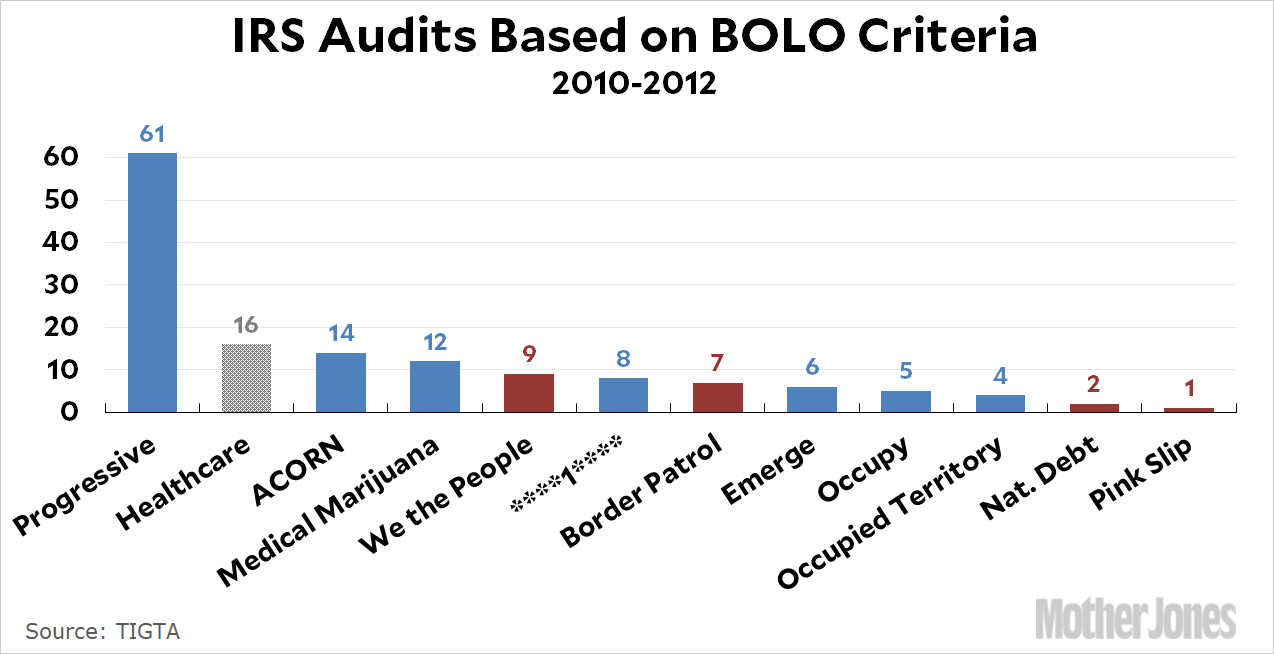
Well, funny story. It turns out that the 2013 audit was based on incomplete information because the IRS didn’t maintain case listings for most of the BOLO criteria. So TIGTA conducted a second audit. This one took a lot longer because they had to manually reconstruct the case listings themselves. Four years later it’s finally been released. This is their best attempt at recreating the case listing of organizations that might have been targeted based on BOLO criteria. Here’s how it shook out:
927 cases requested
919 cases received
739 cases reviewed
181 political cases identified
146 political cases based on BOLO criteria
And what did TIGTA find? Of these 146 cases which met the BOLO criteria based on words in the organization’s name, a grand total of ten were tea-party groups. Here’s the whole chart:
“We the people” and “pink slip” are associated with tea-party groups. In total, TIGTA identified 111 left-wing groups and 19 right-wing groups. (It’s unclear how the “healthcare” category broke out between left and right.)
Note that this audit is not based on miscellaneous PowerPoint presentations or emails. It’s based on actual cases that might have been referred for further investigation. Of those, only 15 percent were conservative groups. That’s it. The vast majority were liberal groups.
House Ways and Means Committee Chairman Kevin Brady, who was one of the ringleaders of the original Lois Lerner lynching, is pretending that the new audit confirms what “government watchdogs” like Kevin Brady have been saying all along: “Bureaucrats at the IRS, such as Lois Lerner, arbitrarily and haphazardly administered the tax code and targeted taxpayers based on political ideology.”
No. That’s not what they were saying at the time. They said the Obama IRS was corruptly targeting conservative groups for harassment. But that wasn’t true. Whether or not the BOLO list was a good idea, it never had anything to do with Obama. It got its start back in 2004, and during the Obama administration it was mostly used to target liberal groups.
There was nothing to any of this. There was never anything to it. Just a couple of PowerPoint presentations that were blown up into a “scandal” that never existed. But it took four years to officially confirm that.
Do you remember how all-consuming the “Obama scandals” once were? This was a turn of events so dramatic it defined Obama’s entire second term — he was “waylaid by controversies,” or at least “seriously off track,” “beset by scandals,” enduring a “second-term curse,” the prospect of “endless scandals,” Republicans “beginning to write his legislative obituary,” and Washington had “turned on Obama.” A ritualistic media grilling of Jay Carney, featuring the ritualistic comparisons of him to Nixon press secretary Ron Ziegler, sanctified the impression of guilt.
Four years later, we know even more about the “Big Three” scandals. It turns out there was never the slightest scandal associated with Benghazi. There was no IRS scandal. And Obama’s prosecution of leaks may have been unwise policy, but there was never anything remotely corrupt about it.
Oh, and Hillary Clinton’s emails? The more we found out about that, the less there was. Ditto for the Clinton Foundation. And her health. Hillary Clinton had her own Big Three scandals, and they turned out to be just as baseless as Obama’s. Imagine that.
President Trump plans to announce next week that he will “decertify” the international nuclear deal with Iran, saying it is not in the national interest of the United States and kicking the issue to a reluctant Congress, people briefed on an emerging White House strategy for Iran said Thursday.
….Trump’s senior national security advisers agreed within the past several weeks to recommend that Trump “decertify” the agreement at the Oct. 15 deadline….That would start a 60-day congressional review period to consider the next steps for the United States.
If Trump goes ahead with this, Congress has 60 days to reimpose sanctions on Iran. But no matter how much you dislike the Iran deal, it’s hard to see what the point of this would be. Iran already has the money we unfroze, and reimposing sanctions would do little good without cooperation from everyone else—which we won’t get. What’s more, it sends a signal to the world that agreements with America aren’t worth much.
Basically, it’s all bad for the United States and all good for Iran. Then again, it is an Obama deal we’re talking about, and Trump is hellbent on undoing every last thing Obama accomplished. Maybe that’s all that matters to him.
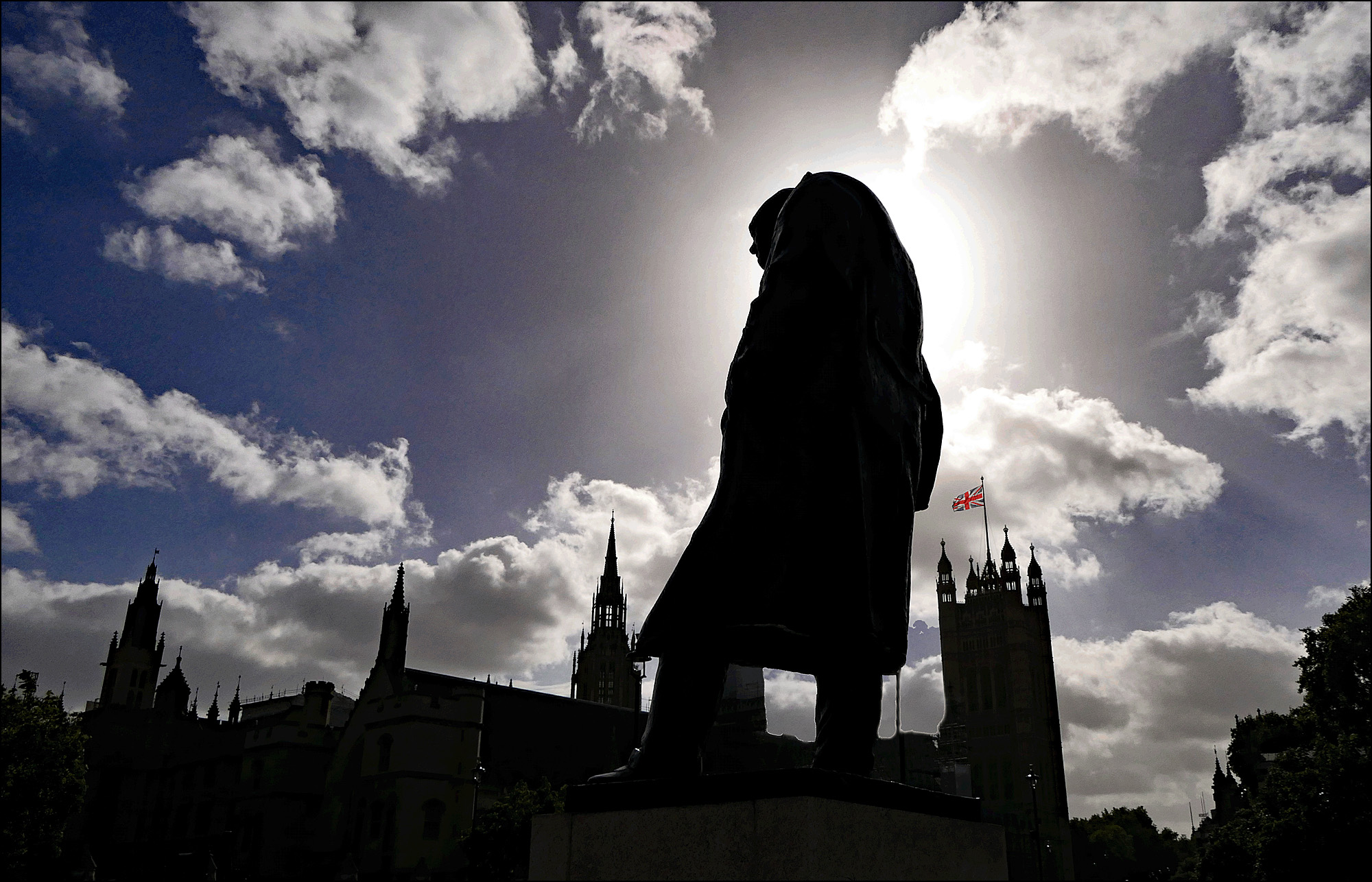
This is the famous sculpture of Winston Churchill in Parliament Square, where he’s forced for all eternity to keep a watchful eye on the shambles that his party has become. I wonder if he would have supported Brexit? I can think of several pretty good reasons to take either side of the argument.
Star Trek’s universal translator is here, about 200 years early. Say hello to our new digital overlords, the Google Pixel Buds:
The earbuds connect wirelessly with Google’s latest smartphones, but more importantly, they’re able to access Google Assistant, the company’s virtual personal concierge, which launched exactly a year ago. Through this software, Google claims the earbuds can translate 40 spoken languages nearly in real time—or at least, fast enough to hold a conversation.
A demonstration on stage during Google’s event showed accurate and nearly instantaneous translation from Swedish to English, but it’s unclear how well it will perform in the real world, where background noise, differences in accent, verbal stumbles, and so on could confuse the software.
I don’t quite get the name. Pixel Buds? Did they just pick some random, techie-sounding word to go before buds? Can anybody explain?
Anyway, this is great. I don’t doubt they work a bit spottily right now, but real-time translation is sort of like the dancing bear: pretty astonishing even if it’s mediocre. And if they’re mediocre now, it means we’re no more than a few years away from reliable, accurate, honest-to-God universal translation. And that’s some genuine futuristic shit.
Artificial intelligence is on its way. This isn’t it, but it’s the Archangel Gabriel of precursors. It’s coming.
Some Los Angeles apartments that probably won't take Section 8 vouchers.Orange County Register via ZUMA
When Los Angeles opens applications to join its waitlist for subsidized housing vouchers in a couple of weeks, the city’s housing authority expects that it will receive more than 600,000 applications. According to the Los Angeles Times, the waitlist’s capacity is just 20,000, which means that 580,000 of those who apply will be told, more or less, ‘Sorry, better luck next time.’
The lucky 20,000 then stand to wait up to a decade for a voucher to become available. Los Angeles has about 57,000 federally funded Section 8 vouchers in use, and only about 2,400 become available each year as recipients typically start earning more money, move, or die. Many of these vouchers will be set aside for the homeless or particular housing projects, further limiting applicants’ opportunities to escape the waitlist.
The last time LA opened up applications to join its Section 8 voucher waitlist was in 2004, when the city received a comparably light 300,000 applications.
Though New York and San Francisco are usually cited as the nation’s most expensive housing markets, Los Angeles is generally considered the most country’s most unaffordable. Angelenos typically have lower median incomes than New Yorkers or San Franciscans, and end up devoting a a higher percentage of their monthly income to housing.
A HUD report released in August determined that the majority of Los Angeles’ one million “very poor” households spent more than half of their income on rent, and found a greater share of low income people with inadequate housing in Southern California than in nearly any other major US metropolitan area.
And we respect that! But maybe you’re of a mind to support our work directly instead? We have until December 31 to raise the last $400,000 we need to keep our nonprofit newsroom running at full strength into 2026. Will you make a gift today?
We noticed you have an ad blocker on. Can you pitch in a few bucks to help fund Mother Jones' investigative journalism?
Billionaires own the media,
but they don’t own us.
At Mother Jones we know these aren’t conventional times, and they require unconventional coverage. That’s what deliver every day: fierce, independent journalism you can’t find elsewhere. Perhaps never in the history of our country has that been more necessary than now. But we can’t do it without reader support—your support. Please chip in today.
Billionaires own the media,
but they don’t own us.
At Mother Jones we know these aren’t conventional times, and they require unconventional coverage. That’s what deliver every day: fierce, independent journalism you can’t find elsewhere. Perhaps never in the history of our country has that been more necessary than now. But we can’t do it without reader support—your support. Please chip in today.