Wildflower season is long over, but the miracle of photography allows us to enjoy it one more time. I wouldn’t say that the California poppy is the #1 reason to move here,¹ but a great big field of them in the spring might just change your mind. Or you could just visit during wildflower season, I suppose. Either way, it’s truly a delightful flower.
¹Other reasons include a better time zone; great weather; nobody cares what you wear to dinner; and we’re 2,500 miles away from Donald Trump.
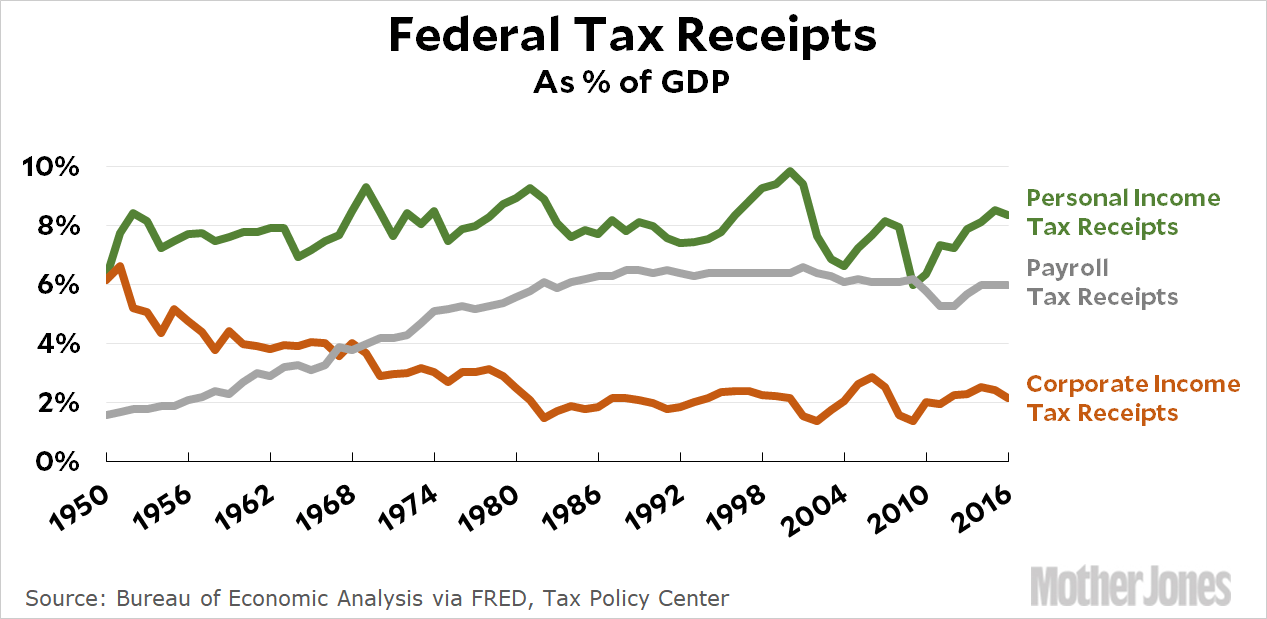
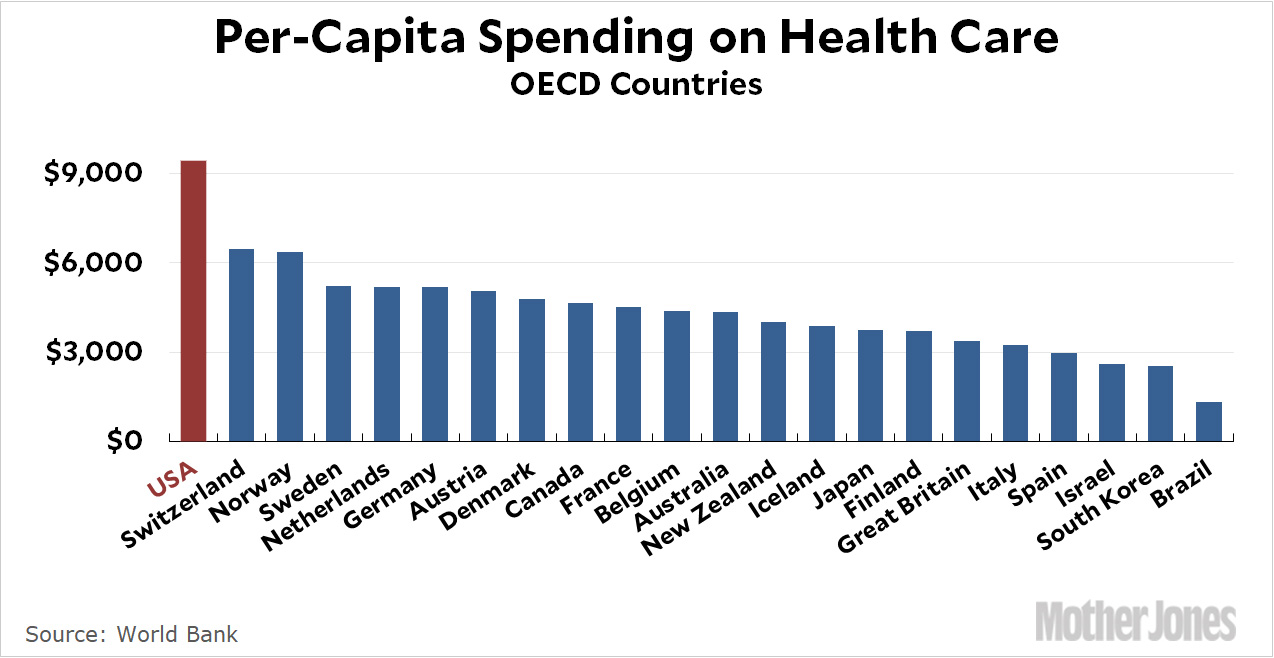
Whether we “must” lower our taxes is a matter of opinion, I suppose. However, the question of how high our taxes are is a matter of fact. So here you go:
Gee, I wonder which taxes Trump thinks “must” be lowered?
First: don’t disrespect geometry and don’t effin disrespect parallelograms – particularly IN a parallelogram…
The SIGN is a parallelogram (rectangle) as is the WINDOW. Structurally the building is held up with triangles & parallelograms…
The graphic software used to MAKE the sign contains maths that deals with vectors & hence PARALLELOGRAMS…
EVERY season is PARALLELOGRAM season if you live in a built environment or use technology. I’m bloody glad I learnt about parallelograms…
Imagine if I’d spent my time learning about taxes at school instead of parallelograms…
1 it would all be out of date now & 2 be about the wrong country & 3 be so vague as to be irrelevant to my current life.
Oh & 4 be as dull as shit. Whereas geometry is truly amazing…
…now no offence to accountants in general. I admire all maths related disciplines & accountants are unfairly maligned as dull…
BUT don’t shit on a different field of maths for cheap laughs…
‘But it is just a joke’ no it is a shitty joke that perpetuates a shitty idea: that only ‘useful’ maths is worth learning.
‘Useful’ is a shitty standard for general education. Drama, literature, art, music we learn because they are good in themselves…
‘Oh but STEM is different!’ No! Name a dinosaur – go on. I bet you can name several correctly with the right technical name…
…how come? Most people will never need to deal with actual dinosaurs. But we learn about them because they are FUN and weird & freaky…
People who succeed in maths & related areas find pleasure in maths. ‘Useful’ has its place but it is not as powerful as pleasure.
…and tying down a subject whose power is its abstractness with ‘useful’ means that it will always fail…
‘When will I use this’ I don’t know because you haven’t lived your life yet!…
Anyway. Moral: don’t disrespect parallelograms.
Quite so. The problem with parallelograms is that they’re a con. They tell you that finding the area is simple: it’s base · height. Easy peasy!
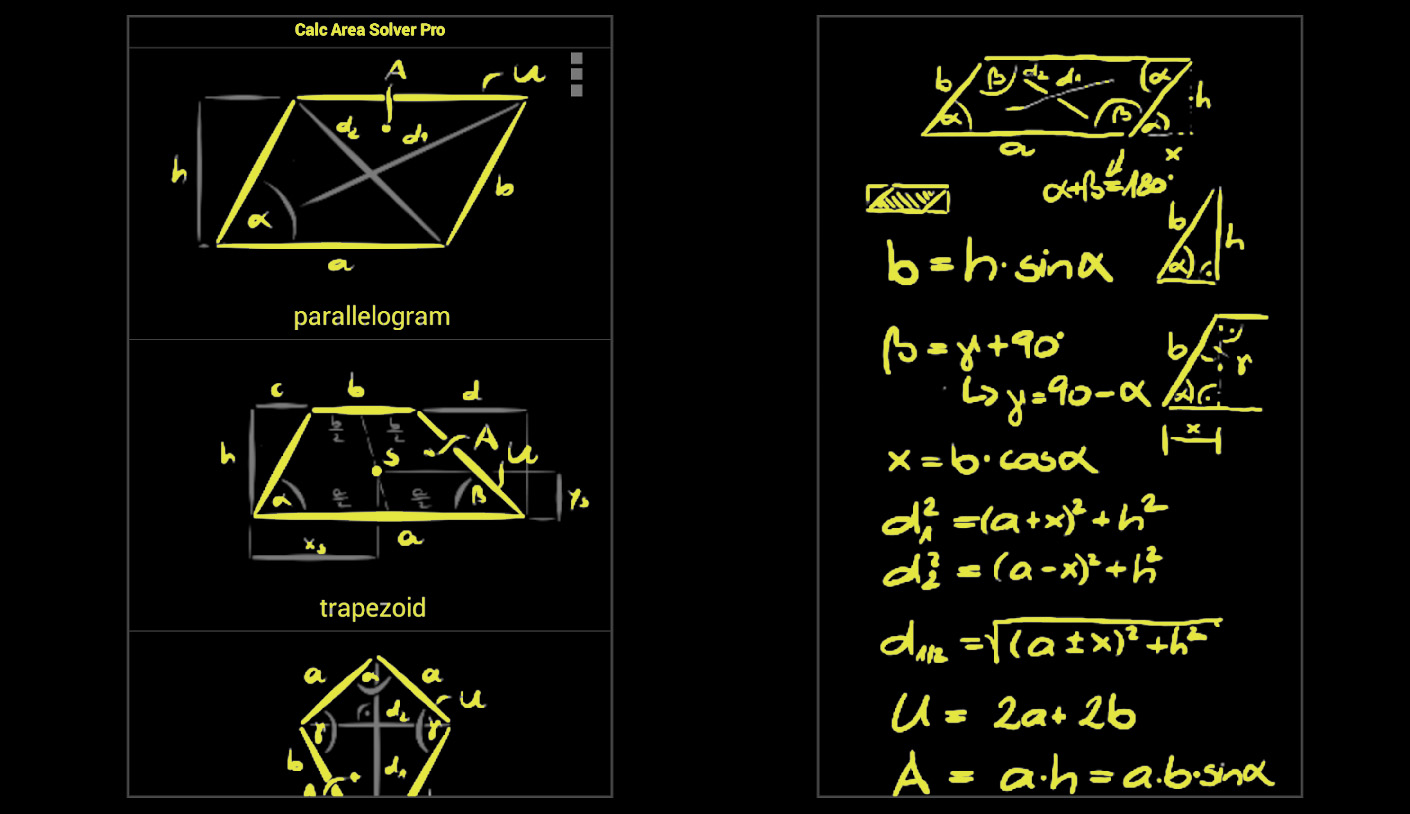
But what’s the height? Crap. The length of the sides isn’t enough to figure that out. You need to know the angles too. And then you have to apply some trigonometry:
So there you go: the area of a parallelogram is a · b · sin α. Greek letters! Blecch. So sure, respect the parallelogram, but only because such a simple looking thing requires more math than you’d think to figure it out.
No worries, though. You’ll need it when you take physics anyway.
President Trump on Wednesday will pressure Congress to pass a sweeping package of tax cuts by year’s end, but he is not planning to advance a specific plan….In a speech delivered to supporters in Springfield, Mo., Trump plans to make a populist argument for cutting taxes, saying it will help raise wages and boost economic growth, said senior administration officials who spoke on the condition they not be named.
One of the officials said Trump is going to try to tap into a view among many Americans that “the economy is rigged — that it only benefits a very small [number of] wealthy and well-connected few … The president is going to really hammer on that.”
And what’s the best way to unrig the economy? To reduce corporate taxes and lower top marginal rates on rich people! That should help all those struggling white working class folks who voted for Trump.
Donald Trump once said he could shoot someone on Fifth Avenue and his supporters would still love him. It looks like he’s about to put that to the test. If he can convince working-class voters that Paul Ryan’s tax plan will help them out, it means they’ll literally believe anything.
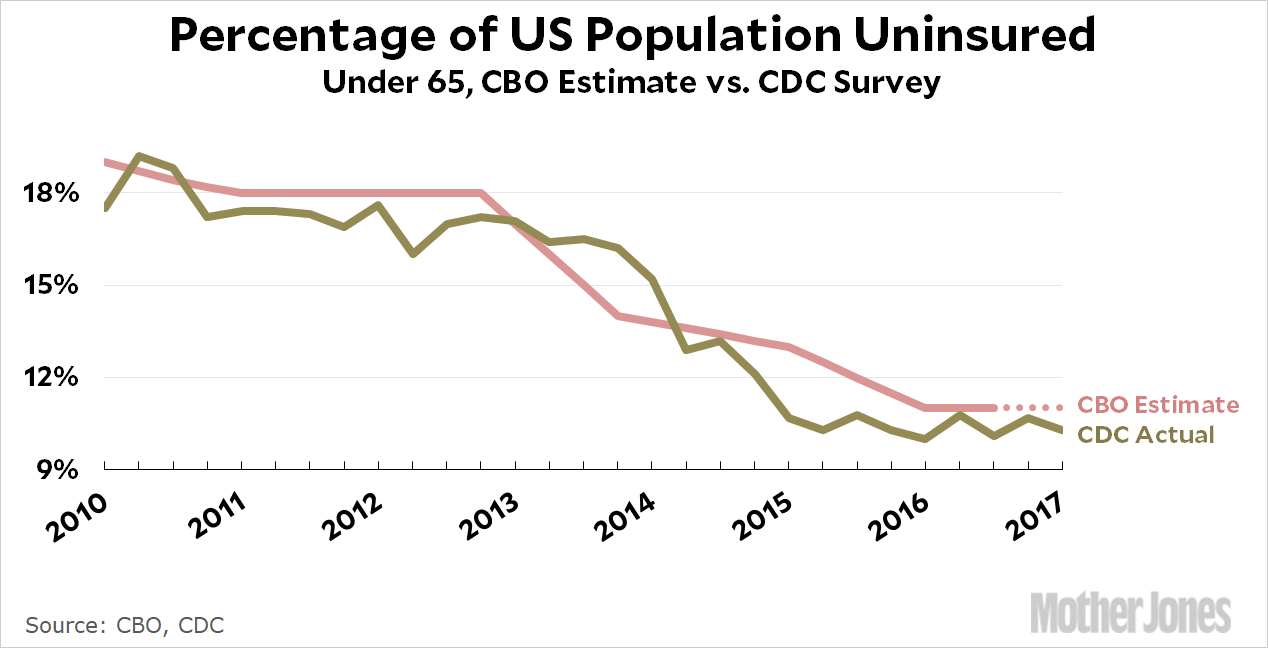
The latest CDC numbers on the uninsured population are out. In the first quarter of 2017 the number of uninsured in the US had dropped from about 17 percent before Obamacare to 10.3 percent. That continues to be below the original CBO estimate of 11 percent for 2016 and beyond.
The uninsured rate has been hovering at about 10 percent for the past two years, and this is most likely where it will stay given the constraints and subsidy rates of the current program. Despite the best efforts of Republicans, there’s no evidence that it’s failing or imploding or collapsing. It’s not in a death spiral and it’s not busting the budget. It’s doing fine—better and cheaper than expected, in fact—and our job now should be to improve it, not to deliberately sabotage it.
NOTE: As always, I’m using the CDC’s figures for the nonelderly population. That’s because (a) this is what CBO used for its estimates, so I need to use comparable numbers, and (b) it’s the number we actually care about. The overall figure for all ages is currently 8.8 percent.
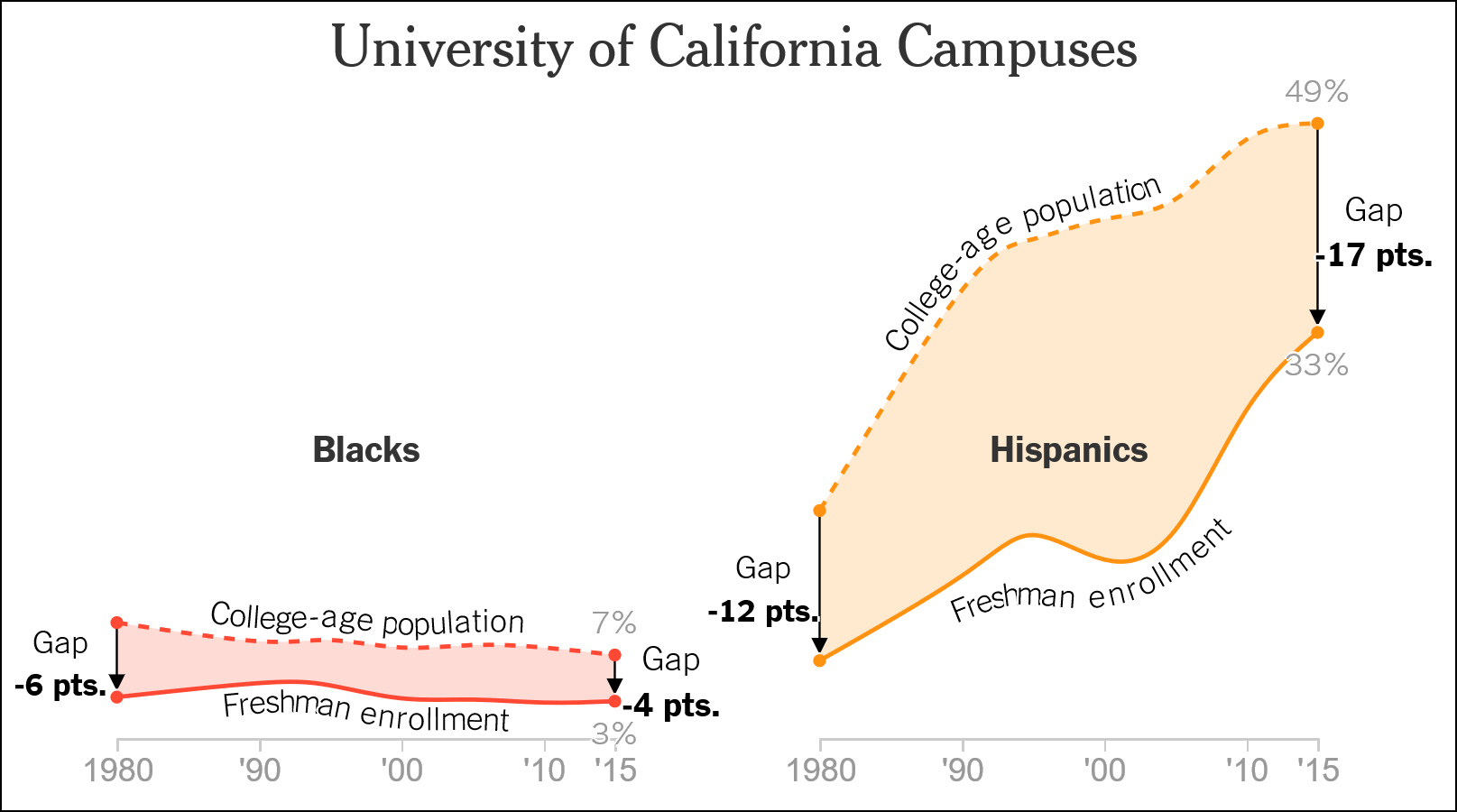
Oddly, the data editors who created this chart included numerical percentages on the right, but not on the left. This is a very peculiar decision unless you’re trying to mislead people. So let’s take another look at this.
When you have two trends that are increasing, you can’t look at the absolute differences over time. For example, suppose I have $1 and you have $2, and we both put our money in the bank. Over a decade, inflation doubles and so does our money. Now I have $2 and you have $4. The absolute difference has gone from $1 to $2, but the growth rate is equal and our relative purchasing power is exactly the same as before. It would be misleading to suggest that anything has changed.
In the case of college enrollments, looking at absolute differences is even more wrongheaded since the top and bottom lines in the Times chart measure completely different things. So what should we look at? The answer is relative growth trends, but unfortunately the data in the Times charts is all but useless for this. The top line is percent of the college-age population while the bottom line is percent of UC enrollments. I’ve calibrated the left axis, and the growth rates look like this for Hispanics:
College age Hispanics as percent of all college-age: 18 percent to 49 percent, growth = 2.7x.
UC freshman enrollment as percent of all UC freshman enrollment: 6 percent to 33 percent, growth = 5.5x.
This is suggestive of relative growth rates, but without more details about the UC system and California demographics it doesn’t provide anything more than that. So I dug into it. This turned out to be spectacularly difficult, so much so that I began to wonder if I was missing something obvious. I’ll spare you the details, but in the end, my rough estimate is that in 1980 about 2 percent of college-age Hispanics went to UC schools. Today, 5 percent do. That’s very significant progress. Hispanics may or may not be “underrepresented,” depending on how you measure it, but they very clearly aren’t more underrepresented than they used to be.
I don’t feel like going through this exercise for all of the other charts. There are probably some cases where minority students really have fallen behind, though I suspect not many. And it’s certainly arguable that we should have made more progress than we have. That said, it’s just wrong to say that college-age minorities have it worse than they did in 1980. The Times should be more careful in how they present data like this.
I have a love-hate relationship with black-and-white photography. I want to note up front that I’m not talking about people who enjoy darkroom work as a hobby and therefore shoot black-and white. I’ve done plenty of that in my life, and it’s a lot of fun.
I’m talking about everyone else. Virtually all photographers shoot digital these days, which means they shoot in color. If you see a black-and-white image, it’s almost always a color image that’s been converted. This bugs me for a few reasons. First, shooting black-and-white is different. It’s not just color but without the color. Second, there’s often a bit of pretentiousness to it. Shooting black-and-white because that’s what’s available is one thing, but doing it even though you have an original color image is sort of annoying. Third, most photographers don’t really know how to shoot black-and-white these days. (I emphatically include myself in that.) Fourth, shooting in black-and-white seems to encourage a fascination with abstract shapes and shadows. This is occasionally interesting when done by someone really talented, but hardly ever when the rest of us do it.
On the other hand, nothing beats black-and-white for that gritty urban look. If that’s what you’re after, I’m all for it. It’s also magnificent in the hands of someone truly talented—both artistically and technically. I do still sometimes see some really good black-and-white photography, and it’s hard to beat.
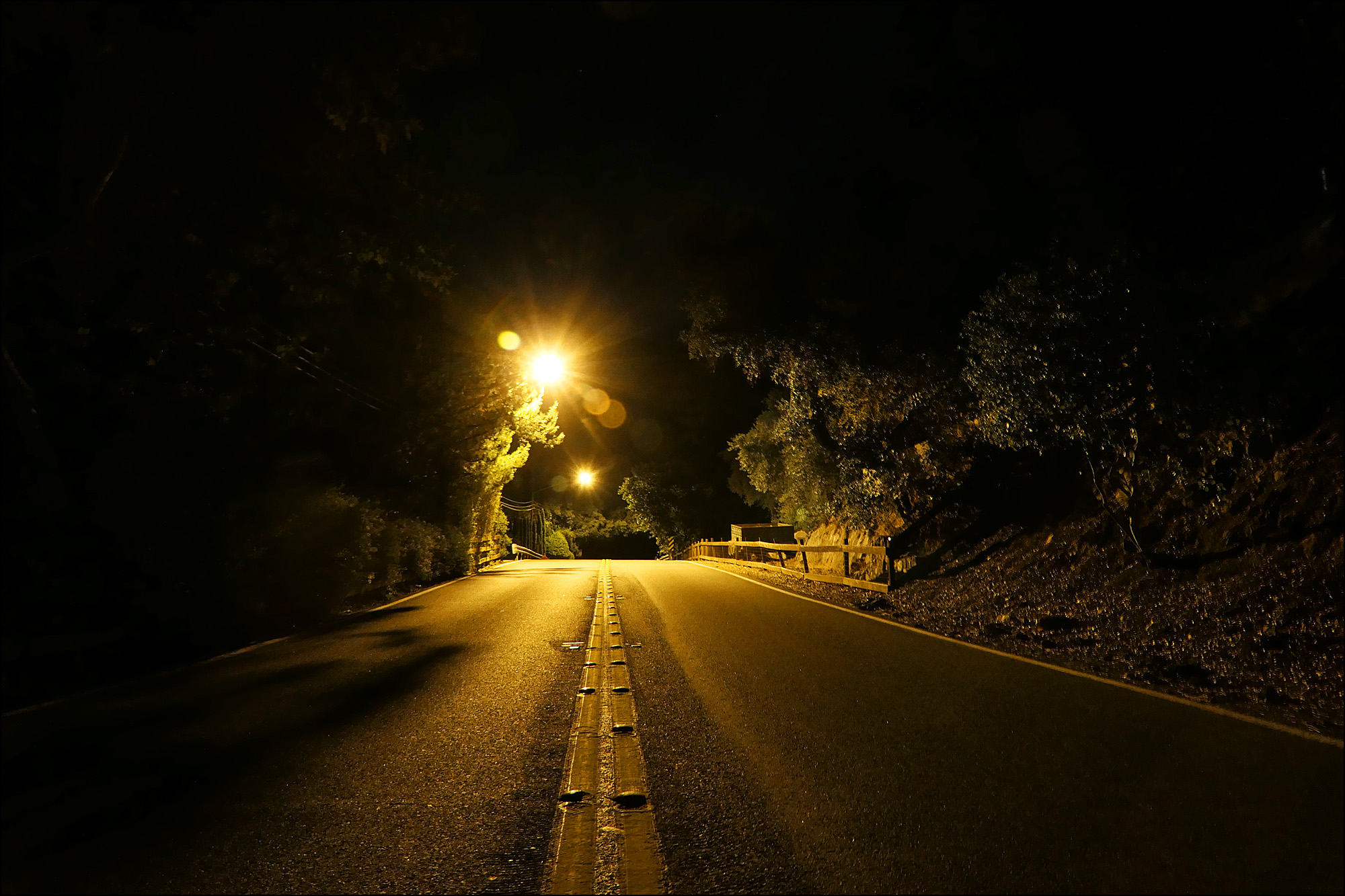
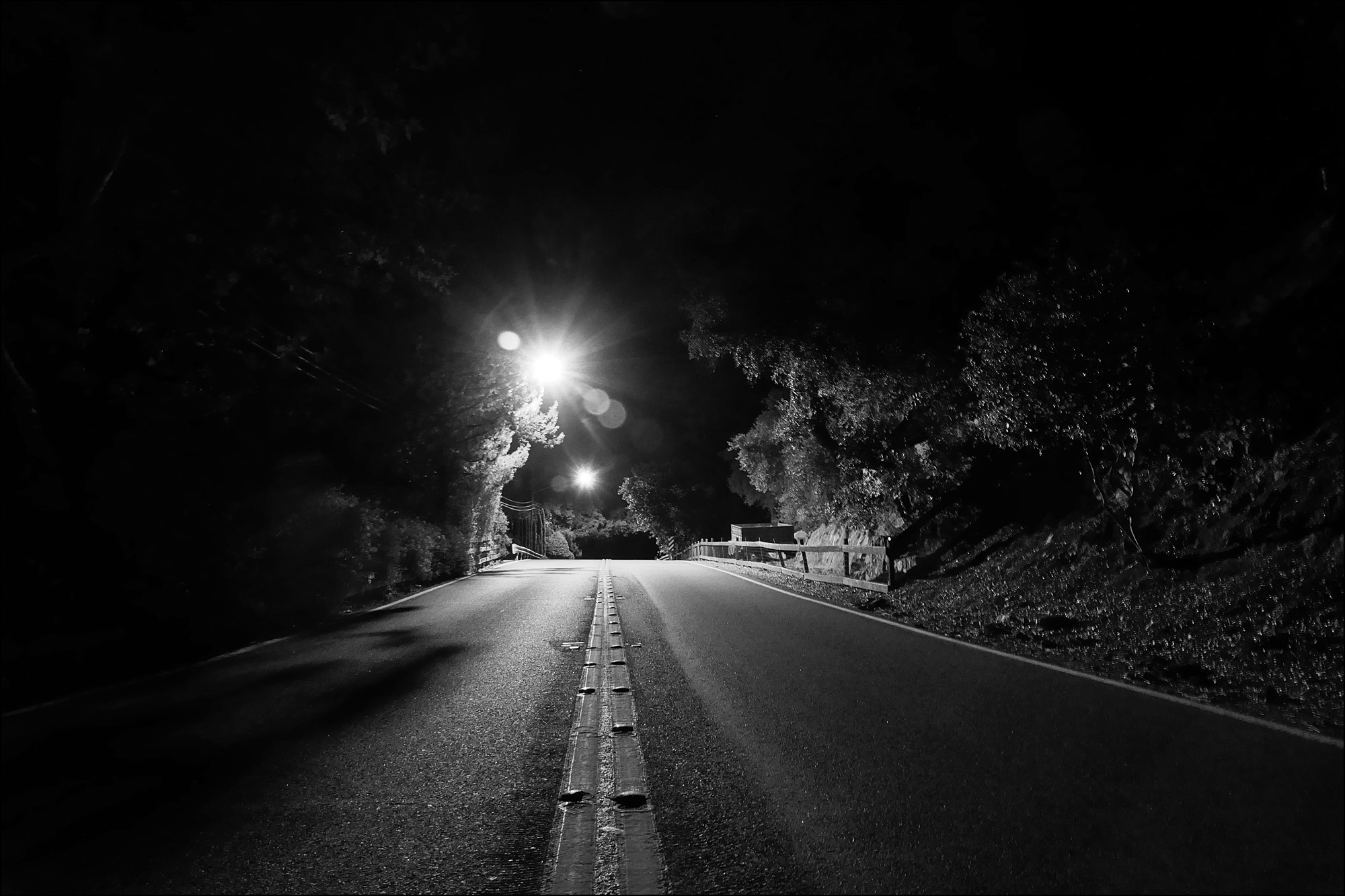
But judge for yourself. Here’s a picture of a deserted country road at night. Below it is the same picture converted to black-and-white. I deliberately did nothing to try to enhance it. I just did the best I could to match the tone and levels of the original. Everyone has their own taste in these things, but I’ll take the color version.
Over at Vox today, Matt Yglesias writes about single-payer health care. This is because there’s sort of a fascinating backstage conversation playing out among progressive activists these days. In a nutshell, the question is how enthusiastic liberals ought to be about single-payer. There are several threads to this conversation:
Are we at the point where single-payer ought to be a litmus test for any committed progressive? A few years ago this was a point of contention, but it doesn’t seem to be anymore. Whether it’s because of Bernie Sanders, or the failed Trump plan, or just a steady move to the left among liberals, true single-payer now seems to be back on the liberal agenda. Thus we’ve come full circle. Harry Truman supported single-payer; LBJ implemented it for the old and the poor; and Nixon almost agreed to it in the early 70s. Then liberals gave up on it as a bridge too far, and we got Clintoncare and the Obamacare. But now it’s back.
Is it really single-payer we care about, or universal health care any way we can get it? This is an odd part of the conversation. Everyone agrees we want universal coverage, and in practice the only options open to us are single-payer and multi-payer. (See here for an explainer.) There’s virtually no real difference between the two, and I’ve always assumed that lefties have adopted the single-payer mantra mostly out of convenience. But maybe not. Multi-payer usually refers to the government plus some assortment of sickness funds, employers, and private insurance plans that are so heavily regulated they’re almost like utilities. Perhaps there’s really a difference between those of us who don’t care much about the plumbing and those of us who hate private coverage so much that only pure single-payer will do. I’m not sure.
Should health care wonks get into the action by creating genuinely workable plans for transitioning to single-payer? This is what Yglesias talks about today. In a way, it’s almost a caricature of liberalism, insisting on full-blown white papers for lefty plans while our current conservative president basically won office by promising better, cheaper, more comprehensive health care that will cost the taxpayers nothing. “It’ll be so easy,” he assured us over and over. Why aren’t liberals allowed to do that?
Speaking for myself—and who else would I be speaking for?—I’d say the answers to these three questions are yes, universal, and yes. With Obamacare in place, single-payer really ought to be something that liberals coalesce around. However, I don’t happen to hate private options so much that I’d dismiss them out of hand. A good multi-payer plan is fine with me.
And yes, this probably is a good time for wonks to start putting some meat on the single-payer bones. It’s worth hashing out some of the problems now while nobody is paying much attention. That doesn’t mean our next presidential candidate has to run on a thousand-page plan, only that our next candidate should have a good idea of which obvious pitfalls to avoid. If Republicans had been serious about this over the past seven years, they might have succeeded in repealing Obamacare. They failed largely because they settled for crowd-pleasing slogans and were blindsided when it turned out that simple-minded legislation wasn’t as popular as simple-minded red meat for the base. Liberals would be wise to avoid the same mistake.
Over the weekend, a friend of mine sent me an audio clip of Toscanini in rehearsal. Toscanini flips out, as he was wont to do. He goes absolutely psycho on the bass players….I wrote to my friend — a pianist and conductor, by the way — “Un mostro” (a monster). I had some other choice words for the maestro as well. My friend responded, “Knowing bass sections the way I do, though, I can sympathize. And, I get a little bit of a sick thrill out of it!”
I am intrigued! What’s the deal with bass sections? Can someone please enlighten me?
UPDATE: Via Twitter, antisol responds:
I have anecdotes. Bass sections have a reputation for being out of tune. Not entirely undeserved, for reasons I can go on about at length. Some conductors will respond to this with rage and humiliation rituals. It’s fun! & more anecdata, but some players/sections conform to what you’d expect from the people who always sit in the back of the room. Weirdly, orchestra sections often have personalities.
OK. But why are bass sections so often out of tune?
UPDATE 2: Via email, reader JB explains:
There are two main reasons it’s harder to tune a double bass and keep it in tune:
First, tuning it to the orchestra is harder because the other instruments don’t overlap with it. Well, the tuba and French horn do, but think about tuning a bull fiddle to a note from a tuba. The other players tune typically to an oboe or to the first violinist, and the bull fiddle won’t go there.
Second, bass strings are twice as long as cello strings, which are twice as long as viola strings, und so weiter. Even if the coefficient of elasticity is the same, they’re going to stretch twice as far under tension as cello strings, so you have to turn the peg more to get a given change in the tuning and the amount of inexactitude has doubled. In addition to the slop built into the system in achieving the tuning in the first place, the length of the strings means that their tendency to relax under tension or to change tension because of environmental factors has doubled. Blah, blah, blah.
Hmm. These bass section folks are just full of excuses, aren’t they?
Of the dozens of organizations that turned out for Sunday’s mass protest against racism [in Berkeley], one group was impossible to miss. Its members dressed head to toe in black, with masked faces and some bearing pastel-painted riot shields that read “no hate.” These 100 or so militants billed themselves as a security force for progressive counter-protesters, vowing to protect them from far-right agitators.
But as the protest got underway, some of those in masks would resort to mob violence, attacking a small showing of supporters of President Trump and others they accused, sometimes inaccurately, of being white supremacists or Nazis.
The graphic videos of those attacks have spurred soul-searching within the leftist activist movement in the Bay Area and beyond. Emotions remain raw in the wake of this month’s white supremacist rally in Charlottesville, Va., which left one woman dead and dozens injured.
Soul searching? Let me help out here: Antifa good, violent antifa bad. If this is too tough for your soul to figure out, maybe that ought to be the subject of your soul searching.
And we respect that! But maybe you’re of a mind to support our work directly instead? We have until December 31 to raise the last $400,000 we need to keep our nonprofit newsroom running at full strength into 2026. Will you make a gift today?
We noticed you have an ad blocker on. Can you pitch in a few bucks to help fund Mother Jones' investigative journalism?
Billionaires own the media,
but they don’t own us.
At Mother Jones we know these aren’t conventional times, and they require unconventional coverage. That’s what deliver every day: fierce, independent journalism you can’t find elsewhere. Perhaps never in the history of our country has that been more necessary than now. But we can’t do it without reader support—your support. Please chip in today.
Billionaires own the media,
but they don’t own us.
At Mother Jones we know these aren’t conventional times, and they require unconventional coverage. That’s what deliver every day: fierce, independent journalism you can’t find elsewhere. Perhaps never in the history of our country has that been more necessary than now. But we can’t do it without reader support—your support. Please chip in today.