• Sure, There Were Some Obama-Trump Voters. Who Cares?

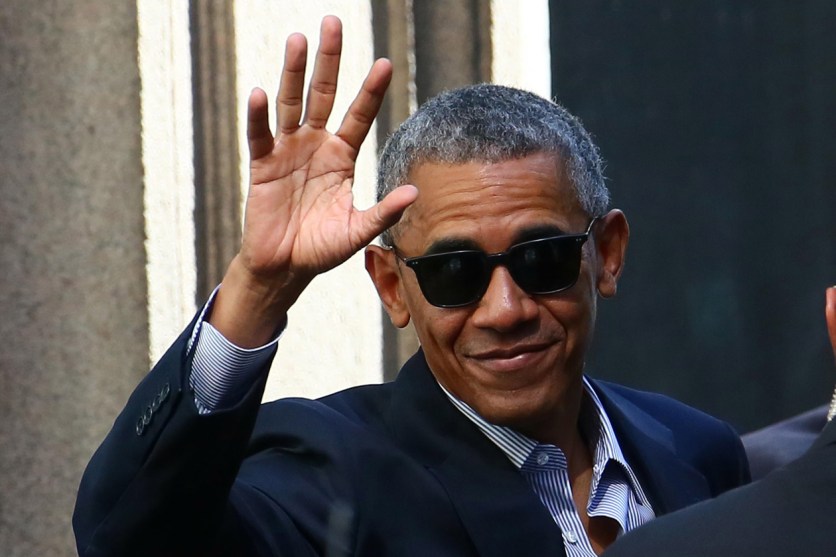
    Procopio/Fotogramma/Ropi via ZUMA

    Nate Cohn addresses the question of Obama voters who switched to Trump in 2016:

    The story of the 2016 presidential election is simple. Donald J. Trump made huge gains among white voters without a college degree. His gains were large enough to cancel out considerable losses among well-educated white voters and a decade of demographic shifts.

    This is true, but I’m not sure it’s interesting. In every election where the parties switch power, there are some folks who voted for the old party four years ago but decided to vote for the other party this time. This is almost by definition. So sure, there were Obama-to-Trump voters in 2016, just as there were Bush-Obama voters in 2008 and Clinton-Bush voters in 2000.

    Nor was the white vote all that interesting in 2016. Four years ago, as Republicans were passing voter ID laws in a desperate attempt to squeeze the last possible juice out of racial vote mongering, I figured the jig was up. There just wasn’t anything left they could do to get even more white votes. But they sure tried! By nominating Donald Trump, who ran the most overtly race-conscious campaign since Nixon, they hoped to squeeze just a little more out of their white base. But it didn’t work. The problem is the one I and everyone else identified in 2012: as racial appeals get more explicit, you lose as many college-educated whites as you gain working-class whites. In the end, Trump got almost exactly the same percentage of the white vote as Mitt Romney.

    But this doesn’t mean Cohn is wrong. Two things turned the tide for Trump. First, of course, was the Comey letter, which moved 2-3 percent of the vote in every state. Without that, Trump loses. The second is the fact that, to everyone’s surprise—including Trump’s—there were a few states where the gains among working-class whites were bigger than the losses among college-educated whites. Without the Comey letter that wouldn’t have mattered much, but with the Comey letter it did. So those states voted for Trump by razor-thin margins, and they were just enough for him to win the election.

    The question is whether there are any broad lessons to be learned here, and I’m not sure there are. The background of the 2016 election was increased tribalism: at this point, pretty much any Democrat can count on 45 percent of the vote and pretty much any Republican can count on 45 percent of the vote. It doesn’t matter who it is. This is why the race was close even though a buffoon like Trump was running. Every presidential election is balanced on a knife-edge these days: a difference of a few percent in half a dozen states is all it takes to turn victory into defeat.

    The 2016 race was always going to be close. Given the tribalism of politics today; the fact that Democrats had been in power for eight years; and the so-so economy, it was a 50-50 affair from the beginning. It should have tipped Clinton’s way, but it didn’t thanks to the Comey letter and a chance alignment of the white working-class vote in a few states. It’s hard for me to see any big lessons for the future here.

    If it were up to me, we’d never talk about this again. The problem for Democrats isn’t the presidency. The problem for Democrats is everything else. That’s what they should be talking about.
  • Asking For a Friend: What Does It Take to Pull Down a Statue?

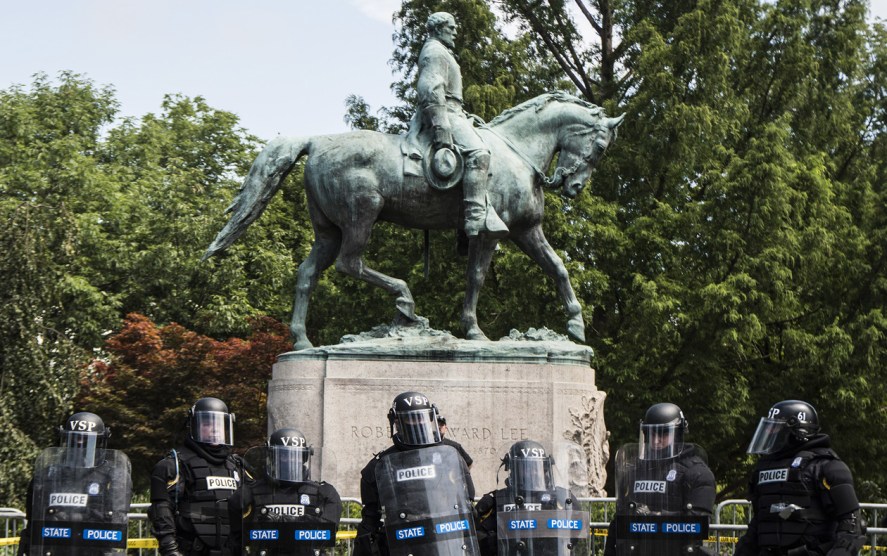
    Go Nakamura via ZUMA

    I have an engineering question. As we all know, the violence this weekend in Charlottesville originated in a proposal to move a statue of Robert E. Lee that was erected in 1924. That got me wondering: what does it take to pull down a statue like that? If I had, say, a big pickup truck, could I tie a cable around the statue, attach it to the trailer hitch, and gun the engine? Would that bring it down? How about two pickup trucks? Or does it take a lot more power than that?

    How about smaller statues? Would it work on them? It would be illegal and potentially dangerous, of course, so probably it’s better for cities to just take down the statues on their own.

    But I’m still curious.

  • What Does It Take For Conservatives to Acknowledge That Donald Trump Is Racist?

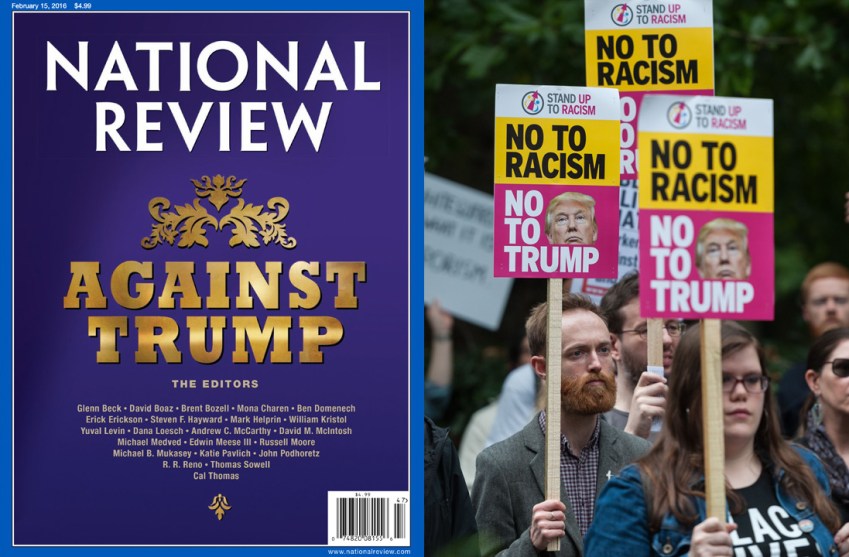
    Protesters by Rex Shutterstock via ZUMA

    Last night National Review posted an editorial calling on President Trump to be more forthright in his denunciation of the neo-Nazi violence in Charlottesville: “It is important that he…call this what it is: an act of terrorism conducted under the auspices of a white-supremacist movement that has embraced terrorism and political violence.” That’s fine. But then they added this:

    This is somewhat awkward for President Trump because the cracked and malevolent young men raging about “white genocide” are his people, whether he wants them or not. Let us be clear about what we mean by that: President Trump obviously has defects and shortcomings as a political leader, but we do not believe for a second that those failures include a sneaking anti-Semitism or a secret taste for neo-Confederate revanchism. At the same time, he has made common cause with those who have flirted with those elements for political and financial gain.

    In January of last year, during the Republican primary race, NR famously headlined an entire issue “Against Trump.” But it was a funny thing. The lead editorial laid out all sorts of reasons Trump was unfit for office, but neither his racism nor his tolerance for racism were among them. The issue also included short pieces from 22 well-known conservatives who opposed Trump. Of these 22, only one, libertarian David Boaz, explicitly called out Trump’s racism (“Not since George Wallace has there been a presidential candidate who made racial and religious scapegoating so central to his campaign”).¹

    Since then, we’ve seen Trump repeatedly refuse to condemn David Duke. We’ve watched as he hired Steve “we’re the platform for the alt right” Bannon and then installed him in the West Wing. We listened to him attack a federal judge as unfair because “he’s a Mexican.” And now we’ve all sat agog for two days wondering if he would ever explicitly denounce neo-Nazis and the KKK. Neo-Nazis! And of course, this is all on top of everything Trump had done before last January—things that were obvious enough for David Boaz to note, even if no one else did.

    What, exactly, does it take for conservatives to do more than delicately suggest that Trump has “made common cause with those who have flirted” with racism? What does it take to convince them that Trump is, simply, racist? Or, at the very least, is cheerfully enthusiastic about using racial appeals as a core political tool? What does it take?

    ¹Michael Medved also mentioned the “uncomfortable, unavoidable issue of racism,” but only to note that it gave Democrats a pretext to smear Republicans, and anyway, it wouldn’t do any good since Republicans could hardly win any more of the white vote than they already did.

  • Quote of the Day: “We Polled the Race Stuff”

    Greg Sargent ponders Donald Trump’s reluctance to denounce white nationalism today, and concludes that (a) Trump doesn’t want to risk his support among racists, (b) he doesn’t recognize that he has any particular public obligations as president, and (c) he can’t stand to give in to critics who are pressuring him. Plus this:

    Joshua Green’s new book on Trump strategist Stephen K. Bannon reports that in August 2016, as Hillary Clinton elevated the issue of white nationalism to national prominence with a major speech, the Trump campaign internally decided not to go too far in renouncing it. Bannon told Green: “We polled the race stuff and it didn’t matter.”

    Now that’s a moral compass for you. They polled “the race stuff” and then decided they had no special need to oppose racism. So they didn’t. A real profile in courage, our president.

  • Lunchtime Photo

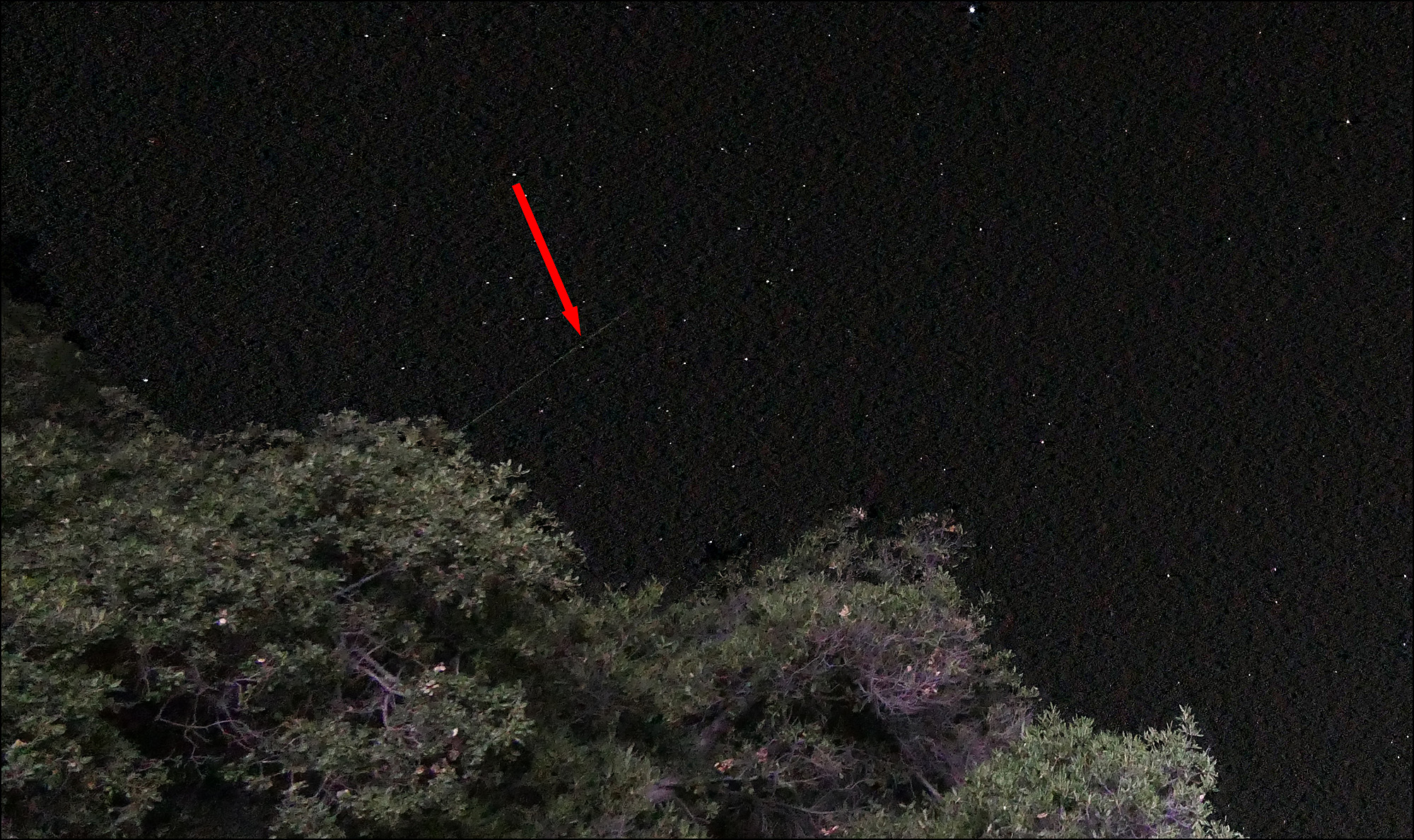
    Having spent several hours on Friday night figuring out how to set my camera to catch a meteor streak from this year’s Perseid shower, I went back out Saturday night to try again. It was a lot easier this time. I had the best exposure already set and had already figured out how to get the camera to take continuous pictures. All I did was aim, press the shutter button, and then sit back and relax.

    The night sky was darker on Saturday because I went out earlier, before the moon rose, but that also meant fewer meteors. I only saw one, but I wasn’t really watching closely most of the time. When I got home, I went through the 180 exposures the camera had taken, and found nothing. But then I went through them again, more slowly, and it turns out I got one after all. It’s a pretty faint streak, even with a bit of image processing, but it’s there.¹ It’s not much, especially for you folks who live in the desert or some other dark region and see meteors all the time, but it’s pretty good for us city dwellers.

    (Note to fellow city dwellers: those little dots in the picture are “stars.” They are either pinpricks in the celestial sphere that separates us from the endless bonfire of the gods, or humongous balls of invisible gas that supposedly release vast amounts of energy by being converted into a different invisible gas. It all depends on which of those explanations you find most plausible.)

    And why is the tree in the foreground so bright? Because lots of people had the same idea I did, and rolled by in their trucks and SUVs to look for good meteor-watching spots. Whenever one approached, its headlights lit up the trees, and it just happened that one did that during this exposure. I have several others with the tree lit up in yellow, red, and other colors depending on what kind of headlights the truck had. I swear, some of them were lit up like Christmas trees.

    ¹Why so faint? It was a five-second exposure, but meteors streak by in about a quarter of a second. Even though the meteor is fairly bright, that’s just not enough time to capture very many photons. It’s times like this that I wish I had one of those cameras that went up to ISO 3 million.

  • Donald Trump Is Following His Usual White Nationalist Playbook

    Donald Trump’s appeal to white nationalists is following his usual playbook:

    President Donald Trump bowed to overwhelming pressure that he personally condemn white supremacists who incited bloody demonstrations in Charlottesville, Va., over the weekend — labeling their racist views “evil” after two days of equivocal statements.

    “Racism is evil,” Mr. Trump said. “And those who cause violence in its name are criminals and thugs, including the K.K.K., neo-Nazis, white supremacists and other hate groups that are repugnant to everything we hold dear as Americans.”

    Trump refused to explicitly condemn neo-Nazis and white nationalists for two days, and there’s no question that his fans got the message: “He didn’t attack us. He just said the nation should come together,” wrote the Daily Stormer’s Andrew Anglin. “No condemnation at all. When asked to condemn, he just walked out of the room. Really, really good. God bless him.”

    Today Trump grimly recited a prepared text from a teleprompter, but did so under such obvious pressure that his white nationalist fans understand he’s just playing a role. This is exactly the way he handled the David Duke controversy last year: weasel words for a couple of days, followed by an obviously insincere condemnation under heavy pressure. Now, of course, it’s time to move forward, let the healing begin, and stop arguing about who killed whom. While we’re at it, though, you may be sure that Trump is making absolutely sure that his white supporters understand that nothing has really changed:


    Wink wink, nudge nudge.

  • Sinclair Broadcast Is Steadily Expanding the Reach of Right-Wing Media

    AM radio is already the exclusive preserve of right-wing agit-prop. Is broadcast TV next? The New York Times reports today on the coziness between Sinclair Media and President Trump’s new head of the FCC. Their first tête-à-tête came before Trump was even inaugurated:

    The invitation from David D. Smith, the chairman of Sinclair, went to Ajit V. Pai, a commissioner on the Federal Communications Commission who was about to be named the broadcast industry’s chief regulator.

    ….Within days of their meeting, Mr. Pai was named chairman of the F.C.C. And during his first 10 days on the job, he relaxed a restriction on television stations’ sharing of advertising revenue and other resources — the exact topic that Mr. Pai discussed with Mr. Smith….It was only the beginning. Since becoming chairman in January, Mr. Pai has undertaken a deregulatory blitz, enacting or proposing a wish list of fundamental policy changes advocated by Mr. Smith and his company. Hundreds of pages of emails and other documents obtained under the Freedom of Information Act reveal a rush of regulatory actions has been carefully aligned with Sinclair’s business objectives.

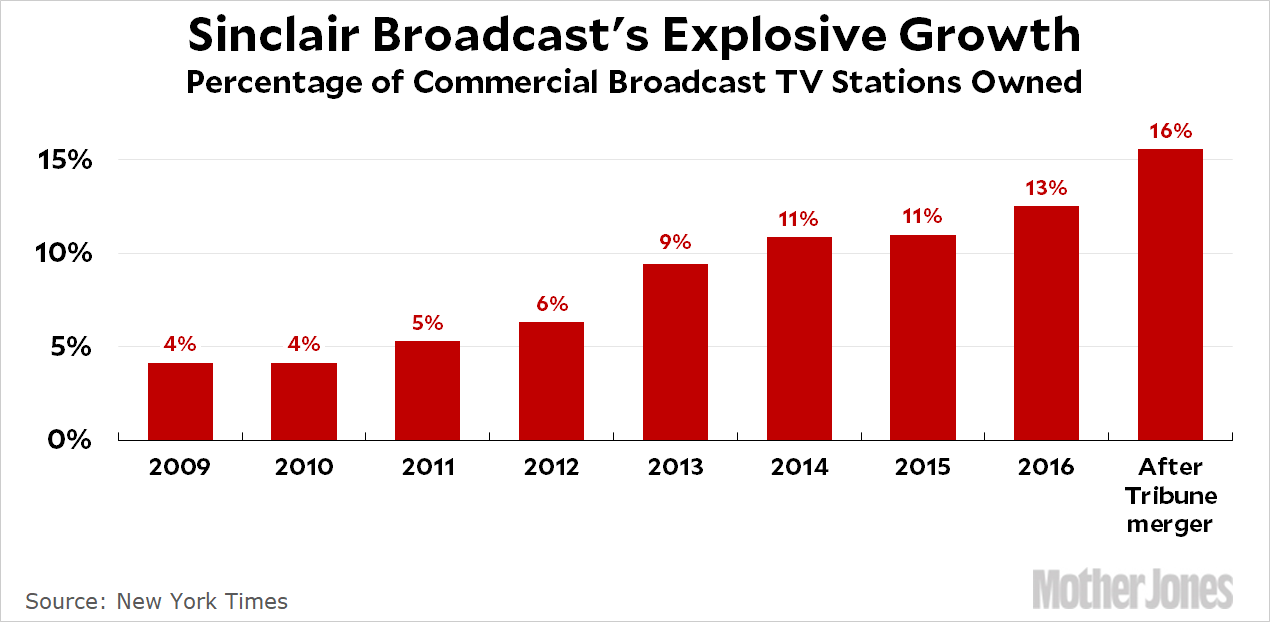
    If Sinclair’s deal to merge with Tribune Media is approved, Sinclair will own one out of every six commercial TV stations in the country:

    As the Washington Post reported several months ago, Trump can likely expect favorable coverage from Sinclair stations:

    A review of Sinclair’s reporting and internal documents shows a strong tilt toward Trump. Sinclair gave a disproportionate amount of neutral or favorable coverage to Trump during the campaign while often casting Clinton in an unfavorable light.

    ….A “must-run” email from Washington managers to stations on Sept. 13 read this way: “DESCRIPTION: Why did Hillary Clinton struggle with disclosing her medical diagnosis? She has been repeatedly faced with previous questions of trust. Can a president lead with so many questions of transparency and trust?”

    Another, from Sept. 8: “DESCRIPTION: Hillary Clinton showed up to talk about the responsibilities of being a leader at the commander-in-chief forum and the first question she took from the audience was about the email/server debacle. Clinton has repeatedly admitted it was a mistake, but 18 months since the first story broke and she’s still in the mode of damage control.”

    An October “must-run” story was a report about conservative activist James O’Keefe’s “sting” video in which two Democratic-affiliated contractors who were surreptitiously recorded discussed disrupting Republican events and mused about a voter-fraud scheme. Another, on Sept. 9, was titled “Donald Trump Reflections of 9/11,” which also included a package in which Ivanka Trump discussed what she would do in a Trump administration. In early September, it pushed “Women for Trump,” a feature about Trump’s daughter-in-law Lara and another woman who was campaigning for him.

    There were no equivalent “must-run” stories examining Trump’s refusal to release his medical or tax records or about questions surrounding his charitable foundation.

    Fox News (cable news), Sinclair (broadcast TV), and Clear Channel (AM radio) are essentially state media in the Trump era. That’s a mighty useful thing for a demagogue to have.

  • President Trump Flatly Refuses to Condemn Neo-Nazis and White Nationalists

    Joel Angel Juarez via ZUMA

    Ivanka Trump has explicitly condemned the white nationalists in Charlottesville: “There should be no place in society for racism, white supremacy and neo-Nazis.”

    Mike Pence has explicitly condemned the white nationalists in Charlottesville: “We will not tolerate hatred and violence of groups like white supremacists, the KKK and neo-Nazis. These extremist fringe groups have no place in the American debate.”

    H.R. McMaster has explicitly condemned the white nationalists in Charlottesville: “We cannot tolerate, obviously, that bigotry, that hatred that is rooted in ignorance, ignorance of what America stands for, what America is.”

    Jeff Sessions has explicitly condemned the white nationalists in Charlottesville: “The violence and deaths in Charlottesville strike at the heart of American law and justice. When such actions arise from racial bigotry and hatred, they betray our core values and cannot be tolerated.”

    A White House spokesman has explicitly condemned the white nationalists in Charlottesville: “The President said very strongly in his statement yesterday that he condemns all forms of violence, bigotry and hatred and of course that includes white Supremacists, KKK, neo-nazi and all extremist groups. He called for national unity and bringing all Americans together.”

    The only person who’s been unwilling to explicitly and personally condemn the neo-Nazis and white nationalists in Charlottesville—as opposed to condemning generic violence and bigotry “on many sides”—is President Donald Trump:


    Trump had previously announced that he would hold a big press conference on Monday. As of now, it’s no longer on his calendar.

  • Is It Time For Mike Pence To Be President?

    Yin Bogu/Xinhua via ZUMA

    Back in the day, there was a bit of bloggy conversation about whether Donald Trump might actually be a less destructive president than, say, Ted Cruz or Marco Rubio. The case against that was pretty simple:

    He’s a serial liar. He’s a demagogue. He’s a racist and a xenophobe. He appeals to our worst natures….He’d appoint folks who make Michael Brown look like Jeff Bezos. He would deliberately alienate foreign countries for no good reason….And while that volatile personality of his probably wouldn’t cause him to nuke Denmark, you never know, do you?

    This week we’ve seen both of his two most serious flaws in action. Resurgent neo-Nazis and white nationalists, who take Trump as their inspiration and role model, invaded Charlottesville and produced exactly the violence and mayhem you’d expect. Ted Cruz and Marco Rubio had no problem denouncing these racist thugs. But Trump, as he did before with David Duke, refused to clearly and explicitly condemn them. He offered only his usual weasel words, which gave him plausible deniability but refrained from risking his reputation as the champion of white America. “Nobody in media/politics can legitimately claim they didn’t know that Trump plays footsie with white supremacists,” says my boss today, and then lays out MoJo’s extensive coverage of exactly this over the past two years. You should read it if you have even the vaguest thought that maybe Trump isn’t quite as toxic and ugly as I’m suggesting.

    At the same time, he’s been engaged in a childish war of words with North Korea. This is not just idiotic, since Trump is making threats he knows he won’t carry out, but recklessly dangerous. It’s exactly the kind of thing that, with the right push, could escalate into Kim Jong-Un doing something foolhardy and then Trump responding in kind. The odds of this turning into a nuclear exchange are low. Maybe 1 percent or so. But with any other Republican the odds would be 0 percent.

    Trump needs to go. The sooner Republicans figure this out, the better off we’ll be. Mike Pence may have sold his soul by signing up with Trump—and as president he’d unquestionably be bad for everything I care about—but Donald Trump is a disgrace, and a dangerous one. His 15 minutes should have been up long ago.