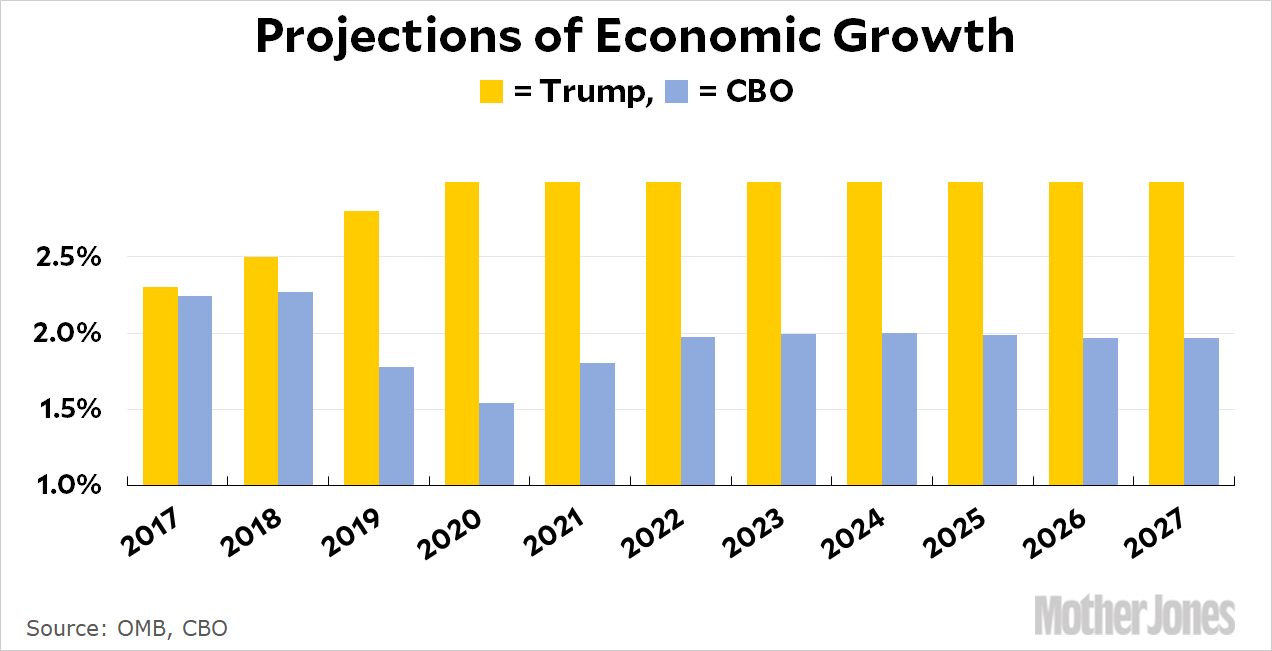
Donald Trump thinks that slashing spending will reduce the federal deficit. Fair enough. It will. But would his proposed cuts reduce the deficit by $10 trillion over the next decade? CBO thinks he’s off by several trillion dollars. Here’s why:
Trump believes that his cuts would supercharge the economy and get it to 3 percent annual growth. CBO, which is required to be reality-based, figures his cuts would increase growth by about 0.1 percent. That puts long-term growth at 2 percent per year.
Of course, CBO isn’t taking into account the effect of Trump’s massive tax cuts for the rich. That’s because they don’t exist. Trump himself, however, is under no such constraints, and his budget simply assumes the tax cuts will happen and the results will be spectacular. When you can say anything you want, that’s the kind of fantasy you come up with.
Over at the Washington Post, Paige Winfield Cunningham writes about the united effort of doctors’ groups to oppose Trumpcare:
They don’t think the present law is perfect by any means, but they’re deeply worried about the Senate health-care bill’s deep Medicaid cuts — that is, what that would mean for the ability of low-income families to receive care — and how the bill provides a pathway for states to opt out of its mandatory essential health benefits.
….[The lobbyists] said they didn’t meet with McConnell or anybody on his leadership team — which has been holding their own heart-to-hearts with moderate senators, trying to convince them to vote for the bill even with the Medicaid cuts intact. Here’s what McConnell has told several hesitant senators (including Portman and Sen. Shelley Moore Capito (R-W.Va.): The bill’s deepest Medicaid cuts are far into the future, and they’ll never go into effect anyway.
“He’s trying to sell the pragmatists like Portman, like Capito on ‘the CPI-U will never happen,’ ” a GOP lobbyist and former Hill staffer told me.
Vote for our bill because it will never really go into effect anyway. I’m sold! Where do I sign up?
It’s worth noting that even if McConnell is right, that doesn’t change anybody’s reelection calculus for 2018. They can hardly campaign on the proposition that all the bad stuff in the bill they voted for will probably never happen. Versions of ads showing Republicans pushing granny off a cliff are going to be on television 24/7 regardless.
The GOP’s best bet at this point is to let health care go and move on to tax cuts. They all agree about tax cuts, don’t they?
Let’s end the day with something more edifying than the Trump White House. Here is Jupiter’s Great Red Spot, as captured by NASA’s Juno spacecraft. Image processing was done by Roman Tkachenko, with some additional putzing around by me. Click here if you want to play around yourself.
UPDATE: Sorry, it’s Cassini that’s about to dive into Saturn and disappear forever. Juno will be around for a long time to come. I’ve corrected the text to remove the fake news that Juno was near the end of its mission and was about to dive into Jupiter.
Even by Trump-era standards, Sean Hannity is a joke these days. Trump could give the Louisiana Purchase back to France and Hannity would find some way to hail it as the most brilliant foreign policy coup of all time.
In other words, there’s no reason to bother with him, even for a bit of drive-by mockery. But every rule has exceptions, and anyway, tonight’s episode has turned into a viral meme already. You do want to keep up on your memes, don’t you?
Note Kellyanne Conway’s Freudian use of the word “yet.” Maybe she knows something we don’t?
From Donald Trump, explaining how he pressed Vladimir Putin about whether Russia was responsible for campaign hacking in 2016:
First question — first 20, 25 minutes — I said, “Did you do it?” He said, “No, I did not, absolutely not.” I then asked him a second time, in a totally different way. He said, “Absolutely not.”
Damn, that Trump is a tricky one. I then asked him a second time, in a totally different way. If Putin had been guilty, he never would have stood a chance.
Last summer, Donald Trump, Jr. met with a Kremlin-connected attorney in an attempt to obtain information “that would incriminate Hillary.” Earlier this year, on May 12, 2017, the Department of Justice made an abrupt decision to settle a money laundering case being handled by that same attorney in the Southern District of New York. We write with some concern that the two events may be connected—and that the Department may have settled the case at a loss for the United States in order to obscure the underlying facts.
This is where the Trump-Russia thing starts to get sort of Watergate-y. The Watergate scandal started off with a burglary of DNC headquarters in Washington DC, but by the time it was over it was all about ITT, Daniel Ellsberg’s psychiatrist, interference with the CIA, 18-minute gaps, using the IRS to intimidate enemies, etc.
Donald Trump has only been in office for six months, so there’s no way he could have built up a Nixonian level bill of particulars like this yet. Still, we might discover more than just campaign collusion as leakers get busier and reporters start to take the whole thing more seriously.
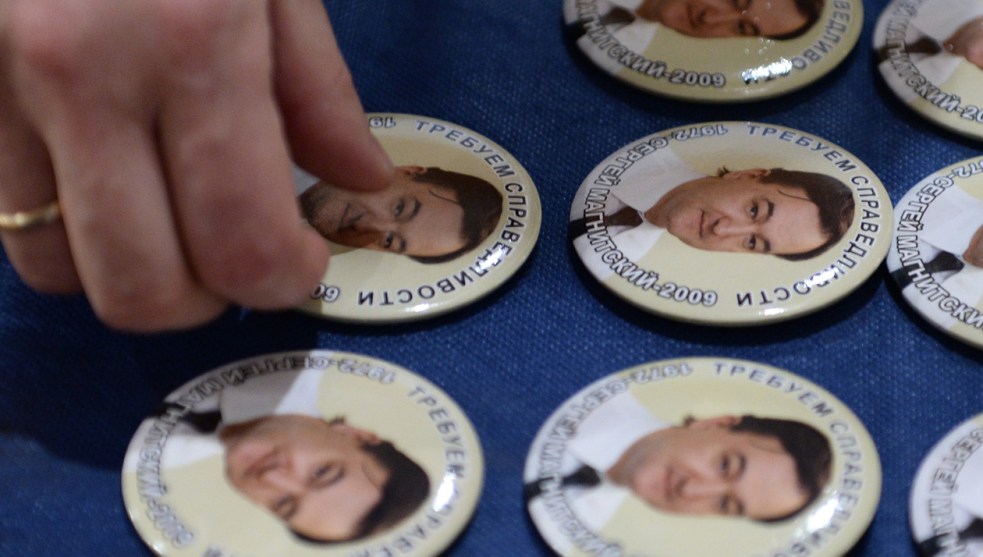
In this case, Don Jr. initially said that he met with Russian lawyer Natalia Veselnitskaya because she wanted to discuss Russian adoptions. But the law banning Americans from adopting Russian babies is a nothingburger, a minor bit of Putin score-settling enacted in retaliation for Congress passing the Magnitsky Act. When you hear “Russian adoptions,” Magnitsky is the real topic of conversation.
The Magnitsky Act is a set of sanctions designed to punish Russia for arresting and killing Sergei Magnitsky, a Moscow lawyer who had uncovered a state-sanctioned scheme of tax cheating that implicated police, the judiciary, tax officials, bankers, and the Russian mafia. Over $200 million was involved, much of it laundered through overseas companies, including several who used the money to buy up high-end Manhattan real esate. One of these companies was Prevezon.
Natalia Veselnitskaya was one of Prevezon’s lawyers. Preet Bharara was the US Attorney prosecuting the case, which was not going well for Prevezon. However, Donald Trump fired Bharara in March, and two months later the Justice Department surprised everyone by abruptly settling the case for $6 million. The settlement was so meager that one of Prevezon’s US attorneys said it was “almost an admission that they shouldn’t have brought the case.” Veselnitskaya herself crowed that it was “almost an apology from the government.”
So: was there a deal made last year? Did Trump campaign aides—or Trump himself—agree to scuttle the case against Prevezon in return for dirt on Hillary Clinton?
This might be a big stretch, nothing more than a bit of connecting-the-dots conspiracy theorizing. Alternatively, it might be the real deal. If it is, it’s the first step toward the Watergate-ization of the Trump-Russia scandal.
I sometimes get scoffed at because Lunchtime Photo never features an actual lunch-related photo. Even when I put up a photo of my favorite burger joint last month, it was a picture taken at night.
Fine. Here’s a lunch photo. It’s our squirrel, caught in the act of snarfing down one of our roses. Stupid squirrel. I thought they were supposed to eat pine cones or something?
A couple of days ago I wrote about climate change, which is, in any useful definition of the word important, more important than the doings of the president’s idiot son. I want to follow up with a little more detail on one of the points I made.
Right up front, I want to acknowledge that lots of other people have made these points before, and I haven’t studied them closely enough to provide any details. But I still think they form a useful prism for examining the challenge we face. This is a list of various groups and why they resist the big changes necessary to halt climate change:
Regular people: don’t want to be constantly badgered and guilted about the car they drive or the meat they eat.
Poor countries: don’t want to be stuck forever in low-energy poverty compared to currently rich countries.
Oil companies: don’t want their businesses to crater because no one is buying fossil fuels anymore.
Republicans: don’t like the business regulations that would be necessary to truly address climate change.
The rich: don’t want to pay the taxes necessary to address climate change.
OPEC countries: don’t want to leave $10 trillion of wealth sitting in the ground.
I’ve probably missed some, but you get the idea. The problem is that there are simply too many powerful groups who are fundamentally opposed to dramatic action on climate change. The odds that we’ll get even half of them to see the light in time to make a difference is pretty small.
Like it or not, then, we have to bribe everybody. Here are the bribes we have to offer:
We have stop guilting people about their personal choices. Instead, spend a ton of money putting them to work building and installing solar/wind infrastructure.
We have to make sure poor countries can continue to grow. That means spending money on infrastructure for India, Malaysia, Bolivia, etc.
We have to ensure that oil companies get a piece of the de-carbonization pie.
We have to give up on trying to regulate our way to carbon reduction. Sure, a carbon tax would still help things along, but it doesn’t have to be massive.
We have to give the rich a piece of the de-carbonization pie. Frankly, this will probably happen automatically.
We have to give OPEC—what? I’m not really sure what we can do for OPEC.
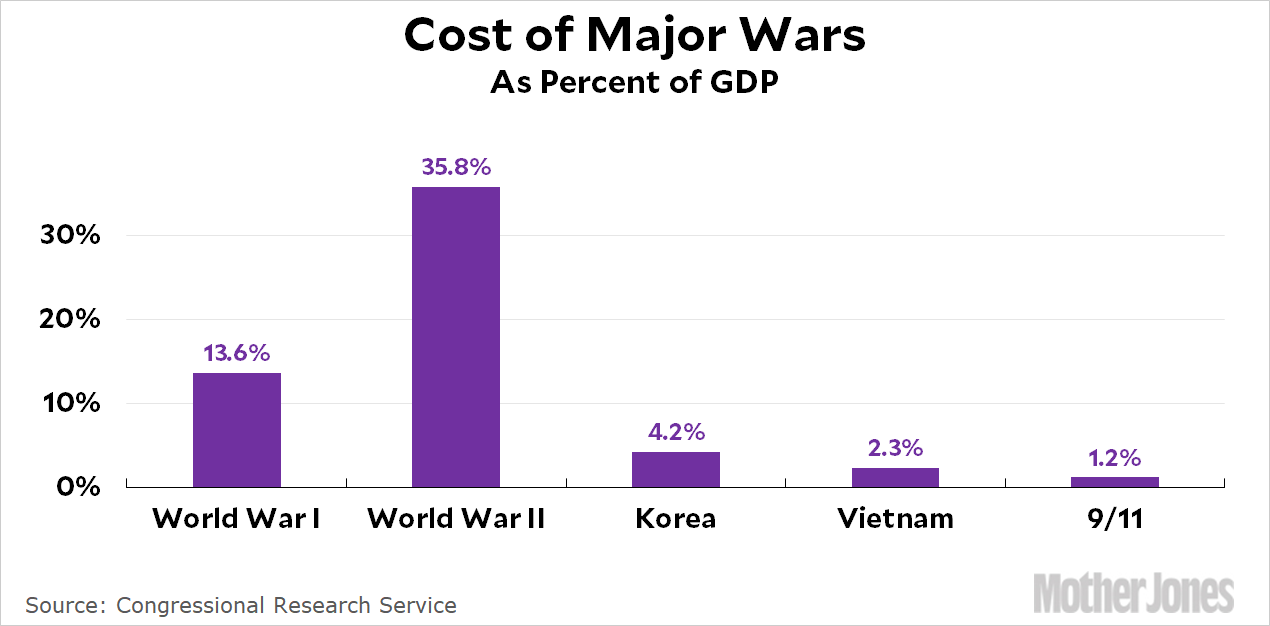
This is what leads me to think that our only real chance of success is to spend vast amounts of money on R&D and infrastructure buildout. Offhand, I’m thinking of about a trillion dollars a year.¹ Is that a lot? Why yes, it is. But it’s only about 5 percent of GDP. Here’s some context for that:
When we talk about a “wartime effort,” people tend to think about World War II, with its enormous defense buildup, rationing of supplies, and Rosie the Riveter. But we don’t need anything close to that. We don’t even need to spend what we did on World War I. We basically need a Korea-sized commitment. That shouldn’t scare anyone.
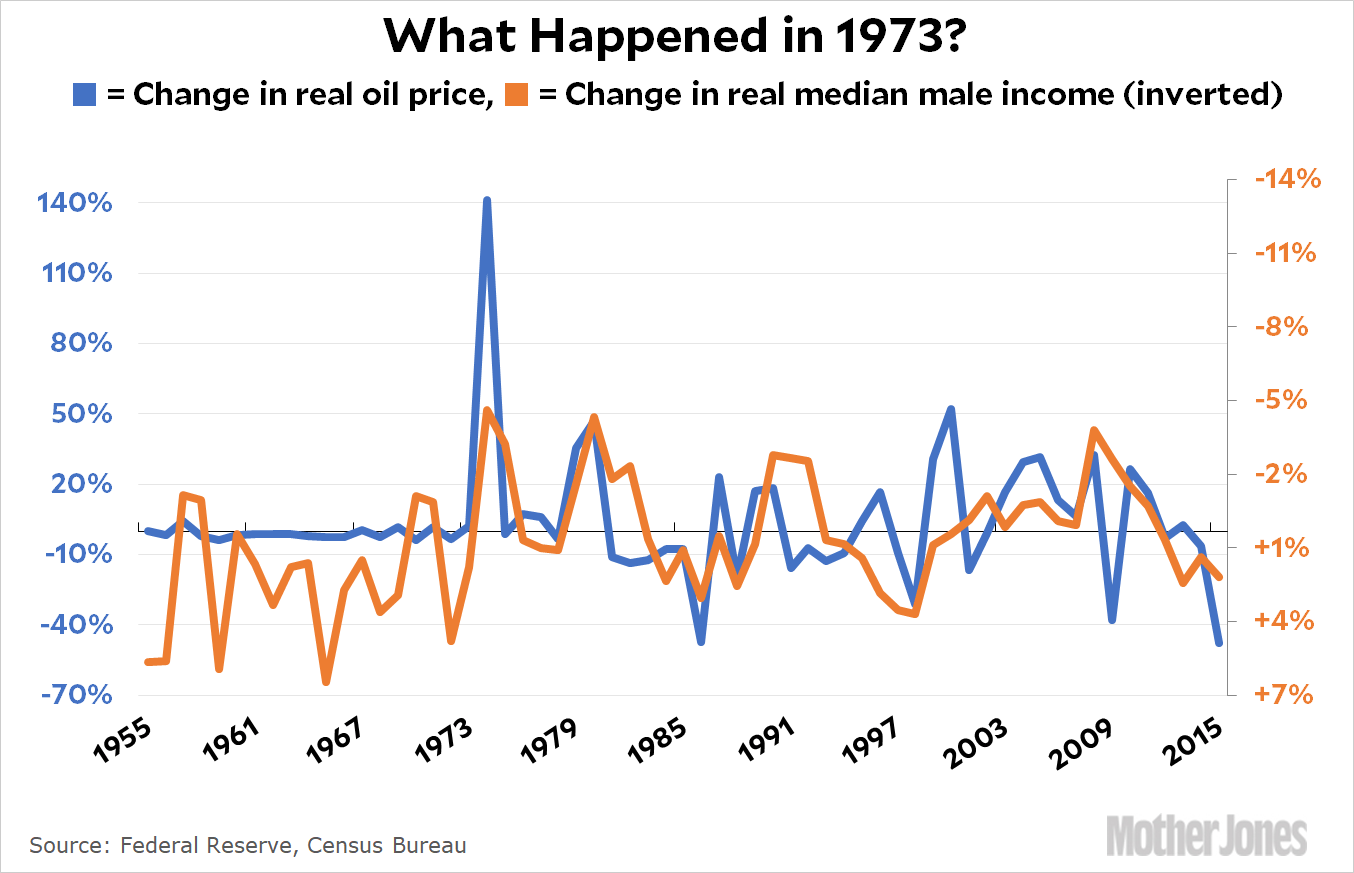
And here’s one other thing. A couple of days ago I put up this chart:
The orange line is median male earnings, but it’s inverted to show how closely it follows the trend line for spikes in oil prices. When oil prices spike upward, earnings go down. For example, in 1974 earnings dropped 5 percent thanks to the recession that followed the 1973 oil embargo.
This is amateur economics, but listen anyway. We’ve had periodic recessions for the entire history of our country, but median earnings rose anyway. They took a small hit during recessions, and then rose more during the subsequent expansions. In 1973 that stopped happening. There are lots of reasons for this, but I think oil is a big and underappreciated one. It has made the global economy far less stable than in the past, and ordinary workers generally don’t do well in an unstable world.
So that’s another reason to take decarbonization seriously: it would return us to a more stable global economy, which would most likely be good for workers. Shed no tears for the rich, though. They’d do fine. They just wouldn’t gobble up nearly the entire value of economic growth. And in return, for surprisingly little pain, we all get a world that’s safer, more habitable, and economically more stable. What’s not to like?²
¹For the US. Other countries would add to that. If we figure 5 percent of GDP, total global spending on R&D and infrastructure buildout would be about $3 trillion.
²Plenty. The rich are going to have to pay higher taxes, one way or another. Federal spending is going to skyrocket, which will be opposed by lots of tea party types. But what if Republicans were persuaded that (a) liberals will stop badgering them for lots of new regulations, and (b) the money will mostly be like Social Security, just passed through to private sector companies who build the infrastructure and nothing else will be done with it? Maybe a lot of them would decide to go along. Maybe.
Atrios has been listing the books he’s read this year, and this got me curious about which books I’ve read this year. The answer is that I don’t know. Some time ago I began using Nook as my regular e-reader because the Kindle app is a piece of crap on Windows tablets. And it turns out that Barnes & Noble makes it all but impossible to figure out when you bought a book. You can check your orders for the past six months, but they provide only order numbers, not book titles. I looked and looked, but unless I missed something obvious there’s no real way to know when you bought a particular book.
That’s kind of annoying—at least, for those of us who are easily annoyed. Anyway, take this list with a grain of salt, but here’s what I’ve read in the first half of the year, in chronological order:
Charlie Jane Anders, All the Birds in the Sky
Ethan Canin, A Doubter’s Almanac
Michael Eric Dyson, Tears We Cannot Stop
Connie Willis, Crosstalk
Alice Dreger, Galileo’s Middle Finger
Brian Stavely, The Emperor’s Blades
Brian Stavely, The Providence of Fire
Brian Stavely, The Last Mortal Bond
Rob Sheffield, Dreaming the Beatles
Joan Williams, White Working Class
Al Franken, Giant of the Senate
Cory Doctorow, Walkaway
Charles Stross, Empire Games
David Weigel, The Show That Never Ends
Paul Beatty, Sellout
Did I also read one or two dead-tree books? I think I did! But I don’t remember what they were.
It’s mostly fiction. Political nonfiction (broadly defined) has become so partisan that I find I don’t enjoy it much these days. There are several books I liked on this list, but none that blew me away. I guess my top picks are A Doubter’s Almanac among fiction¹ and Galileo’s Middle Finger among nonfiction.
¹Assuming you get a kick out of novels about disturbed, world-class mathematicians, which I do.
The first story was published on July 8th, one day after Trump’s meeting with Vladimir Putin….Sec. of State Tillerson is the only person other than Trump, Putin and Lavrov who knows what was said and discussed during that meeting between the two heads of state.
Rex isn’t saying why, but he is very angry about the meeting with Putin.
— Rogue POTUS Staff (@RoguePOTUSStaff) July 7, 2017
To the extent we can believe that Rogue POTUS Staff tweet, he played the good soldier with the press, but was making it known among staff that he was pissed about something that happened.
Maybe! It’s certainly possible that Tillerson and other State Department folks were briefed about Don Jr.’s meeting with the Russian lawyer. However, they wouldn’t have had access to Junior’s email chain. That leak has to have come from someone else.
And we respect that! But maybe you’re of a mind to support our work directly instead? We have until December 31 to raise the last $400,000 we need to keep our nonprofit newsroom running at full strength into 2026. Will you make a gift today?
We noticed you have an ad blocker on. Can you pitch in a few bucks to help fund Mother Jones' investigative journalism?
Billionaires own the media,
but they don’t own us.
At Mother Jones we know these aren’t conventional times, and they require unconventional coverage. That’s what deliver every day: fierce, independent journalism you can’t find elsewhere. Perhaps never in the history of our country has that been more necessary than now. But we can’t do it without reader support—your support. Please chip in today.
Billionaires own the media,
but they don’t own us.
At Mother Jones we know these aren’t conventional times, and they require unconventional coverage. That’s what deliver every day: fierce, independent journalism you can’t find elsewhere. Perhaps never in the history of our country has that been more necessary than now. But we can’t do it without reader support—your support. Please chip in today.