• California Has Seven of the Ten Steepest Streets in America

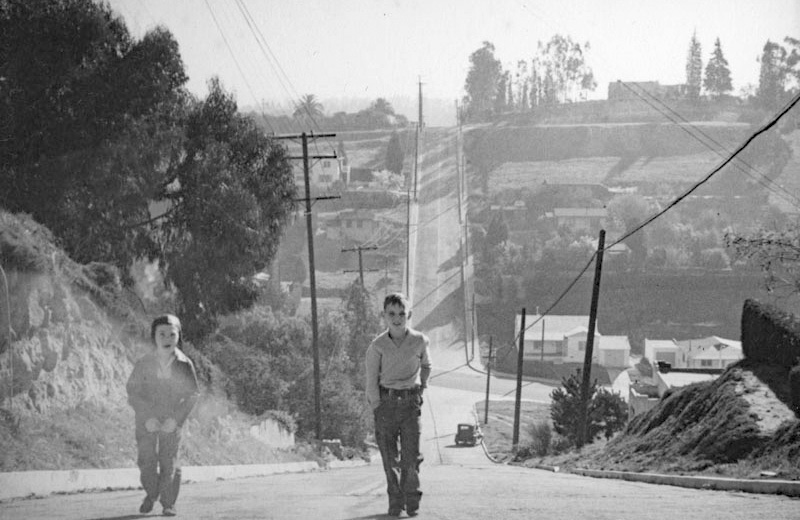
    Baxter Street in 1937.Herman J. Schultheis Collection, Los Angeles Public Library

    From the LA Times this morning:

    Baxter Street in Echo Park, one of the steepest roads in Los Angeles, is about to get a makeover….The narrow road has a 33% grade, the third steepest in Los Angeles and 10th in the nation. In recent years, navigation apps have directed more drivers to Baxter Street to avoid traffic jams along nearby Glendale Boulevard. But the apps don’t tell drivers how treacherous the road can be, especially in rainy weather.

    I hate stories like this. They tease you with stuff about Baxter Street being the third-steepest in Los Angeles, but they don’t tell you which street is the first steepest. Come on! And who keeps track of stuff like this, anyway? The Federal Steep Roads Agency?

    Beats me. However, according to fixr.com, here are the ten steepest streets in America:

    1. Waipio Rd. in Honokaa, HI — 45% gradient
    2. Canton Ave. in Pittsburgh, PA — 37% gradient
    3. Eldred St. in Los Angeles, CA — 33.3% gradient
    4. 28th St. in Los Angeles, CA — 33% gradient
    5. Baxter St. in Los Angeles, CA — 32% gradient
    6. Fargo St. in Los Angeles, CA — 32% gradient
    7. Maria Ave. in Spring Valley, CA — 32% gradient
    8. Dornbush St. in Pittsburgh, PA — 31.98% gradient
    9. 22nd St. in San Francisco, CA — 31.5% gradient
    10. Filbert St. in San Francisco, CA — 31.5% gradient

    Baxter Street is the fifth steepest. Is there an updated list that puts it at tenth? Or maybe it’s tenth in the world? I dunno. And I’m surprised that California has seven of the top ten. I wouldn’t have guessed that. Here is the story of Baxter Street from KCET:

    It began as a sliver of land in an 1853 survey, separating empty real estate tracts in what was then the city’s northwest corner. The city designated that narrow strip Baxter Street in 1872, and when subdividers eventually carved those empty tracts into housing developments in the late 1890s, they honored the surveyors’ lines and imposed a grid pattern on the hilly land. Then, the arrow-straight line of Baxter Street made some practical sense. As Matthew Roth of the Auto Club Archives noted in an interview, the road — like many of L.A.’s so-called secret stairways — functioned as a pedestrian access path for a streetcar line along present-day Echo Park Avenue.

    Baxter later became a proving ground for automobiles, as manufacturers staged elaborate stunts to demonstrate their vehicles’ power. In one such event in 1916, a four-wheel-drive truck loaded with 4,300 pounds of baled hay groaned its way up the grade, pausing twice for newspaper cameras.

    So there you have it. Back in 1872, they built streets on gridlines like real men and didn’t let mindless frippery stop them. It’s not like today, when we’re all soft and lazy and break the lovely gridlines whenever we feel like it for no reason except that they make streets “too steep.” It’s sad that we’ve lost that can-do American spirit: nowadays LA doesn’t allow new streets to have more than a 15 percent gradient. Here’s a guy skateboarding down Baxter Street:
    Skateboarding Down The 10th Steepest Hill in America

  • Scott Pruitt Talks Big, But the Details Keep Getting in His Way

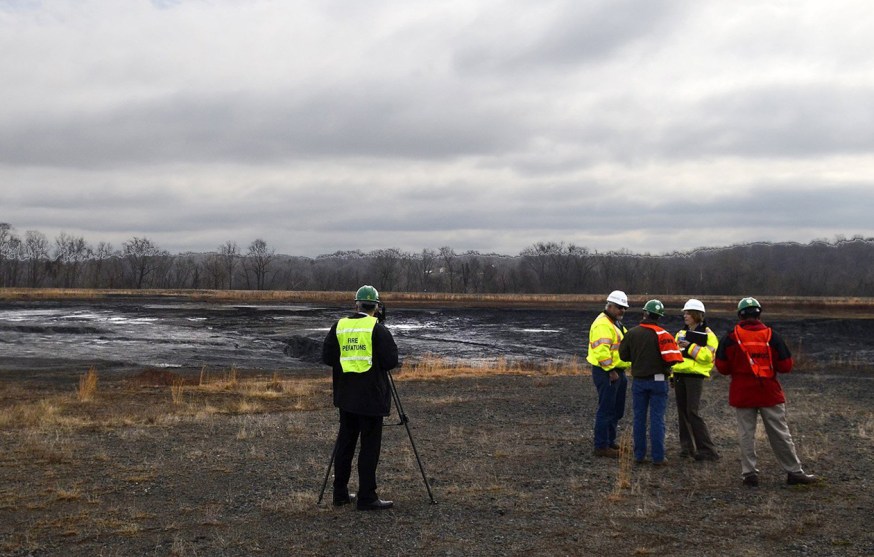
    Duke Energy officials show off the latest coal ash leak from one of their power plants. This one leaked coal ash into the Dan River at Eden, NC in 2014.John D. Simmons/TNS/ZUMAPRESS

    Poor Scott Pruitt. He’s dedicated to tearing down every environmental rule he can think of, but it turns out he’s doing a shoddy job of it. And while his boss might not care about that, it turns out that the courts do. Here’s the Washington Post today:

    In March, as part of Scott Pruitt’s aggressive campaign to roll back federal regulations, the Environmental Protection Agency proposed relaxing standards for storing potentially toxic waste produced by coal-burning power plants.

    EPA officials cited a study indicating that forcing utilities to get rid of unlined coal ash ponds too quickly could strain the electrical grid in several regions of the country. But when environmental advocates scrutinized the specifics, they discovered a problem: The evidence cited was not established scientific research. Instead, the agency was relying on a four-page document by the utility industry’s trade association, the Edison Electric Institute, which has acknowledged that its conclusions were not “part of or a summary of a larger study.”

    ….The coal ash proposal is among the more than half-dozen major EPA moves that have been snagged by procedural and legal problems. The delays threaten to tarnish Pruitt’s image as an effective warrior in President Trump’s battle against federal regulations, a reputation that has so far saved the EPA administrator his job amid an array of investigations into ethical and management lapses.

    Pruitt thinks that science is just hogwash, yet another part of the academy controlled by liberals and whale huggers. So he’s fine with justifying EPA’s proposals using excerpts from industry pamphlets, fossil fuel advertising, or whatever else comes to hand. Unfortunately for him, the court system takes the idea of science a little more seriously and wants to see actual analysis performed by actual scientist who have at least a nodding acquaintance with actual evidence. This is a serious roadblock to Pruitt’s ambitions. Sad.

  • We’re (Still) Fundraising to Put a Stop to Weaponized Disinformation

    Disinformation_Header

    Mother Jones illustration

    Many of you already saw this on Friday, but just in case you never got around to clicking through I want to share again this headline from the front page of Friday’s LA Times:

    Russian inquiry losing public support
    Trump’s frequent attacks seem to be eroding confidence in the Mueller probe among Republicans

    It’s not just due to Trump’s frequent attacks, of course. It’s Sean Hannity and Tucker Carlson at Fox News. It’s Kimberley Strassel at the Wall Street Journal. It’s Devin Nunes in the House of Representatives. It’s Breitbart and Andrew McCarthy and Rush Limbaugh and Lou Dobbs. They are, collectively, the vanguard of a new movement dedicated not just to partisan spin, but to the outright invention of a fake reality that they repeat over and over and over until their audience starts thinking there must be something to it. And as Monika Bauerlein and Clara Jeffery point out, it all started back in 2016:

    There are many things we know about the 2016 campaign now that we didn’t know then—or rather, that you, the public, weren’t told … Big tech companies knew about their platforms being used for propaganda … Intelligence agencies knew a foreign adversary was attacking election infrastructure, campaigns, and individuals … Congress stood idly by … The nation’s biggest media organizations too often fell into a rut of sensationalism and he-said-she-said false equivalency.

    Together, these failures opened the door wide to the biggest threat our democracy may have ever faced: Weaponized disinformation. That’s the thread connecting them all, and the one running straight into 2018.

    As we’ve been thinking here at MoJo about what we need to do to tell this year’s most important stories—the ones that others might be missing—we keep coming back to this fact. We can’t wait until a week from Election Day to find out who’s trying to manipulate the outcome. We need to investigate and expose them before it’s too late.

    So that’s what we’re doing. We’re hoping to build a team dedicated to identifying and tracking the forces behind disinformation, and we’ve started a new fundraising campaign to get it started.

    It’s hard to think of anything more important. Weaponized disinformation is the Big Lie. It’s what intimidated the FBI into helping elect Donald Trump. And it’s a coordinated effort to erase the ability of a free press to do its job.

    Click here to make a tax-deductible donation. We hope to raise $350,000 before June 30—$250,000 to meet our budget, and an extra $100,000 to get this special project off the ground. There’s no better cause. Or, if money is tight, click here to find out other ways you can help.

  • Donald Trump Is Trying to Ruin Someone Who’s Annoyed Him. It’s Barely Worth a Shrug.

    Dennis Van Tine/Avalon via ZUMA

    In just the past couple of days, Donald Trump has produced such a storm of horseshit that I never even got around to noting this story from the Washington Post:

    President Trump has personally pushed U.S. Postmaster General Megan Brennan to double the rate the Postal Service charges Amazon.com and other firms to ship packages, according to three people familiar with their conversations, a dramatic move that probably would cost these companies billions of dollars.

    ….Brennan and Trump have met at the White House about the matter several times, beginning in 2017, and most recently four months ago, the three people said. The meetings have never appeared on Trump’s public schedule. Brennan has spent her career at the Postal Service, starting 32 years ago as a letter carrier. In 2014, the Postal Service’s Board of Governors voted to appoint her as postmaster general.

    ….Trump has met with at least three groups of senior advisers to discuss Amazon’s business practices, probing issues such as whether they pay the appropriate amount of taxes or underpay the Postal Service, according to the three people. These groups include Treasury Secretary Steven Mnuchin, then-National Economic Council Director Gary Cohn and Domestic Policy Council Director Andrew Bremberg. Bremberg has served as a key liaison with Brennan.

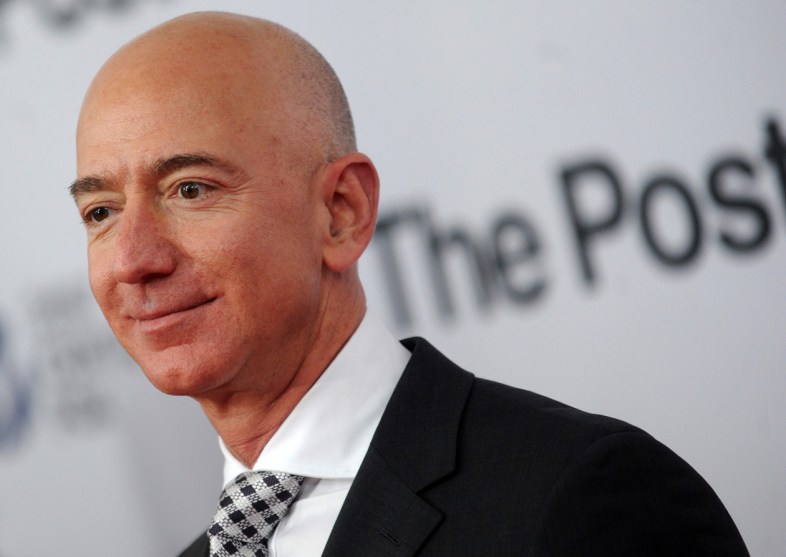
    Everyone—everyone—knows why Trump is doing this. He hates the Washington Post, which is owned by Jeff Bezos, and he’s trying to exact some revenge by going after Bezos’s main business, Amazon. In any other presidency, this would be a major scandal. Unless you’re Richard Nixon, you don’t use the power of the presidency to conduct personal campaigns of vengeance against companies or people you happen to be mad at. You just don’t do it. With Trump, however, this bit of retribution is so trivial that it’s hardly worth noting. Of course Trump is using the presidency to settle personal scores. Hell, his whole agenda is motivated primarily by a desire to take revenge against Barack Obama for making fun of him in 2011.

    Still, just for the record, this is happening. Trump has tried numerous times to jack up Amazon’s shipping fees, and he’s co-opted his Treasury Secretary and others to spend their time on this too. This might put the postal service out of business. It would certainly hurt plenty of other companies. He doesn’t care. He just wants people to know what happens if they cross him. It’s like Trump’s presidency is a real-life mashup of The Godfather and The Count of Monte Cristo. This would be an entire book chapter if it been part of, say, the Grant administration’s scandals. Today, it’s barely worth a shrug.

  • It’s Just Another Lazy Sunday in Bizarro World

    Mother Jones illustration

    I was out all last night and got home around 7 am. I immediately rolled into bed and then woke up at the crack of lunchtime. I took a shower, went out for lunch, got my car washed, and then picked up some groceries for dinner. I didn’t bother checking the news. It’s Sunday. Why bother?

    But of course, eventually I did. A few dozen f-bombs later, I figure I should at least do a roundup. Here we go.

    First up is Donald Trump. By now we’re all used to both his Twitter rants and his insistence that the Russia investigation is a witch hunt. Lately, we’ve also gotten used to his claim that the real crime is the conspiracy between Democrats, the media, and the FBI to hide their own scandals while trying to destroy his presidency. But even by Trump’s usual standards, this morning’s lick-spittled harangue was extraordinary. My feeble skills with the English language aren’t adequate to describe it, so I’ll just show you the final entry:

    As you all know, I’m an optimist about Trump. I think he got elected because of a weird perfect storm of shit—not because of a sea change in public opinion—and we’ll get back to normal fairly soon. He’s not a harbinger of the future of American politics. But I’m having a harder and harder time maintaining this attitude as Trump navigates ever closer to banana republic territory. I’m no fan of Attorney General Jeff Sessions, but I’ve mentioned before that he really does seem to be an honorable person by his own lights. I sure hope I’m right about that. He needs to loudly and clearly refuse Trump’s request, and the rest of the Republican Party needs to make it plain that it’s had enough. Every party wants to win, but there have to be limits if you want to keep up even the pretense of supporting democracy. Even if you don’t think Trump has breached those limits before, he sure has now. It’s time to step up.

    Next up is the school shooting in Santa Fe. The lieutenant governor of Texas is in the news because he believes schools should have fewer entrances and exits. And more armed guards. Or something. He seems not to know that Santa Fe High School was already considered “hardened”—a word I can barely believe we use to describe schools these days—and had not one, but two armed guards. It didn’t do any good.

    Then Oliver North, a man who should have been shamed out of polite society long ago, spoke up in his new role as president of the NRA. He agreed, naturally, that schools ought to be locked down even more, and then resurrected a musty old favorite: our real problem, he suggested, is “youngsters who are steeped in a culture of violence”—which is exactly the opposite of the truth compared to 30 years ago. But then he pulled a whole new rabbit out of his hat: The real real problem is that so many kids have been on Ritalin since early childhood. “They’ve been drugged in many cases,” he said. Yes, you heard that right: our kids have been sedated into shooting up schools.

    I would just like to say that, all things considered, I think I preferred it back when the NRA maintained a cowardly silence after school shootings, figuring that the fuss would go away within a week or so. We’ve now seen the alternative, and it’s even more repugnant and stupid.

    Next up is Trump again. Apparently he’s “putting the trade war on hold” after getting a few vague promises from China to consider the possibility of maybe thinking about someday buying a little more stuff from the United States. No promises, but they’ll give it the ol’ college try. Punishing China was practically the only thing in Trump’s campaign arsenal that was truly directed at helping the working class, and now the negotiator-in-chief has suddenly given up on it. Poof. There’s literally nothing left in his agenda that would help the working class even in theory.

    Moving on to Donald Trump Jr., it turns out he didn’t just meet with sketchy Russians who promised him help with his father’s presidential campaign. He also met with sketchy Middle Eastern folks who offered him help because they hated the Iran nuclear deal so much. Are there any sketchy foreign autocrats Don Jr. didn’t meet with?

    What else? Roger Stone said he’s prepared to be indicted. “It is not inconceivable now that Mr. Mueller and his team may seek to conjure up some extraneous crime pertaining to my business, or maybe not even pertaining to the 2016 election,” Stone told NBC News. Uh huh. The US intelligence and law enforcement community sure has it out for anyone who’s ever supported Trump, don’t they?

    Rudy Giuliani is back in the news too. He says that Robert Mueller told him the Russia investigation would be wrapped up by September 1. “You don’t want another repeat of the 2016 election where you get contrary reports at the end and you don’t know how it affected the election,” he said with a straight face. I guess he never got the memo from his boss that James Comey’s letter about Hillary Clinton’s emails eight days before the 2016 election HAD NOTHING TO DO WITH TRUMP’S HISTORICALLY EPIC VICTORY. Donald would have won anyway because of his superior strategy and the fact that Crooked Hillary is a big ol’ crooked crook who ought be behind bars.

    There’s probably some stuff I’m forgetting, but my ability to hold back the f-bombs is limited these days. I’d better quit now. However, because I’m a rotten bastard at heart, I’m going to leave you with this:

  • How Long Does It Take To Figure Out If a Ten-Dollar Bill Is Real?

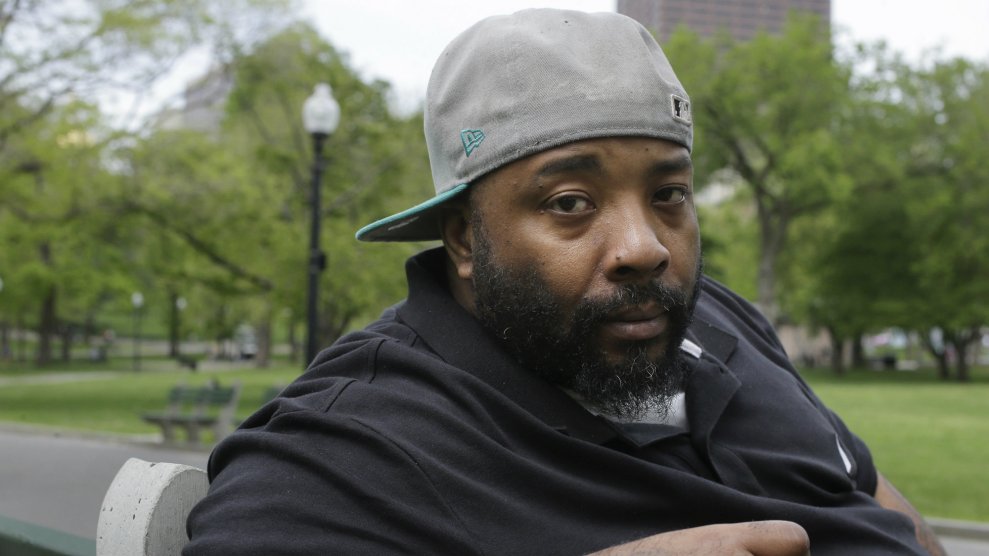
    Emory Ellis, who was apparently suspected of trying to pass the world's most perfect counterfeit ten-dollar bill.Steven Senne/AP

    A few days ago, we reported on the story of Emory Ellis, a homeless man who was arrested for trying to pass a counterfeit bill:

    According to his complaint, Ellis, 37, was trying to buy breakfast at Burger King one morning in November 2015 when the cashier asserted that his $10 bill was bogus. Ellis insisted otherwise, and when the cashier wouldn’t budge, Ellis said he would take his $10—all he had to his name—and leave. Instead of returning the bill, restaurant staff called the police. Ellis was arrested and later charged with forgery of a bank note—a crime that can carry a life sentence, according to the complaint.

    The arrest triggered a probation violation, and Ellis ended up spending three months in jail. But aside from the obvious, something has been bugging me ever since I read this story: why did it take three months to clear him? I couldn’t find anything beyond what was reported in the original AP story:

    He wasn’t released from jail until February 2016, when prosecutors dropped the forgery charge after the Secret Service concluded Ellis’ bill was real, the lawsuit says.

    I’ve had banknotes checked before by cashiers. Usually they just run a pink marker across them or something. But even supposing this particular cashier didn’t have a marker, or didn’t care, or was just trying to make trouble, is it really possible that the Boston Police Department couldn’t figure out if the banknote was real within a few minutes? And even if you suppose they couldn’t, this is one of the primary jobs of the Secret Service. It can’t possibly take them three months, can it? Three minutes seems more like it.

    Aside from bureaucratic incompetence of one sort or another, the only way this makes sense is if they took the word of a Burger King cashier so seriously that they figured this homeless guy was part of a ring of incredibly sophisticated criminals who make counterfeit bills that are well nigh indistinguishable from the real thing—and who then waste their talent on ten-dollar bills. I assume the Secret Service would refuse to comment on some specious grounds or another, so it’s probably pointless to ask them. But I would sure like to know how the combined efforts of the Boston PD and the Secret Service managed to take three months to figure out that a ten-dollar bill was real.

  • Two Things Can Be True at Once: Class Warfare Edition

    Matt Yglesias quotes Cory Booker:

    “I am so frustrated with the obvious changes going on between my dad’s age and now,” said Sen. Cory Booker (D-NJ) delivering a stem-winder of a midday keynote address Tuesday at the Ideas Conference, hosted in Washington by the Center for American Progress to celebrate its 15th anniversary. “It’s like we inherited this incredible house from our parents and we trashed it.”

    ….Without stinting the importance of the civil rights movement, he also argued Tuesday that “you don’t even need to use race as one of the lenses” to understand how kids born into low-income families are disadvantaged in life. He said explicitly that when he read Hillbilly Elegy and other work about poor rural whites, it reminded him of his neighbors in Newark. “My neighbors are incredible folks who work hard — in many cases, they work harder — than their parents did, but they’re making less money.”

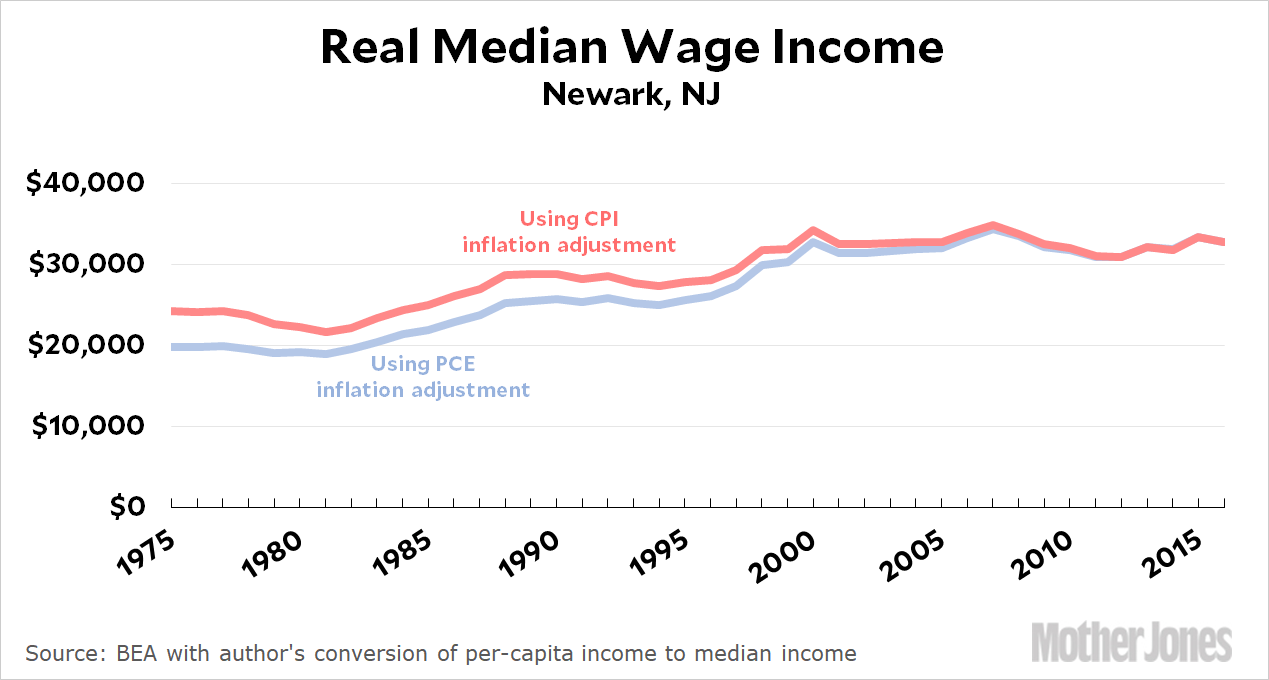
    Here’s the closest I can come to showing how median income has changed over the past half century for Booker’s neighbors in Newark:

    This chart is not perfect. “Newark” includes the entire Newark metro area, not just the city itself. And there’s no data for median income, so I had to perform a rough-and-ready conversion of per-capita income to median income based on national data. That said, this chart probably understates Newark’s income growth anyway. It includes only ordinary wage income, not income from dividends or interest or capital gains or Social Security or any other government transfers. Nor does it include noncash income like Medicaid or CHIP. If you add in all those things, the life of the average Newark resident hasn’t gotten 50 percent better since 1975, it’s gotten more like 100 percent better.

    I find myself in a weirdly precarious position these days. I pretty firmly believe that the explosion of income inequality since 1980 has been a disaster for America. Sluggish income growth, which eventually turned into completely stagnant income growth, has sapped the spirit of the average middle-class worker, who grew up still believing that life was supposed to get better and better every year thanks to the growth of the American economy. By the early 90s that had turned into a faint memory, and after 2000 it was just a sick joke. Meanwhile, the rich just kept on getting richer and richer as wages were squeezed in order to set aside a bigger and bigger share of corporate profits for executives and wealthy shareholders. The whole thing was profoundly disheartening. What was the point of that whole “fair day’s pay for a fair day’s work” thing if lawyers and CEOs and Wall Street bankers were just going to hoover up all the money for themselves?

    And yet, even in the era of Trump, Booker’s hyperbole bothers me because I think it motivates unwarranted despair more than it motivates action. For him to say that folks in Newark are working harder than they were 30 or 40 years ago is almost certainly untrue, and to say they’re making less money is absolutely untrue. I hate to hear stuff like this partly because I value the truth, but even more so because telling people how miserable they are makes them discouraged, not raring for a fight.

    That said, Booker would be a good messenger for the message Democrats should embrace: unapologetic class warfare that doesn’t pretend we’re all miserable wretches. Bernie Sanders tried the class warfare part of this, of course, but Booker has a couple of big advantages over Sanders. First, he’s not a socialist. He grew up in a comfortable, suburban, middle-class household, and that makes him a much more acceptable messenger.¹ Second, he’s black, which means that he knows (or should know) how to deliver this message without the racial tone deafness that sometimes dogged Sanders.

    This is the main point of Yglesias’ post, in fact. The question is, how do Democrats run a racially sensitive presidential campaign without alienating the working-class white voters they need? One answer is to run a class-based campaign that will obviously benefit people of color, but without actually saying so explicitly. This is sort of a mirror-image dog whistle: blacks and Hispanics understand and accept what you’re not saying, while white folks don’t know anything is happening at all. Barack Obama did this on a smallish scale, but in the same way that Sarah Palin paved the way for a more effective Palin, perhaps Sanders paved the way for a more effective Sanders.

    A more effective Sanders couldn’t expect much corporate support. But the fact is that a class-based campaign doesn’t really have to be especially anti-corporate. You can be fully in favor of a business-friendly economic climate (as I am) while also believing that the profits it generates should be more broadly shared (as I do). And if Trump has re-taught us anything, it’s that people love enemies. For Trump, it was China. For Booker it could be Wall Street. Why not?

    ¹Maybe this is fair, maybe it’s not. But it’s true. Politics isn’t always fair.

  • In Huge Disappointment, the FBI’s Super-Secret Trump Informant Looks to Be . . . Stefan Halper

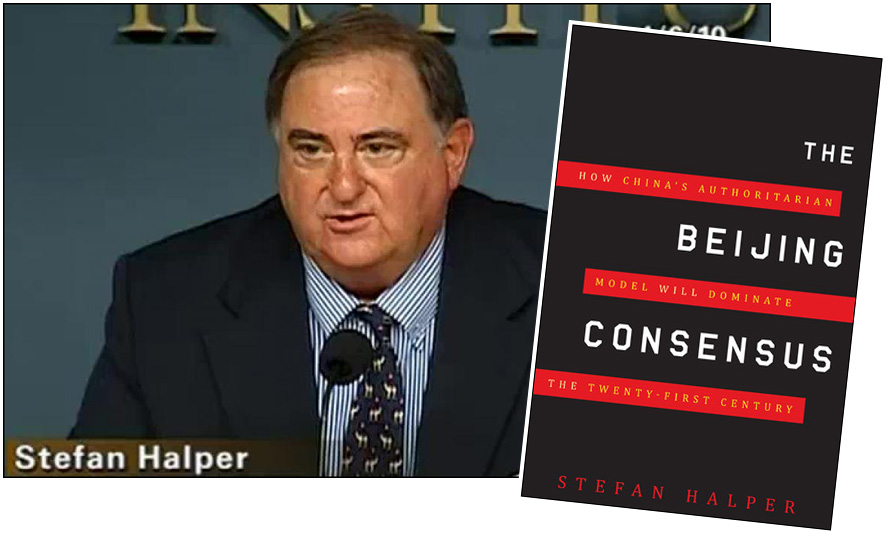
    Top secret spy Stefan Halper in 2010 promoting his latest book on CSPAN. In the acknowledgements, he thanks Henry Kissinger and the former head of MI6—both of whom blurbed the book—and an all-star cast of other world-class military and intelligence officials.

    Devin Nunes has been fighting with the FBI for some time in an effort to get them to reveal the name of the informant they used in 2016 to gather information about the Trump campaign’s ties to Russia. On Friday, the New York Times wrote this:

    The informant, an American academic who teaches in Britain, made contact late that summer with one campaign adviser, George Papadopoulos, according to people familiar with the matter. He also met repeatedly in the ensuing months with the other aide, Carter Page, who was also under F.B.I. scrutiny for his ties to Russia….The informant is well known in Washington circles, having served in previous Republican administrations and as a source of information for the C.I.A. in past years, according to one person familiar with the source’s work.

    This was enough information to identify the informant almost instantly, but the authors didn’t do that. “The New York Times has learned the source’s identity,” the article explained, “but typically does not name informants to preserve their safety.” A few minutes later, one of the authors of the Times piece tweeted this:

    This is just bizarre. They obviously wanted his name to become public, but also wanted to pretend that they weren’t the ones who had done it. Why? In any case, not to keep you in suspense any longer, by several accounts the FBI’s informant was Stefan Halper, a guy who worked in the Nixon, Ford, and Reagan administrations and is now Director of American Studies at Cambridge University. He’s the son-in-law of a former CIA executive, and as a member of the Reagan campaign in 1980 he was instrumental in stealing classified documents from the Carter White House and handing them off to the Reagan team, which was paranoid about the possibility that Carter might announce an end to the Iran hostage crisis and thus gain in the polls. He’s such an obvious candidate to be the FBI’s informant that the connection was being publicly bandied about more than a week ago.

    Glenn Greenwald has much, much, much more here,¹ and he is unsurprisingly skeptical about complaints that revealing Halper’s name endangered a longtime intelligence asset. After all, Halper’s connections to both the CIA and to high-ranking mucky-mucks in general is pretty well known. He’s not exactly operating under deep cover.

    So it’s unclear what’s really going on here. Halper does not, in fact, appear to be someone in need of the highest levels of secrecy. The fact that he was pretty friendly with establishment intelligence services was well known. On the other hand, he also obviously wasn’t an FBI “spy,” as the Trump camp keeps claiming. He appears to have been just a well-connected guy who could chat with targets of FBI investigations without raising suspicions that they were targets of FBI investigations. I don’t see anything especially untoward about this, but neither do I really understand the scorched-earth campaign to prevent Congress from knowing what Halper told the FBI. It’s all very strange.

    ¹I guess that’s unfair. His piece is about 2,600 words, which is just a brief sketch by Greenwaldian standards.

    POSTSCRIPT: I probably should have been clearer about this, but I understand that the FBI is opposed to naming any of its sources, regardless of how much or how little danger there is in outing one particular source. And this makes sense: aside from any specific damage, the FBI obviously needs its sources to know that they can trust them to keep their names secret. Outing any of them hurts their credibility.

    And yet … still. Something seems a little off here. There was an awful lot of talk about lives being in danger, networks being blown up, etc. etc. Obviously I have no insight into what Halper might have been doing, and I support the general principle of keeping sources secret, but he sure doesn’t seem like an especially sensitive source. He was so publicly close to the CIA for so long that surely anyone who cares would already assume that anything said to him was pretty likely to end up in official US hands?

  • Who Hates It When Disinformation Is Exposed?

    That Atlantic Council is a think tank of the great and good. It’s basically a centrist, mainstream organization dedicated to free trade, economic development, and generally strong relationships between America and Europe. It’s an apex organization, so to speak, with its senior members frequently being tapped to serve at high levels in new administrations. A couple of days ago one of their programs, the Digital Forensic Research Lab, announced a new partnership:

    Today @DFRLab announced that we are partnering with Facebook to expand our #ElectionWatch program to identify, expose, and explain disinformation during elections around the world. The effort is part of a broader initiative to provide independent and credible research about the role of social media in elections, as well as democracy more generally.

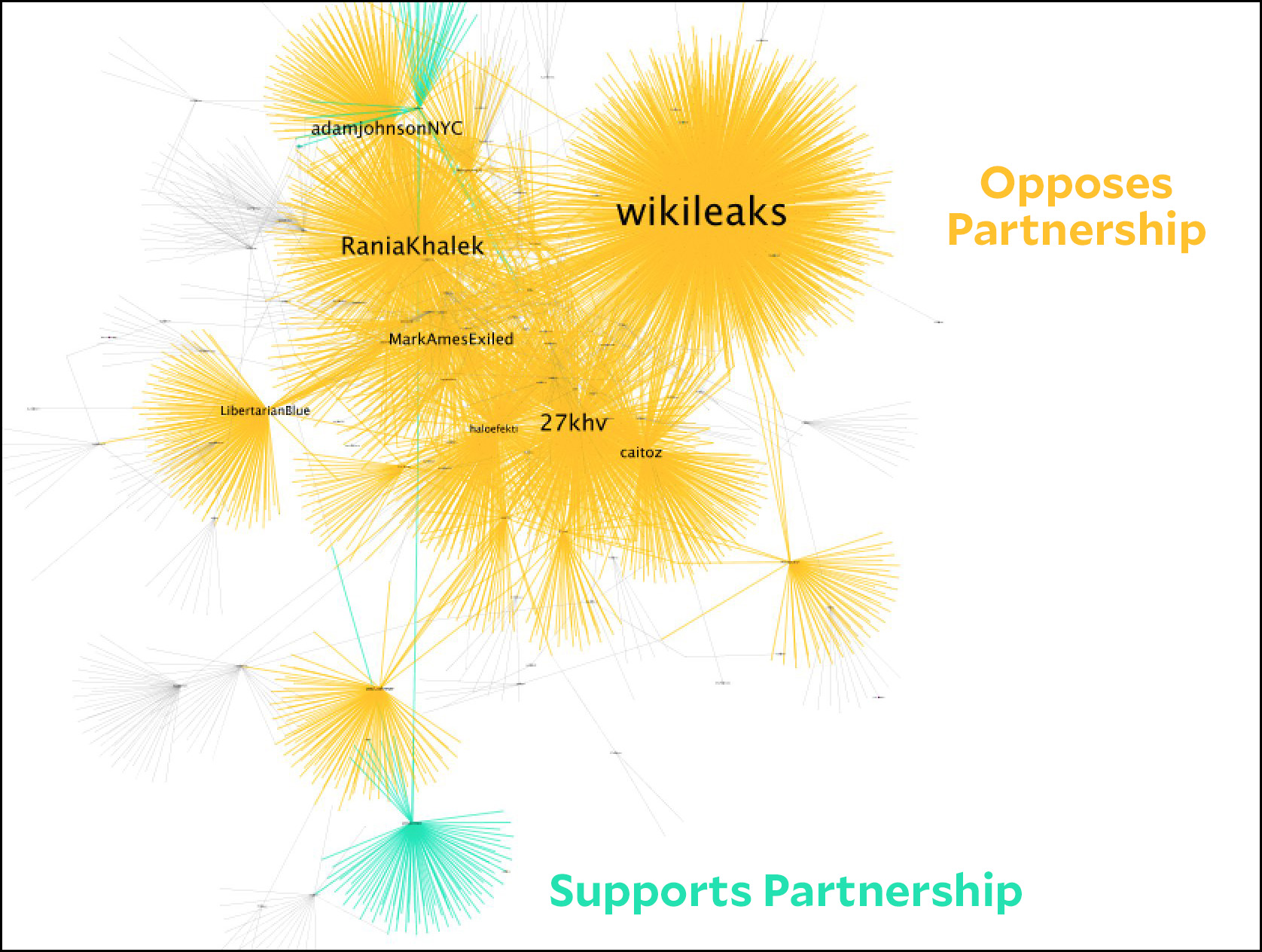
    That sounds like a fine idea, doesn’t it? Who could possibly object to exposing disinformation? This social network diagram of Twitter mentions from Conspirador Norteño provides a clue:

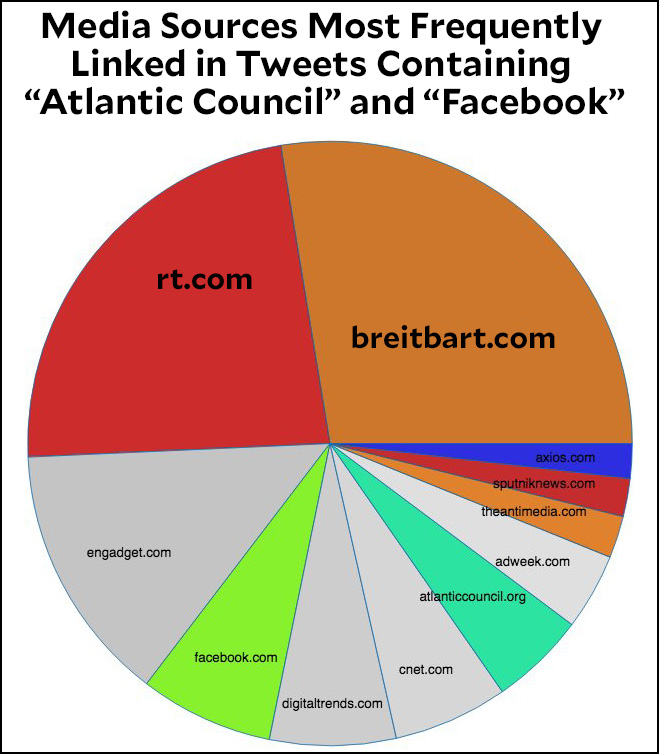
    Huh. How about that? Could you provide a little more detail, Senor Norteño?

    Fascinating! Anything else you’d like to add?

    Well, there you go. This has been your weekly message from my NATO propaganda overlords.