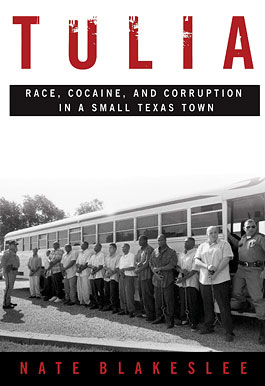
Tulia: Race, Cocaine and Corruption in a Small Texas Town

Nate Blakeslee. <i>PublicAffairs. $26.</i>

Get your news from a source that’s not owned and controlled by oligarchs. Sign up for the free Mother Jones Daily.


Investigative journalist Nate Blakeslee’s tale of an infamously crooked cocaine sting has plenty of villains. The most prominent is Tom Coleman, the rogue police officer whose uncorroborated testimony led to the arrest of 46 people in Tulia, Texas, in 1999—most of them black and most of them innocent. Also sharing the blame in Tulia are unscrupulous county officials, a hanging judge, and gullible white juries infected by small-town racism and swayed by the overheated rhetoric of the war on drugs.

Working undercover, without witnesses or a wire, Coleman, by his own account, made more than 120 purchases of powder cocaine—odd in itself, considering that crack was the drug of choice in Tulia’s less-than-prosperous black community. His bust led to 38 drug-dealing convictions in a town with a population of only 5,000. Most resulted in long prison sentences—up to 434 years—before the tide turned. Blakeslee, an editor at the Texas Observer, broke the story of Coleman’s checkered past, including an arrest for theft and allegations of dishonesty, paranoia, and domestic violence. But in Tulia he also credits the phalanx of appellate attorneys who rode to the rescue, eventually winning the release of most of the defendants and a substantial civil settlement as well.

Blakeslee’s prose is crystalline, but there are so many characters in Tulia—scoundrels, victims, and heroes—that sometimes it’s hard to keep the story straight. The flashback-heavy narrative, at once intimate and panoramic, can be a slog. In the end, though, Blakeslee’s portrait of Tulia—a place where white and black live side by side but separately and warily—is indelible.
If you buy a book using our Bookshop link, a small share of the proceeds supports our journalism.

Owned by no one—except you.

We just keep seeing it happen: Newsrooms owned by billionaires and corporations are spinning their own narratives, overwriting the truth, following only stories that keep them in the pocket of those with even more power.

Not here. We’re not owned by anyone. We’re not part of any cult that demands our allegiance to a bottom line. We’ve spoken up and spoken out while other newsrooms changed their stories—or cut them altogether—to keep the C suite happy.

Our mission is to find the truth and amplify it. That’s why we’re independent, nonprofit, and, crucially, funded by readers. The investigations on our website will always be free to read, watch, and listen to, but our newsroom is powered by readers who pitch in what they can so we can keep asking the hard questions.

Can you chip in today?

Owned by no one—except you.

We just keep seeing it happen: Newsrooms owned by billionaires and corporations are spinning their own narratives, overwriting the truth, following only stories that keep them in the pocket of those with even more power.

Not here. We’re not owned by anyone. We’re not part of any cult that demands our allegiance to a bottom line. We’ve spoken up and spoken out while other newsrooms changed their stories—or cut them altogether—to keep the C suite happy.

Our mission is to find the truth and amplify it. That’s why we’re independent, nonprofit, and, crucially, funded by readers. The investigations on our website will always be free to read, watch, and listen to, but our newsroom is powered by readers who pitch in what they can so we can keep asking the hard questions.

Can you chip in today?

We Recommend

Latest

Sign up for our free newsletter

Subscribe to the Mother Jones Daily to have our top stories delivered directly to your inbox.

Get our award-winning magazine

Save big on a full year of investigations, ideas, and insights.

Subscribe

INDEPENDENT. BECAUSE OF YOU.

Mother Jones has no billionaires calling the shots—just readers like you making fearless reporting possible

Donate