<a href="http://www.shutterstock.com/cat.mhtml?lang=en&search_source=search_form&version=llv1&anyorall=all&safesearch=1&searchterm=woman+on+computer+at+night&search_group=#id=20748589&src=4G92I9IiWpjIwlMfdvzSdg-1-4">Dmitrieva</a>/Shutterstock
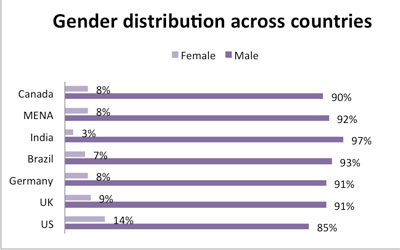
Earlier this month, Wikipedia cofounder Jimmy Wales told conference-goers in Hong Kong that a whopping 87 percent of the site’s editors are men. It wasn’t the first time Wikipedia’s gender imbalance had played out in the media: In Februrary, staff acknowledged that it affected the online encyclopedia’s content, and a New York Times op-ed in April noted that Wikipedia editors had been moving women from the “American Novelists” category to the “American Women Novelists” subcategory.
So what’s a tech-savvy woman to do? “Storming Wikipedia,” a project of the feminist organization FemTechNet and an assignment given to students participating in FemTechNet’s new online course, is designed to fix this imbalance. During these exercises students edit Wikipedia en masse, “with the goal being to collaboratively write feminist thinking into the site,” says Alexandra Juhasz, professor of media studies at California’s Pitzer College and one of the course facilitators.
Students participating in the exercise will create and expand Wikipedia articles on influential women and encourage “feminists, academics, and activists to contribute to Wikipedia and help revolutionize its culture.” According to Inside Higher Ed, “students will be given lists of women who have played key roles in science and technology,” and will tweak articles to acknowledge their contributions.
FemTechNet, which Juhasz calls “a collective of international feminist scholars, artists, and activists,” is launching an online curriculum focused on educating people about the relationship between women and technology. Starting in September, instructors at 15 different colleges, including Brown, Yale, and Penn State University, will be offering “Dialogues on Feminism and Technology.” Students taking the course will study technology through a feminist lens using prerecorded videos featuring prominent feminist scholars.
“From a feminist perspective, we think of technology differently than just as objects or applications,” says Anne Balsamo, a course organizer and dean of the School of Media Studies at the New School in New York City. “Technology from a feminist perspective is social, cultural, technical objects or arrangements.”
And, importantly, it includes women.