Weekend at Culture Camp

International adoptees taste lives they’ve never known.

Get your news from a source that’s not owned and controlled by oligarchs. Sign up for the free Mother Jones Daily.


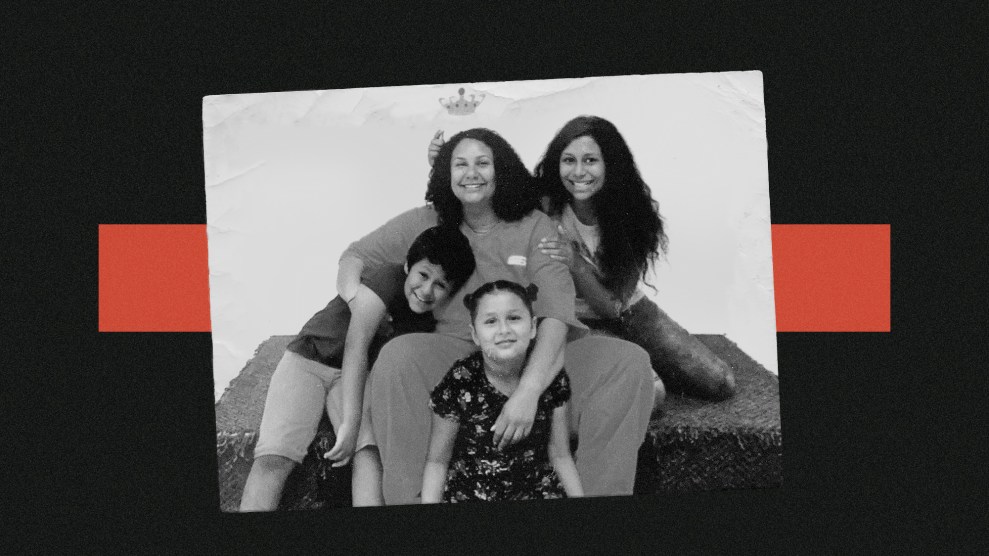
When it comes to cultural identity, adoptees from other countries live a paradox: They hail from places they may know little about. “Your parents can’t provide that kind of connection or information for you,” says the Evan B. Donaldson Adoption Institute’s Hollee McGinnis. “And yet when you leave your family, people expect you to know everything about every Asian culture or every Latin culture.” One way adoptive parents try to bridge this gap is by sending their children to culture camps, weekend or weeklong immersions that explore everything from kimchi and siestas to the pain of living with racism.

Culture camps were championed in the 1980s by adoption agencies on behalf of adult transnational adoptees—many raised in mostly-white suburbs and small towns—who said they would have benefited from an opportunity to explore their roots and meet kids in similar circumstances. By the 1990s, these camps were fixtures in many adoptees’ lives and also in the lives of their parents, who increasingly volunteered their time. (I facilitate a classroom at the weeklong camp for children adopted from Latin America and their siblings that my three children attend.) Yet when the Adoption Institute recently surveyed more than 400 adult adoptees (the results will be officially released later this winter) about which experiences helped them build healthy identities, culture camps ranked surprisingly low—below reading articles on the internet and having mentors of the same race.

Those results don’t surprise Kim Park Nelson, a Ph.D. candidate and researcher in the Department of American Studies at the University of Minnesota, who developed and taught the first-ever university course in Korean adoption studies. While she applauds culture camps for providing adopted children with a fun opportunity to make meaningful connections with each other, she questions whether the curriculum is truly relevant to their lives. There is no way that you can “become Korean” or learn about being Colombian in one week or weekend a year, she says.

Most troubling to Park Nelson are the messages that can get transmitted. “What happens in camps is really colored by all of the misunderstandings and prejudices that Americans have about Asians in general,” she says. “I think that these camps have Orientalized Korean culture in a way that is palatable to white Americans but can do some damage in terms of painting Korean people and Korean culture in a very demeaning and condescending way. Korea is one of the most electronically and technologically advanced societies in the world, but camps have a tendency to focus on folk culture. And learning the fan dance doesn’t exactly create cultural cache if you go to Korea.”

McGinnis says these critiques shouldn’t be limited to Korean camps; almost every country that currently sends children to the United States is developing and modernizing, and camps need to update their classes to reflect that fact so adoptees have a realistic understanding of what to expect should they choose to visit their birth country. Nonetheless, she thinks camps do have value and her research has convinced her that the most important benefit a child can glean from culture camp is the opportunity to spend time with adults of their same race, whether adopted or not. She notes that it’s important for adoptive parents to remember that for their children, issues of race are ongoing, not just experienced one week out of the year. “It’s a daily occurrence,”she says. “To have people of color daily around you, that’s more beneficial.”

I'm hopeful because of readers like you. Will you pitch in today?

We see the headlines on a weekly basis: the claw backs in public media, the gutting of The Washington Post, the bending over backwards to appeal to Trump and his allies.

But not here.

When Mother Jones started publishing 50 years ago, our founders made a critical decision: to be a reader-supported nonprofit. They knew that no corporate owner would be interested in a muckraking newsroom; they also knew that no muckraking newsroom would be interested in following the agenda of a corporate owner.

And so, we’ve been reader-funded for half a century. We rely on contributions from our readers—readers like you—whether it’s $50, or $15 a month, or whatever fits your budget. People give what they can, and every donation makes a difference for our newsroom, which has grown tremendously—in size and reach and renown—since its inception in 1976.

You may be wondering: What does it take to publish an investigation? And what does my donation actually fund? The answers are one and the same: It takes people, resources, and time. And that’s what your donation funds directly.

Every donation Mother Jones receives from readers fortifies our newsroom, whether we’re covering underreported scandals out of Washington, DC, or the most important news of the day. And right now, each donation will be doubled thanks to a $50,000 match. So when you make a donation, it’ll go twice as far.

Your support keeps us going. If you’re able, donate today.

Thanks for reading.

—Monika Bauerlein, CEO

I'm hopeful because of readers like you. Will you pitch in today?

We see the headlines on a weekly basis: the claw backs in public media, the gutting of The Washington Post, the bending over backwards to appeal to Trump and his allies.

But not here.

When Mother Jones started publishing 50 years ago, our founders made a critical decision: to be a reader-supported nonprofit. They knew that no corporate owner would be interested in a muckraking newsroom; they also knew that no muckraking newsroom would be interested in following the agenda of a corporate owner.

And so, we’ve been reader-funded for half a century. We rely on contributions from our readers—readers like you—whether it’s $50, or $15 a month, or whatever fits your budget. People give what they can, and every donation makes a difference for our newsroom, which has grown tremendously—in size and reach and renown—since its inception in 1976.

You may be wondering: What does it take to publish an investigation? And what does my donation actually fund? The answers are one and the same: It takes people, resources, and time. And that’s what your donation funds directly.

Every donation Mother Jones receives from readers fortifies our newsroom, whether we’re covering underreported scandals out of Washington, DC, or the most important news of the day. And right now, each donation will be doubled thanks to a $50,000 match. So when you make a donation, it’ll go twice as far.

Your support keeps us going. If you’re able, donate today.

Thanks for reading.

—Monika Bauerlein, CEO

We Recommend

Latest

Sign up for our free newsletter

Subscribe to the Mother Jones Daily to have our top stories delivered directly to your inbox.

Get our award-winning magazine

Save big on a full year of investigations, ideas, and insights.

Subscribe

INDEPENDENT. BECAUSE OF YOU.

Mother Jones has no billionaires calling the shots—just readers like you making fearless reporting possible

Donate