Wag the Labradoodle: A Timeline of Pet Fads

Get your news from a source that’s not owned and controlled by oligarchs. Sign up for the free Mother Jones Daily.


1884 1,500 different styles of dog collar are for sale in Manhattan.

1907 The New York Times announces pigeons as the latest pet for fashionable women.

1935 An 8-foot alligator is found in an East Harlem sewer, helping launch an urban legend.

1936 Cocker spaniels are dubbed America’s favorite breed; beagles unseat them in 1953.

1960 Fascination with all things French makes the poodle America’s favorite dog.

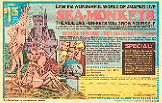
1960 Sea-Monkeys, a.k.a. brine shrimp, surface.

Early 1980s Up to a million potbellied pigs become pets. A 1997 survey of slaughterhouses finds that many became dinner.

1983 Cocker spaniels regain the “most popular” title.

Late 1980s Teenage Mutant Ninja Turtles hype leads to record numbers of pet turtles being released into the wild.

Early 1990s Rottweilers become status symbols for Russia’s nouveaux riches.

1991 Labrador retrievers fetch the top dog spot; they’re still there.

1995 Neuticles, fake testicles for neutered dogs, are introduced. Nearly a quarter million pairs sell.

Mid-1990s Hedgehog craze spikes in the U.S.; video-game character Sonic is blamed.

1996 More than 40 million Tamagotchi, or digital handheld pets, are sold worldwide.

1999 New York mayor Rudy Giuliani bans pet ferrets, saying, “This excessive concern with little weasels is a sickness.”

Early 2000s Sugar gliders, flying marsupials from Indonesia, start to take off in the U.S.

2003 Finding Nemo inspires kids to free their fish—in the toilet.

2003 Crazes for prairie dogs and Gambian giant pouched rats are cut short by a monkeypox outbreak and a federal ban on further sales.

2004 A bug-fighting video game feeds stag-beetle mania in Japan.

2006 The toyger, a house cat bred with a “designer toy tiger pattern,” is recognized as an official breed.

2007 Rat retailers in France report a boost in sales following Pixar’s Ratatouille.

From the desk of Mother Jones CEO, Monika Bauerlein...

Newsrooms can be funded in many ways. One of the most controversial (and volatile) ways is by a for-profit corporation or a billionaire owner. We see it across the headlines on a weekly basis: the claw backs in public media, the gutting of The Washington Post, the bending over backwards to appeal to Trump and his allies.

But not here.

When Mother Jones first started publishing 50 years ago, our founders made a critical decision: to be a reader-supported nonprofit. They knew that no corporate owner would be interested in a muckraking newsroom; they also knew that no muckraking newsroom would be interested in following the agenda of a corporate owner.

And so, we’ve been reader-funded for half a century. We rely on contributions from our readers—readers like you—whether it’s $50, or $15 a month, or whatever fits your budget. People give what they can, and every donation makes a difference for our newsroom, which has grown tremendously—in size and reach and renown—since its inception in 1976.

You may be wondering: What does it take to publish an investigation? And what does my donation actually fund? The answers are one and the same: It takes people, resources, and time. And that’s what your donation funds directly.

Every donation Mother Jones receives from readers fortifies our newsroom, whether we’re covering underreported scandals out of Washington, DC, or the most important news of the day. And right now, each donation will be doubled because of our $50,000 match. So when you make a donation—$5, $50, any amount—it’ll go twice as far.

Your support keeps us going. If you’re able, donate today.

Thanks for reading.

—Monika

From the desk of Mother Jones CEO, Monika Bauerlein...

Newsrooms can be funded in many ways. One of the most controversial (and volatile) ways is by a for-profit corporation or a billionaire owner. We see it across the headlines on a weekly basis: the claw backs in public media, the gutting of The Washington Post, the bending over backwards to appeal to Trump and his allies.

But not here.

When Mother Jones first started publishing 50 years ago, our founders made a critical decision: to be a reader-supported nonprofit. They knew that no corporate owner would be interested in a muckraking newsroom; they also knew that no muckraking newsroom would be interested in following the agenda of a corporate owner.

And so, we’ve been reader-funded for half a century. We rely on contributions from our readers—readers like you—whether it’s $50, or $15 a month, or whatever fits your budget. People give what they can, and every donation makes a difference for our newsroom, which has grown tremendously—in size and reach and renown—since its inception in 1976.

You may be wondering: What does it take to publish an investigation? And what does my donation actually fund? The answers are one and the same: It takes people, resources, and time. And that’s what your donation funds directly.

Every donation Mother Jones receives from readers fortifies our newsroom, whether we’re covering underreported scandals out of Washington, DC, or the most important news of the day. And right now, each donation will be doubled because of our $50,000 match. So when you make a donation—$5, $50, any amount—it’ll go twice as far.

Your support keeps us going. If you’re able, donate today.

Thanks for reading.

—Monika

We Recommend

Latest

Sign up for our free newsletter

Subscribe to the Mother Jones Daily to have our top stories delivered directly to your inbox.

Get our award-winning magazine

Save big on a full year of investigations, ideas, and insights.

Subscribe

INDEPENDENT. BECAUSE OF YOU.

Mother Jones has no billionaires calling the shots—just readers like you making fearless reporting possible

Donate