<a href="http://www.shutterstock.com/cat.mhtml?people_number=&commercial_ok=&search_cat=&searchterm=secret&people_ethnicity=&anyorall=all&searchtermx=&color=&search_tracking_id=2D674FC0-8678-11E2-A8D8-67921472E43D&photographer_name=&search_source=search_form&lang=en&version=llv1&search_group=&orient=&people_gender=&show_color_wheel=1&people_age=&safesearch=1&prev_sort_method=relevance2&sort_method=popular&page=1#id=127360631&src=04257204-8678-11E2-A882-07D271D9A14D-1-19">sebra </a>/Shutterstock
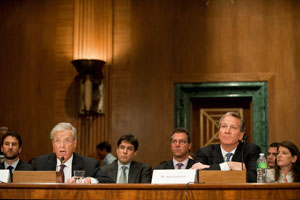
In the aftermath of the 2008 financial meltdown, the US government launched a vast investigation, but it still doesn’t want you to know the details of what it found.
In January 2011, the Financial Crisis Inquiry Commission (FCIC) created by Congress put out its final report. But it only released a portion of all the source documents it scoured, so last year the government accountability group Cause of Action filed a lawsuit seeking the release of those documents, including emails, memoranda, and draft reports. Last week, the DC district court announced it was dismissing the case. But it’s not over yet: COA vowed on Tuesday that it will appeal the decision. In a statement, the group said the judge’s ruling that the documents were not subject to the Freedom of Information Act was “a misapplication of the law,” and said that “COA will continue to fight to shed light on the workings of our government.”
The FCIC was created in 2009 and given an $8 million budget and a lot of power to subpoena witnesses and documents, and give whistleblower protections to those who would come forward with information. The commission was also plagued by partisan division. Its final report in 2011 faulted failures in financial regulation, excessive borrowing, a lack of transparency, and risky investments, among other causes—but Republicans on the committee put out their own conflicting report. Meanwhile, the commission said it could not release all related documents but vowed that they “will eventually be made public through the National Archives and Records Administration.” (Which has yet to happen.)
As Jay Rosen, a journalism professor at New York University, told my colleague Nick Baumann at the time:
The [final] report, as I understand it, says [the financial crisis] was a preventable thing and preventable by lots of different measures. The Republican dissent is that this was caused by Fannie Mae and Freddie Mac. That’s one of those disputes where it’s not just two interpretations of common facts diverging from one another. Those are two different narratives coming out of the same commission, which lead in two different policy directions and really tell two different stories.
There are powerful incentives in certain institutions to just leave it at that. The most obvious one is the “he said/she said” journalism, where you say, “This is what the commission Republicans said, this is what the Democrats said, and really—who can tell.” The release of documents provides a way for people to provide a check on that tendency.
As Baumann reported, FCIC chairman Phil Angelides worried at the time that “there’s going to be a very conscious, deliberate effort to rewrite [the] history [of the crisis], to wave this away like it was a bump in the road.” Keeping the primary source documents hidden from the public makes that easier, of course.
COA suggested that another financial meltdown could loom if the public can’t hold the government accountable for exactly what happened in the lead up to the 2008 crisis. “The President has signed into law regulations, like [the] Dodd-Frank [financial reform bill], without the American people fully understanding what caused our economic meltdown or what went into the creation of the FCIC’s report,” the group said, adding that it’s not even clear if the taxpayer-funded FCIC conducted a full investigation.
As Michael Perino, a law professor at St. John’s University in New York who has written about the investigation of the causes of the Great Depression, told Baumann in 2011: “Opening up all those materials would allow independent investigators to pore through them and reach their own conclusions.”