<a href="http://www.shutterstock.com/pic-45085954/stock-photo-pharmaceutical-bottle-with-skull-symbol.html?src=IhcnwO0URcrc_gUGS2Sb3Q-1-67">BarracudaDesigns</a>/Shutterstock
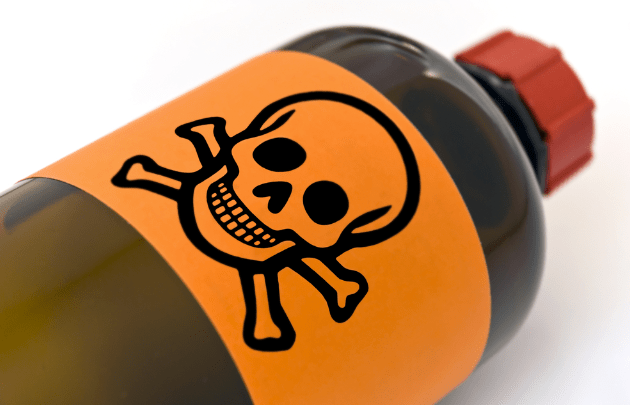
Last week, a federal court issued a ruling strengthening protections for Americans injured by chemicals on the job.
Both state and federal statues dictate how companies are required to label harmful chemicals in the workplace. Federal law usually trumps state law, but victims injured due to inadequate chemical labeling are still allowed to sue their employer for damages under state law. Earlier this year, the American Tort Reform Association (ATRA) sued the Occupational Safety and Health Administration (OSHA), which is the federal workplace safety regulatory agency, arguing that OSHA regulations only allow workers to sue under federal law, not state law. (Tort reform refers to proposed changes to the civil justice system that would cut down on personal injury lawsuits.) Last week, the powerful DC Circuit Court unanimously rejected ATRA’s argument, which consumer advocates say is a win for workers.
“The court’s opinion is great news for those who want to hold chemical manufacturers liable for injuries to employees,” Leah Nicholls, an attorney with the public interest law firm Public Justice, said in a blog post Tuesday.
While the ruling does not mean that other courts will agree that workers are allowed to sue under state law, the DC Circuit decision “will help persuade other courts that the existence of federal regulations does not prevent people from suing under state laws,” Nicholls adds.
ATRA is a coalition of industry groups founded in 1986 whose members range from the chemical industry to the tobacco industry to the drug industry. The organization advocates for limits on corporate liability for damage caused by member industries’ products and services. Since the group’s inception, corporations including Dow Chemical, Exxon, Phillip Morris, and Aetna have helped fund it.
In the case before the DC Circuit, ATRA said that when OSHA issued its regulation governing how federal chemical injury law preempts state chemical injury law, it changed the definition of “preemption,” which only Congress is allowed to do.
The US Supreme Court has issued several rulings in recent years scaling back Americans’ ability to sue corporations for damages. The high court is also the most business-friendly since World War II. In that context especially, Nicholls says, “[T]his is a heartening decision.”