Kenishirotie/Getty
In the first two weeks after their release, former inmates are 40 times more likely to overdose on opioids than the general population. That’s according to a recent study in the American Journal of Public Health.
Past research has shown that the period immediately following jail or prison is a dangerous time, but this is the first study to examine post-incarceration overdose rates since America’s opioid epidemic took hold. In 2016, more than 64,000 Americans died of overdoses—more than the US military deaths in the Vietnam War.
By some estimates, as many as two-thirds of prisoners have substance abuse disorders. Former inmates with a history of opioid addiction face compounding risks: They have lost their tolerance to opioids, yet the drugs in circulation are far more potent than they were a few years ago—especially since heroin and counterfeit painkillers are often laced with synthetic opioids like fentanyl. “The [drug] market is always changing and evolving,” explained study co-author Dr. Steven Marshall, an epidemiologist who directs the University of North Carolina’s Injury Prevention Research Center. “Some of these people are coming out into a new mix of drugs that weren’t around when they were [in prison].”
Overdoses: Former Inmates vs. General Population
Per 100,000 in North Carolina
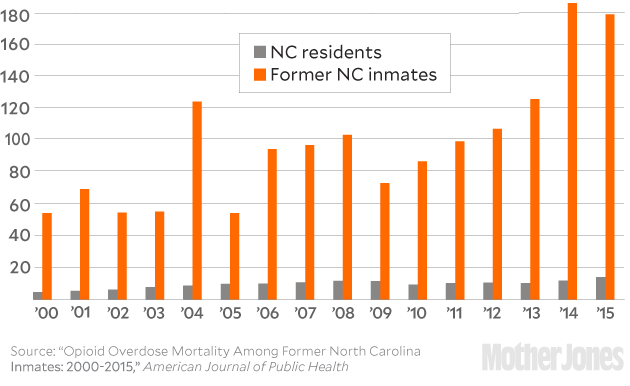
The researchers combined two data sets: North Carolina prison releases between 2000 and 2015, and death records through 2016. They found that opioid overdose rates were highest in the two weeks after release but continued to remain high: nearly 11 times higher than the general population in the year after release, and 8 times higher overall.
Despite the sky-high rates of substance use disorders among inmates, only a fraction of prisons offer evidence-based addiction treatment. The most promising approach for opioid addiction is a combination of counseling with one of three medications: methadone, buprenorphine, or naltrexone. A recent Vox investigation found that Rhode Island is the only state to allow prisoners access to all three medications—a policy that has resulted in a dramatic fall in post-incarceration deaths. Sixteen states offered only naltrexone, the least studied of the three medications. The remaining offered no medications at all.
The authors call for the use of buprenorphine and methadone in prisons and distribution of the overdose reversal drug naloxone prior to release. They also note the need for more robust reentry services, as challenges such as finding a job, housing, or health care—particularly in states like North Carolina, which didn’t expand Medicaid under the Affordable Care Act—could “serve as an impetus for substance abuse.”
“Just as it is important to target high-risk populations in infectious disease epidemics, our society must find additional ways to prevent opioid-related [overdoses] among former inmates,” the study concludes. “Overall, imprisonment for individuals with substance use disorder may be more harmful than helpful.”