The cast of "The Secret Lives of Mormon Wives" poses for press in Los Angeles.Cristian Lopez/Disney/Getty
Season 3 of The Secret Lives of Mormon Wives debuted on November 13, and among the routine infighting, there’s a heavier topic that has consumed the season’s conversations: the incremental revelations that most of the women in the cast have been sexually assaulted in their lifetimes. (Hulu didn’t include any trigger warnings in front of these episodes.) This isn’t surprising, given the self-reported rates of sexual violence. Similarly disturbing and unsurprising, though, is the fact that for one of those women, the cast and the audience have decided that she’s lying.
Demi Engemann shared this season that Marciano Brunette groped her without her consent while she visited the Vanderpump Villa, a different Hulu original reality show. Brunette, the lead server at the Villa, claims they shared a consensual kiss and denies assaulting Engemann. Vanderpump Villa producers released a statement that they had reviewed their footage and found her claims to be “unsubstantiated.” In early December, Brunette filed a lawsuit against Engemann, claiming she defamed him by lying that she had been assaulted.
For those who haven’t watched SLOMW, it follows a group of young women who grew up in the Mormon church, have large social media followings, and started their own “MomTok” group, infamous for a swinging scandal years ago. The group often discusses how they want to modernize the Mormon church and change its stance on traditional gender roles and LGBTQ+ acceptance.
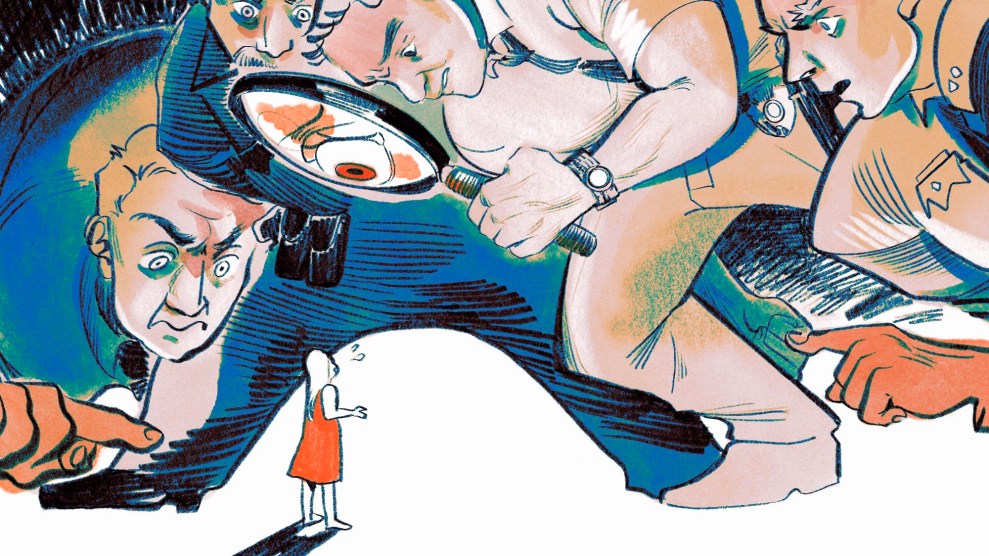
I found that many of the police investigations hinged on the victim’s behavior instead of hard evidence: were they sad enough, did they try to fight back, were they flirting beforehand, and had their story been consistent through and through?
However, their treatment of Engemann’s allegation looks all too familiar to me, as a reporter who has read through dozens of police reports that labeled sexual assault claims as false. My reporting was featured in the Netflix documentary Victim/Suspect, which shows police interrogation videos and first-hand interviews with alleged victims who were accused of lying and charged with crimes.
I found that many of the police investigations hinged on the victim’s behavior instead of hard evidence: were they sad enough, did they try to fight back, were they flirting beforehand, and had their story been consistent through and through?
Now, for Engemann’s part, and separate from her allegation of sexual assault, she has been incredibly insensitive to others’ pain and discomfort. She chastised and mocked another wife, Jessi Draper, for having a consensual affair with Brunette (yes, the same Brunette). She orchestrated a very awkward and public Chippendales-like dance with a different cast member, Jen Affleck, who said she was uncomfortable and didn’t give consent.
As happens with a reality TV scandal, Engemann’s accusations turned the audience into pseudo-detectives. On camera at least, she is friendly with Brunette, hugs him, and doesn’t say outright that she’s uncomfortable with anything. Perhaps most suspicious to the online detectives and cast is that she kept in touch with her alleged assailant, sending him messages that included some sexual innuendos. But to be clear, none of these publicized messages mentions anything physical happening between the two of them, consensually otherwise.
This vigorous analysis of Engemann’s behavior hasn’t been applied to Brunette, whose character isn’t spotless. In a previous season of Vanderpump Villa, Brunette bragged that he had slept with an “extraordinary” number of his coworkers at an old job. In the Vanderpump Villa episode when Brunette meets the wives, he comments on their looks soon after meeting them, calling them “so f*cking hot”. And after he asks Engemann for a“therapy session”, she is the one who ends the conversation, and Brunette pulls her in for a hug, kissing the side of her head.
Instead, all the shame bore down on the two women involved with Brunette. Draper was excoriated by her husband, who said his own bad behavior toward her was excused because she cheated on him. And Engemann has been called a liar and a master manipulator who made up sexual assault allegations to cover up a consensual affair.
Reporting a sexual assault has always been fraught because these crimes usually have no witnesses, leave no physical injuries, and worst of all, credibility can be made or broken by a victim’s behavior before and after the alleged assault.
I want to be very clear that I don’t know if Engemann was actually assaulted — and neither do you.
Claire Fallon and her co-host summed up my feelings pretty perfectly on a podcast episode of Rich Text: “We both feel very uncomfortable about the fact that this is a half-season of a reality show about whether a group of women believe another woman’s claim that she was sexually assaulted.”
The way that the group of wives has characterized their doubt has been in service of other “real” victims. In a hotel room, Draper, Mickaela Matthews, and Miranda Hope discuss their feelings about the accusation. Miranda says while pinching her fingers together:
“You’re taking a situation that’s this big, and using your position as a woman to make it this big, which is actually so much worse for actual assault victims.”
Draper: “Yes, and it makes women not be believed when other women do shit like this.”
Reporting a sexual assault has always been fraught because these crimes usually have no witnesses, leave no physical injuries, and worst of all, credibility can be made or broken by a victim’s behavior before and after the alleged assault.
My reporting found that family, friends, and police all come up with remarkable excuses for why they think someone made up an allegation of assault. For a 12-year-old, police said she lied about her adoptive dad abusing her to get back at him for taking her phone away. For a college student, it was so she could get help with her grades. For a restaurant server, it was so she could extort money from her boss. All three of these people – even the child – were charged with crimes for lying. And all three saw their charges later dropped or were fully exonerated.
The season’s reunion aired last week, and during it, Engemann again said and did things to others which have no excuse — while pointing to her head, she asked Affleck what was wrong with her brain (after Affleck came out publicly that she recovered from prenatal depression and suicidal ideations). She assumed Affleck wasn’t a victim of sexual assault, which was quickly corrected, and to which Engemann responded, “OK, that’s great.”
But something else struck me while watching the reunion that was true for so many of the young women I’ve interviewed. While crying during a break, Engemann said, “It’s more painful to not be believed […] or to have to go over it over and over and over and feel the pain of past things than to just say ‘F*ck yeah, we kissed.’”
For so many victims, it is easier to dismiss the truth, push down their memories, and say that they weren’t assaulted – especially when there is a culture so ready to accept their admission of fault.
I have no idea where Brunette was that night during the reunion, but for certain, he wasn’t on national TV in front of narrowing and skeptical eyes, facing intense and repetitive questions.