• “We Can’t Not Give Back. Randal Was a Giver”: 21 Stories of Strength to Close Out 2021

    As we close the books on 2021, and not a moment too soon, a question I’ve been wrestling with and want your thoughts on, at recharge@motherjones.com, is what to do with fatigue. Pandemic fatigue, pain fatigue, news fatigue, loss fatigue. I’m hardly alone, but I’m also not alone in finding strength in stories that met the moment this year, 21 of them below. Starting with one, from a 19-year-old’s mother, that stopped me in my tracks:

    1. Postscript. On the morning of December 11, postal worker Randal Mosby Jr. started on his route, delivering mail for the holidays. Shortly into his shift, his mother, a school teacher, got a knock at her door from a coroner’s officer telling her Randal had died in the line of work. Details of his death are still emerging, and as his family struggles to piece together what happened, his mother, Tiffany, tells me on the phone days later, introduced by her brother and my Mother Jones colleague Homer, about the brightly compassionate life her son led and the outpouring of support she’s receiving. In his wake, she hopes to honor his life by establishing a family foundation that connects people in need with local resources.

    Tiffany’s process of grief is taking its course. But her efforts to memorialize and expand his impact are already reverberating. Of all the stories she shares, the one I keep thinking about is Randal anonymously stuffing large donations into a USPS co-worker’s coin bank every time he walked by her desk to fulfill her dream of attending a World Series game: “My son was donating the whole time and didn’t say anything. Most teenagers don’t do that. To think that he was selflessly giving, it just touches me. And another co-worker was going through hard times, so Randal searched online for the perfect gift: an engraved keychain with a compass that read ‘Be guided on the right path—fulfill your dreams.’ And another co-worker liked to try recipes and was jokingly nicknamed Betty Crocker by her colleagues, so my son stopped at a neighborhood garage sale and surprised his co-worker with a stack of cookbooks. He was listening to people, doing his best to help. Not only is he hard-working, but he actually cares.”

    “We can’t not give back. Randal was a giver,” his uncle tells me. “In this painful moment, we’re witnessing a community of friends, students, strangers who never knew him, and local businesses come together to support my sister in her loss. Looking ahead to 2022, I hope this spirit of support extends to the countless families grieving for loved ones.”

    A hopeful New Year to Randal’s family and USPS friends. If you have a note for them, send it to recharge@motherjones.com.

    2. Migration music. “What’s a 4-year-old doing in prison for 700 days?” asked poet Paul Flores onstage in CAGES: Ways to Interrogate History, pianist Jon Jang’s latest. I was in the audience, my first in two years, with Jang at his best: acutely alert to political patterns and tightly improvising. “Jon is so quick and well-versed in protest music that he can hear a line from my poem about survival boats carrying Dominicans fleeing to Puerto Rico,” Flores says, “and hear my refrain ‘This is a boat’ and play it back. And suddenly my poem about Caribbean immigration and Native culture becomes a spiritual song.” Catch it February 6.

    3. Beautiful News, a site delivering on its promise.

    4. What Does It Mean to Be American? is Robert Stillman’s new solo album, a mix of minimalist improvisation, layered effects, and pitch-bending drones. His music is lapping, as defamiliarizing as the past year: “I was born and raised in America and identify as American but I’ve lived in the UK for over a decade, and it’s given me the opportunity to consider what being ‘American’ means outside the day-to-day experience.” Two albums coming.

    5. Housing gains. A big win for housing activists putting people over profits as Berliners voted to “seize housing from big corporate landlords,” reports Camille Squires of Quartz.

    6. Climate fix. Beyond the policy fights are immediate efforts in Indigenous communities to take action: A livestream delves in with Melina Laboucan-Massimo of Canada and Tyson Yunkaporta of Australia in #DearWorldLive’s “Protecting the Earth: Indigenous Solutions to the Climate Crisis.”

    7. Spacing out. I can think of lots of ways to spend $10 billion: vaccines, student debt relief. NASA’s idea is fine I guess, a new telescope launched last week to unlock mysteries of the universe.

    8. Book it. Jennifer Shahade, director of US Chess Women, finished her book Chess Queen: The True Story of a Chess Champion and the Greatest Female Players of All Time. Preorder it and catch her commentary in Louisa Thomas’ New Yorker profile of Hou Yifan.

    9. “Recover Together,” a vital list of pandemic relief, has a spread of resources, from a veterans’ alcohol self-management program to tips for caretakers.

    10. Ringing a bell. Everything Daniel Carter touches is an unconventional recharge, his latest no exception. Start with his classic “Refracted Light and Grace.”

    11. Strong words. Keep these in mind, one from historian Tom Christensen: “Tyranny hates memory.” The other from Mother Jones’ David Corn: “Much of human history is a war against forgetting.”

    12. Defying debt. Jateria Pittman tells me about starting her own business after quitting a corporate finance gig to pursue her passion—creating Debt-Free Travel Journey—thanks to Tulsa Remote paying her $10,000 to move to Oklahoma: “For me, travel was escapism. I was trying to escape reality. But mental health and money are tied to travel, so I thought let’s fix the money mindset. A lot of people hold shame for their debt and can’t move forward because every step feels like a cement block on their foot.” Her tips are practical—tackling debt, building wealth—and psychological: “It’s not just money. Debt is heavily emotional. It costs more to be poor than to be middle class. One thing I tell people is travel doesn’t have to be a big trip abroad. You can travel your backyard, your city, your coast.” Through Tulsa Remote, she’s “getting support from the history of Black Wall Street and so many resources to build my business, all to inspire other millennials to take control of finances so they can build wealth and redefine travel.”

    13. Existential stepback. A promising new podcast is rounding the runway from science educator and children’s book author Annaka Harris. Lights On: My Search for a Theory of Consciousness includes a strong lineup: scientists Lee Smolin, Christof Koch, Sue Blackmore, and George Musser.

    14. Twitchingly funny. The most wryly hilarious graphic designer I’ve seen this year is Jaron Saturnino, the tongue-in-cheek editor and enigma behind Hikaru Nakamura’s video thumbnails and intros, including this one: What happens when the world Speed Chess Champion blunders against a 14-year-old?

    15. Solutions journalism. It’s conventional wisdom, but not actually wise, in certain precincts of progressive media to assume that things are always and irredeemably worse than they appear. But Solutions Journalism Network puts that idea to the test with tips for reporters and readers on telling stories that solve problems.

    16. Reuniting. Two 91-year-old women, best friends as kids before fleeing Germany on the cusp of World War II, reunited for the first time in 82 years. Betty Grebenschikoff had thought Ana María Wahrenberg didn’t survive before they embraced in Florida this winter, a reunion facilitated by several groups.

    17. Landing. The first Native-led marine sanctuary in the United States, on 7,000 square miles off the coast of California, got a boost last month when the Chumash tribe’s proposal moved forward, a big step for Indigenous stewardship. 

    18. Labor win. Workers’ rights organizer LaTanja Silvester, the Louisiana director of disaster preparedness and recovery group Resilience Force, rallied to strengthen emergency response this year. She’s also leading efforts in New Orleans to create jobs through vaccine and food distribution.

    19. Rescue. In honor of five first responders killed in the line of duty, the Tunnel to Towers firefighters foundation has paid off their families’ mortgages.

    20. Recovering. Controversy swarms San Francisco over the state of emergency its mayor declared for homelessness in the Tenderloin neighborhood. Ed Reed once lived there, and he’s now an acclaimed singer who’s headlined Jazz at Lincoln Center. His new book, Double Helix: A Memoir of Addiction, Recovery, and Jazz in Two Voices, is written with his partner, Diane. “I would never have imagined I’d be performing” on the big stage, he writes. “Certainly not when I was shooting heroin and overdosing, spending the better part of 16 years at San Quentin and Folsom Prisons and, for 20 years more, rotating in and out of 25 drug treatment programs, five mental hospitals, and fleabag hotel rooms in San Francisco’s Tenderloin.” His writing, like his music, is unguardedly candid, confessionally deep, and profoundly moving.

    21. “Let’s not forget the very best thing about this year: It’s almost over.”

    Happy ’22. Send good news to recharge@motherjones.com.
  • Canadian Pilots Rally to Supply Towns Isolated by Flooding

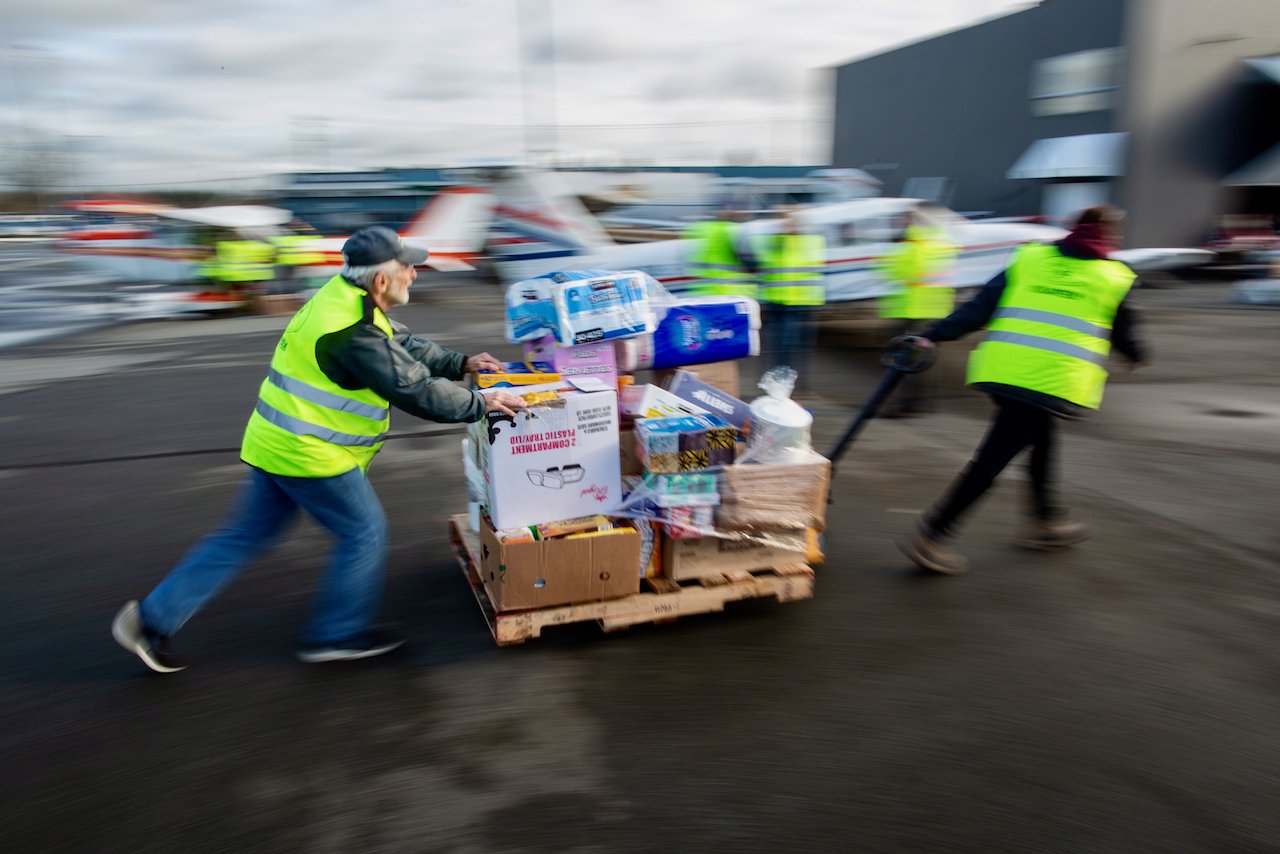
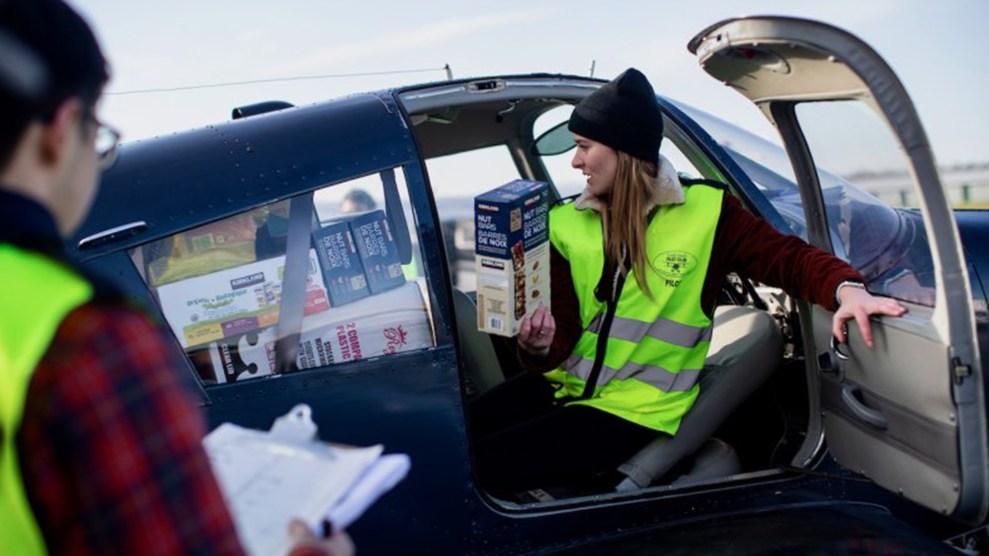
    Pilot Kim Alaric prepares to fly a planeload of food and supplies to Merritt, BC, a town cut off by the recent floods. Jesse Winter/Canada's National Observer

    This story was originally published by Canada’s National Observerand is reproduced here as part of the Climate Desk collaboration.

    It was cold and near sundown at the Langley, British Columbia, airport Friday afternoon as Shaun Bradley Heaps in his signature shorts greeted a team of fellow pilots returning from an emergency mission delivering food and necessities to flood-ravaged southern BC towns.

    “There’s butter chicken and samosas over there,” said the pilot and member of the West Coast Pilots Club, pointing towards the glowing yellow door of a nearby hangar. The coolers filled with curry, boxes of crispy samosas, and chapatis hand-wrapped in aluminum foil were donated by a local Sikh temple earlier that day, he said.

    Inside, roughly a dozen other pilots and volunteers were relaxing after delivering essential goods through rugged mountain passes. For more than two weeks, this volunteer flying squad—Heaps’ brainchild—has collected thousands of pounds of food and other essentials from across the Lower Mainland and used privately owned propeller planes and helicopters to deliver it to roughly 30 communities isolated after last month’s floods. Money for fuel and supplies has come out of their own pockets or from donations.

    November’s devastating floods storms washed out bridges and roads, including this section of Highway 1, cutting off roughly 30 towns and hamlets across southern BC, including many Indigenous communities, from food and supplies.

    Jesse Winter/Canada’s National Observer

    On Friday alone, the crew shipped roughly 9,000 kilograms of goods to places like Merritt, Boston Bar, and Siska. “A bunch of private pilots are doing more than the federal government,” Heaps said as he waited for another flight to land.

    While he acknowledged authorities have provided some support, people in the stranded communities are telling him the provincial and federal governments seem content to leave it to volunteers and donations to meet people’s ongoing needs. “So we’re just keeping on resupplying and resupplying,” he said. “How [else] are they supposed to survive?”

    Held together with plastic wrap, each pile had been carefully built by the volunteers to contain most items on “shopping” lists sent to the group by impacted communities, said Brenda Lennax, the team’s dispatch manager. Lennax runs several small businesses in Maple Ridge, BC. When the floods hit, she told all her clients she was taking time off to help out—even as her own family was evacuated. “I’m supposed to be here,” she explained during a brief lull in the packing frenzy.

    Volunteers rush to pack planes with food and necessities donated by community churches, temples, and mosques. congregations.

    Jesse Winter/Canada’s National Observer

    The first plane was loaded within 15 minutes: Costco-size boxes of granola bars and Kraft Dinner squeezed behind passenger seats. Twelve-packs of water and pop were propped against mega-packs of diapers, baby wipes, and toilet paper. Bags of chicken and livestock feed covered the floor. Fleece blankets filled any remaining crannies before the pilot latched a cargo net over the load to keep it in place.

    “It has all been coming from all the Sikh temples, Sikh communities, Hindu temples, Jews, Muslims—all community churches are donating a ton of food,” explained the group’s supplies and provisions manager Pritpal Singh Sekhorn as he double-checked each load. “(The flying squad) is bringing everyone under one umbrella to reach the flood-affected communities as soon as possible.”

    There are enough donations to fill three airport hangars and a nearby warehouse nearby—and Heaps said more keeps coming. “It’s endless. And if we need dog food, they send dog food. They bring batteries, horse feed…(we) make a phone call and it shows up.”

    Most communities are still weeks or months away from regular road access and people and animals need to eat, so the excess of supplies is unlikely to go to waste. And with Christmas near, the flying squad is doubling its efforts to make the holiday easier for people cut off from friends and family.

    “It’s all about love,” Lennax said.

  • How Biking Calms My Pandemic Angst

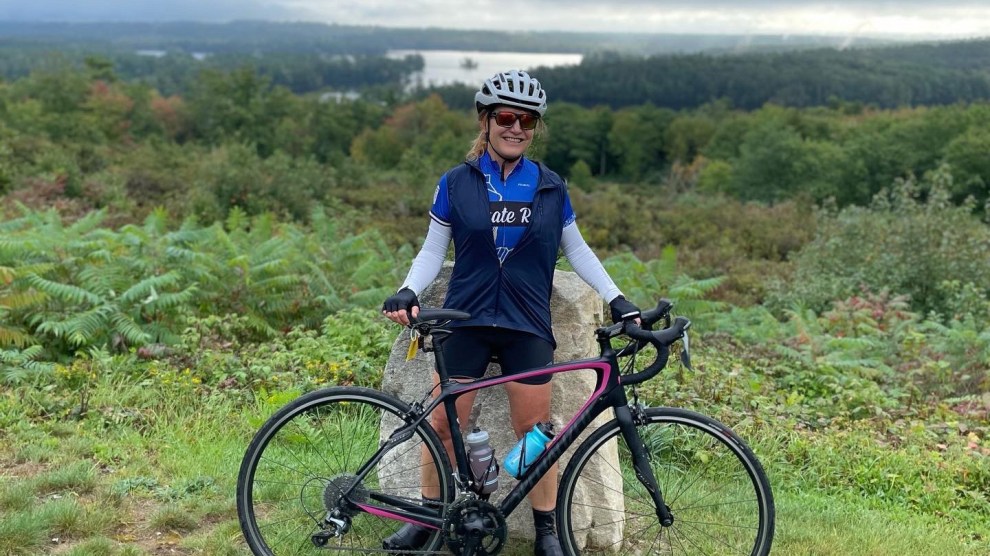
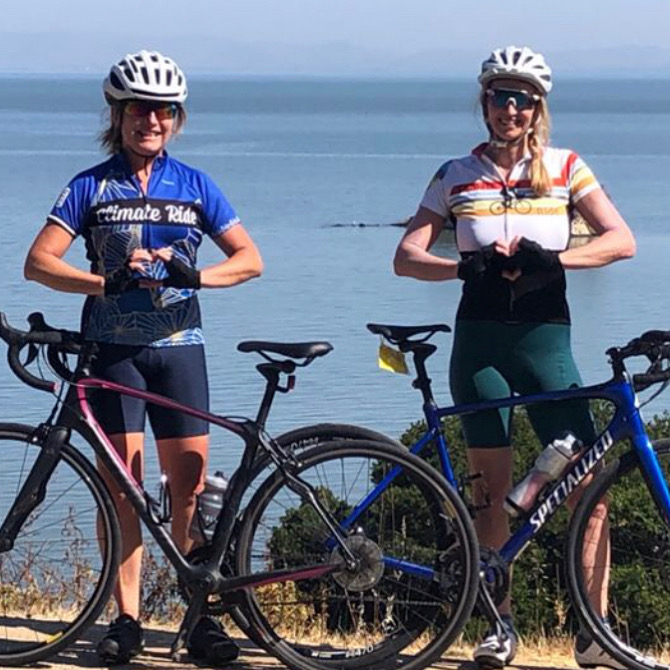
    Mother Jones' director of leadership gifts, Teri Carhart, finishes her first Climate Ride of 273 miles in four days to raise funds and awareness for the climate crisis.@climate_ride

    Last February, in the grips of the pandemic before getting vaccinated, I took stock of my wellbeing, and things weren’t great. I felt depleted. I was slogging through that transitional “sandwich generation” space, which I’m smack in the middle of. Everyone, everything, seemed to signal rising levels of anxiety and stress.

    The January 6 insurrection, mass COVID death—a few within my own circle of family and friends—took their toll. I wasn’t exactly “bouncing back.” I was sleeping poorly and starting each day pissed, sad, or numb. I needed a reset. Gratitude—a healing practice I believe in (my mom calls it “prayer”)—wasn’t enough. I craved something proactive.

    I picked up a nerdy pandemic obsession—kelp harvesting—and buried myself in learning about seaweed’s rich history, feeling buoyed by its carbon-sequestering potential. I kept gravitating to the ocean and a salt marsh for long walks, searching for direction, and somewhere along the way, in my resetting of headspace, I decided I needed an ambitious, joyful goal. So I signed up for a biking fundraiser to support climate advocacy and reset my outlook. I chose a group to support, SeaTrees, whose mission is to restore coastal ecosystems. And I convinced a girlfriend to join me.

    My friend is a school principal who knows that depression and anxiety among kids and teachers have spiked during the pandemic. She needed a recharge as well, so the two of us plunked down deposits and trained for the ride: four days and 273 miles along Maine’s coast. The fundraising was community-building, and I’m still volunteering, but biking a lot—committing to it—was the hard part.

    “Do just one thing”—the wise words of Dr. Ayana Elizabeth Johnson, a badass marine biologist and co-author of All We Can Save, a collection of musings by powerful women sharing stories and poems about how we can turn the tide on climate catastrophe. It’s as much a blueprint for change as a meditation on health and a racial justice primer that shows how much agency we all have when we lift each other up. My favorite observations about biking through the lens of Johnson’s insight:

    Syncing with the rhythms of nature

    After clocking almost 2,000 miles over seven months, I’m less inclined now to obsessively grab my phone, refresh my inbox, and scroll Twitter. Like the tides, our bodies have rhythms, so I pay closer attention to focusing my behavior for fewer interruptions. My bike paths reward me with a familiar flock of turkeys, “my dudes,” whom I’ve watched grow up into teenagers. I’ve seen their caruncles up close, deer trails on steep hills, a reservoir dry up, trees discolor too early from drought. I’ve seen turkey vultures drying their wings at sunrise. A coyote sunbathing. A meadow where jackrabbits play. I wave to my favorite madrone tree every time I pass her by. Like a swimmer timing ocean waves, I choose my routes to take the headwinds so I can flip around with winds at my back. And when I misread nature, another lesson awaits.

    Take your time (if you can). The journey counts.

    Biking awakens my senses: the sun on my cheeks, fog wetting me down. I’ve gotten cold, overheated, dehydrated, tired, but each brings a reminder: take time to feel, smell, and taste it all, and develop a new skill, like leaning into the turns and looking ahead.

    I’m a lefty politically and handedly. Like most lefties, I tend to be more big-picture when it comes to problem-solving, but a few small modifications serve me well when biking—keeping my speed up, tucking into turns instead of hitting the brakes, with my body aligned to the road’s curves. Taking the turns, instead of being taken by them, is possible in areas of life beyond biking.

    Finding your edges

    Our esteemed colleague Jamilah King, upon leaving her MoJo family recently for exciting new challenges, gave us parting advice: Do something every now and then that scares you. For me, that’s hard to do. My reserves run low. So I’ve tried something similar: finding my edges. None of us know what we’re fully capable of until stepping into uncomfortable spaces, forced to rise to the occasion. The edges are usually farther out than we think.

    Sleeping and eating have never felt so good

    No joke: Bike a lot and your sleep will improve, and food is more delicious. Never has a PB&J felt more satisfying, squished up in my jersey pocket. By the time I pull it out midride, it looks like nothing much but it tastes like five Michelin stars.

    Boosting endorphins by resting up and exercising is a nontoxic, sustainable way to improve my mood and mental health, and biking makes me breathe hard and deeply. Hope follows healing, and I understand now why sunflowers bend toward the sun.

    I’m leaving this Recharge in my editor’s hands as I head out for a Climate Ride. I’m excited and a little scared—to ride and to write—in a way that’s as joyful as it is unsettling. I highly recommend choosing a personal recharge, just one that’s good for you and the planet. As Johnson suggests, “Do just one thing.” The momentum and connections can strengthen us all.

    @climate_ride

    —Teri Carhart is Mother Jones’ director of leadership gifts. She’s just finished her first Climate Ride, biking 273 miles in four days to raise funds and awareness for the climate crisis. Send a wave to recharge@motherjones.com.
  • Are These Black Leaders on the Cusp of a New National Movement?

    Mother Jones illustration

    With everything going on these days—we’ll spare you the requisite list of existential crises we’re currently living through—now seems like the perfect time to hear from two leaders who have a revolutionary vision of what this country could be.

    Mayor Chokwe Antar Lumumba is currently the youngest mayor ever of Jackson, Mississippi. India Walton won a historic upset primary against a four-term incumbent and is the Democratic nominee for the mayor of Buffalo, New York. They are from two different cities, over 1,000 miles apart, but both Walton and Lumumba consider themselves to be Black radicals.

    Mother Jones reporter and columnist Nathalie Baptiste sat down with them to dig deep and talk about what’s on their, and our, minds. They both use the term “radical” to describe their politics, but what does that really mean? What do they consider the biggest obstacle to a robust socialist party in the United States? And this wouldn’t be a conversation during the years of the pandemic without finding out what, if any, guilty-pleasure TV shows are on their watch list. (Any Madam Secretary fans in the house?)

    Watch the full conversation below. You don’t want to miss it:

  • Reporters Covering Protests Score New Protections Against Police Interference in California

    In a milestone for press freedom, reporters covering political protests will be allowed to enter areas closed to the general public without interference from cops in California. The law, taking effect in January, extends protections that reporters already have in emergency zones—like wildfires and evacuation sites—to rallies and demonstrations. One would’ve thought this was constitutionally protected practice, but state and local laws shake out variably. Arrests and assaults have recently included a radio journalist shot in the throat by a rubber bullet; a photographer shot at by rubber bullets while wearing a press pass and a visible press jacket; and the zip-tying of a reporter who’d identified himself as a member of the press.

    Opposing the law were police chiefs’ groups and other officers claiming that giving “nearly unfettered access to an emergency” zone could imperil law enforcement. But the measure passed with overwhelming majorities, and reporters will be shielded from citation for refusing to disperse or violating curfew.

    Harm’s way isn’t new to reporters in conflict zones. But the hazards were pronounced during last year’s protests. As Mother Jones contributor Wil Sands documented in a powerful photoessay, he and others have unwillingly joined what they call the Shot in the Eye club. During the uprising, the group’s members—across the country—were hit with “less lethal” ammunition in the face. After losing his retina to a tear gas canister while photographing a protest, he began organizing. His photos are a jolting reminder of what’s on the line.

    One more for press freedom: The Nobel Peace Prize was awarded days ago to two reporters fighting authoritarianism, Maria Ressa of the Philippines and Dmitri A. Muratov of Russia, honored for uncovering corrupt forces hostile to public disclosure.

    Keep more press wins coming to recharge@motherjones.com.
  • 25 Years After “The Score,” the Fugees Reunite to Raise Funds for Global Poverty Relief

    The Fugees (here in 2005) reunite for a 2021 tour to raise funds for global poverty relief.Tabatha Fireman/Redferns/Getty

    It’s hard to believe it’s been 25 years since the Fugees released The Score and 15 years since they last toured together, remaking the realms of rap, reggae, funk, and rock. It’s even harder to believe, if you’re steeped in Fugee fandom, that they’re playing again, crisscrossing the United States, England, France, Nigeria, and Ghana.

    Lauryn Hill, Wyclef Jean, and Pras Michel are back with charitable shows to raise funds in partnership with the poverty-fighting group Global Citizen. “I decided to honor [our album’s] anniversary and the fans who appreciated the music by creating a peaceful platform where we could unite,” Hill says, “and set an example of reconciliation for the world.”

    Reconciliation on a personal level—the three had vowed to stay apart—and at the level of legacy, testing what time does to a singular sound bound up in 1990s America. “Times have changed, but the vibe remains the same,” the Fugees tweeted. And Fugee fandom has never been just Lauryn fandom—she shares the bill with Wyclef and Pras—but there’s a singular way that a love of Lauryn, the prizing of her vocal and lyrical warmth, and the captivation around her growth enamor listeners. Tour dates are here. If you can’t make it, take a spin of “Killing Me Softy” and “Ready or Not.”

    A second Recharge into the weekend: the mesmerizing new video by Explosions in the Sky, the Austin-based post-rock band. It’s a new soundtrack in honor of Big Bend National Park, accompanying a public TV documentary, to lift all moods.

  • A Meditation on Movement—and Homemade Egg Rolls

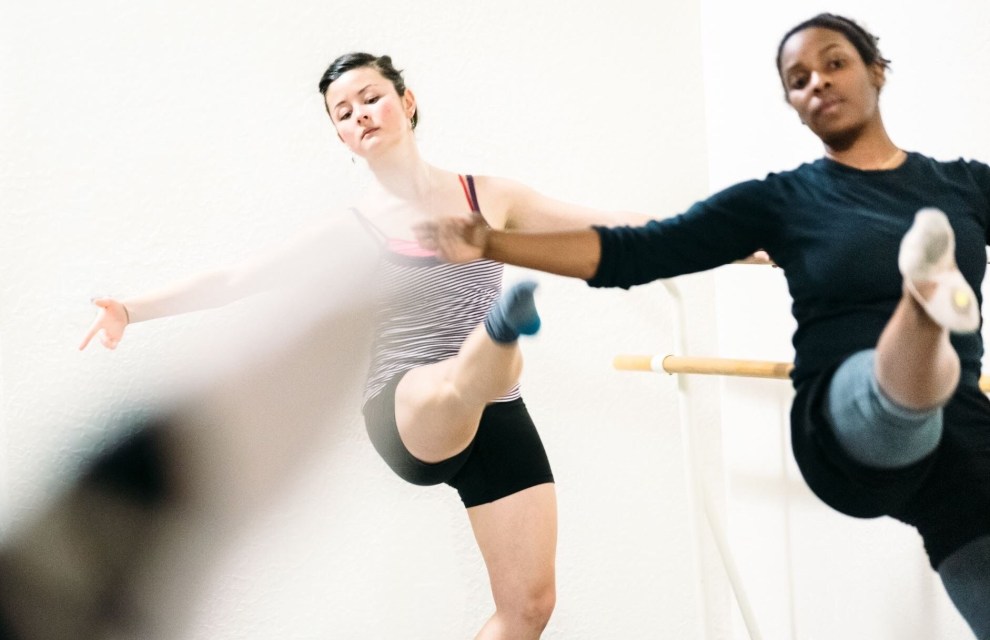
    Cathy Asmus, Mother Jones' membership initiatives manager, in a Motion Pacific studio dance showCrystal Birns

    My partner is running his first marathon in the morning, and somehow I’m the one up late worried that I forgot to pack something—anything!—that I might need while standing around in the spectator area tomorrow. He’s fast asleep while I pace. This is how we typically operate; our temperaments must be hardwired by now. But I wouldn’t miss him crossing the finish line for anything, just as he wouldn’t miss my events, though he’d undoubtedly be less stressed getting ready.

    The spectacle of big events isn’t the draw—it’s the chance to deepen our mutual love of movement, whether it’s a marathon, a dance show, a backpacking trip, or a high-five after our daily workout. Movement builds community for us, when our hard work meets peak celebration.

    So I get ready, triple-checking that I packed both sunglasses and layers—San Francisco is temperamental—and find myself thinking of all the ways that movement sustains me. About how movement, both bodily and political, has changed during the pandemic. How old ways of moving, motivating, and gathering expand and contract.

    Social became solitary as the pandemic halted our hangouts, with Zoom lording over us. So we turned our kitchen counters into ballet barres and slid furniture to clear way for YouTube yoga. But I like to think of our insistence on movement as a small rebellion against the forces trying but failing to stop us.

    Moving is so good for me. I wonder if it is for you. And if you can at all. Here I run into a question of just who can move and who can’t, to whom movement is available and whom it’s denied. We each confront movement’s limitations. But we also get closer to its liberation. Recognizing that makes me all the more grateful for the movement I do have access to.

    Cathy Asmus Crystal Birns

    Movement takes lots of cathartic, freeing forms. We should consciously make more time for it. Count and celebrate your small movements. And if you can’t be moved to move, at least sit back and watch one of my favorite chef-lebrities, Lucas Sin, make egg rolls from scratch. That should get you. I defy you not to watch and feel inspired to make them yourself.

    —Cathy Asmus is Mother Jones membership initiatives manager. Send stories about movement, if so moved, to recharge@motherjones.com.

  • As COVID Rages on, the First Malaria Vaccine in History Gets Approval

    Cristina Aldehuela/AFP/Getty

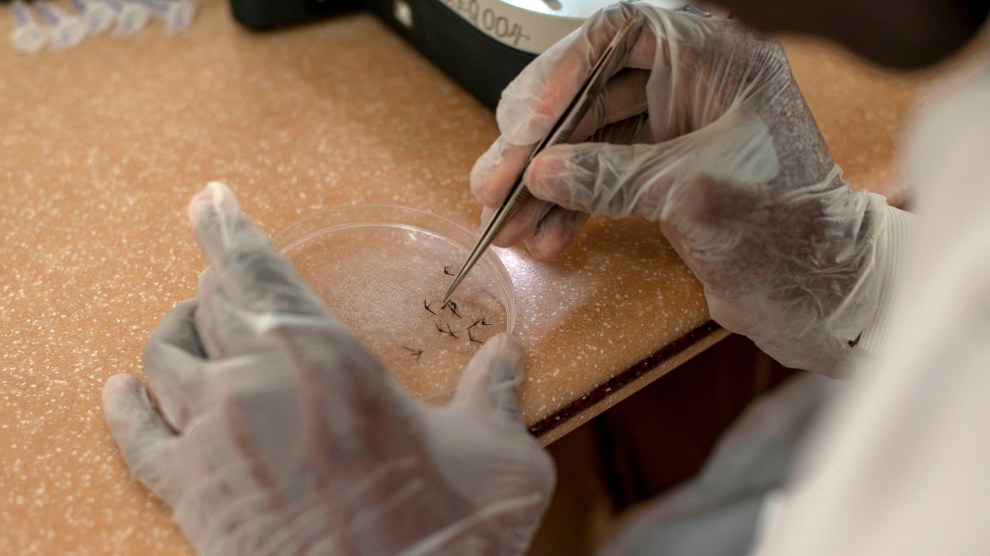
    Good news on the global health front is hard to come by, but the World Health Organization shared a big line of hope today by endorsing the first-ever malaria vaccine. The green light is a gamechanger for one of the oldest and deadliest diseases, which kills half a million people each year, predominantly kids under 5 years old in sub-Saharan Africa.

    The vaccine moves the needle medically and potentially socially—if the rollout is accountable and equitable, a big if. And as COVID consumes wall-to-wall media coverage and eclipses the deadly contagions before it, there’s a welcome note of perspective in marking gains beyond COVID. In a search of MoJo archives, I came across a 2006 headline that asked, “Can Malaria Be Stopped?” The answer is coming into clearer focus.

    The vaccine is not just a breakthrough for malaria. It’s the first for any parasitic disease. Keep an eye on MotherJones.com for broader analysis and updates, and let us know how this could affect your or your family’s lives at recharge@motherjones.com.

  • Jon Stewart, After Six Years Off Air, Launches a New Show on Apple TV+

    Jon Stewart (left) returns to the TV.Fernando Leon/Getty

    We’ll keep this short. Jon “Getting Excited!!!” Stewart, an American comedian, devotee of sandwiches, critic of cats, dabbler in democracy, fanboy of Mitch McConnell, publicist of Tucker Carlson, and haver of plans, is back. His new show, The Problem With Jon Stewart, premieres tomorrow on Apple TV+, free for a limited time, after six years hugging the sidelines in cowering fear of his own shadow as the world collapsed. No pressure. Welcome back.

  • Barack Obama’s Library, the First Digital-Driven Presidential Archives in History, Breaks Ground Today

    Michelle and Barack Obama in May 2016Drew Angerer/Getty

    After a series of starts and stops and a lengthy legal battle over construction clearance, Barack Obama’s presidential library is pressing ahead today. A livestream ceremony is underway at the site of the future archives.

    One catch: The center, as the New York Times reports, “won’t actually be a presidential library. In a break with precedent, there will be no research library on site, and none of Mr. Obama’s official presidential records. Instead, the Obama Foundation will pay to digitize the roughly 30 million pages of unclassified paper records from the administration so they can be made available online.”

    Alongside the center will sit a museum, a sports space, a test kitchen, an art plaza, a kids’ area, and a new branch of the Chicago Public Library. The breaking of ground hits bedrock on levels deeper than just the framing of a foundation. It comes on the heels of four years of Donald Trump’s damage to democracy and a still-going pandemic that’s scrambled all conventions of civic life. Obama’s center is the first in history without a physical archives room, making it a cementing of contrasts; a wager about what transparency looks like.

    Historians are still wrestling with just how transparent any digital archives can be, as Obama himself pondered in his memoir A Promised Land. His library puts to the test the promise of a promise, or as the philosopher Daniel Dennett intones in other contexts, belief in belief: If Obama’s legacy rests on his hypothesis of good governance as a way to broaden civic participation, his library runs that test through.

    Presidential libraries got their start with FDR’s during World War II, when defending democracy against authoritarianism was tested again. Every library since then has busied itself with enshrining a namesake’s legacy by tightly guarding a narrative. See Mother Jones2013 classic “8 Things You Won’t See at the George W. Bush Presidential Library.” But as a culmination of historical firsts, Obama’s center is thoroughly “cause for celebration,” as CNN rightly rejoices.

    Catch the livestream here.

  • “Birthday Under a Canopy”: A Climate Wish From MoJo’s Production Director

    If you’re like me and can’t carry a tune to save your life, so you speak the lyrics of “Happy Birthday” instead of bombing the singalong, there are better ways to celebrate: Ask questions and attend to the person’s answers. Happy birthday to Mother Jones’ production director, Claudia Smukler, who reluctantly agreed to a Q&A:

    Happy birthday, Claudia. What’s in store?

    I’m thinking about trees. Tomorrow I’m headed to the Pacific Northwest and Olympic National Park. After the dry, dusty, smoky summer in the Bay Area, the rainforest seems an inviting landscape to restore my mood. The investigative stories in our just-finished magazine, about carbon capture and agroforestry and climate collapse, bring up a lot for me. As MoJo’s production director, with a long career in magazine manufacturing, I’ve purchased a lot of paper. I have complicated feelings about that.

    We closed the magazine a week ago after a hard sprint, unthinkable without your expert helming of our production and marshaling of pages to the printer. What’s your secret? Caffeine? Music? Throwing darts at our copy editor on the wall?

    I enjoy creating magazines. I know where we need to go and what the endgame is, and guiding the process toward that goal takes energy and skills that I get to refine each time. I’ve been doing this a long time, and while it’s a similar effort every issue, there’s always something new. New staff to train or technical challenges to solve, or a contributor who needs more time. Shit breaks down and the story we thought was in the can at the start ends up being the last to ship—the nature of it. And yet it works. The creative process requires a lot from people, and the core team, each with a specific job, “gets it.” We learn to depend on each other’s skills and professionalism. That’s what gets us through. And the fact that we have a beautiful thing in the end to show for all that struggle.

    Speaking of a beautiful thing to show for struggle, what’s a birthday wish for readers who feel exhausted and drained by the onslaught of corruption at the core of American politics? What can you recommend to stay grounded?

    My birthday wish for Mother Jones readers and readers everywhere is that we make the investment in our species to provide a global standard of care and teach young people to read. Reading requires sustained education for years, community commitment at the highest level, and work to nurture each child’s ability to discover the truth about themselves and the world around them. Reading the news makes me wonder about that commitment. I was reminded recently—while pondering the collapse of Afghanistan and the fate of so many children—of the United Nations Convention on the Rights of the Child. This treaty defined global standards for young people. Basic rights! The UN General Assembly adopted the convention and opened it for signature in November 1989, the year my own son was born. It was ratified the next year. But as of this month, 196 countries are party to the resolution, including every UN member, except the United States. My birthday wish is that citizens of the United States would raise hell till our government makes that basic commitment to children.

    See more of Claudia’s work in our upcoming magazine; subscribe here and send her birthday wishes at recharge@motherjones.com.
  • The Founders of Stop AAPI Hate’s Anti-Violence App Make Time’s 100 Most Influential List

    A few days ago, Time released its annual list of the 100 “most influential people.” As lists go, Time’s has always been a contingent one—as coveted as it is debated and criticized. But this year’s has some absolute powerhouses. Many deserve amplifying on all channels. Among them are the trailblazing founders of Stop AAPI Hate’s reporting tool that tracks surging violence against Asian Americans and Pacific Islanders in the United States.

    No coalition has done more to drive community-based tech solutions during the pandemic to combat assaults and advance restorative justice, the list says. Stop AAPI Hate is “an invaluable resource” not just for reporting and reducing harm but, in some cases, remedying it. The founders—Manjusha P. Kulkarni, Russell Jeung, and Cynthia Choi—launched the portal to cast light on a constant of American life that goes underreported by government agencies and major media. The nonprofit has logged more than 9,000 entries.

    Also on Time’s list are anti-corruption activist Aleksei Navalny, written about by Garry Kasparov; artist Luis Manuel Otero Alcántara, written about by Ai Weiwei; Olympian Simone Biles, written about by Serena Williams; and, because “influential” is the only bar, Tucker Carlson and Donald Trump. You’ll want to sit down for the rest. And it bears mentioning that Time’s prism, for all its transparency in methodology, is just one. Let us know about people in your life whose influence improves your day at recharge@motherjones.com.
  • A Last Laugh: Norm Macdonald Eulogizes Norm Macdonald

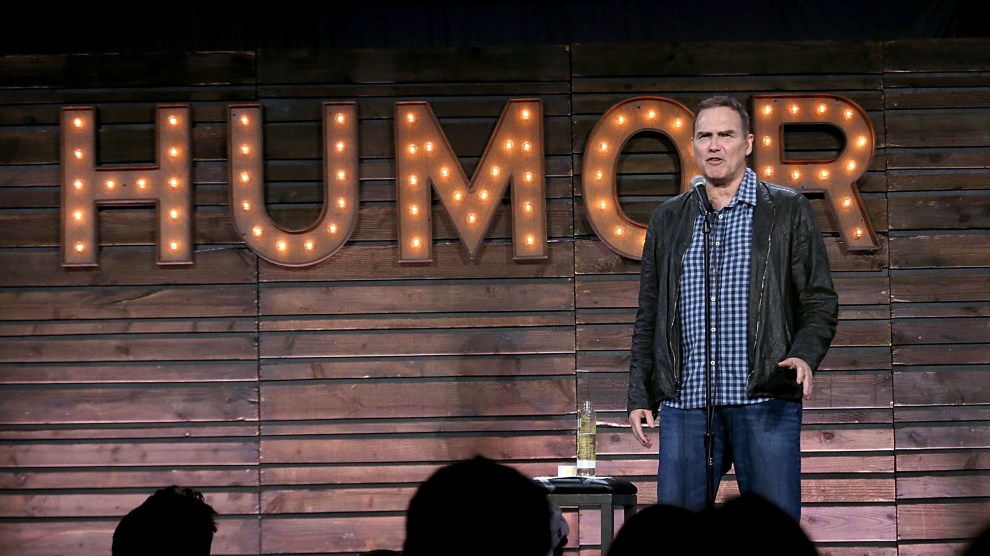
    A non-Canadian set designer misspells the only word they were given.Gary Miller/Getty

    Here’s one. A humourist¹ walks into a bar. He pulls up a stool, orders a banana for the table², tips the bartender, and, 61 years later, checks out, leaving friends and foes, laughs and groans, and coal in his wake:

    ¹The guy’s Canadian.
    ²Norm’s mom is hilarious.

    Share clips, coal, cheese sandwiches, and recharges at recharge@motherjones.com.

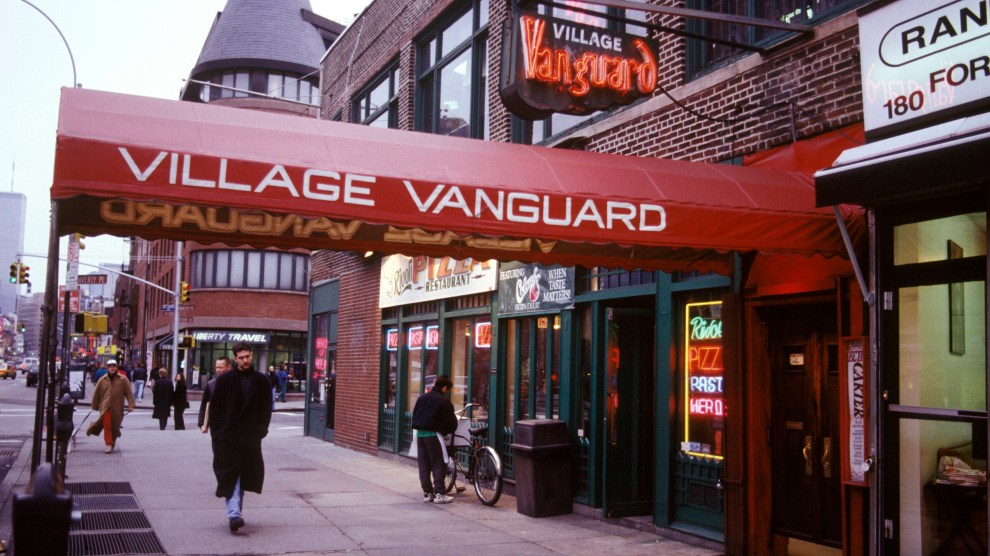
  • After Shuttering for Almost Two Years, the Village Vanguard Reopens to Live Audiences

    Christopher Bierlein/Redferns/Getty

    The epicenter of jazz history in New York City, and an engine of its future, is up and running again. The Village Vanguard seated a live audience last night for the first time since the pandemic started, welcoming listeners with proof of COVID vaccination.

    The historical meaning of the club’s return was marked on its website in a note pointing out that the venue had bounced back similarly in 1947 after 6 million New Yorkers were vaccinated against smallpox in less than a month. The Vanguard hosted a band that year that played the uptempo “Don’t Wait, Gate—Let’s Vaccinate,” an improvisation that, as Billboard reported that spring, “aided the city’s inoculation drive.”

    As he arrived at the club last night, the pianist Jason Moran said, “It’s the season to wipe the rust away with tears,” before taking the stage with Ron Miles’ band. No pianist is more fitting to inaugurate the reopening. Moran, the artistic director of jazz at the Kennedy Center, is a treasure of historical exploration, evolution, and reference; versatile enough to encompass the styles and registers of blues, bebop, hard bop, modernist modes, and impressionistic palettes, and deliberative enough to see improvisation as a form of personal memory.

    Memory is central to jazz. Some musicians bottle and revere it, others obliterate it. But most jazz confronts memory, rarely so movingly as when Moran plays “Gentle Shifts South.” Give that song a listen below. It’s not a new release, but it is timeless, a breathtaking tribute to his grandparents. Overlaying the piano is a track of Moran’s grandparents reminiscing, their spoken speech recalling his lineage. Of all songs on rotation during the pandemic, few approximate the restorative impact of “Gentle Shifts South.”

    Two versions for you, one with his grandparents’ voices and one without. Let us know what you think at recharge@motherjones.com.

  • A Bright Light in COVID News: Vaccine Approval Could Be Near for 5- to 11-Year-Olds

    It’s not a done deal, but relief is on the horizon for children as young as 5 years old, as Pfizer and BioNTech will soon seek clearance for kids’ COVID vaccine use, Reuters reported this weekend. It’s a crucial line of hope for the millions of parents, teachers, and students waiting and wondering as schools return to in-person classes.

    As encouraging as the prospect is, uncertainty surrounds the timeline. The companies hope for clearance by the end of October, two sources told Reuters. Clearance has not yet been sought and the projection is based on the expectation that Pfizer “will have enough data from clinical trials to seek emergency use authorization.” Officials anticipate “the FDA could make a decision on whether the shot is safe and effective in younger children within three weeks of” submitting the data.

    There you have it. Welcome to the week. If you need a second push to get going, far afield of vaccine news, take a tour of the new Substack you’ve all been waiting for: Popping Tins. It’s a canned seafood newsletter to tide you over, the side hustle of the features editor at Vice. Give it a look. Even if you don’t slurp seafood from a can, you’ll enjoy the archival spelunking, aesthetic mapping, dryly funny asides. There are oysters and mussels and cockles and trout, oh my.

  • Take a Minute for 40 Things That Have Actually Gotten Better

    It’s Friday. I’m gonna wager that you won’t agree with everything on this list of what’s “gotten better” in the past 20 years. So, go ahead, order a la carte: On today’s menu is a seasonal assortment of purportedly good things crowdsourced by University of Virginia postdoctoral fellow David Walsh, who’d asked casually on Twitter: “What has gotten materially better in America in, say, the last twenty years?”

    Answers rang in. So many that Reason magazine editor Elizabeth Nolan Brown compiled top entries, from “HIV care” to “cannabis quality” to “home entertainment” to “information access.” Also in the winner’s circle: “bicycling infrastructure,” “digital reading experience,” “automobile efficiency and safety,” “acceptance of neurodiversity,” “restaurant food variety and quality [including vegetarian and vegan],” “cameras,” “digital video,” “smoking rates,” “getting dressed,” “hygiene products,” “being a nerd,” and, uh, an inappropriate one.

    If you can access each.

    As you were.

  • Artists in Louisiana Mobilize on Instagram for On-the-Ground Hurricane Relief

    In the days after Hurricane Ida made landfall in Louisiana on the 16th anniversary of Hurricane Katrina, leaving at least 26 dead and ravaging homes, historical sites, power lines, and cultural spaces, artists began organizing to shore up the staggering holes left by federal and state emergency response. From @IdaSupportNetwork to @IdaSupportNetworkNY, new Instagram accounts reposted requests for aid and material relief.

    The artists connected scores of people with “transportation, housing, and other time-sensitive resources, circulating a spreadsheet of individuals in need and others who can help, as well as running an emergency support hotline,” Valentina Di Liscia reported for Hyperallergic.

    “Our collective experience in the film industry definitely played a part in how we were able to organize ourselves to respond to Hurricane Ida,” New Orleans–based filmmaker Bron Moyi told her about his hand in raising tens of thousands of dollars to donate generators, lanterns, fuel, canned food, and other supplies, along with his colleagues Satie De Gend, Edward Buckles, and Cassandra Rumping. “Assembling a team, delegating tasks, using creativity as a problem-solving tool, and a high tolerance for stress and operating on lack of sleep all to achieve a common goal.”

    A deeper dive here, and share more hurricane-relief recharges at recharge@motherjones.com.

  • Indigenous Hip-Hop Star J25 is the First Native Woman Inducted Into the Recording Academy

    In its six decades of presenting the Grammys, the Recording Academy has never inducted a Native American woman to be a judge, until now. Jezelle Childs-Evans, also known as J25, is the first.

    The Wisconsin-based hip-hop star will help judge submissions for the next awards ceremony, in late January, and she’s seeking the creation of an Indigenous category. Of the academy’s 11,000-plus members, women account for just 26 percent. Childs-Evans says her induction “gives me a chance to be a part of the change in the future of music,” she tells Wisconsin Public Radio’s Elizabeth Dohms-Harter.

    The Green Bay Press-Gazette’s Frank Vaisvilas, who covers Native communities, first ran the story—and WPR’s new podcast takes a deeper dive into Childs-Evans’ lyrics and life in an interview that foregrounds her fight for the return of land. Each song—from “Land Back” to “Indigenous”—excoriates state-sanctioned theft and familiar injustices but also affirms how wide-ranging and creatively diverse Native joy is. Her music enlarges and expands Indigenous identities and experiences beyond a single set of bounds.

    “Native American hip-hop / paving the way and it won’t stop / Aboriginal, flow original, got the red game in the gridlock,” she raps. “Indigenous, strong and resilient / 500 years and we’re still here / We weathered the storm like Trail of Tears / Going hard for my res like I’m Ada Deer / The creator help me see it clear.”

    “I’m just speaking facts / Missing Indigenous women all over the world / gotta put an end to that / We gonna need more leaders to lead us.”

    Her music video for “Indigenous” just had its premiere, and this short montage of ripping beats is a strong chaser.

  • “I Want to Make the Company Work for Me”: What Co-op Power Looks Like

    On Labor Day yesterday, we ran a series of photographs from six regions of the country, each answering an underlying question as aspirational as it is achievable: What does it look like when people are their own bosses? You can see the answers here.

    It’s a striking portrait—commissioned by Mother Jones in collaboration with the Economic Hardship Reporting Project and Solutions Journalism Network—of how co-ops are returning power to workers in North Carolina, Alabama, Vermont, California, and other areas where labor rights is a paramount movement of civil rights. “It’s no wonder,” writes the author, Alissa Quart, “that people are drawn to a model that gives them back some power” in an era of “epic income inequality” and “corporate consolidation and union-busting” that reliably produce “unstable and episodic” work. The interest in co-ops marks a return to what one worker in the series calls making a “livelihood” rather than just earning a paycheck.

    To sustain a co-op, the portrait shows, is to be freer of the grasping moves of top-down profiteers who’d sooner vacation in space on rank-and-file dime and moonwalk in the media than invest more meaningfully in worker safety, security, and health. Give the photos a look.

  • All Right, Let’s Talk About the Poop in the Pit Thing

    Each Friday, we bring you an article from our archives to propel you into the weekend.

    In Santa Cruz, California, earlier this week, the unthinkable happened: Someone pooped in the pit. At a show for Turnstile—who released a new record, Glow On, this week—someone, um, yeah, they took a literal poop in the mosh pit and within the melee the feces was reportedly flung about!

    Turnstile is known for crazy shows. There’s an old Washington Post article about how they wrecked a new venue; that includes a fantastic two paragraphs about moshing/slam-dancing as juvenilia but also beautiful. My initial reaction was basically in that vein of an adult giddily re-finding a single pulsing emotion in modernity: That’s really funny that someone pooped in the pit because poop is funny! Others have pointed out it is unsanitary. Oh, yes, I shake my head. Yes. I see that, too. Poop is gross.

    Here’s my recommendation for how to get through this crisis of “How to think about poop in the pit”: Read more about feces. There’s a lot of stuff in our archives (kinda weirdly) about it. We’ve got explainers on whether it’s OK to poop in the woods; long pieces on fecal transplants; and an old report about how there is poop in hamburger meat(!). Another you should read about: bidets.

    So, first, everyone listen to the Turnstile album. Former MoJo writer Matt Cohen and I were chatting about it and realized both of us listened to it over a dozen times in less than 48 hours. (As a local DC guy, he sent me the WaPo link.) This record is an unstoppable machine. It’s like I am a 13 years old again and just playing the same music until it’s engraved in one part of my brain instead of a memory of my friends and/or family. A good analysis is over at Pitchfork, about how the album fits into the broader hardcore landscape—and what it means. Or, you know, just watch their live sets, especially the one in Baltimore, filmed for some reason like someone teleported back to the 1990s.

    And read our genuinely interesting and high-impact coverage about poop while you do.

    I hope that helps you out when thinking about the national crisis of Poop in the Pit 2021. I’m sorry I said poop so much.