Hamed Aleaziz

Hamed Aleaziz

Editorial Fellow

Hamed has reported for an English language magazine in Jordan and Tehran Bureau/PBS Frontline, and his work has appeared in Foreign Policy. Outside of Mother Jones, Hamed reads about issues in the Middle East, plays basketball, and obsesses about sports.

Get my RSS |

The Secret Torture Memo Cheney Didn't Want You To See

| Thu Apr. 5, 2012 12:20 PM PDT
Dick Cheney torture memo

In 2006, Philip Zelikow, an adviser to then-Secretary of State Condoleeza Rice, wrote a secret memo warning his colleagues that many of the Bush administration's enhanced interrogation techniques were likely illegal. Zelikow didn't speak publicly about the memo—the smoking gun that the Bush administration was warned by its own staff about legal problems with its interrogation program—until 2009, when he revealed its existence in a blog post for Foreign Policy. But when Zelikow testified to Congress about his warning, his classified memo was withheld, and two unclassified documents were released in its stead. Zelikow told Mother Jones in 2009 that Vice President Dick Cheney's office had attempted to destroy any evidence of the classified memo, but that some copies might survive in the State Department's archives.

It appears that Zelikow was right about the archives: the secret memo, which he called a "direct assault on [the Bush Justice Department's] interpretation of American law," was finally released by the State Department on Tuesday, three years after the National Security Archive and WIRED reporter Spencer Ackerman (then at the Washington Independent) first requested it under the Freedom of Information Act. You can read it here:


In 2009, when Zelikow told Mother Jones that the "White House attempted to collect and destroy all copies of my memo" and that he suspected Cheney's involvement, he noted that the vice-president's office was not officially allowed to do such a thing. "They didn't run the interagency process. Such a request would more likely have come from the White House Counsel's office or from NSC staff... It was conveyed to me, and I ignored it," Zelikow said.

Neil Kinkopf, who worked for the Justice Department under the Clinton administration (and is now an Obama administration official), told Mother Jones in 2009 why Cheney might have wanted to get rid of the document: "People in the White House—Dick Cheney for example; David Addington, his legal adviser—didn't want the existence of dissent to be known. It's not hard to imagine David Addington playing very hardball internal politics and not only wanting to prevail over the view of Zelikow but to annihilate it. It would be perfectly consistent with how he operated."

Zelikow told WIRED on Wednesday that he believes the Bush administration's harsh interrogation techniques constituted a "felony war crime."

Advertise on MotherJones.com

Romney Adviser Blasts Government Investigation, Says Bring It On

| Mon Apr. 2, 2012 3:45 PM PDT
MEK rally on August 26.

Last December, Mitt Romney claimed that he had never heard of the Mujahedin-e-Khalq, an Iranian dissident group that's drawn prominent American defenders despite being labeled by the State Department as a terrorist organization.

Romney's ignorance was surprising: Mitchell Reiss, his foreign policy adviser and a known Mujahedin-e-Khalq supporter, had spoken at a MEK rally just the previous weekend.  Now it's another adviser to his campaign, Michael Mukasey, who's voicing his support for the MEK. At an event in Paris last week, the former Attorney General spoke passionately against a recent Treasury Department investigation into the terrorist group.

Last month, Treasury delivered subpoenas to speaking agencies that count several high-profile figures and MEK advocates as clients, including former Pennsylvania Governor Ed Rendell, former FBI director Louis Freeh, former Department of Homeland Security head Tom Ridge, and former chairman of the Joint Chiefs of Staff Hugh Shelton. The subpoenas demand payment records from speeches given by the figures—records which might detail MEK payments to its backers. 

Wondering If Your "Jihadist" Friend Is With the FBI?

| Tue Mar. 20, 2012 3:30 AM PDT
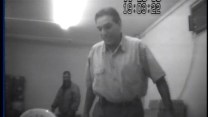
Shahed Hussain in an FBI surveillance video

Shahed Hussain, a long-time FBI terrorism informant Mother Jones profiled last year, has surfaced again—but this time, Google appears to have foiled his effort to identify a new target. Khalifah al-Akili, a 34-year-old Pittsburgh man, says he was approached by Hussain and another informant in January. Al Akili told the Albany Times-Union that after Hussain "repeatedly made attempts to get close" to him, he googled them. He found Trevor Aaronson's August 2011 Mother Jones expose about the FBI's massive network of undercover terrorism informants and confronted Hussain on the phone. After al-Akili explicitly asked if he was an informant, Hussain hung up the phone. Now al-Akili awaits trial on a gun charge (but no terrorism charges).

Al-Akili says became suspicious of Hussain because he was friendly, dropping in at al-Akili's house and, after al-Akili lied that he had a sick family member, dropping off a get-well card.

Hussain's involvement in two previous FBI counterterrorism cases led to convictions: James Cromitie, a 45-year-old former Walmart stocker from Newburgh, New York, was sentenced to 25 years in the headline-making Bronx synagogue plot. Yassin Aref and Mohammed Hossain of Albany, New York, an imam and pizza shop owner respectively, were each sentenced to 15 years for, among other charges, conspiracy to provide support to a terrorist organization with which Hussain claimed to have connections.

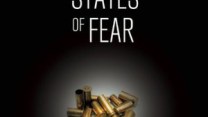
Book Review: "The United States of Fear"

| Wed Feb. 22, 2012 4:58 PM PST

Tom Engelhardt, who founded and runs the popular website TomDispatch, is a politician's worst nightmare. In his new book, The United States of Fear, Engelhardt criticizes the right and the left in equal measure, challenging both former President George W. Bush and President Barack Obama for the wars they have engaged in and the costs associated with those wars. Engelhardt's popular columns are republished on websites like ours, and his own site was borne out of the post-9/11 haze. That's according to Engelhardt himself, who told fellow TomDispatch writer Nick Turse in 2006: "It was more an endless moment—those couple of months after 9/11 when, for a guy who was supposedly politically sophisticated, my reactions were naive as hell. I had this feeling that the horror of the event might somehow open us up to the world. It was dismaying to discover that, with the Bush administration's help, we shut the world out instead."

Engelhardt takes a hard look at what he calls the decline of the "American empire." He draws a comparison between the path that the United States has taken over the past two decades and that which led the former Soviet Union to destruction: "In a far wealthier country, another set of leaders, having watched the Soviet Union implode, decisively embarked on the Soviet path to disaster." He describes how the United States of today and the former Soviet Union share one key characteristic: an unreasonably massive military budget. Engelhardt traces the US path from the '90s, when he says the United States turned into a "self-intoxicated" country, intent on solving the world's problems even if bleeding itself in the process.

Advertise on MotherJones.com

Is a Top US Cop Helping "Reform" Bahrain's Police?

| Wed Feb. 15, 2012 4:10 PM PST
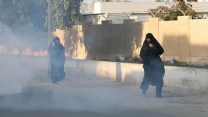
Tear gas used during the Bahrain protests in Feb. 2011.

A veteran US law enforcement official recently began advising the Bahraini police, who on Tuesday engaged in another harsh crackdown as protesters took to the streets. John Timoney, fomerly Miami's police chief, agreed in December to join Bahrain's effort to reform its police; a brutal government response to protests there last year included fatalities. The tiny Gulf Kingdom also recruited a former top police official from Britain to help with the process. Timoney has since claimed that Bahrain is changing its police tactics for the better. Tuesday's events cast doubt on that, with protesters once again facing tear gas, stun guns, and armored vehicles aimed at stifling the demonstrations.

The police attempted to prevent protesters from even entering Manama's Pearl Roundabout, the site of mass protests and brutal police response last year. One protester described the use of tear gas to Reuters: "They fired straight at us, they weren't even shooting in the air." Andrew Hammond, a reporter at Reuters and one of the only journalists who covered yesterday's protests, wrote on Twitter that police "chased everyone down road, firing straight at ppl fleeing." Some protesters reportedly threw Molotov cocktails and rocks at police, who arrested at least 25 protesters in Manama. More than 100 protesters were injured. In Shia villages, Bahraini police reportedly even entered homes in hopes of finding protesters. Opposition activist Mohamed al-Maskati described the scene to Bloomberg: "They are storming houses suspected of harboring demonstrators, using tear gas, closing roads and arresting people."

Wed Feb. 22, 2012 4:58 PM PST
Thu Dec. 15, 2011 5:06 PM PST
Mon Dec. 12, 2011 1:19 PM PST
Tue Oct. 11, 2011 2:00 PM PDT
Wed Sep. 28, 2011 12:19 PM PDT
Mon Sep. 26, 2011 9:50 AM PDT
Sun Sep. 11, 2011 6:45 AM PDT
Mon Aug. 29, 2011 3:00 AM PDT
Thu Aug. 25, 2011 3:40 AM PDT
Sat Aug. 20, 2011 1:33 PM PDT
Tue Aug. 9, 2011 1:29 AM PDT
Mon Jun. 20, 2011 10:04 AM PDT
Fri Jun. 17, 2011 3:45 PM PDT
Thu Jun. 16, 2011 3:23 AM PDT
Mon Jun. 13, 2011 4:09 PM PDT
Fri Jun. 10, 2011 10:46 AM PDT
Wed Jun. 8, 2011 10:46 AM PDT
Fri Jun. 10, 2011 10:16 AM PDT