In The Blogs

Cheap Parking

CHEAP PARKING....One of Matt Yglesias's hobbyhorses is the scourge of cheap parking, and today he explains how mispriced parking can hurt downtown businesses:
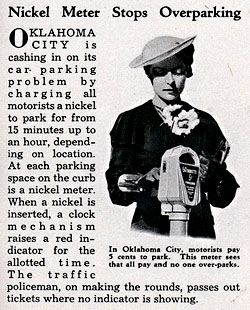
On the one hand, meters might be so expensive that there are just tons and tons of vacant parking spaces haunting downtown. In this case, the high price of parking is keeping customers away from stores and the meter rates are [too] high. On the other hand, meters might be so cheap that convenient street parking is rarely available and drivers leave their cars parked for long stretches of time. In this case, the low price of parking is creating parking shortages and low turnover, keeping customers away from stores.

As a born and bred suburbanite, my reaction naturally is, "What are these parking meters you speak of?" Here in The OC, when you want to park your V-8 Cadillac Escalade, you just cruise through a vast expanse of asphalt until you find a suitable spot. What's to meter?

But I guess you city slickers do things differently, don't you? So here's my question: what's the best way to figure out a market price for parking? Surely someone has done this, haven't they? Electronic meters that adjust pricing to different times of day? Experiments with different prices? Studies of how many open spaces there are at different times and places? What? There must be some clever answer.


image
image
Get Mother Jones by Email - Free. Like what you're reading? Get the best of MoJo three times a week.
Comments
no profile pic for comment author

San Francisco is considering 'demand' based fees for parking.

http://www.smartgrowth.org/news/article.asp?art=6299&State=5&res=1280

However, claims that this will ease parking woes aside, it seems to me more focused on raising revenue.

On a similar note, the Public Transportation is considering raising the cost of tickets during 'peak' rider times ? again, under the guise of managing the number of riders, but the fact that it would like raise revenues seems to be the primary benefit.

no profile pic for comment author

I actually just read (and reviewed) a book that touches on this: Tom Vanderbilt's "Traffic." He cites a study suggesting that 15 percent of parking spaces should be available at a given time. Any more, and parking's too expensive. Any less, and it's too cheap.

As it stands, engineers have found that anywhere from 7 to 85 percent of cars in city traffic are looking for parking spaces at a given time. Increasing the price of parking should seriously reduce traffic by decreasing the number of cars driving in circles.

no profile pic for comment author

Robot chauffeurs never need to park.

no profile pic for comment author

Out here in Gomorrah-by-the-Hudson, our reliance on meters is secondary. Our primary source of parking control is private garages, who change their rates throughout the day to maximize their revenues.

We also have some street parking; some metered, some "free." To minimize the moral hazard of street parking, we maintain a crack staff of crackheads, who randomly break into street-parked cars.

no profile pic for comment author

There must be some clever answer.Public transit?

no profile pic for comment author

Yeah, increase the cost of parking, but then use that money to increase the amount and quality of public transit!

no profile pic for comment author

Shoup at UCLA. The High Cost of Free Parking. He prefers electronic meters that vary in price depending on demand at a particular location similar to SoCal's HOT lanes.

no profile pic for comment author

Electronic meters that adjust pricing to different times of day?

Why stop there? Network the meters and charge according to real time demand!

no profile pic for comment author

My birth town, which I visit once a year or so, is Logan, UT, a university town of 50,000 of so in the mountains of far northern Utah. About thirty years ago it was facing the bane of many small towns -- big box stores growing on the outskirts that were killing the old downtown. Today the downtown is filled with a variety of stores, an organic bakery, clothing boutiques, a used bookstore, ski shops, a coffee house for the alternative population, long established jewelry stores -- a mini- indoor mall with restaurants in the long-closed Penney's. You name it. One way the city council made it viable is to take out all the parking meters. The town's not big enough to warrant a parking garage, but you can almost always find parking.

Oh yeah, and there's a free city bus. It doesn't run as often as one might hope, but it's there. And for seniors who need to get to medical appointments and procedures there's a shuttle that takes them to and from their front doors. I have elderly relatives who depend on the service.

no profile pic for comment author

How about running it like a reverse auction (I think that's the term I'm looking for). Each meter should be programmed to start out at some price. The longer it remains unused, the lower the price until it drops to zero.

That way, all the unused parts of town will have free parking and the heavily used places will have at or near the maximum. You could also cull a lot of information about parking habits and so forth by looking at the data from all the meters.

no profile pic for comment author

Stand:

Interesting...

So if you zip into a spot right after someone leaves you'll pay the maximum (as long as your meter is smart enough to not grant excess minutes to the next car).

Of course, you still need to know what the maximum is. Also, meters would have to have some way of clearly displaying their price to potential parkers.

no profile pic for comment author

"Electronic meters that adjust pricing to different times of day?

Why stop there? Network the meters and charge according to real time demand!"

Exactly. Pick a percentage of spots you want to be free, say the 15% number. Network the meters in a nearby area together (or network them all together but analyze the availability by a 4-6 block radius from the meter in question). Whenever the availability goes below 15% the price trends up. Whenever it goes below 15% the price trends down.

Ideally you'd put your card at the meter and you'd get charged at the end, but so long as the maximum meter time is less than a half a work day, you shouldn't get too much rushing to the spots even if you fix the price when the person pays at the beginning.

no profile pic for comment author

Ft Worth, Texas revitalized its downtown over the past 20-25 years by building a lot of parking (an enormous garage, several lots, many metered spaces) and making all that parking free on nights and weekends. Downtown is now as much of a destination for shopping or movies &c. as is the mall.

One dynamic one has to take into account in many cities other than Ft Worth (where few people as yet live downtown) is the balance between city residents who need to find places for their cars pretty much permanently, commuters who have predictable M-F needs, and visitors who would really like to get out and spend money on nights and weekends if they could only stop their cars somewhere. That's a hassle in many cities that have mixed residential and business districts, Manhattan being the archetype.

no profile pic for comment author

I'm on the page with Steve. I work in my downtown.

I take the bus, dodge the meters and the $16-$20 daily fee at garages.

If I want to shop, I go home and drive someplace with free parking. Anything available in any downtown is available somewhere else that has free parking.

Why on earth would I pay to park?

I guess this means I think Tim Morris is spot on. Free parking on nights and weekends will help a lot. Cities need to realize that they are in competition for consumer dollars, and free parking is one big edge that suburban malls have.

no profile pic for comment author

I work in one of the most parking scarce areas outside of NYC, DC near Capital Hill. There are meters and they are clearly priced too low. The only time you will find an empty space, short of dumb luck, is before 7 am and after 9:00 pm. There is already a market mechanism, with modest adjustments, that can help fix the price of parking. Any number of parking garages in the area charge anywhere from $5-10 for the first hour. The price dropped significantly after the evening rush hour. DC should increase the amount charged--say $4-5 per hour--and vigorously enforce its maximum parking time to ensure turnover and prevent longterm squatters. Of course the price can drop during early morning and evening hours. Already there are coinless meters operating in nearby Arlington that can accomodate these prices without requiring a bag full of quarters.

no profile pic for comment author

BTW, our downtown meters charge $.25 per 15 minutes.

no profile pic for comment author

Dave,

So if you zip into a spot right after someone leaves you'll pay the maximum (as long as your meter is smart enough to not grant excess minutes to the next car).

It's probably too complicated to make the meter this smart. Of course, the way it works now, I can take the minutes left over by a previous parker, but it often isn't many minutes. Any additional money I put in would give me minutes at the maximum rate.

Of course, you still need to know what the maximum is. Also, meters would have to have some way of clearly displaying their price to potential parkers

I think you'd only need the latter. As a potential parker, I don't care what the maximum rate is, only what I need to pay now. The meter should prominently display the current rate.

Another benefit to reverse auction meters is that you potentially have a great deal of control over parking behavior via manipulation of the two variables; the maximum rate and the rate of decrease of the rate.

no profile pic for comment author

I hate meters. They deter me. In fact, even cheap metered parking tends to keep me away from shops, because I don't always have change on me or in my car.

I know there are technological solutions to this, but those tend to irritate me even more.

Centralized parking kiosks cause people to pay twice for the same time (one person departs a parking spot having used less than the purchased time, but you can't use the balance).

Debit card machines are an excuse to ratchet up pricing.

If the problem sought to be solved is overparking, why not just enforce time limits? Oh yeah, that's NOT really the problem. The problem is municipal revenues.

no profile pic for comment author

As Matt Yglesias ever met a regressive tax policy he didn't like? Because metered parking/fast pay lanes/keeping the working class out of cities always seem to be high on his list.

Yes, we need to make the city safe for the rich single urban young like Matt Yglesias, Harvard Kid.

no profile pic for comment author

Why stop there? Network the meters and charge according to real time demand!

Houston is doing this. In fact, if you want, you can hang out at a meter and get free wifi. We may be the first city to see the homeless with laptops in their shopping carts

no profile pic for comment author

So if you zip into a spot right after someone leaves you'll pay the maximum (as long as your meter is smart enough to not grant excess minutes to the next car).
It's probably too complicated to make the meter this smart.

-------

Actually not any more. The meters in my city (Calgary) are not indivualized. There is a payment meter on one post for a particular zone of parking spaces. You input the amount of time you want and your licence plate number. So the time isn't transferable (unless someone steals your plates).

no profile pic for comment author

I'm liking some of these clever ideas. I wonder, though, if the reverse auction meter would entice some people to guard a meter but not park there to allow the fare to drop? Maybe sit on their car for fifteen minutes before paying the meter?

I'm not a big fan of not doing something because of potential problems that may never arise, I think it would be worth doing this on an experimental basis. Also, I think the free wifi is a great benefit to people living out of their cars. (that was tongue in cheek)

Still, they could have netflix over the net and watch movies.

no profile pic for comment author

San Francisco is considering 'demand' based fees for parking.

http://www.smartgrowth.org/news/article.asp?art=6299&State=5&res=1280

However, claims that this will ease parking woes aside, it seems to me more focused on raising revenue.

On a similar note, the Public Transportation is considering raising the cost of tickets during 'peak' rider times – again, under the guise of managing the number of riders, but the fact that it would like raise revenues seems to be the primary benefit.

no profile pic for comment author

Tripp,

Sure you could sit in your car and let the meter run down, but how valuable is your time? Presumably, you parked there because you want to get somewhere. Is it worth it to sit around and wait for the space to get cheaper? Maybe, but each person will make that decision based on their situation.

Another couple of benefits of reverse auction meters:

No networking of meters is required. Each meter is independent. Less stuff to break, which is important for something like a meter.
Rates automatically adjust themselves as a function of time. At night, all parking is free. At peak times, it is the maximum (on average).

I think the regressive taxation argument is valid but fairly weak in this case. That's my opinion though.

no profile pic for comment author

our small college-city keeps building parking garages that are cheaper than the meters and you can get a shopping stamp that will reduce the price even more. Nevertheless, people continue to complain there's not enough parking and fees are too high and etc. My husband continues to drive around and around looking for a street spot while I plead "let's go to the garage," and complaining about tickets is a common student pastime. I think there are some cultural and psychological considerations involved

no profile pic for comment author

Kevin: "Here in The OC, when you want to park your V-8 Cadillac Escalade, you just cruise through a vast expanse of asphalt until you find a suitable spot. What's to meter?"

Well, call me a cynic if you like, but I find it ironic that you guys in the OC can provide yourselves with plenty of free parking, but can't build a proper vast expanse of asphalt and call it a sorely needed second airport.

no profile pic for comment author

BTW, the term I used above was reverse auction. Wikipedia tells me they are also called Dutch auctions.

no profile pic for comment author

http://newsblogs.chicagotribune.com/clout_st/2008/12/city-parking-me.htm...

"Rates for most city parking meters will increase to $1 an hour starting Jan. 1 as a result of Mayor Richard Daley's deal to lease the spots for $1.1 billion to a private firm.

Two-third of the city's meters now cost 25 cents an hour, but once the paperwork is finalized, any metered spot costing less than $1 per hour will increase to $1 next year, city officials said today. And by 2013, those same metered spots will cost $2 an hour, according to City Hall.

The most expensive meters, which are found in the Loop, cost $3 an hour now. They will increase to $3.50 an hour next year and $6.50 by 2013."

no profile pic for comment author

A couple of you have hit on the real problem in some areas and that is that parking meters and laws, and the enforcement thereof, are designed in many areas not to encourage car turnover or provide parking, but to raise revenues for the city through meter fees and ticketing. A lot of these ideas are clever and may work, but they don't solve any problem SOME local officials feel need solving.

no profile pic for comment author

Shoup's the guru:
http://shoup.bol.ucla.edu/

no profile pic for comment author

Only one commentor, I think, has mentioned a crucial second variable: maximum times. After all, low rates and short maximum times may keep spaces open as effectively as higher rates, for certain purposes. Near a movie theater, you can avoid packing at showtimes by making some spaces one-hour maximum, independently of the cost-per-hour.

A really smart meter network might adjust times as well as prices -- though there's a problem in that the times should be clearly visible to someone DRIVING by, without having to peer into the meter. But maybe a color-coded button on top of the meter to indicate the time available? Or use a central meter for a street, and it display cost/time prominently.

When turnover is high, the maximum time could also drop, while the price went up. As demand declined, times could go up, and prices down, in various combinations optimized to keep some spaces open.

I have a hunch one could program the meters autonomously, as well, rather than central network and control, if done right -- or at most, have small local groups of meters talk.

Essentially, depending on how quickly nearby spaces were turning over, a meter might decide to start by offering a short time, then expand its time if turnover is low nearby, but too many spaces are empty; or lower its price if turnover is high but too many spaces empty.

Gosh, I had better patent this!

no profile pic for comment author

I would go in favor of trial and error. Go ahead and change prices in every block the market "clears" (Roughly, supply equals demand, how much "slack" to give depends mathy and boring details).

Since you're making price changes dependent on time of day and day of week, it'll take a couple months of testing before you get near the optimal price, but it's not to hard to show that every price change you make will be welfare improving.

no profile pic for comment author

I like the way my city (San Luis Obispo) handles parking downtown. There are metered spots on the main streets (2 hour limit, $1/hr on the busiest streets downtown, as well as public garages a couple blocks away that are free for the first hour and .75 for subsequent hours.

The first hour free garages encourage people to come downtown for a meal or a quick shopping trip, and not have to worry about being cited if they stay beyond that first hour.

no profile pic for comment author

Oh come on. I recall that on PCH by the Ferrari dealership and the Rusty Pelican and all down the Balboa Peninsula there are plenty of meters.

no profile pic for comment author

One thing that's being overlooked is how to control maximum time parking. Europeans limit time in some free parking spaces with a special card where you set the time you parked and leave it on your dash for the meter reader to see. This lowers the cost to the city, since the drivers have to get an approved parking time card.

Another thing is that individual meters are disappearing. Instead, a length of street is served by one meter that you feed with coins, and it prints out a stub you then place on the dashboard where the meter readers can see it. That means one device can serve an average of twenty parking slots, and less individual meters to maintain. The stub print meters are also "smart", as most parking near where I live is metered only during business hours: if you overpay, the time carries over to the next metered time period.

I think Americans should adopt more solutions like this. Europeans (especially Germans) have more experience in making auto traffic adapt to limited space and balancing pedestrian and motorised traffic needs.

no profile pic for comment author

Why don't we connect all city parking lots to the web and have navigation computers pick and reserve the parking spots (no queueing).

The price could be uniform (it is irrelevant to irregulars) but regular parkers with permanently reserved places need to pay more.

no profile pic for comment author

Here in downtown Boston, an overtime parking ticket is $25; most parking garages in the area charge $30 and up. We look on those parking tickets as a way to fund city services.

no profile pic for comment author

The subway is awfully crowded, and slower, at rush hour - should we charge more during rush hour to ease the load there too?

I guess making downtown parking available only for the rich is ok as long as that revenue is funneled directly into excellent public transportation.

no profile pic for comment author

Kevin,

You must read The High Cost of Free Parking, by Donald Shoup.

http://www.amazon.com/High-Cost-Free-Parking/dp/1884829988

It's policy discussion that'll make you want to Shoup!

no profile pic for comment author

Logan, UT

a coffee house for the alternative population

You mean, caffeine-consumers?

ESCANDALO!

Post a comment
Alternately, you may login to or register an account
The content of this field is kept private and will not be shown publicly.
  • Web page addresses and e-mail addresses turn into links automatically.
  • Allowed HTML tags: <a> <ul> <ol> <li> <blockquote> <img>
  • Lines and paragraphs break automatically.

More information about formatting options


Jail.org - Inmate Search
Criminal records, instant public records & people search & current court records. www.jail.org

U.S. Public Records Search
Search County & State Court Records, Criminal records, Vital and Adoption Records www.PublicRecordsInfo.com

Records.com - People Search
Public Records and Background Checks. Instantly Search Criminal Records, Addresses and Court Records www.Records.com

Court Records & County Records
Find Instant Public Records, Criminal Records as Well as County Property Records Search. www.PublicRecordsIndex.com

Goodbye AIDS!
A former AIDS patient reveals the HIV/AIDS deception

NUDISM LIFESTYLE: FAMILY RECREATION
Nudist Family Activities DVDs Discover the joys of nude family life. From holiday parties to nude pageants, all ages enjoy being nude.

Support Independent Artists
Amazing art, crafts, apparel, paper-goods and more. A carefully curated selection of sundries since 1999.

FREE CONNECTIONS FOR GREEN SINGLES
Meet progressive singles in the environmental, vegetarian & animal rights community who share your values