In The Blogs

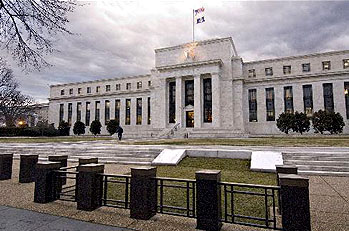
Chris Dodd vs. the Fed

Felix Salmon has a good rundown of Chris Dodd's proposed regulatory reforms, and overall he finds them considerably better than the proposals that came out of the Treasury.  But on one point he thinks Dodd has it wrong:

The Agency for Financial Stability is the agency charged with monitoring systemic risk — a job which under Treasury’s proposal would be given to the Federal Reserve. On this I think I have sympathy with Treasury: the Fed in general, and the New York Fed in particular, is better placed to monitor these risks than a brand-new agency with no direct ability to supervise banks or to break them up. A giveaway appears on page 3 of the discussion draft:

"The Agency for Financial Stability will identify systemically important clearing, payments, and settlements systems to be regulated by the Federal Reserve."

Clearly, the Fed is going to play a necessary role here, and it’s not exactly rocket science to identify key clearing and settlement systems. So why take that job from the Fed and give it to powerless technocrats in Washington?

I think I'll take Dodd's side here.  As Felix says, there's no question that the Fed is going to have a major role here no matter what: it's just too big and too central to the banking system not to.  But there are at least a couple of big reasons not to give it unfettered authority.  First, the Fed has demonstrated pretty conclusively over the past few years that it's too close to the banking industry, and too invested in its success, to ever be objective about the broad level of risk in the banking system.  Second, pronouncements from the Fed are too powerful.  The Fed would (rightly) be very reluctant to make public statements about systemic risk for fear of sending markets into a tailspin.  So it wouldn't.

The problem with Dodd's Agency for Financial Stability, of course, is that it might end up with a fairly limited amount of substantive power.  But that's not entirely a bad thing as long as it has reputational power.  Standing clearly outside the banking system would likely help it develop a reputation as an honest broker that demands attention — or, at very least, a counterweight to the institutional and industry-centric judgments of the Fed.  That's no bad thing.

Overall, it's a mixed bag.  On balance, though, I think there's a strong need for a non-Fed voice, one that considers systemic risk to be its primary mission, not its 17th most important one.  Besides, look at the Fed's track record on assessing systemic risk so far.  How much worse can a new agency be?  Might as well give it a try.

UPDATE: More detail on Dodd's proposal here from Mike Konczal.

image
image

Get Mother Jones by Email - Free. Like what you're reading? Get the best of MoJo three times a week.
Comments
no profile pic for comment author

Fed too close to banks?

The Fed has a small constituency: the banking industry. That's it. They may claim to be working in the best interest of the country or striving for our economic well being, but the Fed is owned by banks. National banks all own a piece of the Fed. You can't get much closer than that.

Having said that I agree with Kevin, but I would go further. There's a real need for more transparency in how the Fed operates. It's too bad the House bill that called for an audit of the Fed was gutted by a bank friendly Congressman from North Carolina.

no profile pic for comment author

Zero Hedge Begs to Differ

Dodd's bill - while sounding good - is really an all-out attempt to save the current, broken system.

Dodd's bill contains a number of concepts and catch-phrases that sound like reform. But the bill would actually:

* Keep the current Federal Reserve system, even though it is a wholly-failed system (see this, this and this). True, the bill would take away some of the Fed's regulatory oversight powers, but the Fed has never used them anyway, so it is really maintaining the status quo

* Keep the current Nationally Recognized Statistical Rating Organization
(NRSRO) credit rating system - maintaining Moody's, S&P and Fitch as a government-endorsed rating monopoly - even though that is a wholly-failed system, as evidenced by their AAA ratings of CDOs (securitized traunches of subprime mortgages)

* While saying it "ends too big to fail", the bill would actually make sure that attempts to immediately break up the giant insolvent black holes dragging our economy down - such as Senator Sanders' bill - will be killed

We can go on and on, as the bill - while using a lot of nice language - attempts to prop up just about every aspect of the current system, while appointing ("trust us, we're different") regulators to oversee things. It does nothing to try to prevent future forms of looting (which Congressmen Grayson, Clay and Miller attempted to do in their bill).

But we cannot be sure that such regulators won't be subject to the same regulatory capture as all of the current regulators have suffered. Or that Senator Dodd has suffered, for that matter.

Only by taking away monopoly power from the too big to fails, and the NRSROs, and the Fed can we ever have a stable economy.

no profile pic for comment author

Kevin, you are right that

Kevin, you are right that the Fed is too close the industry and interested in its success. But there is one caveat to that: the Fed has a strange definition of success. The Fed fell down in regulating the banks it was supposed to be overseeing. It very well could have required banks as a group or even individual banks to be less leveraged or to be invested in less risky instruments. But, and here is the problem, the individual Fed branches did not require the banks they were regulating to be more careful. Those who work inside the Fed will tell you that the individual regulators who were interested in banks being more cautious were reeled in by their bosses. It was, a smaller scale, but repeated Brookley Born event after event after event.

Art Eclectic

I find it a serious stretch

I find it a serious stretch to force myself to believe that Dodd has seen the light and switched sides. He's been the bankers boy for a long time. In my book, this should automatically exclude him from proposing regulatory structure.

no profile pic for comment author

"this should automatically

"this should automatically exclude him from proposing regulatory structure"

The crap he's pulled should probably exclude him from doing anything other than sitting in a federal pen:

http://en.wikipedia.org/wiki/Chris_Dodd#Controversies

As to the bill itself, I'll offer an opinion after I've finished reading the full 1,136 pages of it.

no profile pic for comment author

puma working shoes

It was a very nice idea!I would like to be the supporter of yours. Thank you for sharing such a nice article.
Pumas online prepared for Men's Puma Speed Cat Big,Men's Puma Future Cat Low,Women's Puma Speed Cat Suede and other cheap pumas from www.ilovepuma.com for you to get, free shipping ane top quality with best service.

no profile pic for comment author

Dodd's Good Idea

I don't know about the rest of Dodd's proposal, but I agree that the Agency for Financial Stability (AFS) separation from the Federal Reserve makes sense. (Although it needs a much better name.)

Dodd and the rest of Congress should be looking at a prime example of risk mitigation that works: the NTSB and the FAA. The FAA is sometimes too friendly to the airline industry, occasionally losing its grounding. Yet the NTSB is there, looking over the FAA's shoulder, identifying systemic risks, and (if necessary) badgering the FAA into action. There are other ways the aviation safety system works -- NASA's "get out of jail free once" program permitting voluntary confessional reporting of risky behavior is a good example -- but the FAA and NTSB relationship and healthy pro-safety rivalry should serve as a good model for the financial industry and its regulators.

no profile pic for comment author

I think this is right.

I think this is right. Consider what happens if the Fed had all the power that people want it to have. What happens if it makes a mistake with monetary policy (as it did by keeping interest rates at 1% for a year under Greenspan)? What happens when its regulation fails (as it did when Grenenspan decided not to regulate derivatives)? So surely its system risk regulation could fail too?

The different regulatory powers should be split between two institutions. Otherwise if you give it to one institution (the Fed) then if it makes a mistake in one area (e.g. monetary policy), it can just as easily make a mistake in another area (system risk regulation. Split the regulation, and the chance of mistakes in both areas become less common, as that would require the failing of two institutions rather than one under Felix's idea.

no profile pic for comment author

oversight

we need oversight all around not only on banks but on congress. our government has been run by big business far too long.

Post a comment
Alternately, you may login to or register an account
The content of this field is kept private and will not be shown publicly.
  • Web page addresses and e-mail addresses turn into links automatically.
  • Allowed HTML tags: <a> <ul> <ol> <li> <blockquote> <img>
  • Lines and paragraphs break automatically.

More information about formatting options


Jail.org - Inmate Search
Criminal records, instant public records & people search & current court records. www.jail.org

U.S. Public Records Search
Search County & State Court Records, Criminal records, Vital and Adoption Records www.PublicRecordsInfo.com

Records.com - People Search
Public Records and Background Checks. Instantly Search Criminal Records, Addresses and Court Records www.Records.com

Court Records & County Records
Find Instant Public Records, Criminal Records as Well as County Property Records Search. www.PublicRecordsIndex.com

Mother Jones Podcast
Get in on the conversation! We talk about culture, politics, the environment, the economy and more. Listen now!

TalkBackTees.com
A treasure trove of liberal wit, wisdom and quotations, from ancient to modern, on colorful, cotton tees.

Support Independent Artists
Amazing art, crafts, apparel, paper-goods and more. A carefully curated selection of sundries since 1999.

FREE CONNECTIONS FOR GREEN SINGLES
Meet progressive singles in the environmental, vegetarian & animal rights community who share your values