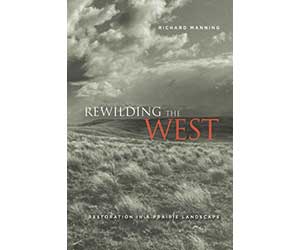
Books: Rewilding the West
Richard Manning rails against "map and camera" prairie restoration.
The northern Montana prairie is not exactly inviting: It gets only 10 inches of rain a year, and the winters are Siberian. The region, known as the Missouri Breaks, was once a sea of grass supporting countless elk, bison, wolves, and grizzlies. But in the 19th century, humans evicted the megafauna in favor of cattle that have, as environmental journalist Richard Manning puts it, "vacuumed every blade of grass from the landscape." In Rewilding the West, Manning tells the grim story of the Breaks and offers a prescription for turning the worn-out region into a pristine, profitable Yellowstone of the plains.
A private conservation group hopes to restore the Breaks by creating a 3.5 million-acre preserve open to bird-watchers, mountain bikers, and sport hunters. But Manning rails against map-and-camera preservation, which he sees as elitist. Instead, he advocates that the preserve become a self-sustaining grassland that will use carbon sequestration to protect prairie and reap profits from large-scale bison and elk hunting. A tenacious reporter, Manning is a guy with a passion for grass, and that's a good thing. Rewilding the West can be preachy, but it reminds us of a forgotten place that deserves more attention.
Rewilding west.
-
tagged as:
- result
Richard Manning provides us with a look at the big dream that will someday become a reality in Montana - The American Prairie Reserve. First, Manning provides us with a detailed recounting of the agricultural history of Central Montana, with a focus on the birth and metastisis of the farm welfare state, which has resulted in a system of government subsidized "welfare cattle ranching" that costs American taxpayers billions of dollars, and ravages millions of acres of public prairie grasslands and riprian areas. Enter the American Prairie Foundation with its vision of an "American Serengeti", where buffalo, wolves, elk, grizzly, prairie dogs, and all the attendant species are returned to their rightful place in the prairie. This book is meticulously researched, and provides a sound basis, both economically and ecologically, for replacing welfare ranching with a 3.5 million acre prairie national park that will be a lasting legacy for Americans. This book will help move the American Prairie Reserve from a dream to a reality.
HI
عشقان
منتدى عشقان
بطاقات ,
كروت ,
بطاقات فلاش
مقياس الحب ,
مقدار الحب
العاب بنات ,
العاب صبايا ,
العاب بنوتات
طبخات ,
أكلات ,
طبخ ,
مطبخ ,
مطعم
عالم حوا ,
حواء ,
عالم المرأة ,
عالم الجنس اللطيف
نكت ,
طرائف ,
مزح .
ضحك ,
مضحك
الطب ,
العلاج ,
المعالج
قروب ,
مجموعة بريدية ,
جروب ,
كروب ,
كركور
دليل مواقع ,
اشهار مواقع , اضف موقعك
افلام -
ثيمات ,
تطبيقات الجيل الثالث
مسجات ,
رسائل , رسالة نصية ,
رسالة مكتوبة
توبيكات ,
لون ماسنجرك , لون التوبيك
رسائل وسائط ,
رسالة مصورة , رسائل
MMS
اخبار ,
جرائد ,
مجلات ,
صحف , وكالة اخبار
ابراج ,
عالم الفلك
ابتسامات ,
سمايلات ,
رموز للماسنجر
زواج ,
الحياة الزوجية ,
ابحث عن زوجة , ممارسة الجنس
برامجج
الثقافة
الجنسية
العاب فلاش
مكتبة الجوال
اليوم الوطني
تردد القنوات ,
تردد الدش ,
التردادات ,
ملف القنوات ,
تردد الستالايات
Manning worked as a
Manning worked as a journalist, reporter and editor for more than 30 years, including four years at the Missoulian. In 1995 he was the recipient of a John S. Knight Fellowship from Stanford University