Photo: Edward Burtynsky
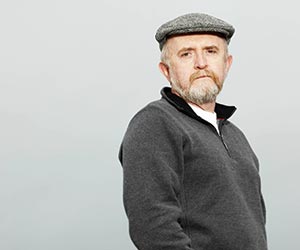
At a small airport in the northern Alberta town of Fort McMurray, a rickety, single-engine Cessna hurtles off the ground with a roar. Dr. John O’Connor ignores the shuddering fuselage, the tail wiggle, the steep climb above the spruce trees at the end of the runway. For O’Connor, a bush doctor who has tended to some of Canada’s most remote Native American communities for more than a decade, this October morning is the start of a routine commute. In his fleece vest and green fedora, the small, middle-aged Irishman looks simultaneously rugged and elfin. A plastic tray of fruit salad vibrates beneath his seat, a gift for locals who are used to subsisting on moose, pickerel, and muskrat.
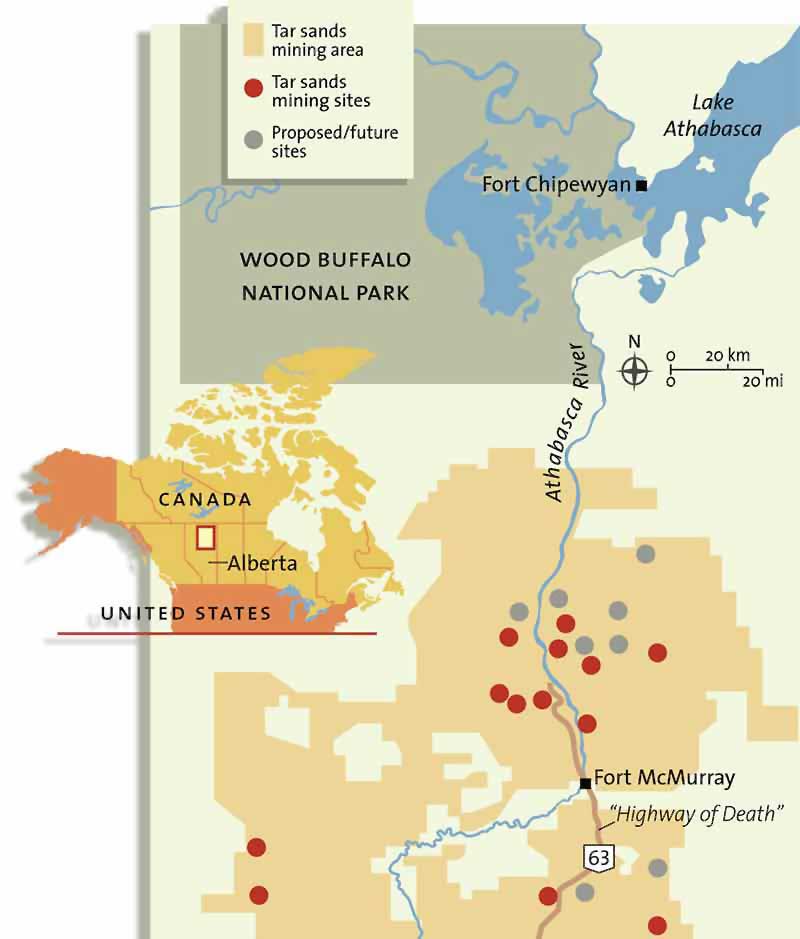
Outside, a carpet of boreal forest unfurls at the southern edge of town. Our plane flies past suburban subdivisions, freshly paved culs-de-sac, and what O’Connor says is the largest trailer park in North America. As we head north, tracking the steep banks of the Athabasca River, the forest returns. And then the trees quickly vanish, along with everything else, into miles and miles of rolling hills of sand. “The sand blows around like you wouldn’t believe,” O’Connor shouts over the propeller buzz. “Drive from Fort McMurray, and you will encounter what looks like a sandstorm.”
Below, some 2 billion tons of soil and rock—”overburden,” as the oil industry politely calls it—have been stripped away to reveal deposits of hydrocarbon-laced sandstone known as tar sands. Trucks that can carry up to 400 tons lumber across the subarctic expanse, hauling the oily muck out of terraced pits to “crushers” located in massive processing facilities.
The tar sands began forming 350 million years ago, when a prehistoric ocean deposited a layer of organic materials that was gradually cooked into a huge underground pool of light sweet crude beneath what became Alberta. Erosion made way for microorganisms that invaded the oil, forming a thick tar sandwiched between the forest above and the groundwater and limestone beneath. Along the banks of the Athabasca River, the black goop sometimes seeps through the sand as if Jed Clampett just made another lucky strike.
Underlying an area the size of Florida, Canada’s tar sands (also known as oil sands) contain as much as 173 billion barrels of recoverable oil—more than the United Arab Emirates, Qatar, and Russia put together. Only Saudi Arabia possesses larger oil reserves. But removing oil from the sands, which involves injecting them with steam or digging them up and pumping in vast quantities of water to heat them, has always been astronomically expensive—until now. As American politicians talk about weaning us from Middle Eastern crude and the price of oil has skyrocketed, the tar sands have become a viable source of foreign fossil fuel. Canada is now the United States’ top oil supplier, selling us more than the Saudis. Not since Texas wildcatters hit black gold 80 years ago has North America seen such a frantic rush for oil. Over the next five years, investment in the Alberta tar sands is expected to exceed $75 billion; oil production is set to increase by 160 percent by 2015. Alberta’s 59 tar sands sites now form the single largest industrial zone in the world. If it is fully developed, the result could be up to 54,000 square miles of man-made wasteland.
Digging up the tar sands is a dirty, wasteful business. Yet in their desperate scramble to cash in, the provincial government and the oil companies have downplayed the environmental risks. The boom is a major reason Canada will likely miss its carbon targets under the Kyoto Protocol. Converting tar sand into gasoline emits up to three times the greenhouse gases as drilling and refining conventional oil.
The extraction process consumes roughly twice the energy of producing conventional oil (in total, enough energy to heat a tenth of Canadian homes). And there are growing questions about the mines, which have transformed once-sleepy northern Alberta into an industrial frontier, and their health effects on wildlife and people. O’Connor is under investigation for expressing his concerns, accused by the national health system of raising “undue alarm.”
As we cross the Athabasca River, I spot the belly of our plane reflected in a shimmering reservoir of oil waste—two gallons for each gallon of oil produced. Scarecrows dressed in old mining uniforms bob on top of the gunk to discourage birds from landing and drowning in it. The oil industry consumes some 15 percent of the Athabasca River’s winter flow—enough to supply a city of 2 million. Tailings ponds such as this one, owned by Suncor Energy, are required by Albertan law to keep waste out of groundwater. Yet the law allows some 1.5 million gallons of slurry containing arsenic and mercury to leach daily from the reservoir into an underground aquifer; some of it drains into the river.
Following the river’s northward course, our plane threads the white steam coming from the smokestacks of Suncor’s “cracker,” the smell of petroleum and sulfur permeating the cabin. Below, the cracker is heating bitumen—the “tar” in tar sands—to 900 degrees Fahrenheit and turning it into synthetic crude oil before it will be piped to special refineries in the United States to be made into gasoline.
A patchwork of more pits unfurls for miles ahead. We fly over Syncrude, partly owned by an ExxonMobil subsidiary, then Albian Sands, a division of Shell. The giant mines give way to fresh clearings where Chevron Canadian Natural Resources Limited and Petro-Canada are just starting to dig. ConocoPhillips and the Exxon subsidiary Imperial Oil have staked additional claims in the area.
Finally, the last tentacles of mining roads give way to pristine forest. The river debouches into Lake Athabasca, and we descend toward Fort Chipewyan, a tiny trading outpost that clings to the rocky shore. In summer, once the ice road melts into an impassable bog, the only way to reach the hamlet is by plane or boat.
O’Connor has been flying in for seven years, serving as the town’s only doctor. It’s the kind of work that kept him in Canada after he came over from Ireland in 1984 for a three-month stint. “You see the same people over and over, and the whole community,” he says. “You feel like part of a family.”
The outside world largely ignores Fort Chip, O’Connor says. But isolation has not protected the town’s 1,200 residents—Mikisew Cree, Athabasca Chipewyan, and the descendants of French trappers—from the effects of the oil frenzy 70 miles upstream. In fact, O’Connor suspects that the tar sands may be slowly killing them.
Founded in 1788, Fort Chipewyan is the oldest continuously inhabited settlement in Alberta. Located by three rivers feeding into one of the largest freshwater deltas in the world, it was a hub of commerce at a time when waterways were superhighways. At the height of the fur trade in the 1800s, it shipped off thousands of beaver pelts to Europe. After the beaver-fur hat lost its allure in the 1840s, Fort Chipewyan languished for decades, doing without electricity until 1959 and without an airstrip until a few years later.
After O’Connor was hired as the town’s fly-in doctor in 2000, he was struck by the number of people wandering the streets with serious ailments—more than he’d seen in other native communities. “Going to Fort Chip, you hit the ground running,” he says as we land. “You are working from the very start.”
Sure enough, as O’Connor lugs his bags across the runway, he’s hailed by a man who complains of being “holed up in bed for days.” O’Connor also expresses concern about Stan, the airport baggage handler, who is due for an important medical test. “Don’t miss it,” O’Connor chides as he climbs into a minivan. The man behind the wheel, thin and hunchbacked, confesses to skipping his own clinic appointment that morning. But he feels healthy enough. “Boy, I hope it’s a good day tomorrow,” he says. “I want to go kill my moose.”
We drive past mossy hillsides of birch and aspen to the lakefront, where we turn into a row of modest homes and trailers, passing oil drums fished from the river and repurposed as trash bins. The minivan stops at the small wood-plank community center. Inside, O’Connor adds his fruit tray to a spread that includes beef, pasta, and salad but little of the abundant wild meat and fish that many locals traditionally subsisted on. John Michael, a trapper and fisherman with a red, leathery face, says he has a stack of caribou and walleye in his freezer but is afraid to dig into it too often. Groceries are expensive, he says, “but fuck, I don’t eat food anyways. I just buy my beer.”
Ten years ago, as the tar sands boom was just getting under way, Michael and other commercial fishermen began to haul in unusual numbers of deformed fish from Lake Athabasca. Walleye came in with humpbacks, crooked tails, pug faces, and bulging eyes. In 2002, an elder named Raymond Ladouceur, who’d been fishing the lake longer than anyone, dropped off 200 pounds of freakish-looking walleye at the doorstep of the Fish and Wildlife Division in Fort McMurray. Instead of testing them, officials left the fish outside to rot. With no official word on what was wrong with the disfigured fish, fishermen who pulled in whitefish and northern pike with red scales and large lumps on their sides and emaciated, jug-headed trout simply tossed them back into the water. Michael tells me, “We don’t like talking about ’em.”
In the past few years, a tide of serious illnesses has passed through Fort Chip’s tiny health clinic. In a period of a few months, O’Connor treated half a dozen people with thyroid disorders. He’s diagnosed multiple cases of lung, colon, bladder, and prostate cancer—many more than he’d seen in other First Nations communities in Alberta. In 2003 he determined that a man with jaundiced skin and weight loss was suffering from cholangiocarcinoma, a rare and virulent bile-duct cancer that normally afflicts 1 person in every 100,000.
O’Connor knew just how devastating this form of cancer could be because his father, an encyclopedia salesman in Limerick, Ireland, had been diagnosed with it 10 years earlier. “Six weeks later,” O’Connor recalls, “he was dead.”
At first, O’Connor shared his budding concerns about Fort Chip’s health with only a handful of friends and colleagues—until he learned of Shell’s proposal to expand its mining operation near the banks of the Athabasca. The oil company wasn’t required to mitigate the $10 billion project’s effects on the people and wildlife living in Fort Chip, because, officially, there were none. O’Connor became the first medical doctor in Alberta to publicly suggest otherwise.
In late 2004, O’Connor diagnosed a second case of cholangiocarcinoma in a 60-year-old school bus driver who died a few weeks later. Shell was deadlocked with the locals over how to study its project’s impact, so O’Connor suggested to a friend who worked for the national health agency that it perform its own studies. By then, a study by Suncor had found elevated levels of arsenic in some local moose meat. The company’s scientists also found that lifetime exposure to arsenic in the moose meat could result in as many as 453 additional cases of cancer for every 100,000 residents.
The anecdotal evidence that something was wrong was mounting: Fort Chipewyan’s hunters complained that their duck and muskrat tasted watery and bland, that moose livers were enlarged and spotted white, and that when they boiled river water it left a viscous brown scum on the pot. “It’s got so bloody many chemicals coming down in that water system today,” says Ladouceur, who’s stopped drinking straight from the river as he’d done since childhood. Many Fort Chip residents have even forsaken the town’s purified tap water, struggling to afford the bottled kind, which sells for $8 a gallon. The clinic often treats the elderly for dehydration.
As things got worse, O’Connor grew tired of waiting for the government to take action. In March 2006, he went on a Canadian Broadcasting Corporation radio program and announced that five people had died from bile-duct cancer in tiny Fort Chip—what one would expect to see in a metropolis more than 400 times its size.
In early 2006, as George W. Bush declared his intention to “make our dependence on Middle Eastern oil a thing of the past,” Canadian officials met with the Department of Energy in Houston to discuss increasing tar sands oil production fivefold. “We certainly are very anxious that oil sands development be as swift as possible,” Energy Secretary Samuel Bodman told visiting Canadian officials that March. He followed up with a trip to Alberta, telling energy executives there that the United States was committed to reducing its oil imports from overseas and that “no single thing can do more to help us reach that goal than realizing the potential of the oil sands in Alberta.”
With several daily nonstop flights linking Calgary and Houston, and an ExxonMobil pipeline that had once pumped Texas oil to Illinois being retrofitted to send Canadian synthetic crude to the Gulf Coast, Alberta’s envoy to Capitol Hill cheered, “We are seamless with Houston.” The province has opened an office in the Canadian Embassy in Washington to promote its oil interests (the only provincial office of its kind). In the summer of 2006, a giant tar sands dump truck was parked on the Mall for the Smithsonian’s annual Folklife Festival, a symbol of “the living traditions that make and sustain Alberta’s unique culture.”
In Fort Chipewyan, the tar sands hold both promise and peril. Young people grumble about the oil companies’ practice of “consulting” with elders, currying favor by handing out payments and “door prizes” such as propane lanterns and microwaves at public meetings. Raymond Ladouceur wonders if fears of contamination could cause the market for the town’s walleye—white-tablecloth restaurants in New York City and Boston—to dry up.
But more than that, he wonders who will keep fishing. The town is aging, while the young—including his daughter, three sisters, and a brother—have set off to seek their fortunes in the tar sands. “We are going to destroy everything, we as human beings,” he says. “Our greed is going to kill us. And in the end, with all the money we are going to have, and nothing to eat, no water to drink, no air to breathe—what is the good of it? It’s just a lousy piece of paper.”
“The way Raymond lives today, we wouldn’t be able to live like that,” she tells me.
On a chilly autumn evening, Ida Stepanowich finishes a 12-hour shift at the Suncor mine 15 miles north of Fort McMurray and stops to pick up her 15-year-old son from his after-school job at a video store. He climbs into the back of her extended-cab pickup clutching a copy of Night of the Living Dead. Inside her home on the sprawling edge of town, she walks past a living room that resembles a page from an Ikea catalog and sits down in her pearl-white kitchen.
Stepanowich, Raymond Ladouceur’s 48-year-old sister, grew up with her 10 siblings in a cabin on the Athabasca River, splitting firewood, hauling water, and eating only what they could grow and catch. “The way Raymond lives today, we wouldn’t be able to live like that,” she tells me in the soft tones of a yoga instructor. “My grandma used to say in Cree that money would mean a lot one day. It would mean everything to the world. And that’s so true.”
The influx of fortune seekers and roughnecks has transformed Fort McMurray into a place that longtime residents barely recognize. Gone are the days when one might see caribou from the back yard. The town has doubled in size over the past decade to more than 64,000 people. With a median single-family home price of $550,000, it’s now among the highest-priced towns in Canada. (The average two-story home price in Toronto is $485,000.) It sports a full-service casino, restaurants with names like Fuel, an Oil Sands Discovery Centre for tourists, and a new nickname: McMoney. Inexperienced truck drivers can earn $100,000 a year in the tar sands, welders twice that. On the only road leading into town, known as the “Highway of Death,” oversize rigs are passed on blind curves by workers flush with cash and booze.
Stepanowich moved to Fort McMurray in 2000, seeking better schools for her two children. For six years her husband has piloted a crane at the Syncrude mine and she’s driven dozers, graders, haulers, and tankers. Although she bought a home and banked a college fund, Stepanowich wonders if the jobs have been worth it. “When I work out there,” she whispers, “I always say, ‘Grandmothers, forgive us for destroying your Earth.’ I don’t say that out loud to people I work with—they’ll probably think that I’m crazy. But if I have tobacco, I’ll sprinkle a little bit along the way someplace and ask for forgiveness.”
Earlier that day, across the street from the Boomtown Casino, I eat breakfast with Georgette Adam, another tar sands worker from Fort Chip. She’s just finished a shift driving a 3,369-horsepower Caterpillar 797B for Suncor. The 400-ton-capacity truck is the largest in the world, and Adam describes driving it as a bit like steering an apartment building. Riding in the Godzilla of monster trucks has its risks, such as blowing a tire (“It can kill anybody beside it”), leaking transmission fluid (“It’s not like a little bucket; it’s huge”), and breaking one of the cooling hoses (“That’s it; they blow up”). It can squash pickups like tin cans, she gushes.
Adam does not share Stepanowich’s concerns about pollution, but she’s familiar with the dark side of the boom. In 1998, she convinced her older sister Chipsy to get a job in the mines. The two sisters lived together in a barracks-style camp that housed 40 men for every woman. Eager suitors came to the sisters’ rooms with gifts such as a boom box and a disco ball and swarmed them in the camp cafeteria.
“Dudes hit on you every day,” Chipsy later recalls. She took up with a boyfriend who agreed to take her to the airport to meet his family. There, the boyfriend was met in the terminal by a young woman with children. “Is that your sister?” Chipsy asked, but the look on the woman’s face told her the answer; she took a taxi home in tears. Later, the boyfriend lamely claimed he’d “just wanted a fresh start.”
Chipsy drowned her sorrows in the bars. On “Thirsty Thursday,” mine workers cashed their paychecks at a strip club and hit the Oil Can or Diggers for beers. Friends introduced Chipsy to cocaine, the camp’s drug of choice because it’s difficult to detect in random drug tests. She guesses that three-quarters of tar sands workers use it regularly. (Fort McMurray’s rate of cocaine-related incidents is three times Toronto’s.) People lost their jobs, she says, but “then you just get a job with another mine.”
The strain and temptation eventually convinced Chipsy to move back to Fort Chipewyan. One day not long after her return, her brother ferried her to a bush camp, where elders invited her into a cabin of logs and moss and fed her warm fish, dried moose, and lard-fried bread called “kill me quick.” A whole muskrat roasted in an oven. This was what she’d missed.
Those who stay in Fort McMurray often don’t fare as well. Prostitution is rampant. The number of pages in the phone book devoted to escort services has reportedly gone from 1 to 10 in recent years. After I say goodbye to Georgette Adam, I pass a portly man and a woman having sex on a picnic table in front of the mayor’s office. The town’s homelessness rate, driven by the exorbitant housing costs, is the worst in Alberta. In the last three winters, 12 people froze to death on the streets.
The boom has also hit the town’s only hospital hard. Even as the population swelled, the number of doctors working at the Northern Lights Regional Health Centre has declined. Emergency room doctors may see upward of 150 patients a day. John O’Connor says he often worked 80-hour weeks, serving as head of family medicine, coroner, and designated physician for the Mounties. “I tell people who care to listen, ‘If you get sick in Fort McMurray, leave,'” he says. “We are drowning in patients. We can’t cope at all.” In a letter to a Nova Scotia newspaper in December 2006, he discouraged newcomers from heading to the tar sands. “I cannot count the number of nurses who express the sentiment that, having been recruited here, they feel they have been duped! Quality of life here is extremely low.” He concluded, “Despite our expressed concerns, we are ignored.”
Eventually, people in high places started paying attention to O’Connor, but not in the way he’d hoped. Last January, Canada’s national health agency accused him of professional misconduct, claiming he had raised “undue alarm” about environmental health threats and “engendered a sense of mistrust” in government authorities. When government doctors had finally examined medical records from Fort Chipewyan, as O’Connor had long requested, they said that its cancer rate was no higher than the rest of the province’s. They’d discovered only one case of cholangiocarcinoma, not the five that O’Connor had cited. At Health Canada’s request, the College of Physicians and Surgeons of Alberta is investigating O’Connor; if the allegations are substantiated, he could lose his medical license. O’Connor says that when he learned of the charges, he ran to the bathroom and retched.
However, the government’s review of O’Connor’s claims has been far from comprehensive. Georg MacDonald, the former director of Fort Chipewyan’s health clinic, told me she has records of two cases of bile-duct cancer. Although O’Connor says he referred his bile-duct cancer patients to specialists in Edmonton and Fort McMurray, the government never examined those cities’ cancer cases to see if they’d originated in Fort Chip. A spokeswoman for the Alberta Cancer Board admitted to me that “those are the things we are looking at right now.” At press time, O’Connor was still waiting for the results of the investigation. “If it finds me really wrong,” he says, “then I will just give up medicine.”
In the meantime, Fort Chipewyan’s health board decided to look into the cancer cluster itself, hiring an ecology consultant to independently analyze local pollution data. His report, released last November, found rising concentrations of mercury, arsenic, and polycyclic aromatic hydrocarbons (pah) in the lower Athabasca River. Thirty to forty percent of walleye tested for mercury exceeded levels deemed safe in Canada for consumers; all exceeded the U.S. epa‘s standard for subsistence fishermen. The consultant also found that a government study had lowballed the levels of arsenic in the food supply. “Their data are cooked,” he proclaimed.
While dismissing this analysis as incomplete and misleading, the province’s scientists could not fully explain the rise in concentrations of pah, a common hydrocarbon found in everything from crude oil to tobacco smoke to barbecued ribs. Since the 1930s, pah has been known as a human carcinogen. Tar sands mining has been linked to increased pah levels in fish; the pah levels in the lower Athabasca are twice those known to cause cancer in fish. Recent peer-reviewed studies have found that arsenic—also present in high concentrations in the Athabasca River—can interact with pah to increase the cancer risk to fish by a factor of 10. Studies of Ohio’s Black River, the Chesapeake Bay, and the Puget Sound have linked pah exposure to rare bile-duct cancers in fish—the same type of cancer O’Connor saw in some residents of Fort Chipewyan.
This array of findings “has added to our concern that there may be a human impact” in Fort Chipewyan, says Jeff Short, an environmental chemist with the National Marine Fisheries Service in Alaska who studied the impacts of pah from the Exxon Valdez oil spill. Short and a team of Canadian and American researchers are conducting additional environmental studies in Fort Chipewyan this year. It’s the kind of work that the provincial government should have done on its own long ago, says David Schindler, a water ecologist at the University of Alberta. “Nobody has done a comprehensive summary that would give me any comfort if I were a resident of Fort Chip,” he says.
But the uncertainty surrounding O’Connor’s cancer findings has provided some breathing room for the oil industry, which maintains that its operations aren’t the source of the pollution in the Athabasca River. Government scientists point out that the river had high levels of mercury and pah long before its banks were lined with strip mines. An industry-funded report concluded that the river was no dirtier today than if the tar sands had been left undisturbed.
Many in Fort Chipewyan aren’t buying it. Last August the town saw its first anti-tar-sands rally. A few months later more than a dozen major environmental organizations joined the Fort Chipewyan tribes and other First Nations groups in Alberta to call for an immediate moratorium on additional tar sands development.
Yet even as Fort Chipewyan’s leaders have publicly called for an end to the mining, they are quietly thinking about bringing the boom to their own back yard. Townspeople are speculating about plans to build a pipeline that would pump water from Lake Athabasca to the mines. And Canadian and Chinese energy companies and a Dutch shipping firm have been discussing construction of a port on Lake Athabasca’s undeveloped south shore, part of the Athabasca Chipewyan First Nation. Barges loaded with refinery parts from Asia would sail from the Arctic Ocean to the new port, where they would be loaded onto trucks and rolled south to the mines on a new superhighway, bypassing the clogged Highway of Death. For the first time in nearly 200 years, the people of Fort Chip would be at the crossroads of the largest industry in Canada, collecting shipping royalties and maybe even selling rights to the uranium deposits next to the new road.
“Certainly there will be quite a debate between the generations about a port and a highway,” says John Rigney, the ceo of the Athabasca Chipewyan First Nation. “The older generation is very worried about what the land can sustain, and the younger generation is excited about the opportunities it could bring—and the wealth. The wealth could be immense. These First Nations stand to become as rich as the Arabs if all this develops.”
Fort Chipewyan’s uncertain future weighs heavily on O’Connor. He’s grown tired of the grit of Fort McMurray, the long hours on call, and the burden of accusation. “It’s constant; it’s consuming,” he explains. “I can’t remember the last time I had a good night’s sleep.”
Last fall, he quit his job and said goodbye to Alberta (although he still makes frequent visits). He has been replaced by a new doctor who has kept a much lower profile. “I’m not a whistleblower,” O’Connor says. “I’m just asking questions as a simple, humble family physician.” He now lives across the continent, in Nova Scotia, in a house overlooking blue rollers and a beach of pure, white sand.