NOAA Says No to Krill Fishing

Photo courtesy Wikimedia Commons

Get your news from a source that’s not owned and controlled by oligarchs. Sign up for the free Mother Jones Daily.


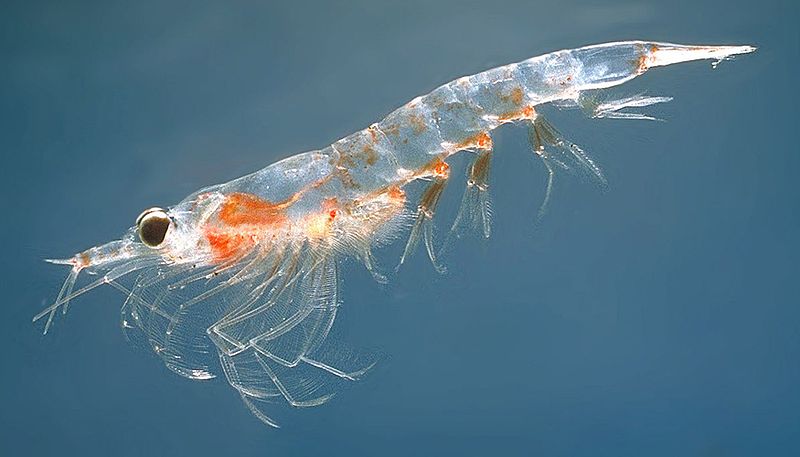
Good news today. NOAA published a final rule that will go into effect 12 August prohibiting the harvesting of the shrimplike invertebrates known as krill off California, Oregon, and Washington.

The states themselves already have regulations prohibiting a krill harvest within three miles of their coasts. But, until now, no federal restriction protected the Exclusive Economic Zone—between three and 200 miles out.

Interestingly, there is no commercial fishery for krill in these waters. Today’s rule is a rare instance of foresight in fisheries management, designed to preserve the foundation of a healthy marine foodweb in the California Current ecosystem, including its five National Marine Sanctuaries.

Krill are vitally important as primary consumers in this ecosystem, feeding on the primary producers:the microscopic phytoplankton that use the energy of sunlight to make life from nonlife.

Numerous commercially important fish feed on krill, including salmon, rockfish, squid, sardine, mackerel and flatfish. Many endangered and threatened species forage on krill, including blue whales, humpback whales, and a variety of seabirds, including Sooty Shearwaters, Marbled Murrelets, and Common Murres.

This krill ban was originally proposed by the National Marine Sanctuary Program and grew from there to include all West Coast waters. The plan is to prevent a commercial krill fishery like the ones that have already taken root in Antarctica, Japan, and off Canada’s Pacific coast. The idea being that fishing the primary consumers of the foodweb is like eating your seed corn.

Most wild krill fished in foodwebs elsewhere in the world are used to feed aquacultured marine life and terrestrial livestock, as fish bait, and for pet foods.

That’s like feeding your seed corn to your milk cow. Or your goldfish.

 

ONLY HOURS LEFT—AND EVERYTHING RIDING ON IT

A full one-third of our annual fundraising comes in this month alone. That’s risky, because a strong December means our newsroom is on the beat and reporting at full strength—but a weak one means budget cuts and hard choices ahead.

With just hours left, we need a huge surge in reader support to get to our $400,000 year-end goal. Whether you've given before or this is your first time, your contribution right now matters. All gifts are 3X matched and tax-deductible.

Managing an independent, nonprofit newsroom is staggeringly hard. There’s no cushion in our budget—no backup revenue, no corporate safety net. We can’t afford to fall short, and we can’t rely on corporations or deep-pocketed interests to fund the fierce, investigative journalism Mother Jones exists to do. That’s why we need you right now. Please chip in to help close the gap.

ONLY HOURS LEFT—AND EVERYTHING RIDING ON IT

A full one-third of our annual fundraising comes in this month alone. That’s risky, because a strong December means our newsroom is on the beat and reporting at full strength—but a weak one means budget cuts and hard choices ahead.

With just hours left, we need a huge surge in reader support to get to our $400,000 year-end goal. Whether you've given before or this is your first time, your contribution right now matters. All gifts are 3X matched and tax-deductible.

Managing an independent, nonprofit newsroom is staggeringly hard. There’s no cushion in our budget—no backup revenue, no corporate safety net. We can’t afford to fall short, and we can’t rely on corporations or deep-pocketed interests to fund the fierce, investigative journalism Mother Jones exists to do. That’s why we need you right now. Please chip in to help close the gap.

We Recommend

Latest

Sign up for our free newsletter

Subscribe to the Mother Jones Daily to have our top stories delivered directly to your inbox.

Get our award-winning magazine

Save big on a full year of investigations, ideas, and insights.

Subscribe

Support our journalism

Help Mother Jones' reporters dig deep with a tax-deductible donation.

Donate