Fifty years after the riots that followed the assassination of Martin Luther King Jr., Matthew Desmond wants to know why our cities are so calm these days:

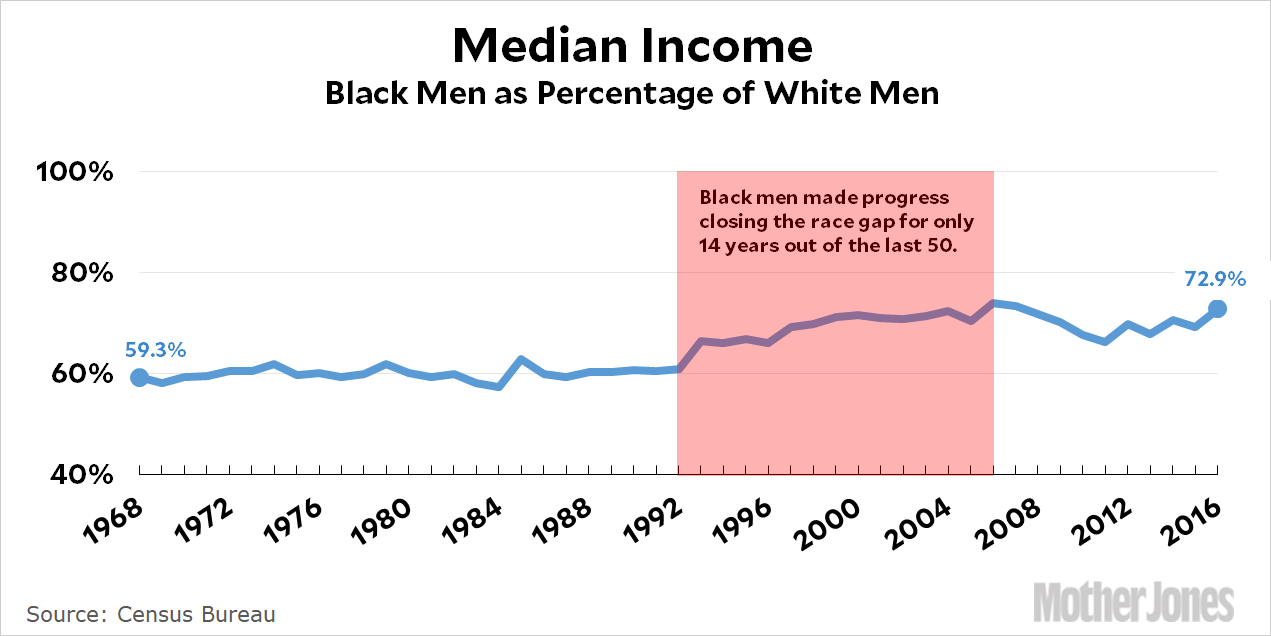
Fifty years later, our cities, in both the North and the South, remain sharp-line segregated. Not only that, but the decades following the Holy Week Uprising have witnessed a surge in mass incarceration that has disproportionately caged poor black men; a loss of manufacturing jobs that has left many black men unemployed; soaring housing costs and an epidemic of evictions, felt most acutely in low-income communities of color; and the gutting of welfare, which has led to a spike in extreme poverty.

By these measures, things have grown worse. Yet the streets, for the most part, have remained clear and quiet. Only two significant riots have broken out since the early 1970s: in Miami in 1980 and in Los Angeles in 1992, both of them in response to the acquittals of police officers who had beaten unarmed black men. Recent years have witnessed spates of unrest protesting police violence in Ferguson, Missouri, and beyond, but these have been short-lived affairs resulting in few serious injuries and restrained arson. The 2015 unrest in Baltimore after Freddie Gray died in police custody resulted in an estimated $9 million in property damage and no deaths. The 1992 L.A. riots, by comparison, caused more than $1 billion in property damage and 63 deaths.

Why don’t American cities burn like they used to?

Desmond wouldn’t like my answer much, I’m afraid. I don’t even have to say it, do I?
BEFORE YOU CLICK AWAY!

December is make or break for us. A full one-third of our annual fundraising comes in this month alone. A strong December means our newsroom is on the beat and reporting at full strength. A weak one means budget cuts and hard choices ahead.

The December 31 deadline is closing in fast. To reach our $400,000 goal, we need readers who’ve never given before to join the ranks of MoJo donors. And we need our steadfast supporters to give again today—any amount.

Managing an independent, nonprofit newsroom is staggeringly hard. There’s no cushion in our budget—no backup revenue, no corporate safety net. We can’t afford to fall short, and we can’t rely on corporations or deep-pocketed interests to fund the fierce, investigative journalism Mother Jones exists to do.

That’s why we need you right now. Please chip in to help close the gap.

BEFORE YOU CLICK AWAY!

December is make or break for us. A full one-third of our annual fundraising comes in this month alone. A strong December means our newsroom is on the beat and reporting at full strength. A weak one means budget cuts and hard choices ahead.

The December 31 deadline is closing in fast. To reach our $400,000 goal, we need readers who’ve never given before to join the ranks of MoJo donors. And we need our steadfast supporters to give again today—any amount.

Managing an independent, nonprofit newsroom is staggeringly hard. There’s no cushion in our budget—no backup revenue, no corporate safety net. We can’t afford to fall short, and we can’t rely on corporations or deep-pocketed interests to fund the fierce, investigative journalism Mother Jones exists to do.

That’s why we need you right now. Please chip in to help close the gap.

We Recommend

Latest

Sign up for our free newsletter

Subscribe to the Mother Jones Daily to have our top stories delivered directly to your inbox.

Get our award-winning magazine

Save big on a full year of investigations, ideas, and insights.

Subscribe

Support our journalism

Help Mother Jones' reporters dig deep with a tax-deductible donation.

Donate