• Immigration Negotiations Have Gone Off the Deep End

    Anik Rahman/NurPhoto via ZUMA

    Let’s talk immigration for a bit. It’s gone completely cuckoo. I realize that this is all due to politics of various stripes, but let’s stop for a minute and look just at the policy.

    It all started when President Trump killed DACA, the mini-DREAM executive order that allows individuals who were brought to the country at a young age to apply for work permits and protection from deportation. Trump revoked it because it was an Obama policy and he’s dedicated to destroying all things Obama, but he took care to delay the end of DACA for six months so that Congress would have time to reinstate it via legislation, something he said he favored.

    That sounds simple enough. Democrats are more eager to restore DACA than Republicans, which means they needed to offer something in return. How about funding for Trump’s wall? Even among Republicans, a recent poll shows that 53 percent support DACA and 62 percent support a deal that includes both DACA and the wall. Then Democrats went further: they offered the wall plus preventing chain migration among the DREAMers by making their parents ineligible for citizenship plus an end to the visa lottery. But apparently that’s still not enough.

    Which is crazy. This was never meant to be a deal for comprehensive immigration reform. It’s a narrow agreement to keep DACA in place, something that both Trump and many Republicans say they want to do anyway. The deal Democrats offered would be hugely popular among Republicans; it would give Trump a start on his wall; and it would prevent a government shutdown, which would probably be blamed on Republicans no matter how many manic tweets Trump sends out.

    In other words, everyone has a strong incentive to ignore the hardliners and do this. Republicans like it. Democrats like it. It avoids a shutdown. Are the immigration hardliners really so powerful that they can kill off a deal that has practically everything going for it? Is Trump really so unnerved by a bit of mockery that the dealmaker-in-chief is going to let this deal sink? The whole thing is crazy.

  • Lunchtime Photo

    Different weather provides different opportunities for picture taking. I’ve been wanting to try some fog pictures for a while, but I’ve had no luck. First I went to Ireland. Gotta be fog there. No fog. So I went to London. No fog. In London! I came home as winter was settling in, but there was no fog. Just the light marine layer that we always have in the morning.

    Then, last week, I woke up and looked out the window. Fog! Nice, thick fog. So I grabbed my camera and went out to the lake. The result is the pair of coots below.

    I love coots. They’re like little bowling balls on stilts, and they look like they can barely stay upright when they waddle around looking for food. I just want to pick them up by their round little bellies and squeeze them. But I never have and probably never will.

  • The Stock Market Is on a Tear

    Let’s just finish up with all the charts I have today, OK? Then I’ll go to lunch, and maybe I’ll come back with some ideas for less analytical posts.

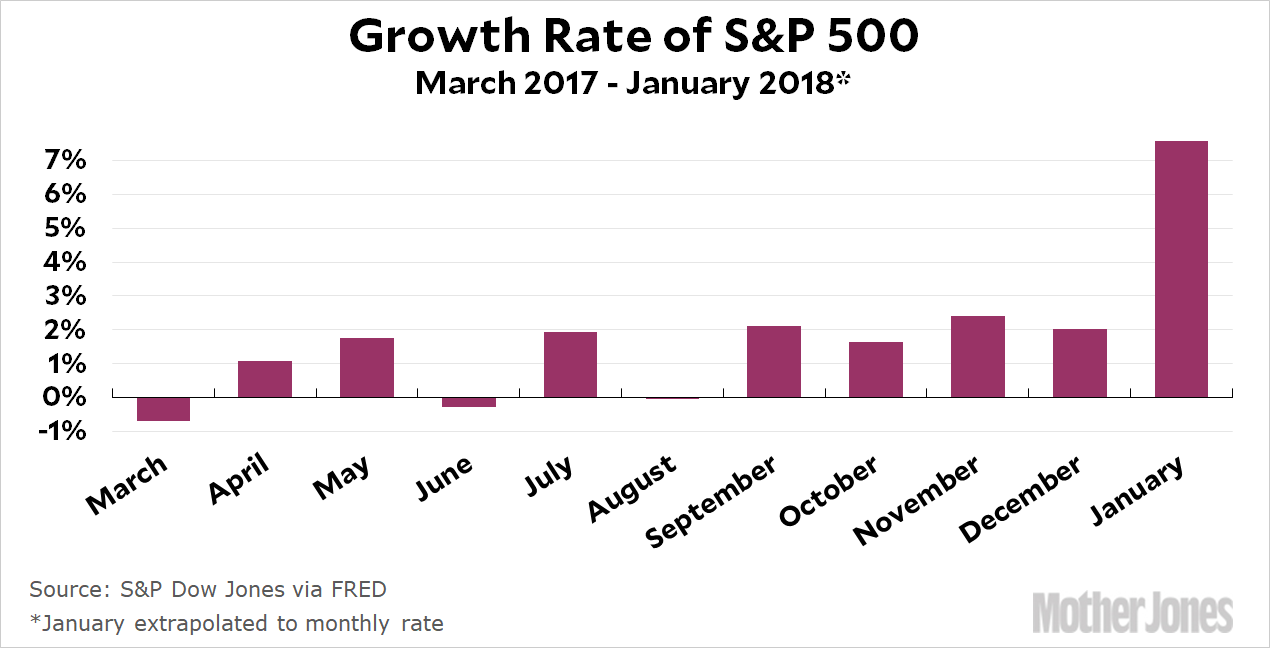
    The stock market has gone crackers this month. Here’s the growth rate of the S&P 500 for the past year, with the first two weeks of January extrapolated to a monthly rate:

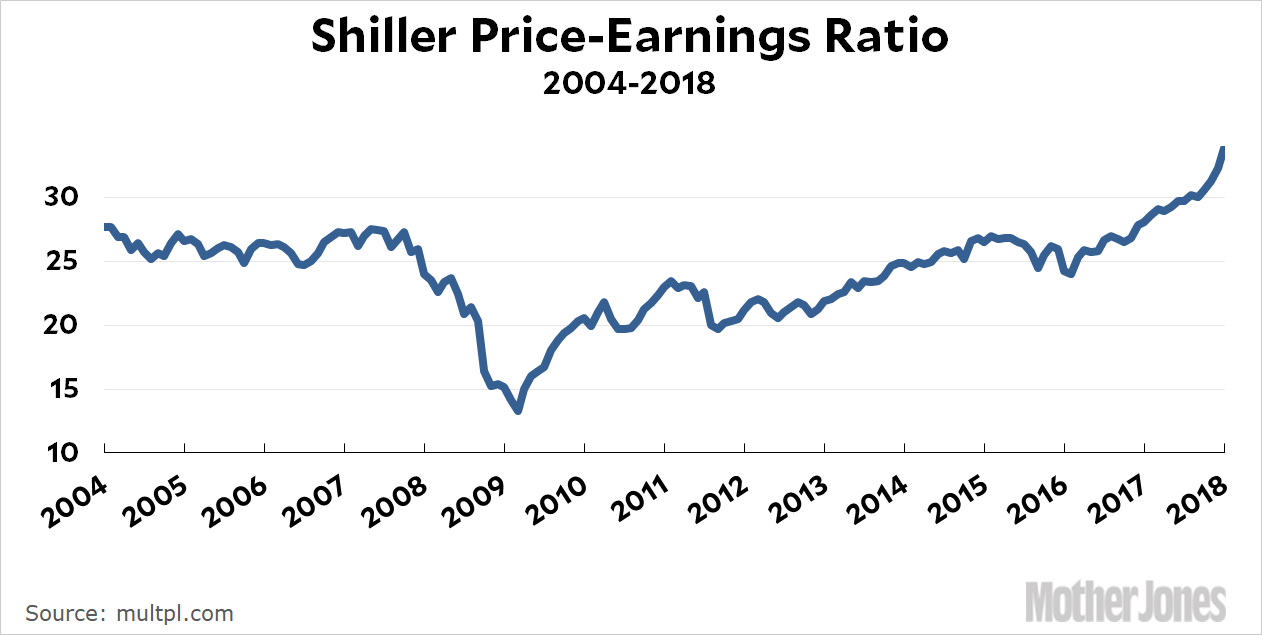
    Hmmm. And here’s the Shiller PE ratio, which uses 10-year inflation-adjusted earnings:

    It’s currently at about 34, which is lower than it was at the height of the dotcom bubble, but higher than Black Tuesday of 1929, the height of the 1960s bull market, Black Monday of 1989, and the height of the housing bubble. Is it too high? I guess that’s for each one of us to decide.

  • Renewable Energy Is Kicking Ass in Colorado

    I’ve got nothing but charts for you today. Sorry about that. But I might as well get them out of my system. Here’s one that Dave Roberts is excited about. It shows the average bid response to a request for new power plants from Colorado’s biggest electricity supplier:

    NOTE: I’ve deleted a couple of paragraphs here. See below for explanation.

    Roberts points out that the cost of storage is now surprisingly low. For wind plants it adds about $3/MWh to the cost, and for solar it adds about $6. Since storage is necessary for renewables to become reliable baseload generators that can supply electricity 24/7, this is important.

    Roberts also points to the sheer scale here. Xcel received 430 bids compared to 55 for a similar request a few years ago. Of those, 350 were for renewable energy, representing over 100 GW of capacity. There are lots of companies working feverishly in the renewable energy sector.

    Read the whole thing. One of the things that Roberts is excited about is that these are actual, concrete bids, and they’re considerably less than anyone was projecting a year ago. In the real world, the price of renewable energy is dropping faster than even the most optimistic projections.

    UPDATE: Are you ready for a correction? Here we go.

    In the Xcel report, the cost of renewables is given in MWh, while the cost of fossil plants is given in kW-mo. In order to compare apples to apples, I converted kilowatts to megawatts (divide by 1000) and months to hours (multiply by 720). That’s technically correct as a matter of units, but after some conversation on this topic I’ve finally figured out why that doesn’t work.

    It has nothing to do with the arithmetic. The difference is that the cost figure for renewable plants tells you how much the bidder will charge to deliver a certain amount of electricity. For fossil plants, it’s the amount the bidder will charge to build a certain amount of capacity. The cost to actually deliver one MWh of power isn’t provided. For that reason, the cost of renewable and fossil plants really can’t be compared until Xcel provides more information.

    I’ve removed a couple of paragraphs that said renewables were still more expensive than fossil plants (that’s not clear yet) and I also modified the chart to remove the cost estimates for fossil plants.

  • Black Incomes Have Fallen Further Behind Whites for the Entire 21st Century

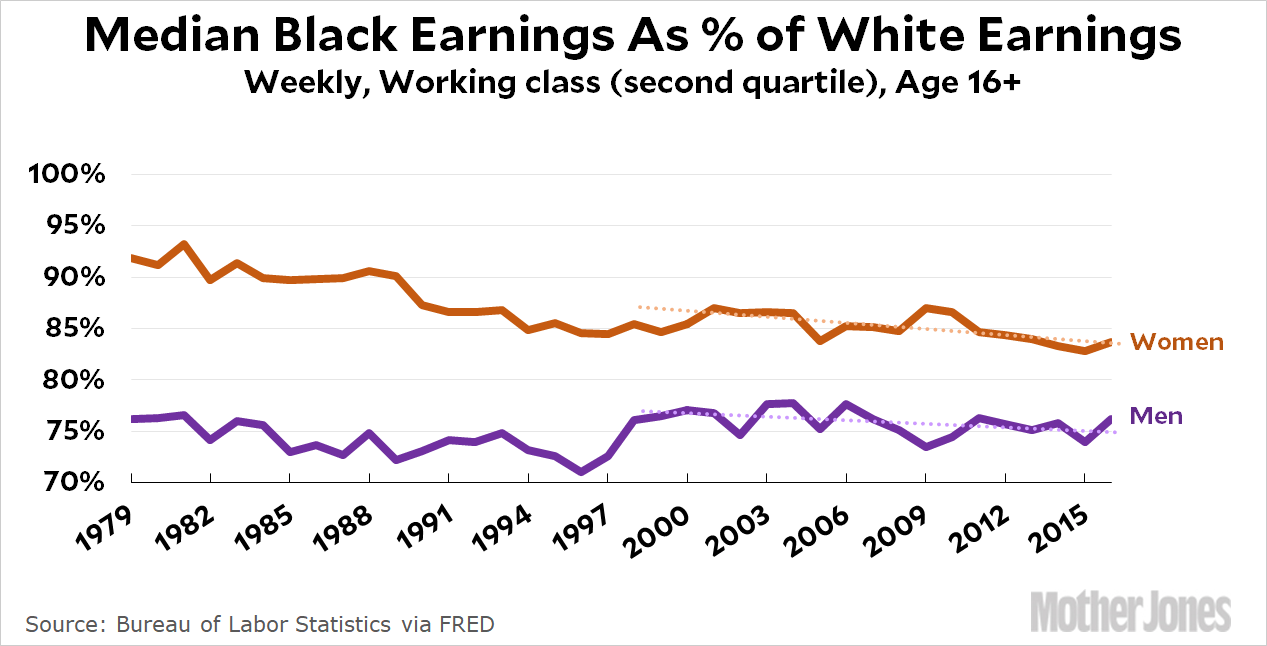
    Over at the mothership, Eli Day points out that blacks still earn a lot less than whites and have way less wealth. That’s bad enough, but it’s actually worse than that. Here are working-class black earnings since 1979 as a percent of white earnings:

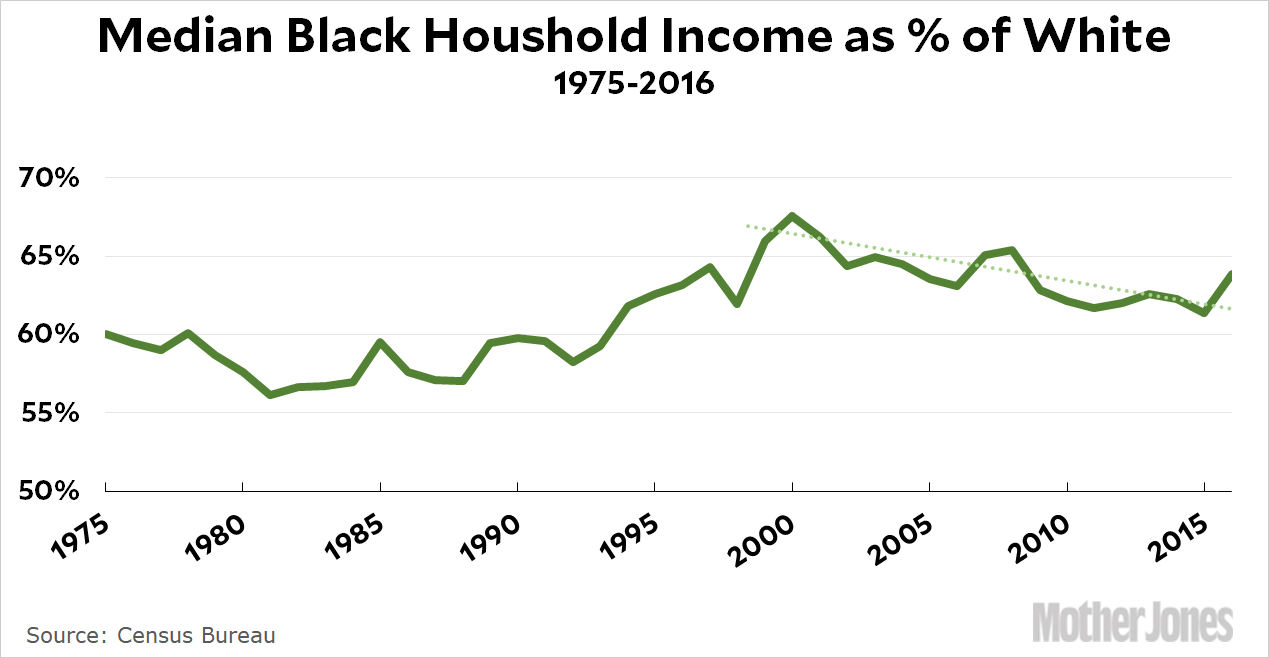
    Black men have made essentially no progress in the past four decades, while black women have fallen considerably further behind. Since 2000, both men and women have fallen further behind their white counterparts. Here’s median household income:

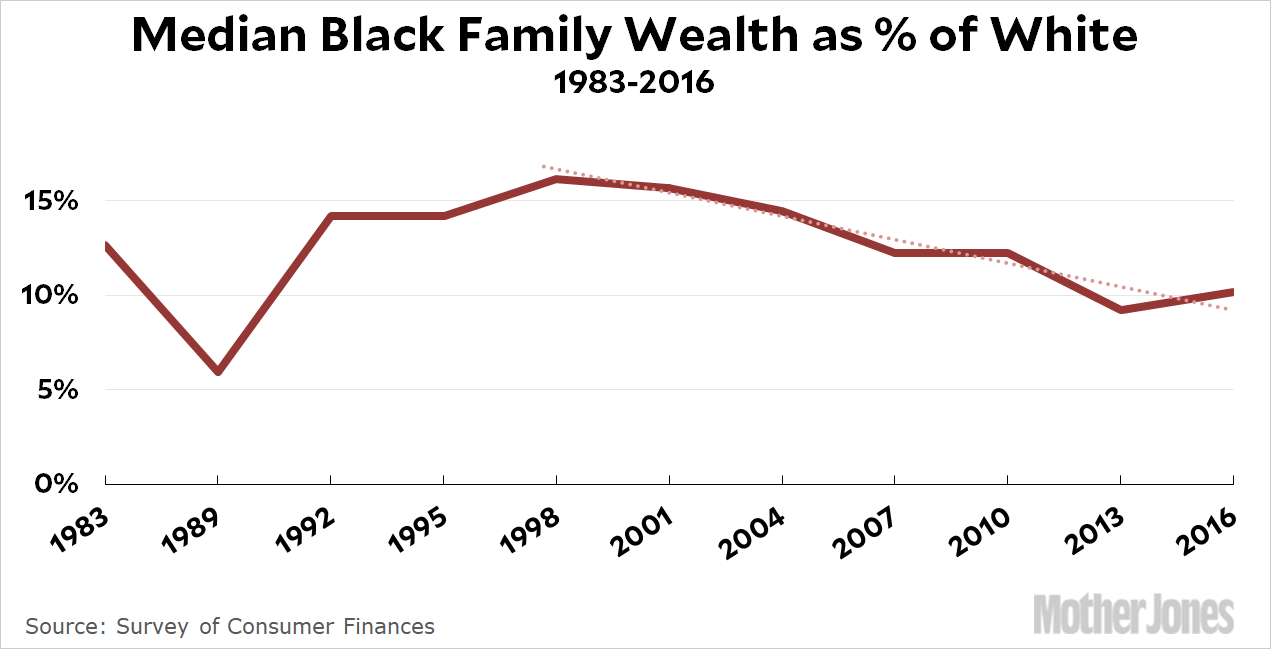
    And here’s family wealth:

    Black households made income and wealth gains up through about 2000, but since then have gone backwards. Any way you look at this, the gap between blacks and whites has gotten worse throughout the entire 21st century. Anyone who doesn’t understand why the African-American community has seemingly become more despairing of racial progress lately should take a look at this. Sure, much of it is because of Ferguson, and much of it is because of Trump. But it’s more than just that, and it didn’t suddenly come out of nowhere in 2014.

  • Paul Romer Explains the “Doing Business” Ranking FUBAR

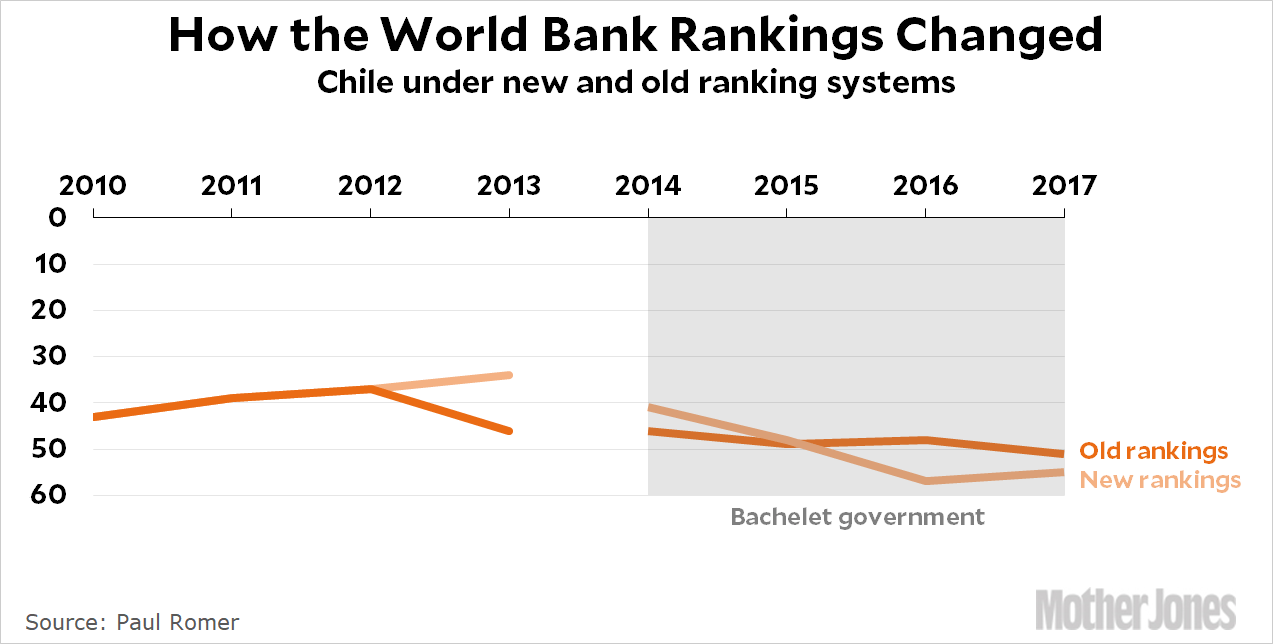
    I don’t want to spend forever on the controversy over the World Bank’s “Doing Business” rankings, but Paul Romer put up a post today that shows what kind of effect the new ranking methodology had on Chile. Here it is:

    The new rankings (light orange) started in 2013 and showed Chile improving under its conservative president. Then Chile’s ranking fell substantially starting in 2014, when socialist Michelle Bachelet took office.

    If the old ranking methodology (dark orange) had been used throughout this period, Chile’s rank would have fallen substantially under the conservative president and then stayed pretty much flat under Bachelet.

    I have no idea how much difference this made to anything. As for how it happened, Romer says, “the fundamental failure can be traced back to a lack of clarity in our communication.” Stay tuned.

  • Why Trump Killed the Immigration Deal: Because Democrats Made Him Look Bad

    Erik Mcgregor/Pacific Press via ZUMA

    I’ve long supported the idea of making a deal that would give President Trump a piece of his wall in return for legislative authorization of DACA. But it turns out that Democrats were prepared to offer him even more: not just some money to start the wall, but also an end to chain migration and the visa lottery. Nancy LeTourneau comments:

    In years gone by, that would have been the kind of compromise one would expect from bipartisan negotiations. But it wasn’t enough for Trump. He said, “no,” and, in the process, made his “shithole” comments. But even beyond that, the entire meeting involved an ambush that many have credited to Stephen Miller.

    Apparently, when Sens. Lindsey Graham and Dick Durbin showed up for last week’s meeting with Trump, they were blindsided by the presence of a bunch of Republican immigration hardliners. “That was obviously designed by Stephen Miller to try to kill the deal,” said a senior Democratic aide.

    That’s eminently plausible, but I have a different theory. All of this stuff happened last Thursday, two days after Trump’s televised session on Tuesday morning designed to prove that he’s not an idiot. Unfortunately, in that Tuesday meeting Sen. Dianne Feinstein tricked him into showing that he is, in fact, an idiot who has no idea what his own party’s position on immigration is. It’s not clear to me if Feinstein meant to do this, but it happened. Everyone in the world picked up on it and mocked Trump’s obvious dimwittedness.

    This is, needless to say, something that Trump can’t abide. My guess is that by Wednesday he had already decided to sabotage the negotiations and then blame it on Democrats, all as retribution against liberals for making fun of him. Stephen Miller may have played a role too, but I’ll bet Trump was the driving force.

    Everyone understands how you handle Trump: you offer him ridiculous, over-the-top praise and insist that he’s the smartest, toughest negotiator you’ve ever been up against. That softens him up for a deal. Plenty of Republicans have figured this out. Plenty of foreign leaders have figured this out. I’m sure plenty of Democrats have figured this out too, but they just don’t have the stomach to play the game. The result is that Trump inevitably becomes offended by the lack of praise and kills any possible deal. I suspect that’s what happened this time.

  • Lunchtime Photo

    The Rev. Martin Luther King Jr. would have been 89 today. It’s striking to think that if he hadn’t been killed 50 years ago, he might still be alive today. Would the civil rights movement have progressed differently if he had been part of it for the past half century? King was already losing influence when he was assassinated, and there’s no telling how he would have addressed that; how he would have evolved; or what influence he would have maintained. Would he have prevented the movement from turning to violence? Would that have lowered the temperature of the white backlash? Would we be further along the moral arc of the universe than we are?

    I have to imagine he would have made a difference. At the same time, racial hatred is so deeply embedded in the souls of so many whites that it’s unlikely anything—or anybody—could have turned it aside by more than a few hairs. This has always been obvious, but the past year has made it even more obvious than ever. We have so far yet to go.

    This picture may look like it’s from deep in the Amazon jungle, but it was actually taken at the Sand Canyon Wash, a smallish wildlife preserve near UC Irvine. The cross belongs to a Methodist church across the street.

  • The Population of Young Men Is Down, and So Is Crime

    In the Daily Beast, criminologist Barry Latzer writes that murder is down in New York and is likely to stay down. Why? Because young men are responsible for most murders (true) and the population of young men has declined since the baby boom years (also true). Now that the baby boom is over for good, the number of young men is also down for good, which in turn means that crime is down for good.

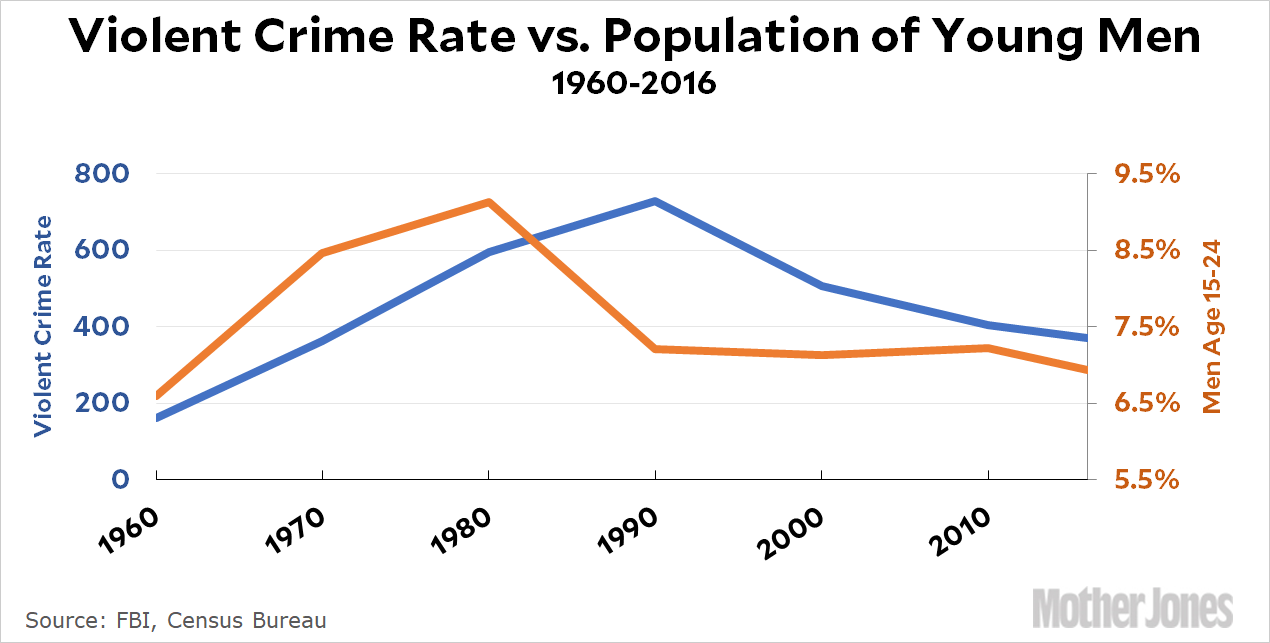
    It’s true that violent crime is related to the population of young men. The problem is that it’s not all that related. Here are the national numbers for all violent crime:

    There’s a relationship there, but not a strong one. The population of young men dropped sharply between 1980 and 1990, but crime kept going up. It was flat between 1990 and 2000, but crime dropped sharply.

    This isn’t dispositive. There’s probably some momentum built into the system, and men age 25-30 also contribute a fair amount to the crime rate. Most likely the rise and fall in the number of young men explains some of the change in the crime rate between 1960-2010, but not a lot of it.

    But this reminds me: I’ve been thinking of creating an updated lead-crime roundup. I haven’t done one since 2012, and there’s been a ton of new research since then. I need to put that on my list of things to do.