• Cultural Studies Is the Target of Another Hoax — And This One Stings

    The hoaxsters, from left: James Lindsay, an author with a PhD in math and a background in physics; Helen Pluckrose, a medievalist and editor-in-chief of Areo; and Peter Boghossian, a professor of philosophy at Portland State University.Areo Magazine

    Remember the Sokal hoax? In 1996, Alan Sokal, a physics professor at NYU, wrote a nonsense paper called “Transgressing the Boundaries: Towards a Transformative Hermeneutics of Quantum Gravity,” and got it published in Social Text, a leading journal of cultural studies. This produced a flutter of argument about whether Sokal had really proven anything or not, and was then quickly forgotten.

    Last year, a team of three academics decided that the reason Sokal had been so quickly forgotten was because he wrote only one paper. After all, you can always dismiss one bad paper as a minor problem of quality control and then move on. So they embarked on a more extensive hoax: they immersed themselves in the postmodern cultural studies literature and started cranking out paper after paper. Here’s their explanation of their method, published yesterday in Areo:

    Our paper-writing methodology always followed a specific pattern: it started with an idea that spoke to our epistemological or ethical concerns with the field and then sought to bend the existing scholarship to support it. The goal was always to use what the existing literature offered to get some little bit of lunacy or depravity to be acceptable at the highest levels of intellectual respectability within the field.

    ….Sometimes we just thought a nutty or inhumane idea up and ran with it. What if we write a paper saying we should train men like we do dogs—to prevent rape culture? Hence came the “Dog Park” paper. What if we write a paper claiming that when a guy privately masturbates while thinking about a woman (without her consent—in fact, without her ever finding out about it) that he’s committing sexual violence against her? That gave us the “Masturbation” paper. What if we argue that the reason superintelligent AI is potentially dangerous is because it is being programmed to be masculinist and imperialist using Mary Shelley’s Frankenstein and Lacanian psychoanalysis? That’s our “Feminist AI” paper.

    In all, they produced 20 papers in about a year. Seven of them were accepted for publication, while the rest ended up being retired because they hadn’t been accepted by the time their hoax was uncovered. The authors estimate that if they had run their experiment to completion, they could have gotten about a dozen of the papers accepted at widely respected journals. So what does the cultural studies field think about all this? Kieran Healey offers a few comments on Twitter:

    I’m disappointed to see this. There are, naturally, criticisms to be made of this particular hoax. But the fact remains that:

    • They wrote 20 credible papers in about two weeks (!) each.
    • Of those, seven were accepted in leading, peer-reviewed journals, and it’s amost certain that more would have been accepted if they’d had more time.
    • They taught themselves how to produce these papers in only a few months with no formal background in the subjects at hand.
    • They were not investigating ideas on the edge of analytical philosophy, where non-intuitive notions of reality have an obvious and well-accepted place.
    • The fact that they had claimed to perform obviously ridiculous fieldwork is all part of the hoax.
    • Ditto for their obviously ridiculous statistical analysis.

    The targets of the hoax were gender studies, masculinities studies, queer studies, sexuality studies, psychoanalysis, critical race theory, critical whiteness theory, fat studies, sociology, and educational philosophy. Minor criticisms aside, the authors have made it clear that there’s really something wrong in these fields—which they unfortunately label “grievance studies”—and it’s not just that their leading journals have low standards. The problem is with the fields themselves, which plainly have academic standards that are subordinated to producing the “right” answer. But even at that, the authors urge the rest of us not to take this too far:

    We managed to get seven shoddy, absurd, unethical and politically-biased papers into respectable journals in the fields of grievance studies. Does this show that academia is corrupt? Absolutely not. Does it show that all scholars and reviewers in humanities fields which study gender, race, sexuality and weight are corrupt? No. To claim either of those things would be to both overstate the significance of this project and miss its point. Some people will do this, and we would ask them not to. The majority of scholarship is sound and peer review is rigorous and it produces knowledge which benefits society.

    To get a better sense of what the authors accomplished, you need to click the link and read the whole thing. It will take you about an hour, I’m afraid. But it’s the only way to see just how absurd their papers were and how blindly receptive some of the reviewers were to even the dumbest ideas. Like the authors, my main complaint with the cultural studies field has always been simple: this is important stuff, and it deserves rigorous scholarship. But it’s not getting it. It’s not just that lots of papers in the field are forgettable—that’s common everywhere—but that so many of them are simply drivel.

    Even the craziest-sounding subject can be worth investigating, but only if it’s done with real scholarship and real creativity. Instead, we’re getting lots of lazy nonsense designed to get hosannas from fellows in the field. So what’s the answer? Nothing from someone like me—with no PhD, no expertise, and no connections—will have any impact. It’s those who are outside these fields but still close to them—and who perform real scholarship themselves—who need to accept what this hoax shows and help lead a cleanup of a badly polluted area of the academy. Unfortunately, what we’re probably going to get is (a) a number of knee-jerk defenses because it’s not worth getting all these folks mad at you, and (b) the usual crew of right-wingers saying “See?” That will allow the whole affair to be forgotten in short order, and that’s the worst possible outcome.

  • Christmas Is Coming, and the Labor Market Is Finally Getting Tight

    Uli Deck/DPA via ZUMA

    Amazon is raising wages:

    Amazon.com said it is raising the minimum wage it pays all U.S. employees to $15 an hour….“We listened to our critics, thought hard about what we wanted to do, and decided we want to lead,” said Mr. Bezos in a statement. “We’re excited about this change and encourage our competitors and other large employers to join us.”

    Hmmm. A regular reader emails with further information:

    My wife is an HR manager in manufacturing at a plant that pays permanent employees over $15 per hour. Earlier this year they increased the wages for temps to $13.50 to try to increase retention, and they have not had good results. The labor market is tight, and these are not skilled positions, but they cannot hold onto new (temp) employees.

    I work with fabricators and machine shops, and multiple shops are having trouble hiring to the point where several shops have warned us they may not meet commitments because they cannot find enough workers to hit their planned labor hours. My anecdotal evidence tells me it is most likely that Amazon is moving to $15 wages due to upward wage pressure, and not the goodness of Jeff Bezos’ heart or the power of Bernie’s persuasion.

    That sounds exactly right. And there’s more:

    Faced with a tight labor market and a busy holiday shopping season, retailers have boosted wages to lure workers. In typical fashion, however, Amazon has outdone them. The e-commerce giant’s decision to raise its minimum wage to $15 an hour will make it harder for traditional retailers to hire the staff they need. The result could be lost sales or, worse, crowded stores without enough staff, sending shoppers online, most likely to Amazon.

    Nobody is moving to $15 wages because they’ve been watching all the progressive rallies and they’re suddenly getting woke. They’re doing it because it’s the only way to attract workers.

    This is a two-edged sword, of course. With the unemployment rate so low, the people they’re attracting off the sidelines are largely those with the weakest skills and the most fragile attachment to the labor force. This suggests that we’re finally getting close to the point where the labor force is fully engaged and there just aren’t any more workers who can be persuaded to come off the sidelines. In the short term, this should lead to higher wages. In the medium term it should lead to an economic peak and then a recession. But I don’t know when.

  • Times Report: Trump Wealth Largely Based on Tax Scams and Bailouts From Dad

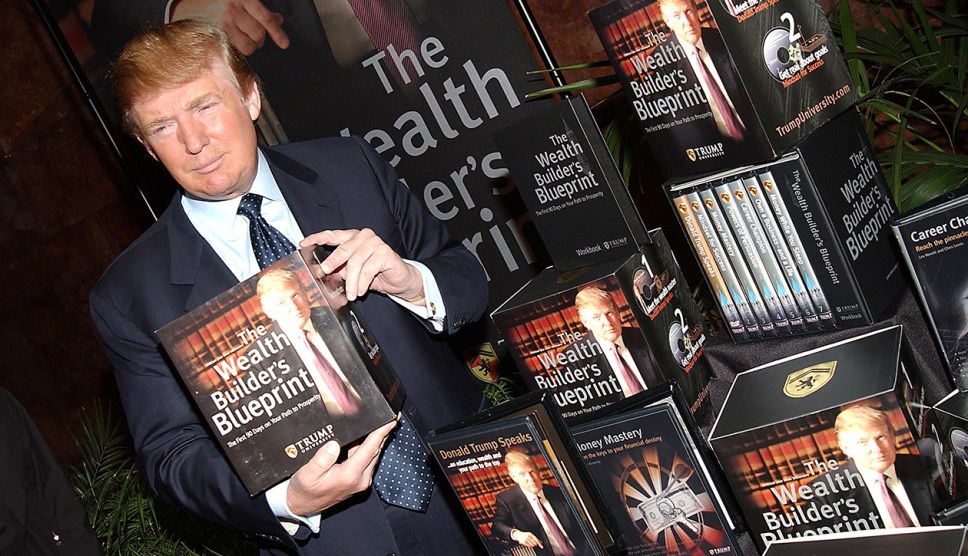
    It's probably safe to say that these books and DVDs don't tell the real Trump story.Globe Photos/ZUMAPRESS

    Here’s the headline at the top of the New York Times right now:

    Trump Engaged in Suspect Tax Schemes as He Reaped Riches From His Father
    The president has long sold himself as a self-made billionaire, but a Times investigation found that he received at least $413 million in today’s dollars from his father’s real estate empire, much of it through tax dodges in the 1990s.

    I read this over lunch, then got my hair cut, bought some groceries, and came home. I expected it to be plastered over every blog, tweet and magazine I read. And yet, things are eerily quiet. It feels kind of weird.

    Long story short, the Times tells us that both Donald and his father, Fred, were engaged in massive tax fraud for decades:

    The findings are based on interviews with Fred Trump’s former employees and advisers and more than 100,000 pages of documents describing the inner workings and immense profitability of his empire. They include documents culled from public sources — mortgages and deeds, probate records, financial disclosure reports, regulatory records and civil court files.

    The investigation also draws on tens of thousands of pages of confidential records — bank statements, financial audits, accounting ledgers, cash disbursement reports, invoices and canceled checks. Most notably, the documents include more than 200 tax returns from Fred Trump, his companies and various Trump partnerships and trusts. While the records do not include the president’s personal tax returns and reveal little about his recent business dealings at home and abroad, dozens of corporate, partnership and trust tax returns offer the first public accounting of the income he received for decades from various family enterprises.

    The most common form of subterfuge in the Trump arsenal was valuation fraud. Basically, Fred would turn over some piece of property to Donald as a gift and value it at, say, $10 million. A year later Donald would sell it for $50 million. There were plenty of variations on this theme, and it turns out the IRS pretty much never audits this kind of thing. Over the years, the Trumps avoided hundreds of millions of dollars in taxes using this ruse.

    Aside from the tax shenanigans, the article also makes it clear that Donald Trump is the farthest thing imaginable from a self-made billionaire. He regularly claims that the only money he ever got from his father was a $1 million loan, but that’s hogwash. We’ve all known it was hogwash for a long time, of course, but the Times puts some numbers to it:

    By age 3, Mr. Trump was earning $200,000 a year in today’s dollars from his father’s empire. He was a millionaire by age 8. By the time he was 17, his father had given him part ownership of a 52-unit apartment building. Soon after Mr. Trump graduated from college, he was receiving the equivalent of $1 million a year from his father. The money increased with the years, to more than $5 million annually in his 40s and 50s.

    ….Fred Trump was relentless and creative in finding ways to channel this wealth to his children. He made Donald not just his salaried employee but also his property manager, landlord, banker and consultant. He gave him loan after loan, many never repaid. He provided money for his car, money for his employees, money to buy stocks, money for his first Manhattan offices and money to renovate those offices. He gave him three trust funds. He gave him shares in multiple partnerships. He gave him $10,000 Christmas checks. He gave him laundry revenue from his buildings.

    ….All told, The Times documented 295 streams of revenue that Fred Trump created over five decades to enrich his son….Here is what can be said with certainty: Had Mr. Trump done nothing but invest the money his father gave him in an index fund that tracks the Standard & Poor’s 500, he would be worth $1.96 billion today. As for that $1 million loan, Fred Trump actually lent him at least $60.7 million, or $140 million in today’s dollars, The Times found.

    Add up all the rest of it and Donald hoovered up nearly half a billion dollars from his father—and then squandered nearly all of it. He lost everything in the 80s; was bailed out by dad; nearly lost everything again in the early aughts; was bailed out by selling off dad’s inherited empire; and then finally made some money on his own as a reality TV star. He is not quite the worst businessman ever to inherit a fortune, but he sure seems to be in the top 100 or so. Except for his TV show, Donald Trump has never really succeeded at anything in his life.

    As ever, click the link to read the whole seedy story. It provides details about tax scam after tax scam and bailout after bailout. Donald Trump has a big mouth, but it turns out that’s just about the only thing big about him.

  • Lunchtime Photo

    This is the Empire State Building, still the world’s finest example of skyscraper architecture, shot in its natural state of black and white. This picture was taken on 6th Avenue near Bryant Park with a handheld camera. Carrying around the tripod is a pain in the ass, but I wish I’d had it here. It would have improved the sharpness of the picture noticeably.

    September 14, 2018 — New York City
  • It’s Time for Conservatives to Start Acting Like Adults

    Universal Pictures

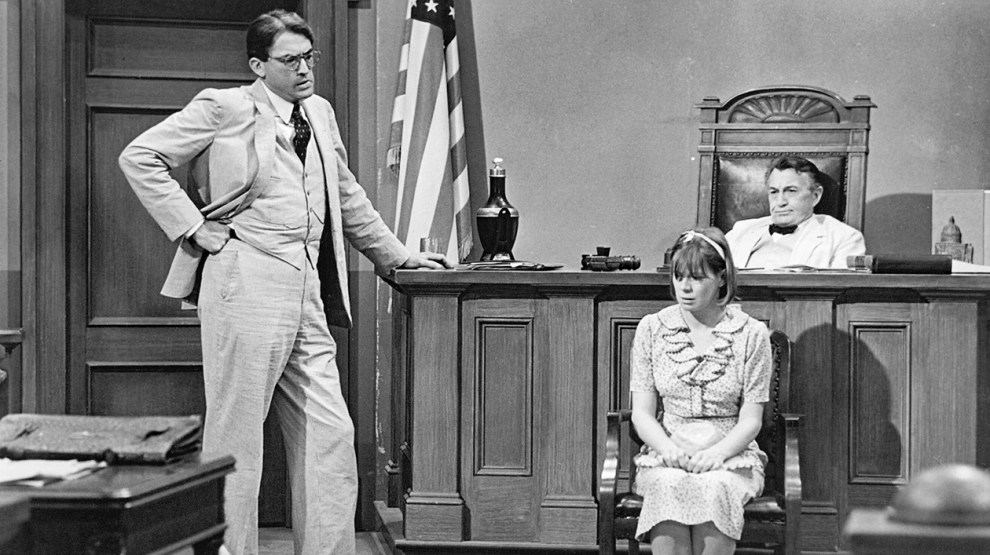
    Rich Lowry is not a college student. He is not 21. He is the editor of National Review, the premier conservative publication in the United States. Today he discusses To Kill a Mockingbird:

    Atticus Finch Was on the Wrong Side

    The setting is Depression-era Alabama. [Atticus] Finch is unpopular in town because he has decided to take on the defense of a black man named Tom Robinson who is accused of rape by a young white woman. And this is where the story, in contemporary terms, goes off the rails. Atticus Finch didn’t #BelieveAllWomen….In a gripping courtroom scene, Finch cross-examines Mayella Ewell, the 19-year-old daughter of an abusive drunk from a dirt-poor family who is Robinson’s accuser. With all the vehemence and emotion she can muster, Ewell insists that Robinson attacked her after she got him to break up a piece of old furniture at her house.

    ….Without mercy, Finch takes apart her account. In contemporary internet argot, he “destroys” her. He brushes right by her tears….It is revealed that Ewell is lying. She had made an advance on Robinson and gotten caught by her vicious, racist father. The charge of rape against Robinson was a cover story, although the bigoted jury convicts him anyway….

    Yuk yuk. It’s one thing for conservatives to disagree with liberals. What else should we expect them to do? But do they really have to engage in endless juvenile mockery like this whenever the subject is racism or sexual assault or workplace harassment? I swear that National Review has published at least a blog post—often more—for every imaginable case where it’s even remotely possible that a white man got a raw deal. These probably outnumber 10:1 the items they’ve written acknowledging in some seriousness the hundreds of cases of cold-blooded racism against blacks or Hispanics that are reported every year. Ditto for sexual assault and workplace harassment, which is usually treated like some kind of middle school joke.

    Twenty years ago, Susan Sontag asked a provocative question: “Imagine, if you will, someone who read only the Reader’s Digest between 1950 and 1970, and someone in the same period who read only The Nation or the New Statesman. Which reader would have been better informed about the realities of Communism? The answer, I think, should give us pause. Can it be that our enemies were right?”

    I would ask the same question today: “Imagine, if you will, someone who read only their local newspaper between 1990 and 2020, and someone in the same period who read only National Review or watched Fox News. Which reader would have been better informed about the realities of racism, police misconduct, sexual abuse, the LGBT movement, and the culture of university campuses? The answer, I think, should give us pause. Can it be that our enemies were right?”

    It’s too early for conservatives to see just how apt this comparison is. Someday they will. In the meantime, though, they’re still adults, not adolescent smart alecks. They should at least act like adults and take questions of racism and sexism seriously, even if they don’t take them seriously enough. It’s way past time for their choices to be limited to either ignoring this stuff or writing about it with a barely concealed snicker.

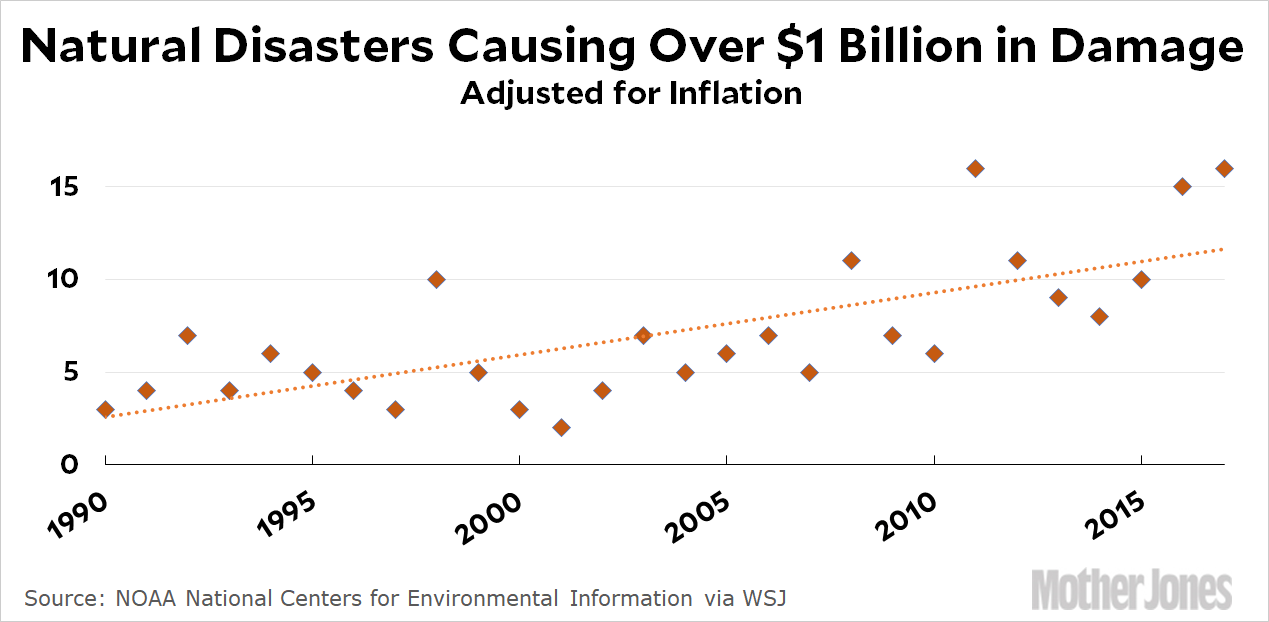
  • Chart of the Day: Natural Disasters Are Getting More Disastrous

    After a wildfire caused $3 billion in damage to the far northern town of Fort McMurray two years ago, insurance company Aviva PLC suddenly paid attention:

    “That is not a type of loss we have experienced in that part of the world, ever,” says Maurice Tulloch, the Toronto-based chief executive of Aviva’s international insurance division. “The previous models wouldn’t have envisioned it.” Aviva studied the incident and concluded the wildfire was an example of how the earth’s gradually warming temperature is changing the behavior of natural catastrophes. Aviva increased premiums in Canada as a result.

    The effects of the planet’s slow heating are diffuse. Predictions of the fallout are imprecise, and the drivers are debated. But faced with the prospect of a warming planet, the world of business and finance is starting to put a price on climate change. Insurers are at the forefront of calculating the impact. “We don’t discuss the question anymore of, ‘Is there climate change,’ ” says Torsten Jeworrek, chief executive for reinsurance at Munich Re, the world’s largest seller of reinsurance—insurance for insurers. “For us, it’s a question now for our own underwriting.”

    Republicans can deny that climate change is real, but real-life businesses can’t afford to do that. The evidence that climate change is affecting their bottom line is just too obvious:

    Some years ago I wondered how obvious climate change would have to be before Republicans were forced to admit that it was real. We still don’t have an answer to that, but eventually the business community that forms the core of the party is going to demand that they cut out the nonsense and start doing something. I predict that conservatives will hold out a little longer, but only until 2024 or so. Beyond that, playing dumb partisan games will no longer be an option.

  • The New NAFTA Is One of the Most Trivial Trade Agreements Ever

    I’ve finally read enough to be pretty sure I have a good understanding of our shiny new North American trade agreement, USMCA. The details, frankly, aren’t very interesting, and you can google them if you really want to. But here’s the nutshell:

    • It’s a very modest change to the original NAFTA.
    • Both Canada and Mexico had already agreed to about 90 percent of the new provisions years ago. That’s because they were included in the TPP agreement, which Donald Trump killed on his first day in office.
    • The net economic effect of the new agreement will be close to zero.
    • The agreement probably could have been concluded months and months ago. As near as I can tell, there were really no serious issues except for Trump’s comical insistence that Canada open its dairy markets further. This made no real sense since we already have a trade surplus with Canada in dairy products.
    • According to Catherine Rampell: “In return for greater American access to the Canadian dairy, poultry and egg markets, we gave Canada greater access to U.S. markets for dairy, peanuts, processed peanut products, sugar and sugar-containing products.” I confess I don’t get this. Peanuts? Canada doesn’t grow peanuts. In fact, according to the Peanut Bureau of Canada—which, and I am serious about this, is actually the “Canadian branch of the American Peanut Council”—the Canadian climate “isn’t very conducive to growing peanuts.” No kidding. They estimate that the total amount of peanuts farmed in Canada “may be as small as a couple hundred tonnes,” and that 85 percent of their peanuts are imported from the United States. So why would Canada want greater access to the US market for peanuts?

    That’s about it. Really. The major provisions of USMCA relate to auto production and pharmaceutical patents, and even those aren’t very major. There’s just not much here. In the end, Justin Trudeau decided to give Trump his dairy provisions in return for Trump agreeing to a dispute resolution process more to Canada’s liking. The total value to the US of this stuff is about a millionth of one percent of GDP. Even among dairy farmers I doubt that it’s all that big a deal.

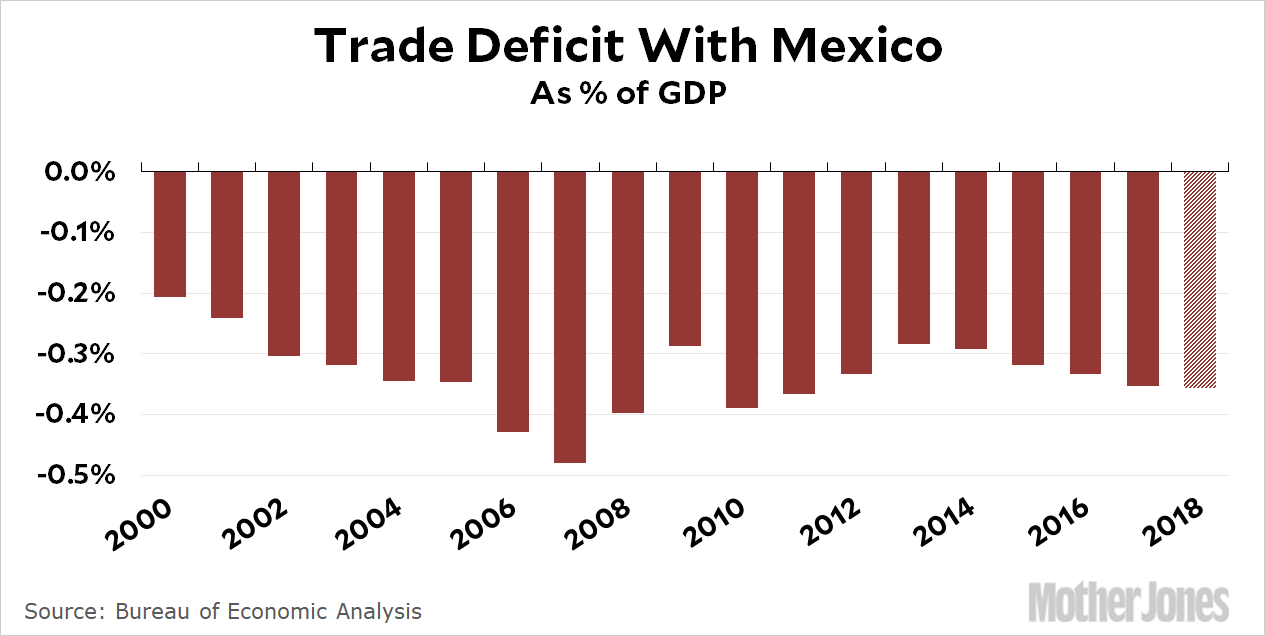
    In any case, we already have an overall trade surplus with Canada, so the new agreement won’t have any effect on that score. This leaves Mexico, and just for the record, here’s our trade balance with Mexico over the past couple of decades:

    There’s no special reason you should care about our trade deficit with Mexico, but if you do, this is our baseline. Tape it to your refrigerator and then check back in four or five years to see if the new trade deal has reduced it. My bet is that it will make no difference whatsoever.

  • Did Brett Kavanaugh Lie About Deborah Ramirez?

    Saul Loeb/ZUMA Press

    This is from the afternoon session of the Brett Kavanaugh hearings last week:

    ORRIN HATCH: When did you first hear of [Deborah] Ramirez’s allegations against you?

    KAVANAUGH: In the last — in the period since then, the New Yorker story.

    Ramirez is the woman who says that Kavanaugh exposed himself to her during a drinking game while they were both at Yale. Kavanaugh denies this ever happened and says that he learned about Ramirez’s allegation only after it was published in the New Yorker last Sunday.

    NBC News, however, has gotten hold of a series of text messages between Kerry Berchem and Karen Yarasavage, both of them personal friends of Kavanaugh, that suggest Kavanaugh has been aware of the Ramirez allegation for quite a long time:

    In a series of texts before the publication of the New Yorker story, Yarasavage wrote that she had been in contact with “Brett’s guy,” and also with “Brett,” who wanted her to go on the record to refute Ramirez. According to Berchem, Yarasavage also told her friend that she turned over a copy of the wedding party photo to Kavanaugh, writing in a text: “I had to send it to Brett’s team too.”

    ….The texts show Kavanaugh may need to be questioned about how far back he anticipated that Ramirez would air allegations against him. Berchem says in her memo that Kavanaugh “and/or” his friends “may have initiated an anticipatory narrative” as early as July to “conceal or discredit” Ramirez.

    All the business about Kavanaugh’s drinking, which has absorbed everyone’s attention for the past week, was never going to go anywhere. He may have done his best to downplay how much he drank, but that’s a political misdemeanor. It almost certainly wouldn’t have derailed his nomination.

    However, if it turns out that Kavanaugh (a) reached out to potential witnesses weeks ago regarding allegations of misconduct and (b) lied to the Senate about when he first heard about these allegations, then he’s toast. The question, of course, is whether Bercham is telling the truth. Bercham told NBC that the FBI has so far been uninterested in talking to her, but I imagine that’s about to change.

  • Lunchtime Photo

    In Greek myth, Persephone was the daughter of Demeter, goddess of the harvest. Hades fell in love with her from afar and—correctly judging that Demeter would never consent to give her up—eventually kidnapped Persephone to become his wife and queen of the underworld. Demeter was distraught, causing the harvest to fail disastrously. Finally, in order to keep everyone from starving, Zeus persuaded Hades to let Persephone leave, but Hades first offered her six pomegranate seeds to eat. For some reason, Persephone went ahead and ate them even though she knew that if she ate anything she’d have to stay in the underworld. This led to some god-level negotiations, and long story short, those six seeds meant Persephone had to spend half of every year in the underworld and half the year with her mother, which is why we have seasons. Or maybe a third of the year in the underworld. It depends on who you believe.

    None of this makes much sense. Why did Hades care if everyone starved? Seems like it would be good for business. Why did eating anything mean Persephone would have to stay in the underworld? And having carefully not eaten anything during her captivity, what caused her to lose her mind right on the brink of her departure and eat the pomegranate seeds? Are they really that irresistible?

    Beats me. But I learned this in fourth grade and it’s everything I know about pomegranates. I’ve never eaten one, but I guess the takeaway from the myth is that they must be pretty tasty indeed.

    September 26, 2018 — Irvine, California
  • Bud Light and the Labour Party: For the Many, Not the Few

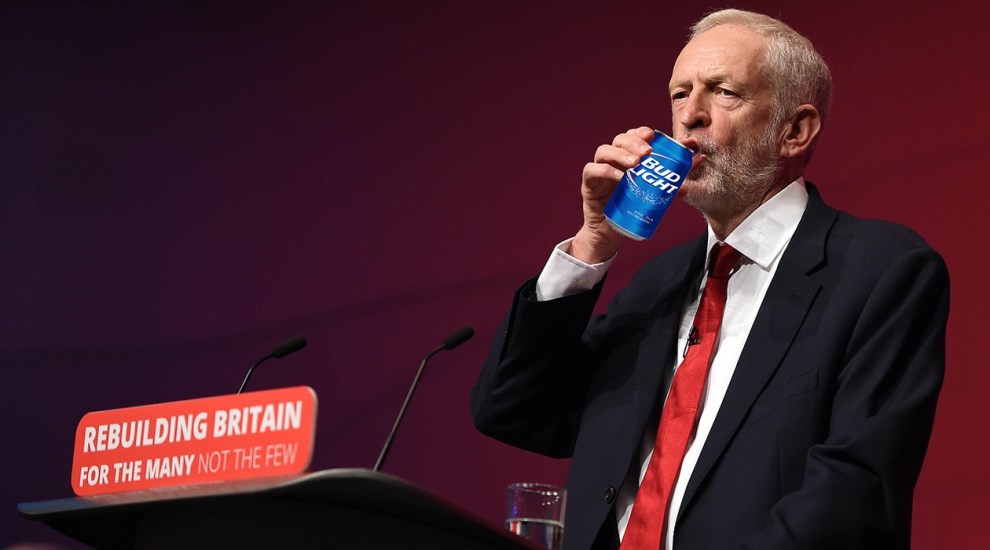
    Labour Party leader Jeremy Corbyn enjoying a refreshing Bud Light during last week's party conference in Liverpool.Corbyn: Pete Maclaine/i-Images via ZUMA; Bud Light: Anheuser-Busch InBev

    There has to be a great story here, right? It can’t just be a tedious coincidence, can it? And if there’s not a great story, can somebody please invent one?