• I Still Have One Question About Democratic Socialism

    Democratic Socialists of America

    I’ve been curious for a while about just what a democratic socialist really is. An FDR liberal on steroids? A Swedish style social democrat? I’m not very clear about this. Meagan Day clears things up for me:

    Here’s the truth: In the long run, democratic socialists want to end capitalism. And we want to do that by pursuing a reform agenda today in an effort to revive a politics focused on class hierarchy and inequality in the United States. The eventual goal is to transform the world to promote everyone’s needs rather than to produce massive profits for a small handful of citizens.

    Tell me more:

    The mid-20th century in the United States featured many elements of social democracy, at least for the majority of white workers….But the rich moved quickly to throw all that out the window as soon as they could get away with it….As a result, a handful of bosses became wealthier and more powerful while wages stagnated and quality of life eroded for everyone else.

    ….Our goal is not to rein in the excesses of capitalism for a few decades at a time — we want to end our society’s subservience to the market. Medicare-for-all is an instructive example. Winning single-payer health care in the US would be an enormous relief to the millions of Americans who, even with insurance, find themselves stymied by claims denials and crushed by medical debt….But we also know that Medicare-for-all is not socialism. It would only nationalize insurance, not the whole health care system….Democratic socialists ultimately want something more like the British National Health Service (NHS), in which everyone pays taxes to fund not just insurance but doctors and hospitals and medicine as well. This would give us the opportunity to design a system that benefits every one of us, not a few pharmaceutical and hospital network executives.

    ….Of course, even socializing a whole industry like medicine wouldn’t automatically lead to the socializing of others. But through the process of the campaign, democratic socialists want to build into the popular consciousness an awareness that the market is not capable of meeting society’s needs….In fighting for Medicare-for-all, people will inevitably start asking basic questions like why corporations are allowed to get rich off of something that should be a basic human right….Fighting for Medicare-for-all can teach Americans the value of uniting over the working-class majority’s interests. Winning Medicare-for-all would free up the labor movement to make more demands on employers, like greater democratic control on the job.

    ….That’s why when democratic socialists choose reforms to rally behind, we favor battles with the potential to transform ordinary people’s lives for the better and teach millions of people the value of uniting to fight the capitalist Goliaths currently in charge of our society.

    So democratic socialism is just…socialism. But Americans have to be taught the virtues of socialism first before we can get there, and the way to do that is (a) fight for Medicare for All, (b) fight for fully socialized medicine, (c) fight to socialize the rest of the commanding heights of the economy.

    As a strategy, this is certainly the classic way of doing things unless you can engineer a revolution of some kind. But I do have one question left: plenty of other rich countries have tried this before, and eventually they’ve all given up because it doesn’t work as well as social democracy or some other form of mixed capitalism. So why will things be different this time?

  • Quote of the Day: College-Educated Republican Women are Extinct

    In a recent interview, Steve Bannon declared that “The Republican college-educated woman is done. They’re gone. They were going anyway at some point in time. Trump triggers them.”

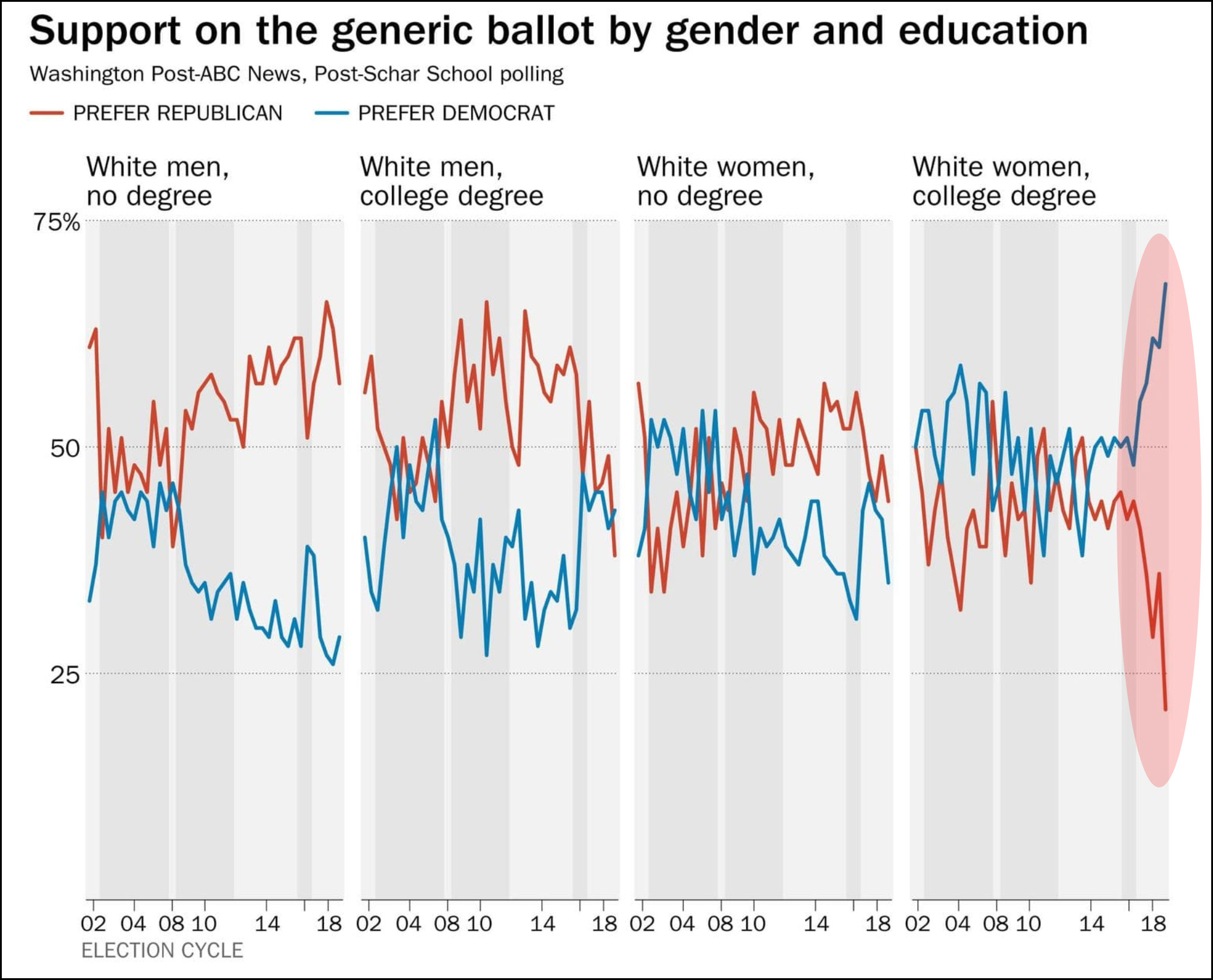
    The Washington Post’s Philip Bump decided to check this out, and it turns out that Bannon is right:

    Working-class white men support Trump, but they’ve returned to reality a bit from the election and now support him by a net of about 28 points. Working-class white women and college-educated white men are bouncing around in the middle. But college-educated white women? They support Democrats by a net of nearly 50 points. And it shows no signs of bouncing back and forth. The more they see and hear of Trump, the more they hate him. Maybe this is the reason. I don’t know. But thanks to Trump, college-educated white women would apparently be pretty happy to see the Republican Party annihilated and replaced with something else.

    Trump has had the same effect, but a bit smaller, on every other demographic group too, wiping out most of the Republican Party’s gains made during the Obama era. The only exception is white-working-class men, which was never really a Trump effect in the first place. They’ve been leaving the Democratic Party steadily ever since the Democrats nominated a black guy for president. But even their support for Republicans has taken a dip lately.

    But even for all those angry white guys, I wonder if they’re starting to see Trump as an empty suit. Sure, he talks big, but there’s still no wall; NAFTA remains in place; North Korea still has nukes; he caved to Europe on trade; Putin seems to have him by the balls; Mueller seems to keep finding a lot of smoke, rich people keep getting tax cuts; and their own paychecks don’t seem any bigger than usual. Trump better start delivering soon if he wants to keep all those working-class white guys in his camp.

  • Lunchtime Photo

    This is an American Robin hanging around the picnic tables at Rosario Beach up in Washington state. They allegedly range all over the entire US, including as far south as San Diego, but I never see them around here. Why is that? Too hot? Too dry? Too many celebrities roaming around?

    March 17, 2018 — Rosario Beach, Washington
  • Why Did We All Start Eating More Vegetable Oil When George Bush Was Elected President?

    Vox reports today that our consumption of fats and oils has been increasing:

    Can anyone explain this? I can’t find the original report, but this chart suggests that our consumption of vegetable fat increased from 55 pounds per person to 75 pounds per person between 1999 and 2003. That’s an increase of a third. Maybe it’s some kind of Y2K glitch in their database?

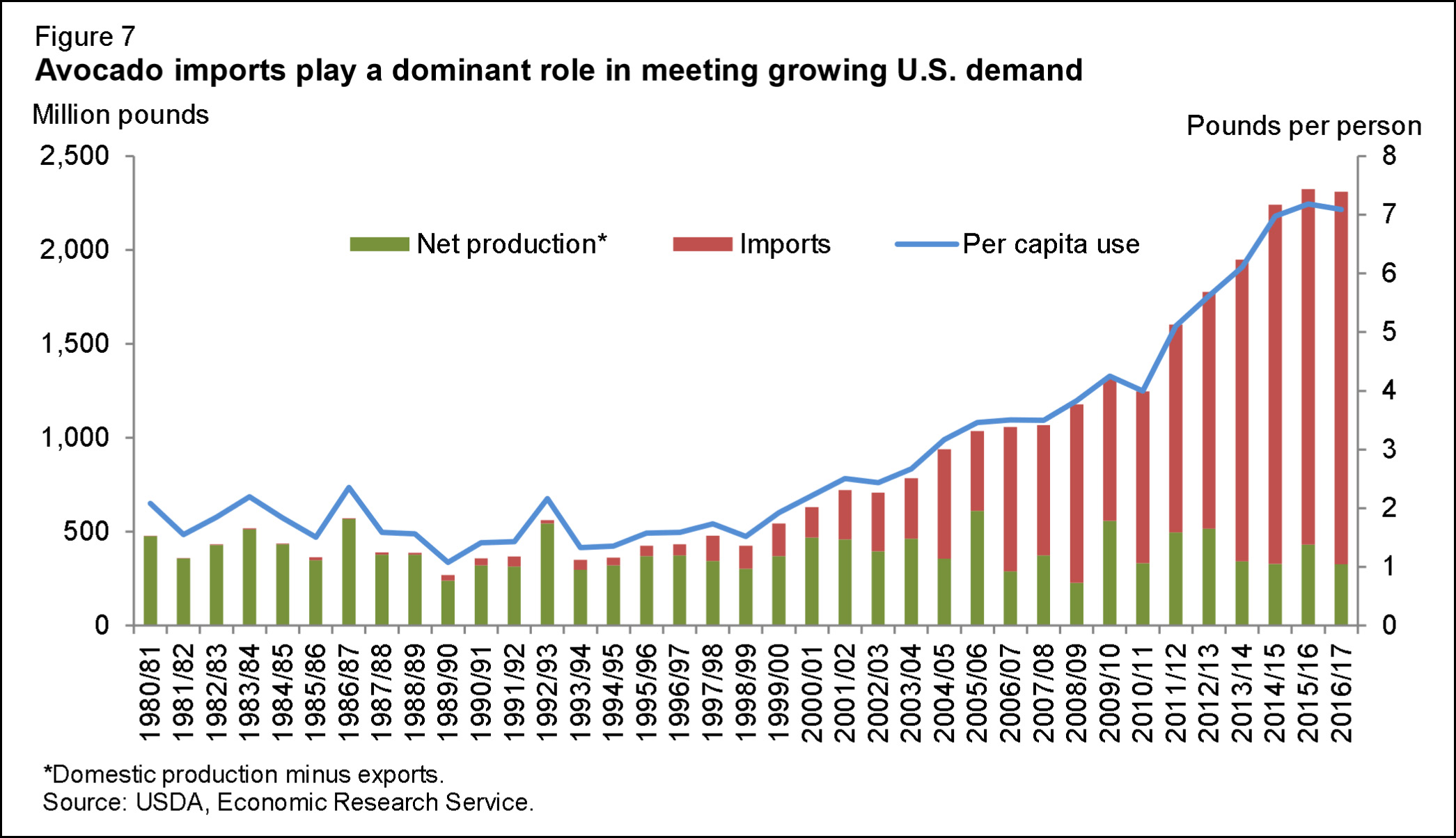
    I’m not sure. But on another note, the USDA also informs us that consumption of avocados has skyrocketed since 2000, from two pounds per person to seven pounds per person. Needless to say, the explanation for this is no mystery at all: avocados are delicious and everyone should eat more of them.

  • Why? Why Does the Media Routinely Lie About Worker Wages and Compensation?

    The Wall Street Journal is excited:

    American workers received their biggest pay raises in a nearly decade in the year to June, a sign the strong labor market and low unemployment is boosting wages as employers compete for scarcer workers. The employment-cost index, a measure of wages and benefits for civilian workers, rose 2.8% in the 12 months to June, the Labor Department said Tuesday. Wages and salaries, which account for about 70% of total compensation, also rose 2.8% from a year earlier. That marked the strongest gain for both measures since September 2008.

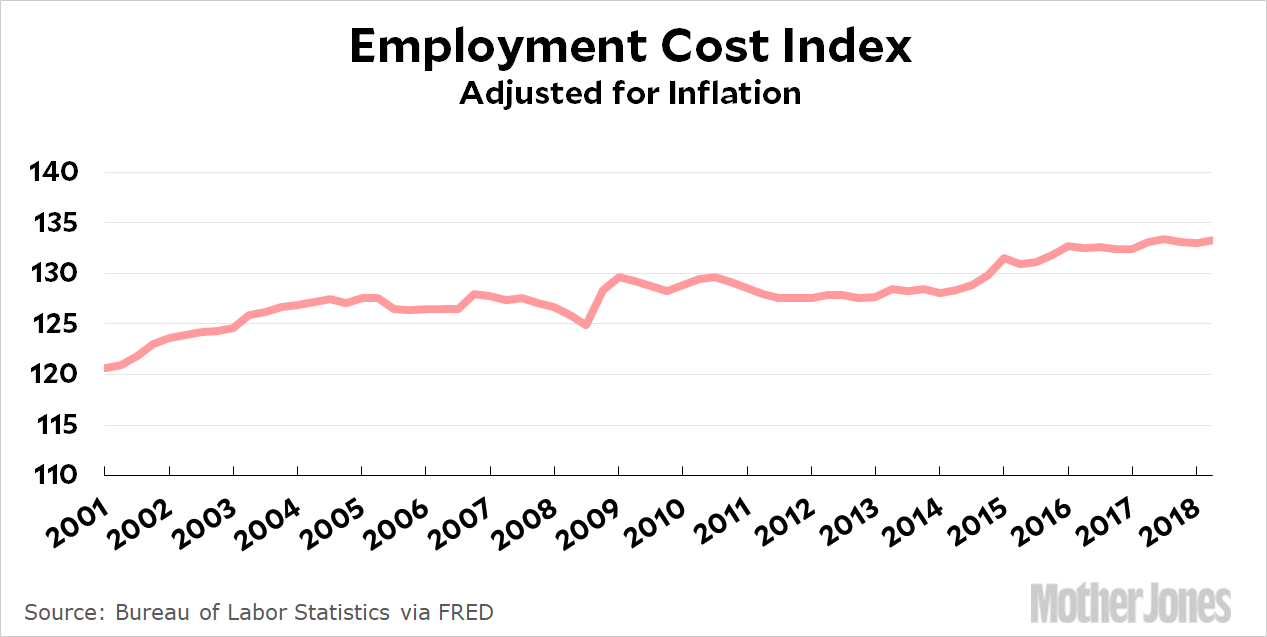
    I am so tired of this shit I could croak. Unless I missed it because I was so annoyed, there’s not a single mention in the Journal story about what this “pay raise” looks like adjusted for inflation. So for your edification, here’s the ECI itself adjusted for inflation

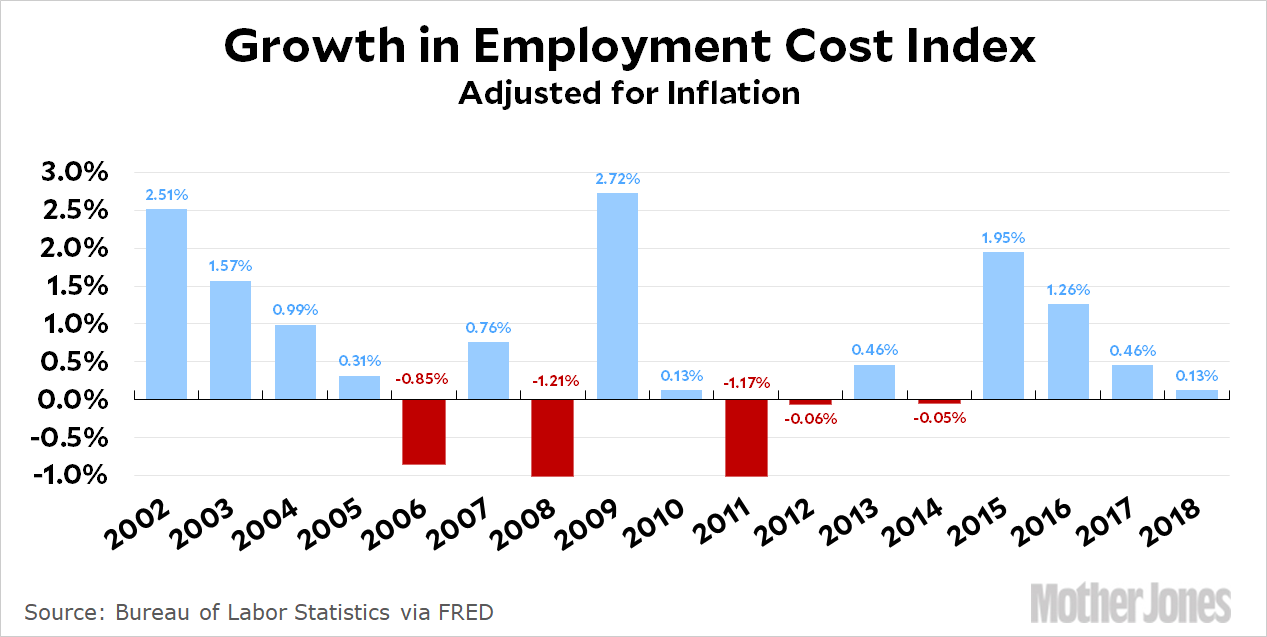
    It doesn’t really seem to be growing much lately, does it? Here’s another chart showing the year-over-year growth of the ECI adjusted for inflation:

    Yep, you read that right: growth from June 2017 to June 2018 is a whopping 0.13 percent. That’s how much the average cost of employing someone has increased over the past year. That includes wages, health care, Social Security payments, office costs, pension benefits, etc. etc. It’s the whole enchilada. Total it up and it comes to 0.13%.

    Does this mean that the “steady drumbeat of rising inflation continues”? I suppose, but you could simply put up a chart showing the inflation rate if that’s the point you wanted to make. Conversely, “U.S. Workers Get Biggest Pay Increase in Nearly a Decade” is just a straight lie by any measure. In fact, worker compensation increased at its lowest rate since 2014.

  • Do White People Not Like Working With Latinos?

    Jebb Harris/The Orange County Register/ZUMAPRESS

    I have two stories for you today. Here is Story #1 from the Wall Street Journal:

    The share of workers in the [construction] sector who are 24 years old or younger has declined in 48 states since the last housing boom in 2005, according to an analysis of U.S. Census data by Issi Romem, chief economist at construction data firm BuildZoom. Nationally, the share of young construction workers declined nearly 30% from 2005 through 2016, according to Mr. Romem. While there’s no single reason why younger folks are losing interest in a job that is generally well-paid and doesn’t require a college education, their indifference is exacerbating a labor shortage that has meant fewer homes being built and rising prices, possibly for years to come.

    The full study from BuildZoom is here. Now here’s Story #2 from the Washington Post. It’s actually a very peculiar story, but I’m just going to pull out this one little bit:

    [Heaven Engle] was standing at the end of a long processing machine called the Multivac, wearing a white smock and blue latex gloves, making $13 an hour, waiting for the next four packages of chicken breasts to come down the line….She could handle the monotony. She could deal with standing under the vents, which cooled the production floor to 40 degrees. She could even tolerate the mess. The day chicken juice got all over her hair and face, the thing that had been intolerable had not been the smell or the taste, but that she didn’t have anyone to talk to about it.

    Over the past two decades, Puerto Ricans and Dominicans had surged into nearby Lebanon city, either from New York or the Caribbean, attracted by cheap housing, an established Latino community, and food-processing plants that had become increasingly, if not mostly, staffed by Latinos, because, as one former employee who spoke on the condition of anonymity put it, “White people didn’t want to work in the stinky chicken shop.”

    The economy is doing well, but younger folks—which I take as code for white younger folks—just aren’t interested in construction jobs even though they pay well. Likewise, white folks aren’t interested in jobs in the chicken plant even though they pay pretty well too.

    What’s going on? This is just a guess, but in both cases whites have to work alongside Latinos who don’t speak English. This is apparently so repellent that very few are willing to do it.

    But maybe there’s another reason. Anyone have any guesses?

  • Conservative Think Tank Says Medicare For All Would Save $2 Trillion

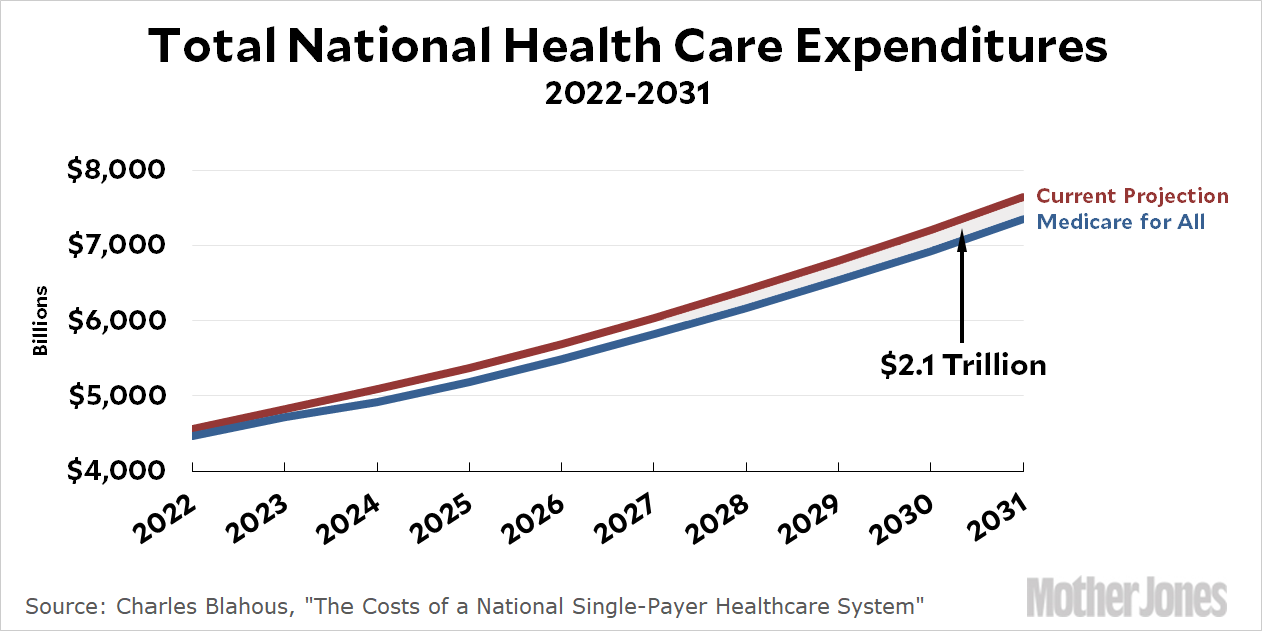
    Here’s some good news. The libertarians at the Mercatus Center did a cost breakdown of Bernie Sanders’ Medicare for All plan and concluded that it would save $2 trillion during its first ten years:

    Now, as you might guess, this was not the spin the Mercatus folks put on their study. Their headline is “M4A Would Place Unprecedented Strain on the Federal Budget.” This isn’t really true, of course, since M4A would absorb all the costs of our current health care system but would also absorb all the payments we make to support it. That includes current taxes (for Medicare, Medicaid, and Obamacare), premiums paid by employers, premiums paid by individuals, and out-of-pocket costs from individuals. Instead of going straight to doctors, hospitals, and insurance companies, it would go instead to the federal government, which would then pay everyone else. It’s a lot of money, but it’s no particular “strain” on anything.

    And overall we’d save at least $2 trillion over ten years. Blahous thinks the number would be less because lots of people would flock to use free health care that they hadn’t used before, but most health economists disagree. Demand for health care would probably stay about the same, while costs would be more strongly contained because everything would be paid for out of tax dollars—and voters are strongly motivated to keep taxes low.

  • Health Update

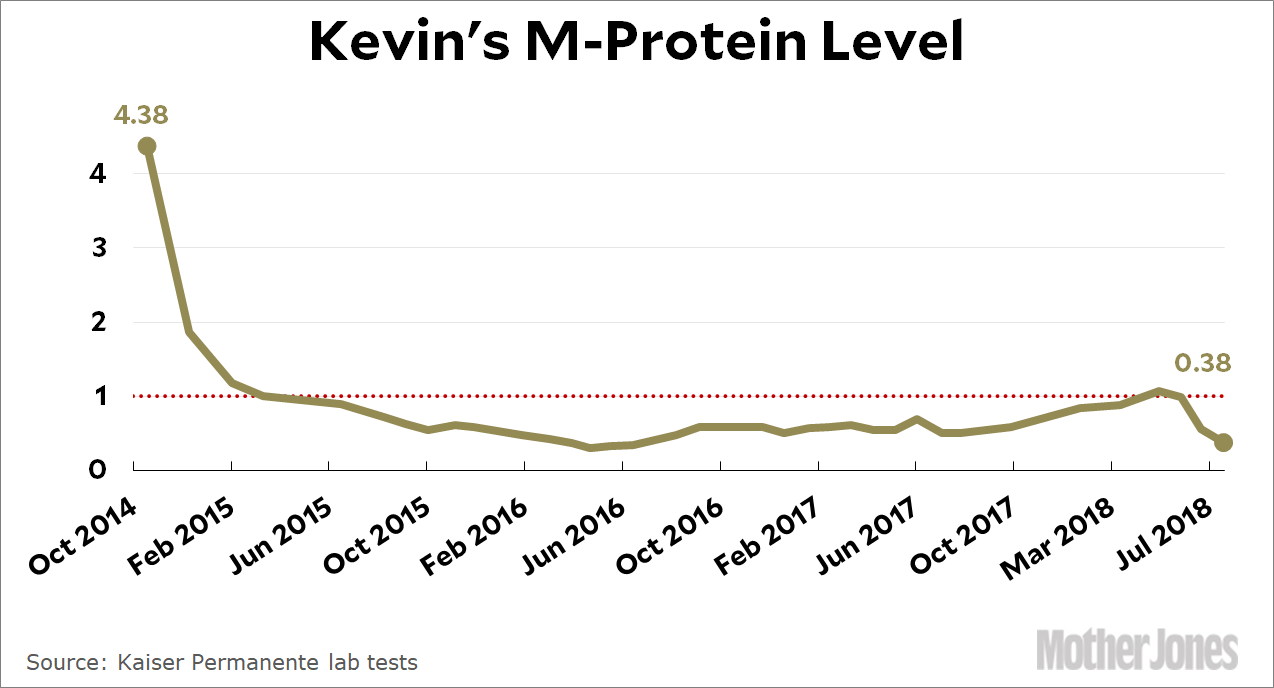
    After nine weeks on the Darzalex, my M-protein level continues to plummet:

    This isn’t quite a new record low (that would be 0.3 on May 6, 2016), but it’s pretty close. I expect that next month’s reading will be the lowest I’ve registered since I was first diagnosed with multiple myeloma. So that’s good news.

    Now, you may recall that there’s some not-so-good news that goes along with this: the Darzalex kills off all the antibodies in its path, not just the cancerous ones. In my case, it’s the IgG antibodies that are cancerous, but the Darzalex also blew through my IgA antibodies, reducing them from 200 to 19. That’s a big reduction. This week they’re down to 12.

    No one has called me with panic in their voice and instructions to curl up in an isolation booth, so I suppose it can’t be all that bad. On the other hand, I wonder if low antibody counts are related to tiredness? Damn, but I sleep a lot these days. I’m averaging 10-12 hours a day lately: about 8 hours at night and then 3 or 4 hours during the day. That’s a lot of sleep.

  • How Not To

    A few weeks ago The Nation published “How-To,” a poem by Anders Carlson-Wee about how passers-by treat beggars and the homeless in the street (“If you’re crippled don’t flaunt it. Let em think they’re good enough Christians to notice”). Last week the poetry editors apologized profusely for having sullied the Nation’s pages with “disparaging and ableist language”:

    We made a serious mistake by choosing to publish the poem “How-To.” We are sorry for the pain we have caused to the many communities affected by this poem….When we read the poem we took it as a profane, over-the-top attack on the ways in which members of many groups are asked, or required, to perform the work of marginalization. We can no longer read the poem in that way….We are grateful for the insightful critiques we have heard, but we know that the onus of change is on us, and we take that responsibility seriously. In the end, this decision means that we need to step back and look at not only our editing process, but at ourselves as editors.

    Carlson-Wee is sorry too:

    I don’t have the mind of a poet, so I have to take some guesses here. I suppose the ableist language is the word “crippled”—or perhaps the suggestion that people on the street might occasionally fake being a little bit disabled. The reference to “blackface” must be the black dialect used by the homeless narrator, which is problematic because:

    This guy is whiter than me! I hope he’s learned his lesson. He says of the black dialect being interpreted as blackface that he “did not foresee this reading of the poem.” How the hell did he not foresee that in this hypersensitive age of cultural appropriation and racial siloing? Then again, neither of the poetry editors foresaw it either. Nor, apparently, did anyone else who saw this poem before it was published. And all of them solid lefties at The Nation! That’s surprising, isn’t it?

    Luckily, Twitter saw it loud and clear. All hail Twitter, our new supreme arbiter of poetic insight and interpretive use of narrative language. I wonder if National Review has this problem when they publish poems about supply-side tax cuts?

  • Are You Rich? Trump Wants to Give You Yet Another Tax Cut!

    Let’s say that ten years ago you bought $1,000 in shares of DrumCo stock. Naturally it’s a well-managed company and today those shares are worth $1,300. You sell them for a $300 profit, and pay a nice, low 20 percent capital gains tax of $60.

    But then you start to think. What about inflation? That $1,000 in 2008 is the equivalent of $1,150 today. Your real profit is only $150, and $60 represents a capital gains tax of 40 percent. What a rip off! Part of your “profit” is really just keeping up with inflation. Why do you have to pay any taxes on that?

    This is an ancient question, and I’m not here to answer it. You can make a good case for various ways of handling capital gains taxes. However, there’s one question I can answer: what does the law say you have to pay? The answer is that the law doesn’t care about inflation. The base price of the stock is whatever you paid for it in dollars at the time, and the selling price is whatever you sold it for later. The difference is your profit, full stop. Congress has had dozens of chances to change this, but it gets complicated once you dive into it. So they’ve always left it alone and made up for the implicit inflation penalty it by making the capital gains rate pretty low.

    But wait. What if you could have both an inflation adjustment and a low capital gains rate? That would be awesome! Let’s check in with the New York Times:

    The Trump administration is considering bypassing Congress to grant a $100 billion tax cut mainly to the wealthy, a legally tenuous maneuver that would cut capital gains taxation and fulfill a long-held ambition of many investors and conservatives. Steven Mnuchin, the Treasury secretary, said in an interview on the sidelines of the Group of 20 summit meeting in Argentina this month that his department was studying whether it could use its regulatory powers to allow Americans to account for inflation in determining capital gains tax liabilities. The Treasury Department could change the definition of “cost” for calculating capital gains, allowing taxpayers to adjust the initial value of an asset, such as a home or a share of stock, for inflation when it sells.

    So who gets all this extra money? The upper middle class? The affluent? The prosperous? The well-off? No, no, and no. Almost all of it would go to the straight-up super rich:

    Independent analyses suggest that more than 97 percent of the benefits of indexing capital gains for inflation would go to the top 10 percent of income earners in America. Nearly two-thirds of the benefits would go to the super wealthy — the top 0.1 percent of American income earners.

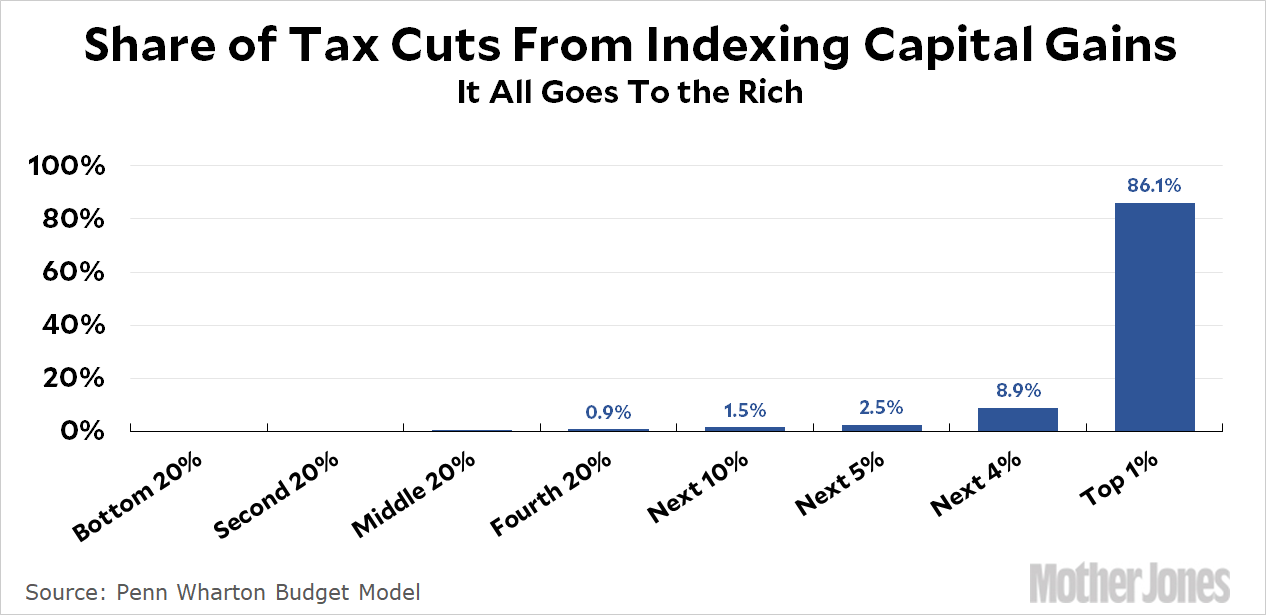
    ….According to the budget model used by the University of Pennsylvania’s Wharton School of Business, indexing capital gains to inflation would reduce government revenues by $102 billion over a decade, with 86 percent of the benefits going to the top 1 percent.

    The good news is that Trump and his wealthy real-estate pals almost certainly can’t do this. The law is simply too clear on this point. Still, at least it shows that their hearts are in the right place, doesn’t it?

    And if they do somehow get away with it, there’s still a silver lining. Now that they’ve gotten religion on inflation, it means that in the interests of fairness they’ll surely be in favor of indexing things like the minimum wage to inflation too. Right? I mean, what possible reason could there be for indexing the wages of the rich to inflation but not the wages of the poor?