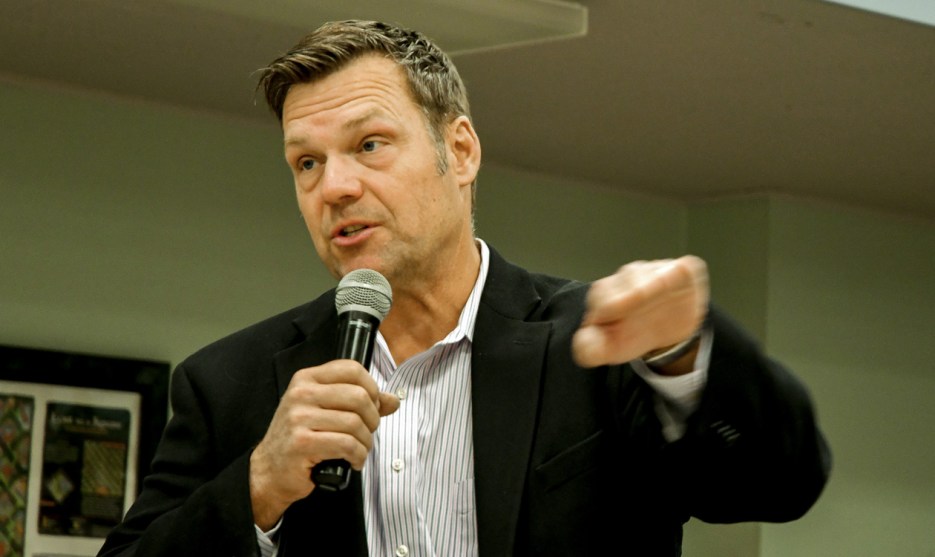
Kris Kobach was hoping his misfit character would become a regular, but "Donald" audiences never warmed to him. His contract wasn't renewed for season 2.Mark Reinstein via ZUMA
The scriptwriters for The Donald Show are getting lazy with their story arcs. I mean, take a look at their latest punt:
Episode 2017.1: Donald is desperate to prove that he won the greatest presidential victory of all time. But how?
Episode 2017.2: Cheating! That’s the ticket. His offscreen arch-nemesis Hillary hoovered up millions of votes from Mexicans who are in the country illegally.
Episode 2017.3: Donald asks kooky recurring character Kris Kobach to head a commission to look for the extra votes.
Episode 2017.4: Kobach promptly rounds up a gang of misfits and starts delivering subpoenas. Hilariously, even his own state doesn’t comply.
[The storyline is abandoned for months and the audience begins to wonder if it’s ever coming back. Is the Trump administration becoming the Lost of presidencies?]
WTF? Not even a little flashback to tell us what happened to Kobach? Did he slip on a banana peel? Get run over by a neo-Nazi? This plotless, meandering show has always been an acquired taste, but now it’s just getting tired. Can it last another couple of seasons at this rate?
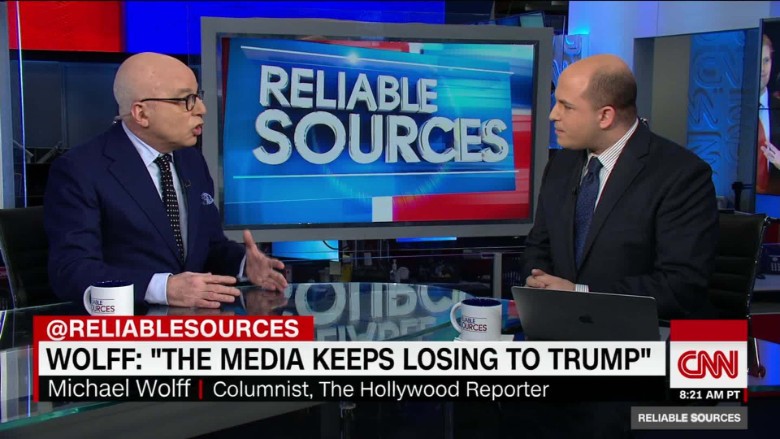
Over lunch I read the Michael Wolff piece everyone is talking about, and the basic takeaway is the same as hundreds of other articles about Donald Trump: he’s a moron; he’s only barely functionally literate; he watches a ton of TV; he’s ignorant about almost everything; he never seriously listens to anyone; he has settled opinions on every subject; he’s moody as hell; and he cares about nothing but himself.
The rest is just details, and plenty of them are entertaining. But the most interesting part, I thought, was the editor’s note at the end:
Shortly after Trump’s inauguration, Wolff says, he was able to take up “something like a semi-permanent seat on a couch in the West Wing” — an idea encouraged by the president himself. Because no one was in a position to either officially approve or formally deny such access, Wolff became “more a constant interloper than an invited guest.” There were no ground rules placed on his access, and he was required to make no promises about how he would report on what he witnessed.
This sort of arrangement is fairly common in presidential campaigns. But it’s not common in presidential administrations. Not even slightly. I’m not at all sure it’s ever been done before.
But apparently Trump is such an insane narcissist that he couldn’t see any downside to this. He simply couldn’t conceive that unrestricted access would produce anything other than a glowing tribute to the most sensational first 100 days of any presidency ever. That’s despite the fact that he’s done this many times before and the results have never been favorable except in a “say anything you want as long as you spell my name right” kind of way.
There’s really no mystery about Trump. He’s exactly what he seems to be. The only reason we keep regurgitating stories like this one is because we can’t collectively believe it. No matter how many times we hear it, we just can’t believe that any human being outside a mental institution could be so delusional and oblivious. But Trump is.
This picture shows a couple of tourists in a jaunting car, touring around Killarney National Park near Torc Falls. They’re probably coming from Muckross House, which is about a mile to the left.
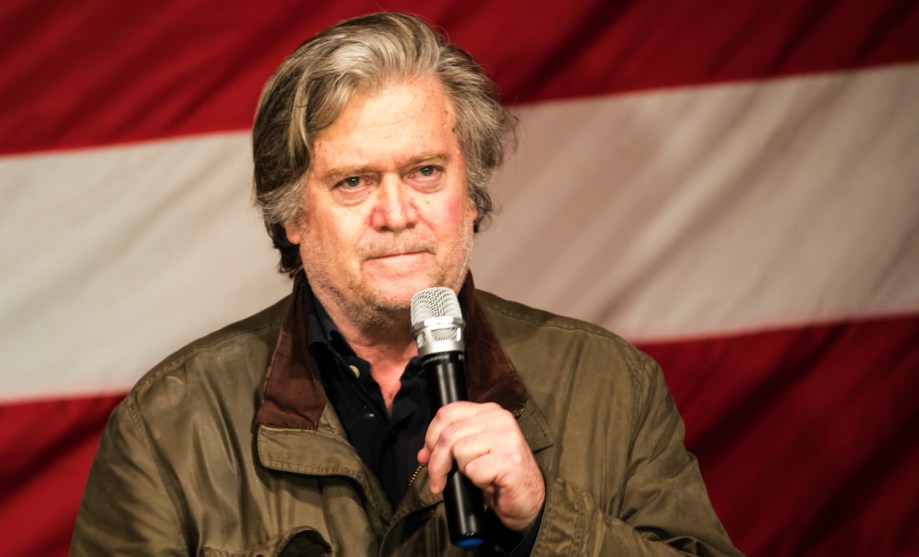
Steve Bannon has nothing to do with me or my Presidency.¹ When he was fired, he not only lost his job, he lost his mind. Steve was a staffer² who worked for me after I had already won the nomination by defeating seventeen candidates….Now that he is on his own, Steve is learning that winning isn’t as easy as I make it look….Steve pretends to be at war with the media, which he calls the opposition party, yet he spent his time at the White House leaking false information to the media to make himself seem far more important than he was.³ It is the only thing he does well.
I wonder who wrote this? It has the general tone of Trumpiness, but not the syntax. Miller, maybe? In any case, this is apparently a response to Michael Wolff’s book excerpt in New York today, which I haven’t read yet because I was too busy bollixing up my medical inflation figures for a couple of hours until I got them right. Apparently Bannon was a prime source for the book, as he has been for so many juicy gossip items over the past year. I guess I should read it over lunch.
¹Bannon is practically the definition of Trump’s presidency.
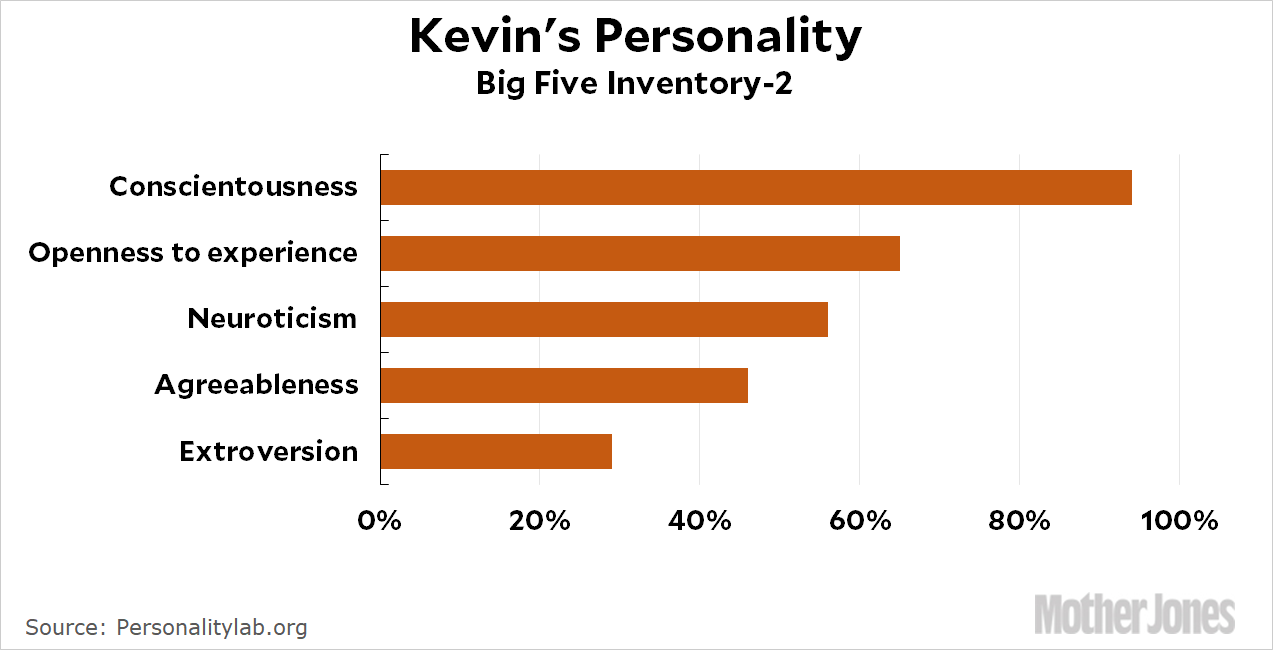
Maggie Koerth-Baker says personality tests are all junk science except for one: the Big Five test. Fine. So I took it. Would you like to know how I came out? Of course you would! But let’s put it into chart form, shall we?
My comments:
Conscientiousness. I’m not sure I’m quite that conscientious. But, yeah, I tend to be a pretty focused and reliable kind of guy.
Openness to experience. I’ve always wondered what this really meant, and now I know. According to the writeup, it’s a mishmash of openness to experience and openness to ideas. I’m a person of settled habits who’s not all that open to new experiences, but I am open to new ideas. I love new ideas. This averages out to an above-average score, but it still seems to me that we’re using the same label for two different things here.
Neuroticism. Yeah, I have mood swings and tend to focus more on negative emotions than positive ones. On the other hand, I mostly stay calm and I bounce back from setbacks relatively quickly. So that all averages out and I end up…about average on this metric.
Agreeableness. I think I probably scored higher than I should have here. Sure, I’m generally polite, but I’m not especially well-liked or sociable. Then again, it’s not like I’m a monster or anything. This score probably isn’t way off. Maybe by 5-10 points at a guess.
Extroversion. I dunno. If I were guessing, I’d say I should have scored lower. Then again, I’m not a hermit and I don’t go to pieces around new people. I’d just prefer that they all go away.¹ I actually have my own score for this, in fact. I’ve discovered that I’m OK in groups of five or less. Six can go either way, though it’s fine if it’s people I know. Above that I tend to go pretty quiet. These are exact numbers, by the way, not estimates. The tipping point is six. Always six.
I would judge a personality by the extreme traits, not the ones that are just average. In my case, it means I’m introverted, conscientious, and open to new ideas. All in all, I’d say that sounds about right.
¹Oddly, I quite enjoy meeting up with readers when they happen to be in town. I suppose that fits, since this always falls well under the six-person rule. On the other hand, after I’ve met someone I tend not to stay in touch very well.
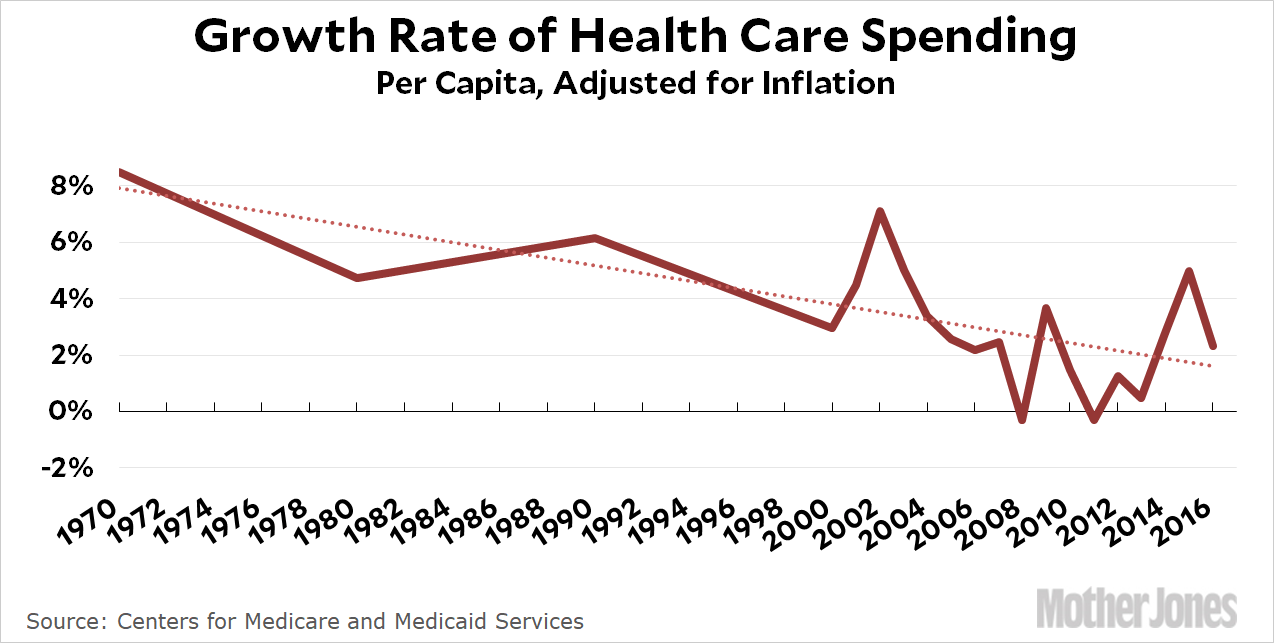
The Kaiser Family Foundation retweeted an old chart about health care expenditures yesterday, so let’s do one of our own:
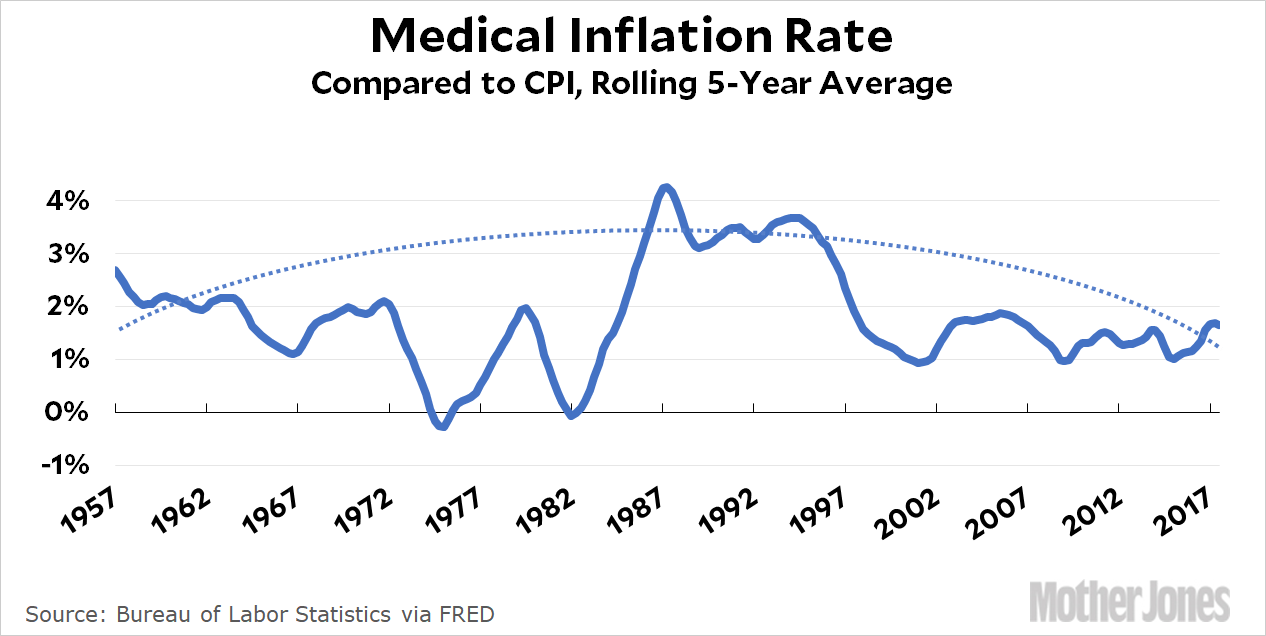
The growth rate is slowing down (yay!), but the decadal data from 1970-2000 hides a big bubble in the 70s and 80s. For a longer-term view, here’s plain old medical inflation as calculated by the BLS. This chart shows how much higher medical inflation is compared to general inflation:
Massive increases in health care spending are neither normal nor inevitable. Until the late 70s, medical inflation ran at about 1-2 percent above overall inflation. Then, for nearly two decades, we suddenly went nuts and allowed every player in the health care industry—doctors, hospitals, drug companies, device manufacturers—to go on a wild spree of increasing their prices as much as they felt like. Being a physician changed from being a comfortable, upper-middle-class occupation to being a member of the top 2 percent. Hospital CEOs got rich. Pharmaceutical companies introduced rafts of new medications and discovered they could charge whatever they wanted and no one would stop them.
Finally, in the late 90s, the party ended. We all woke up to discover that an entire sector of the economy had grabbed an extra trillion dollars for itself for no particular reason except that they could get away with it. So we finally got serious about reining in health care costs, and we did. Medical inflation went back to 1-2 percent above overall inflation in the early aughts, and lately it’s been even lower than that.
Unfortunately, the crazy years pushed prices permanently higher. So year in and year out, the health care industry still gets their extra trillion dollars. We’ll probably never claw that back. But at least it’s not getting any bigger these days.
On Monday at 8 pm, college football holds its national championship game. But if you’re not a sports fan, don’t worry. Donald Trump has you covered:
I will be announcing THE MOST DISHONEST & CORRUPT MEDIA AWARDS OF THE YEAR on Monday at 5:00 o’clock. Subjects will cover Dishonesty & Bad Reporting in various categories from the Fake News Media. Stay tuned!
Over the past few months, Republicans have been too busy reducing corporate taxes to bother negotiating a budget for the 2018 fiscal year (which is already three months old). Instead they keep passing stopgap bills to keep the government going for a few weeks longer. The last one allowed everybody to go home for the holidays, but it expires on January 19 and another stopgap isn’t really in the cards. They need to get a budget passed.
The biggest obstacle is the Republican desire to increase defense spending but reduce domestic spending. There’s really no way they’re going to round up any Democratic votes for that, so Donald Trump and the congressional leadership are going to have to hammer out some kind of compromise on this. But Ed Kilgore writes today that they also need to hash out a deal on the mini-DREAM Act, which allows children who were brought illegally into the country at a young age to stay:
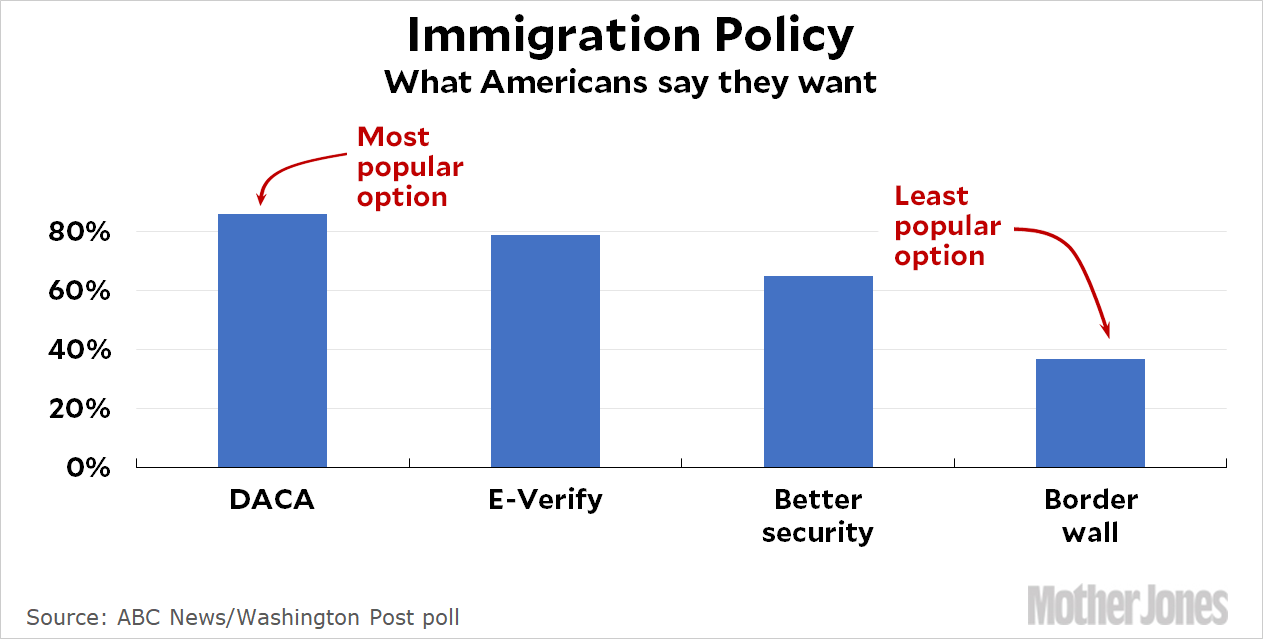
The general lines of an achievable DACA deal have been clear for months: renewed protections for Dreamers in exchange for more money for border control. But every time a deal seems near, Trump demands border-wall funding, which is a classic nonstarter for Democrats.
I still don’t quite get this. Let’s suppose that Republicans offer up an acceptable deal on DACA that makes it permanent. This isn’t pie in the sky, since neither Paul Ryan nor Mitch McConnell are immigration hardliners. They’re probably willing to horsetrade over this. In return, they assuage Trump’s ego with half a billion dollars to build part of the wall. Big deal. This allows Trump to crow about how the wall is making progress, but doesn’t really do much damage in real-world terms. We already have fencing along most of the border, so who cares if they tear out some of it and install better fencing? What’s more, DACA is popular—even among Republican voters—so there’s no political harm in supporting it.
I dunno. I get the obnoxious symbolism at work here, but it still seems like a reasonable bargain if the details can be hashed out. Rescuing DACA would provide concrete help to upwards of a million immigrant youngsters. Conversely, the wall would be little more than an annoying bit of populist trash talking. That makes this a classic win-win based on differences in how the two sides value things. Democrats like tangible achievements that help people, so they’re happy. Trump likes things that allow him to brag about great he is, so he’s happy too. What’s the problem?
POSTSCRIPT: Part of my attitude toward this, I suppose, is motivated by the fact that I’m not an immigration hardliner either. I don’t like the wall because I think it’s bad symbolism and a waste of money. But I don’t object in principle to improving the efforts of the federal government to secure the border. Unless you’re an open-borders enthusiast, you’re not either. For this reason, plus the fact that we fence a great deal of the border already, the wall doesn’t offend me that much. I just think it’s kind of dumb, not a step on the road to fascism.
It’s January, but there’s still plenty of color left on the trees here in Southern California. Mostly you see it on the liquid amber trees, but the tail-end of the maples are still around too. These maples are out in Black Star Canyon, and quite brilliant when they’re backlighted by the afternoon sun.
Susan Glasser has a long piece in Politico today about Donald Trump’s foreign policy, and it’s about what you’d expect: pretty much everyone overseas thinks Trump is dumb, ignorant, and vain. They’ve responded in various ways: opportunistically when Trump is on their side (Israel, Saudi Arabia); with over-the-top flattery when they want to keep him out of the way (China, Japan); and with simpleminded charts and pictures when they want to keep him from doing something unusually stupid (Germany and others).
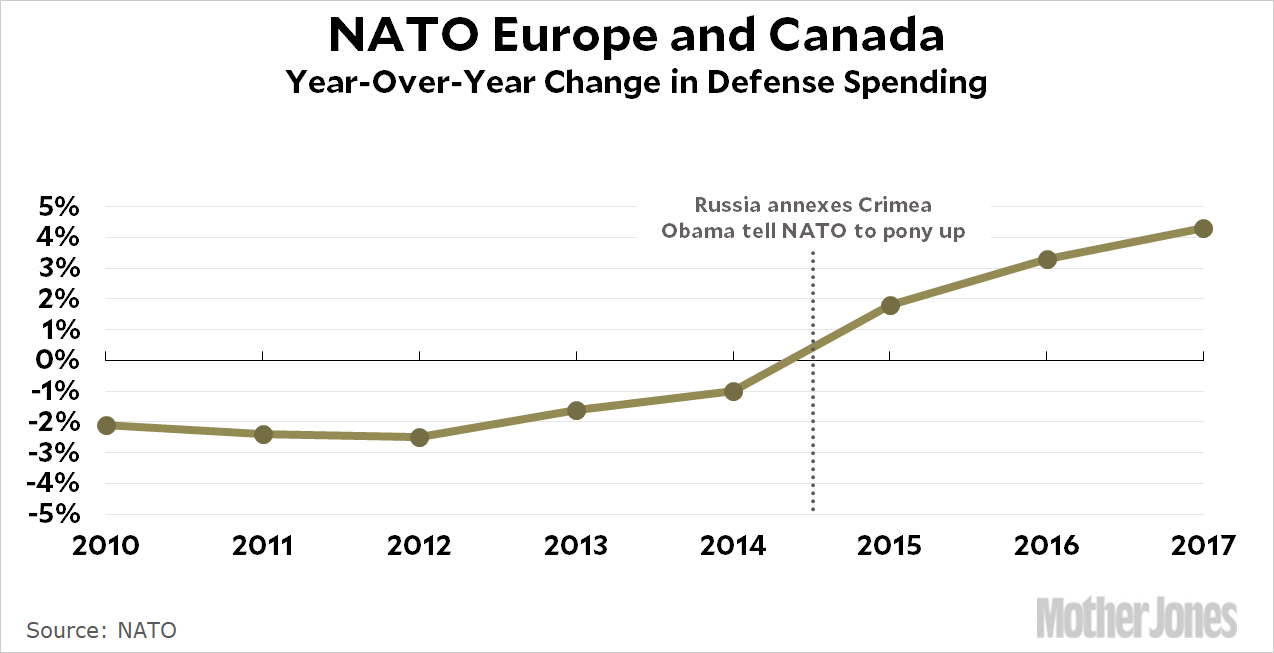
Glasser’s piece is worth a read even if it’s mostly old news, but I was a little surprised that a couple of times she passed along without comment praise of Trump for “forcing European allies to pay more for NATO after years of ineffectual American complaints.” Really? In 2014 Russia seized Crimea and President Obama told NATO it was time to stop shirking their responsibilities:
We have seen a decline steadily in European defense spending generally….That has to change. The United States is proud to bear its share of the defense of the Transatlantic Alliance. It is the cornerstone of our security. But we can’t do it alone.
If Trump was responsible for this, he’s a whole lot more powerful than any of us think. But he wasn’t. Vladimir Putin and Barack Obama deserve whatever credit there is for getting NATO members to stop reducing their military budgets. Defense spending among most NATO Europe members is still no great shakes, but progress to turn that around began in 2015, not 2017.
And we respect that! But maybe you’re of a mind to support our work directly instead? We have until December 31 to raise the last $400,000 we need to keep our nonprofit newsroom running at full strength into 2026. Will you make a gift today?
We noticed you have an ad blocker on. Can you pitch in a few bucks to help fund Mother Jones' investigative journalism?
Billionaires own the media,
but they don’t own us.
At Mother Jones we know these aren’t conventional times, and they require unconventional coverage. That’s what deliver every day: fierce, independent journalism you can’t find elsewhere. Perhaps never in the history of our country has that been more necessary than now. But we can’t do it without reader support—your support. Please chip in today.
Billionaires own the media,
but they don’t own us.
At Mother Jones we know these aren’t conventional times, and they require unconventional coverage. That’s what deliver every day: fierce, independent journalism you can’t find elsewhere. Perhaps never in the history of our country has that been more necessary than now. But we can’t do it without reader support—your support. Please chip in today.