Another Terrorist Convicted in Civilian Court; No One Notices

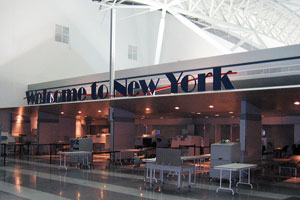
John F. Kennedy International Airport in New York City. | Flickr/<a href="http://www.flickr.com/photos/wallyg/297599606/sizes/z/in/photostream/">wallyg</a> (<a href="http://www.creativecommons.org">Creative Commons</a>).

Get your news from a source that’s not owned and controlled by oligarchs. Sign up for the free Mother Jones Daily.


On Wednesday, a federal judge in Brooklyn sent a terrorist to prison for the rest of his life. Abdul Kadir, a former politician from the South American country of Guyana, was convicted in August of conspiring to blow up huge fuel tanks at JFK airport. The New York Times covered Kadir’s sentencing, but I’ll forgive you for missing it: it was on page A29 of the print edition, above a story about the Korean community in Palisades Park, New Jersey.

This type of media treatment is a big problem for supporters of civilian trials for terrorist suspects. Kadir was involved in an actual terrorist plot—one he hoped would “dwarf 9/11.” He isn’t an American, he wasn’t arrested in America, and he is allegedly connected to a militant Muslim group that has been characterized as one of “Al Qaeda’s Inroads in the Caribbean.” In other words, he has a lot in common with the Gitmo detainees that civil libertarians so desperately want tried in civilian court. (The difference, of course, is that since he was captured by law enforcement in 2007, he was never subjected to “enhanced interrogation.”)

But because Kadir was tried, convicted, and sentenced in the civilian system, the resolution of his case has received little media attention—and the federal justice system gets almost no credit for its success in dealing with him. If advocates of civilian trials for Gitmo detainees like Ahmed Ghailani want to win the argument, they’re going to have to be more aggressive about drawing attention to every single example of the civilian system’s success in dealing with terrorism cases. This is one of those successes.
DECEMBER IS MAKE OR BREAK

A full one-third of our annual fundraising comes in this month alone. That’s risky, because a strong December means our newsroom is on the beat and reporting at full strength—but a weak one means budget cuts and hard choices ahead.

The December 31 deadline is closing in fast. To reach our $400,000 goal, we need readers who’ve never given before to join the ranks of MoJo donors. And we need our steadfast supporters to give again—any amount today.

Managing an independent, nonprofit newsroom is staggeringly hard. There’s no cushion in our budget—no backup revenue, no corporate safety net. We can’t afford to fall short, and we can’t rely on corporations or deep-pocketed interests to fund the fierce, investigative journalism Mother Jones exists to do.

That’s why we need you right now. Please chip in to help close the gap.

DECEMBER IS MAKE OR BREAK

A full one-third of our annual fundraising comes in this month alone. That’s risky, because a strong December means our newsroom is on the beat and reporting at full strength—but a weak one means budget cuts and hard choices ahead.

The December 31 deadline is closing in fast. To reach our $400,000 goal, we need readers who’ve never given before to join the ranks of MoJo donors. And we need our steadfast supporters to give again—any amount today.

Managing an independent, nonprofit newsroom is staggeringly hard. There’s no cushion in our budget—no backup revenue, no corporate safety net. We can’t afford to fall short, and we can’t rely on corporations or deep-pocketed interests to fund the fierce, investigative journalism Mother Jones exists to do.

That’s why we need you right now. Please chip in to help close the gap.

We Recommend

Latest

Sign up for our free newsletter

Subscribe to the Mother Jones Daily to have our top stories delivered directly to your inbox.

Get our award-winning magazine

Save big on a full year of investigations, ideas, and insights.

Subscribe

Support our journalism

Help Mother Jones' reporters dig deep with a tax-deductible donation.

Donate