California’s 3-Strike Prison Reform Is Working

<a href="https://www.flickr.com/photos/norue/13938341399/in/photolist-fGLah-neFDi2-kaaoyN-83Rm1d-7ofhPW-fxSF7k-cCS9zN-cCScMQ-7Fwt7x-cCSbfj-aNPhJ-gF3nXV-7g6rLq-wC8JX-do7WhD-fxStP6-38wBWq-aEukcY-cEdovs-pWMCX5-572Gk-K3z4v-5zCkcN-76wKPQ-LYwY7-a91URN-agcKi3-8TaAdQ-8ad6YY-rpJN4-62R4Ev-6qoBmK-aekaK4-de3U-9icSX1-6qsN9C-dLFf89-5NrRia-7h76DU-kBxd2-gxTYR-gjmKrq-8Aus3-bjoHVX-5jJ1TB-6AVJ7p-kxZy8-byTHXc-8AvSm-7DMweA">AndreasS</a>/Flickr

Get your news from a source that’s not owned and controlled by oligarchs. Sign up for the free Mother Jones Daily.


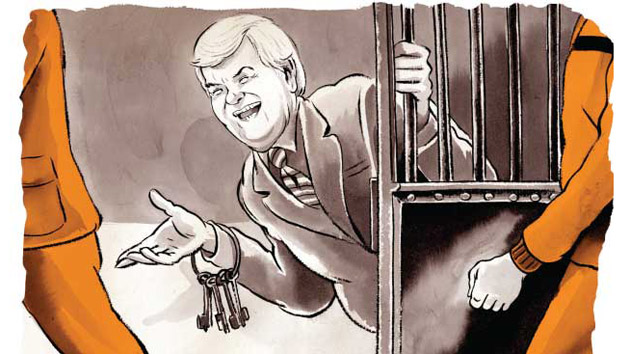
California’s three-strikes law used to mean that all third-time felons had to spend at least 25 years behind bars—pretty harsh, considering that the third strike could be the result of stealing a $2.50 pair of tube socks. Last year, voters decided to scale back the policy, and passed two initiatives to give judges more sentencing discretion and retroactively reduce the penalties for low-level drug and theft crimes. Law enforcement leaders warned that the reform would set free “thousands of dangerous inmates,” and called it “a radical package of ill-conceived policies” that “will endanger Californians.”

Of roughly 2,000 former life prisoners freed as a result of the three-strikes reform, only 4.7 percent have returned to prison.

But almost five months after the second initiative passed, that warning sounds increasingly overblown. About 45 percent of inmates released from California prisons normally re-offend within 18 months. Of roughly 2,000 former life prisoners freed as a result of the three-strikes reform, only 4.7 percent have returned to prison, according to the New York Times. These ex-convicts had been out for an average of 18 months.

Experts say that intense exit counseling helped contribute to the low recidivism rate. “There’s a lot of emotional work,” Mark Faucette, director of community relations for the Amity Foundation, told the Times. “They’re moving from a number to a name.”

Crime rates did fall—but a 2012 study from UC-Riverside later found that it had nothing to do with three strikes.

Two decades ago, fear of crime was at a nationwide peak. The murder of 12-year-old Polly Klaas by a career criminal helped push Californians to pass the three-strikes law, the country’s strictest, in 1994. Crime rates did fall—but a 2012 study from UC-Riverside later found that it had nothing to do with three strikes. The law also added an estimated $19 billion to the state prison budget. As federal courts started pressuring California to shrink its prison population in 2009 due to inhumane treatment and overcrowding, the three-strikes legislation made even less sense.

The tides may be shifting for the rest of the country, too. As my colleague Shane Bauer writes, a 2013 poll found that even among Texas Republicans, 81 percent favor treatment over incarceration for drug offenders. Other states—more than 20 of which also passed three-strikes laws in the 1990s—may also soon be questioning prison time as a blanket solution for low-level crimes.

Take the next step: Help us fight for the truth.

Investigative journalism, like the story you just read, takes time to do. Months of research. Weeks of writing, editing, and fact checking—and putting together the photography, art, video, and audio that tell the stories in a new way, illuminating new perspectives and voices.

We can afford to take that time because we don’t report to an oligarch or corporation with a special agenda. We report to you, and for you. That’s why we unabashedly pursue the truth and relentlessly shine a light into the darkness.

In this month’s Summer Membership Drive, we’ve got to raise $200,000 to support more crucial investigations. This is a pivotal moment in our nation, with democracy on the line, and we can only do this work because readers like you step up. Every donation, of any amount, makes a difference here. We cannot do this work without you.

So, we’re asking: Will you support independent journalism that demands those in power answer for their actions?

Take the next step: Help us fight for the truth.

Investigative journalism, like the story you just read, takes time to do. Months of research. Weeks of writing, editing, and fact checking—and putting together the photography, art, video, and audio that tell the stories in a new way, illuminating new perspectives and voices

We can afford to take that time because we don’t report to an oligarch or corporation with a special agenda. We report to you, and for you. That’s why we unabashedly pursue the truth and relentlessly shine a light into the darkness.

In this month’s Summer Membership Drive, we’ve got to raise $200,000 to support more crucial investigations. This is a pivotal moment in our nation, with democracy on the line, and we can only do this work because readers like you step up. Every donation, of any amount, makes a difference here. We cannot do this work without you.

So, we’re asking: Will you support independent journalism that demands those in power answer for their actions?

We Recommend

Latest

Sign up for our free newsletter

Subscribe to the Mother Jones Daily to have our top stories delivered directly to your inbox.

Get our award-winning magazine

Save big on a full year of investigations, ideas, and insights.

Subscribe

INDEPENDENT. BECAUSE OF YOU.

Mother Jones has no billionaires calling the shots—just readers like you making fearless reporting possible

Donate