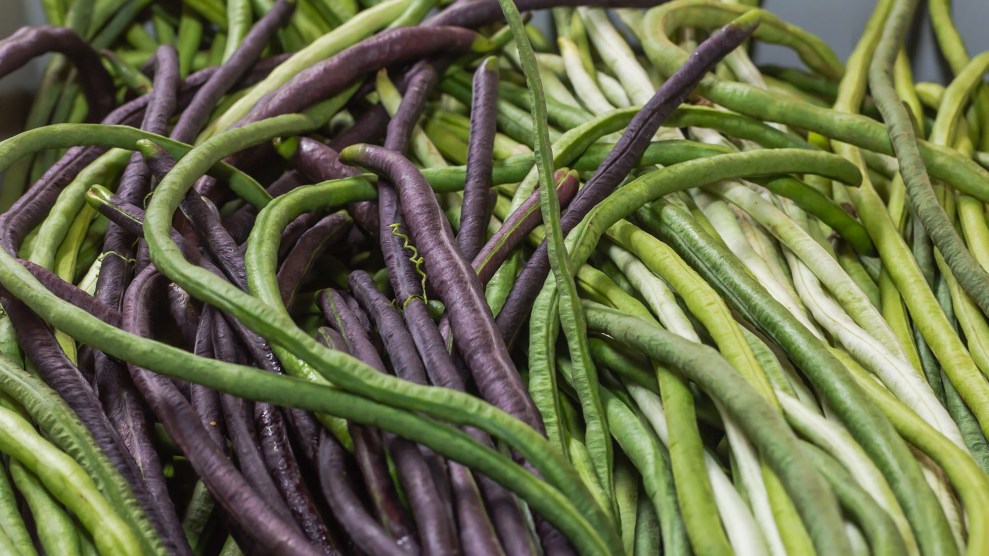
Yardlong BeansBSPollard/Getty
Aileen Suzara reaches into her refrigerator and pulls out a tangle of yardlong beans, a popular ingredient in Filipino cuisine. They look like green beans, except, as the name implies, they’re much, much longer. And instead of green, they’re a deep purple-maroon.
When Suzara, a chef and entrepreneur, visited her parent’s native country of the Philippines for the first time as a child, she remembers a neighbor carefully pinching through a pile of these beans at the early morning market in search of the best ones. “Something so simple to me also embodies the way people remember to eat foods that are fresh and local,” she says on this week’s episode of Mother Jones’ food politics podcast, Bite. (The interview starts at 17:21 in the player below.)
That sentiment is at the core of Suzara’s work: Her Bay Area food business Sariwa, which means “fresh” in Filipino, centers on reframing the narrative about her culture’s traditional food and using the cuisine in public health outreach through workshops and pop-ups.
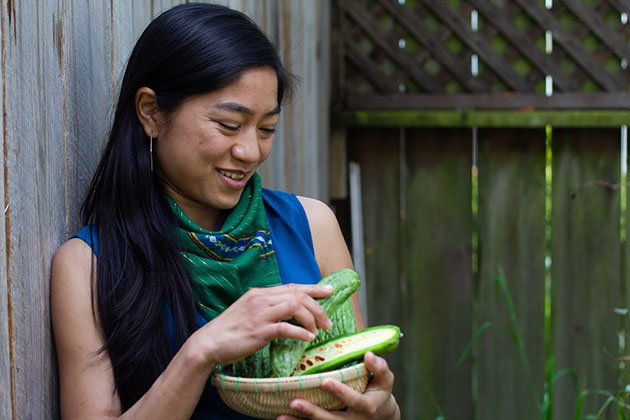
Suzara with a basket of bittermelon at a Rooted Recipes Project community meal
Thuy Tran
Filipino food is having a moment right now—the ever-Instagrammable purple ube root and tasty fried lumpia rolls entered the spotlight a few years ago and continue to grow in popularity. But there are still plenty of conflicting narratives about the cuisine. “On the ground level or the family level or community level,” Suzara says, people tell her, “‘Oh, I’ve been told I can’t eat Filipino food because it’s giving me hypertension, diabetes, et cetera.’ I just think it’s so important for there to be many different stories, a middle way that can kind of show other facets of Filipino food. It has been in the US for a very long time.”
She discovered her own family’s ties with wholesome Filipino food while foraging around the attic of her childhood home in the Mojave Desert when she was eight. There, she found a small, tape-bound book containing traditional Filipino recipes and was immediately entranced. “It was for dishes I had never heard about,” she remembers, “I was like, ‘Oh! This is a little piece of who we are.'”
Suzara shares one of her favorite simple longbean recipes, below.
Ginataang Sitaw at Kalabasa (Longbean and Squash in Coconut)
By Aileen Suzara
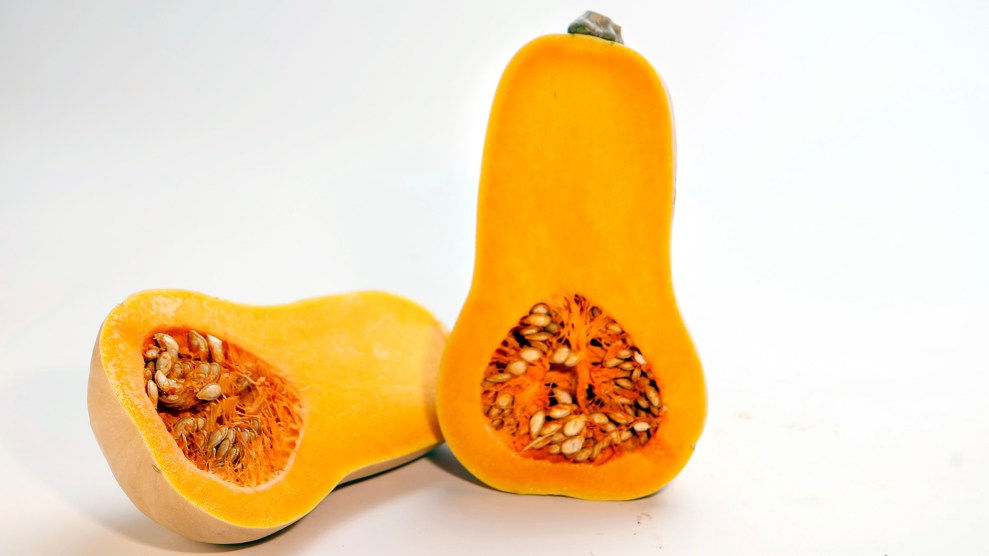
“Ginataang” means to cook in coconut milk. This simple, comforting dish can be easily adapted to what’s available, and served mild or spiced with chili, vegetarian, or with added meat. Try it with fresh malunggay leaf (moringa), winged beans, or spinach wilted into the dish, or swap kabocha squash for delicata or another sweet, firm squash. Longbeans have a distinct texture and can be found at farmers markets and Asian grocery stores, but you can use green beans or fillet beans if unavailable.
Ingredients:
1 Tbs vegetable oil
1 small onion, diced
4 cloves garlic, minced
1 Tbsp grated ginger
3 cups kabocha squash, cubed
2 cups yardlong, snapped or cut into segments (green beans or fillet beans if you can’t find them)
1.5 cup coconut milk
sea salt and pepper
Lemon or calamansi (a small citrus fruit similar to a lime)
Optional: 1 birdseye or green chili, add briny flavor with bagoong (shrimp paste) or patis (fish sauce) or vegetarian bagoong, or fish sauce (this exists!)
Directions:
Heat oil in heavy-bottomed pan over medium heat. Add onions and cook until soft. Add garlic and ginger and sauté until fragrant. Add coconut milk and squash, cover, and simmer until squash is tender. Add longbeans and chilis and simmer just until longbeans are tender. Season to taste with salt, pepper, and citrus. Enjoy with hot rice.